
Could a Port’s colour reveal how it was made, without telling you the whole story? The colour of port, or “color of port” as it’s often searched, offers a useful first clue: deep ruby often points to a fruit-forward style, whilst tawny shades suggest time spent ageing in wood. But colour alone isn’t a reliable measure of age or quality, and the differences can feel unclear when you’re choosing a bottle.
It’s natural to look at the glass for guidance. Ruby, tawny and white each hint at a different combination of grape pigments, ageing and flavour, but the label and style matter too. This guide explains how Port’s main colour families develop and what their hues can suggest, so you can choose with greater confidence for your taste or occasion.
We’ll explore the rich reds of Ruby Port, the amber and brown tones of Tawny, and the range of pale to golden colours found in White Port. You’ll also see why colour is best treated as a clue, not a verdict.
Key Takeaways
- Learn what ruby, tawny, white and rosé hues can suggest about a Port’s style.
- Discover how dark grape-skin pigments and different ageing methods influence appearance.
- Use a simple way to observe the color of port, while accounting for lighting and glass shape.
- Compare what you see with the label to avoid treating colour as a measure of age or quality.
- Choose a style by weighing its broad character against your taste and the occasion.
What the Colour of Port Can Tell You at First Glance
A glass of Port gives you an immediate visual impression, which can offer clues about its style, grape pigments and maturation. But a first glance is only a starting point. The simple rule is: Port colour is a clue to style, not a complete tasting note. It can help you orient yourself, but it can’t tell you everything about a particular bottle’s flavour, age or quality.
For a broader overview of Port wine, including its styles and characteristics, remember that several different families sit under the same name. Ruby, Tawny, White and Rosé each have a typical appearance, though examples within a style can vary.
Which Colours Appear in Port?
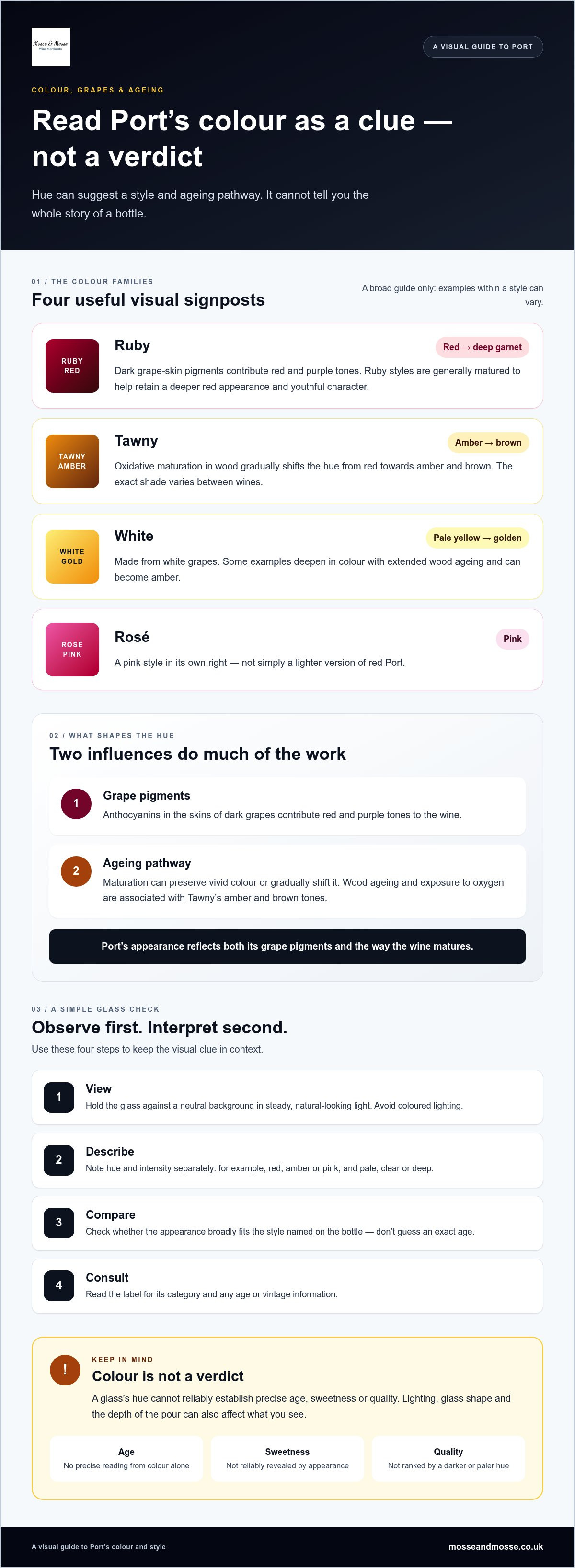
Ruby Port is commonly red, from a lively ruby shade to deep garnet. Tawny tends towards amber or brown, with the exact hue varying between wines. White Port ranges from pale yellow to golden, while Rosé Port is pink rather than simply a lighter version of red Port. These are useful visual signposts, not fixed colour standards.
When looking at a glass, describe what you see before drawing conclusions: red, garnet, amber, golden or pink. Separating the hue from its intensity gives you a useful starting point for comparing styles.
Does Port’s Colour Tell You Its Age?
Colour can reflect maturation, but it can’t establish a precise age. Broadly, Ruby styles aim to retain a deeper red appearance, whilst ageing in wood can bring Tawny shades towards amber and brown. White Port can also deepen in colour with extended wood ageing. The production choices behind these differences are explored in the next section.
A paler or darker glass isn’t a reliable age chart, and it doesn’t rank one Port above another. For more specific information, look to the label: the style, any age indication and vintage details provide context that appearance cannot. Treat colour as a prompt to investigate, not proof. That makes the colour of port useful when choosing, without letting one visual impression decide for you.
How Grapes and Ageing Shape Ruby, Tawny and White Port
Two influences do much of the work in shaping Port’s appearance: pigments in the grapes and the way the wine matures. Anthocyanins are pigments in the skins of dark grapes that contribute red and purple tones. As Port ages, its colour may stay vivid or gradually shift, depending on the style and maturation conditions. In short, Port’s colour reflects both its grape pigments and its ageing pathway.
This comparison is a broad guide, not a guarantee that every bottle will look alike.
| Style | Typical colour range | Main influence on appearance |
|---|---|---|
| Ruby | Red to deep garnet | Dark grape-skin pigments and a style intended to retain colour. |
| Tawny | Amber to brown | Oxidative maturation in wood gradually changes the hue. |
| White | Pale yellow to golden, sometimes amber | White grapes, with colour deepening in some wood-aged examples. |
Why Ruby Port Keeps a Redder Appearance
Dark-skinned grapes bring colour into the wine as their skins release pigments during winemaking. Ruby-style Port is generally matured in a way that helps preserve its deep red appearance and youthful character, often with less exposure to oxygen than wood-aged Tawny. Producers’ methods can vary, so the process isn’t identical for every bottle. A vivid red hue may suggest that fruit colour has been retained, but it can’t guarantee a particular flavour.
Why Tawny Port Develops Amber and Brown Tones
During maturation in smaller wooden barrels, gradual exposure to oxygen encourages colour to evolve from red towards amber and brown. This oxidative development is a defining visual feature of Tawny styles, although the exact shade depends on the wine and its maturation. The colour and ageing of Port wine are closely connected, but a glass’s hue alone can’t tell you a precise age.
White Port can change too. It starts with pale to golden tones, and some examples become deeper or more amber with extended wood ageing. Read the color of port alongside its style and label, not as a stand-alone measure of maturity. If you’re weighing up styles for a particular taste or occasion, personal guidance on choosing Port can help you consider those clues together.
How to Read Port’s Colour Without Misjudging the Wine
A glass offers useful clues, but its appearance can change with the room, the glass and the amount of wine poured. A dark Port may look lighter in a broad glass, while a shallow pour can seem more transparent than a deeper one. Treat your first impression as an observation, not a verdict. The phrase “color of port” may be useful when searching, but colour is only one part of assessing the wine.
A Simple Way to Observe Port in the Glass
Try this four-step check before deciding what the appearance means:
- View: Hold the glass against a neutral background in steady, natural-looking light. Avoid coloured lighting, which can distort the hue.
- Describe: Note hue and intensity separately. Is it red, amber or pink? Does it look pale, clear or deep?
- Compare: Consider whether the appearance broadly fits the style named on the bottle, rather than guessing an exact age.
- Consult: Read the label for the category and any age or vintage information that puts the visual clue in context.
Glass shape matters because the wine’s depth and the angle at which light passes through it affect what you see. If the colour looks unexpectedly pale or dark, check the pour and lighting before drawing conclusions. A lighter rim, where the wine appears less intense at the edge of the glass, is also an observation, not a quality score or an age reading.
What Colour Cannot Tell You on Its Own
Appearance can’t reliably reveal sweetness, quality or the precise time a Port spent in cask. Bottle age and storage may also influence how a wine looks, so colour alone can’t explain every difference between two examples of the same style. Sediment needs context too: it can occur in bottle-aged styles such as Vintage Port and unfiltered Late Bottled Vintage. Its presence isn’t, by itself, evidence of poor quality.
Complete the picture with the label, aroma and taste. Notice whether the aromas and flavours suggest fresh fruit, dried fruit or nutty notes, then consider whether they fit your expectations for the stated style. If you’d like help choosing a Port for your taste or occasion, get personalised guidance on Port.
Choose a Port Style by Colour, Taste and Occasion
Use appearance as a first filter, then let your preferences and plans guide the decision. Colour may draw you towards a style, but it can’t promise the flavour of an individual bottle. Think about what you enjoy, how you’ll serve the Port and whether it’s for a relaxed glass or a special occasion. The colour of port is a helpful starting point, not the whole selection process.
Which Port Colour Might Suit Your Preferences?
If red and purple hues catch your eye, Ruby Port could be a natural place to begin exploring. Its style is associated with retaining a deeper red appearance. If you’re drawn to amber tones, consider Tawny Port, whose wood maturation shapes its colour and style. Neither visual cue guarantees a particular flavour, so use the label and your own palate to narrow the choice.
White and Rosé Port offer alternatives to the familiar red and tawny families. White Port ranges from pale to golden shades, while Rosé is pink. These differences can help you decide which styles to explore, but taste, serving plans and the occasion matter too. For a fuller explanation of how the categories differ, explore this guide to Port styles.
As a practical approach, start with one question: do you usually prefer fresh fruit character, mature wood-influenced styles or something lighter in appearance? Then consider who’ll be sharing the bottle and the kind of occasion. Colour can point you in a direction; the style information gives you firmer context.
Get Personal Guidance on Choosing Port
There’s no need to make the choice by appearance alone. Mosse and Mosse is an independent wine merchant based in Suffolk, offering a curated selection of wines and personalised service. If you’re in Ipswich, Norwich, Bury St Edmunds, Sudbury, Stowmarket, Newmarket, Thetford, Diss, Attleborough, Southwold, Aldeburgh, Framlingham, Woodbridge, Long Stratton or Saxmundham, you can get help weighing up style, taste and occasion. Share what you tend to enjoy, the setting you have in mind and whether you’re curious about Ruby, Tawny, White or Rosé Port.
For tailored help with your choice, talk to Mosse and Mosse about choosing Port.
Let Your Next Glass Reflect Your Taste
Let curiosity lead. The next time you choose Port, use the colour of port as an invitation to explore, then trust your preferences rather than searching for a single “right” choice. Think about who’ll be sharing it, the mood you’d like to create and what you’ve enjoyed before. Those details can make your choice feel personal, whether you’re selecting a bottle for a quiet evening or planning a gathering.
Choosing for other people can be less straightforward. Mosse and Mosse offers personalised service to private clients and private events, helping bring individual tastes and occasions into the conversation. A little guidance can turn a first impression into a more considered choice, while leaving room to discover something new.
Ready to find a Port that suits your plans? Talk to Mosse and Mosse about choosing Port. Enjoy the process, and let your next glass be guided by what you genuinely like.
Frequently Asked Questions
Is Port always red?
No. Port also includes White and Rosé styles, so red isn’t a defining colour for every bottle. White Port is made from white grapes and can range from pale to golden shades, whilst Rosé Port has a pink hue. If a bottle’s appearance surprises you, check its label before assuming it’s a different wine. The style name is a more dependable guide than colour alone.
Can Port change colour after opening?
Yes, its appearance can alter after opening as contact with air affects the wine, though the extent depends on the style and how it’s kept. A change in hue doesn’t automatically mean the Port is spoiled, but a faded appearance alongside muted aromas may suggest it’s past its best. Reseal the bottle between pours and store it away from heat and strong light to help preserve its character.
Does darker Port mean it is sweeter?
No. Colour doesn’t reliably indicate sweetness. A deep-looking Port isn’t necessarily sweeter than a paler one, because appearance is shaped by factors such as grape pigments and maturation. For a practical clue, look for sweetness descriptions on the label, especially with White Port, which ranges from dry to very sweet. If sweetness matters to your choice, use the style and label information rather than judging the glass by its depth of colour.
Why does Port sometimes have sediment?
Sediment is usually a natural deposit from the wine, not a sign that it’s faulty. Vintage Port and unfiltered Late Bottled Vintage can form sediment as they develop in bottle; filtered styles are generally made to be poured without it. If you spot a deposit, avoid shaking the bottle and pour carefully, leaving the final cloudy portion behind. This helps keep the sediment out of the glass.
Can you identify Port from its colour alone?
No. Colour can point towards a broad style, but it can’t confirm that a wine is Port or identify its exact category. Other wines may share similar red, amber or pink shades, and lighting can affect what you see. The phrase “color of port” may help you find visual guidance, but check the bottle’s label for confirmation. Aroma and taste provide further clues once you know what you’re pouring.
Why can two Ports of a similar style look different?
Ports in the same broad style can differ because they may come from different grape blends, harvests and maturation choices. Filtration and the wine’s time in bottle can also affect its appearance. Even the glass and the light in the room influence how its hue seems. So, two Ruby Ports needn’t have identical depth or shade. Compare their labels and descriptions before treating a visual difference as meaningful.


