

Last December, a regular customer arrived at our shop feeling completely stumped by the wall of dark bottles on our shelves. He wanted a special treat for a family dinner but couldn't tell if a £22 Late Bottled Vintage was a bargain or if he really needed to invest £85 in a 2011 Vintage that might not even be ready to pour. It's a common frustration because the various types of port often feel like a secret language designed to catch you out.
You shouldn't have to worry about overpaying for a bottle that requires two decades of cellaring or feel guilty about how long a corked bottle stays fresh on the sideboard. We believe it's all about what's in the bottle. This guide helps you discover the nuanced world of Port, from vibrant, youthful Rubies to rare, complex Vintages, so you can choose the perfect bottle for any occasion with total confidence. We'll explore the distinct flavour profiles of each style and share our secrets for mastering the art of serving and pairing these glorious fortified wines.
Key Takeaways
- Understand why true Port is unique to the Douro Valley and how the traditional fortification process creates its signature "liquid gold" profile.
- Master the distinction between wood-matured and bottle-matured types of port, from the nutty elegance of an aged Tawny to the bold, fruit-forward intensity of a classic Ruby.
- Explore the refreshing versatility of White and Pink Ports, discovering how these vibrant styles serve as the perfect aperitif for your next gathering.
- Gain the confidence to serve your collection with precision, learning which rare Vintages require decanting and the ideal temperatures to unlock their full flavour.
- Learn how to select the perfect bottle for any occasion, ensuring every glass offers the pure drinking pleasure that defines these iconic Portuguese wines.
What is Port Wine? Understanding the Douro’s Liquid Gold
Port isn't just a drink to finish a meal; it's a piece of liquid history that carries the soul of Portugal. For us, it's all about what's in the bottle, and Port offers a depth of character that few other wines can match. This fortified wine comes exclusively from the Douro Valley in Northern Portugal. The region was officially demarcated in 1756, making it one of the oldest protected wine regions in the world. To truly grasp What is Port Wine?, you must look beyond the glass to the steep, sun-drenched hillsides where the vines struggle to survive.
The secret lies in the ground. The Douro is famous for its "Schist" soil, a crumbly, slate-like rock that retains heat and forces vine roots to drill down dozens of metres to find water. These vineyards are carved into dramatic terraces that are so significant they earned UNESCO World Heritage status in 2001. We focus on quality, and that starts with the grapes. While over 80 varieties are permitted, the heavy lifters are Touriga Nacional, Tinta Roriz, and Touriga Franca. These grapes provide the structure and intense dark fruit flavours that define the best types of port.
The production process is what sets it apart from your standard table wine. During fermentation, winemakers add a neutral grape spirit called aguardente, which is roughly 77% alcohol. This spirit kills the yeast and stops the fermentation process before all the sugar has turned to alcohol. The result is a wine that's naturally sweet, incredibly stable, and possesses a much higher alcohol content than a typical Claret or Burgundy. It's a bold, warming style that has comforted drinkers for centuries.
The History of the British Connection
The British love affair with Port began in 1678 during the frequent wars with France. When French wine supplies were cut off, British merchants headed to Portugal to find a replacement. They discovered that adding a splash of brandy to the local red wine helped it survive the long, choppy sea voyage back to London. This necessity birthed a global industry. You'll still see this heritage today in the famous "Port Houses" that line the banks of the Douro. Names like Taylor’s, Graham’s, and the Symington Family Estates sound more like London law firms than Portuguese wineries, yet they've been the stewards of this trade for generations. In British social etiquette, the tradition of passing the Port decanter to the left is still a mark of a proper dinner party.
How Port is Classified
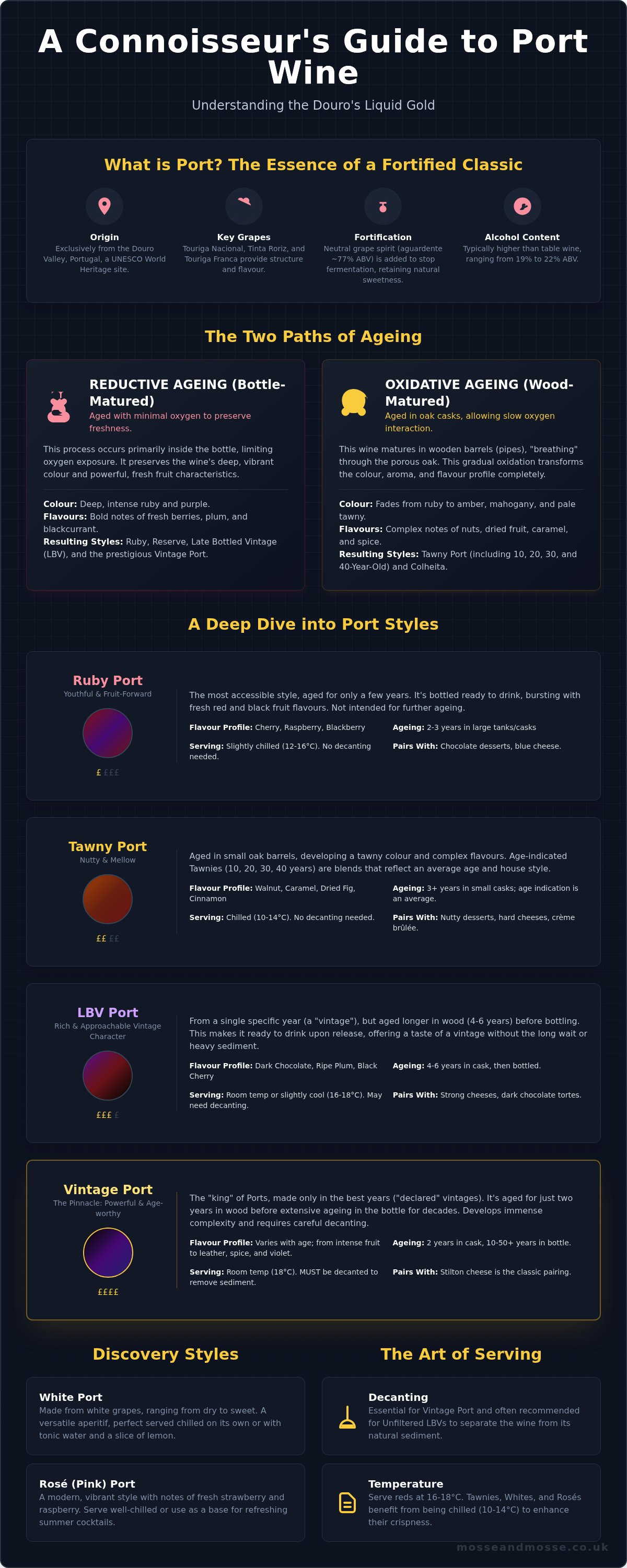
Every bottle of Port is strictly regulated by the IVDP (Instituto dos Vinhos do Douro e do Porto). This governing body ensures that every drop meets the high standards required to carry the name. When you're looking at different types of port, you'll notice the ABV (Alcohol by Volume) usually sits between 19% and 22%. The classification generally follows two distinct ageing paths:
- Reductive Ageing: This happens mostly in the bottle. By limiting exposure to oxygen, the wine keeps its deep ruby colour and intense, fresh fruit flavours.
- Oxidative Ageing: These wines spend years in wooden casks. They "breathe" through the wood, which turns the wine a tawny colour and introduces complex notes of nuts, dried fruits, and caramel.
Whether you prefer a vibrant, fruit-forward bottle or a mellow, nutty vintage, understanding these two paths is the key to finding your perfect glass. It's a glorious world of flavour that we're always excited to share with our customers.
Wood-Matured Styles: The Nutty Elegance of Tawny Port
Tawny Port is where the magic of oxidation takes centre stage. Among the various types of port available today, this style is defined by its lengthy maturation in seasoned oak casks known as "pipes." These barrels usually hold between 550 and 630 litres. Because the wood is slightly porous, it allows tiny amounts of oxygen to seep in over many years. This slow, controlled exposure transforms the wine completely. It's a deliberate process that requires a master blender's touch to get exactly right, ensuring the wine doesn't over-oxidise and lose its soul.
As the wine breathes, its appearance changes. You'll see the deep, opaque purple of a young wine fade into shades of amber, mahogany, and eventually a pale onion skin hue. This is the classic "tawny" colour that gives the style its name. The flavours shift just as dramatically. Instead of fresh blackberries, you'll find a glorious array of dried sultanas, toasted walnuts, butterscotch, and exotic spices. It's a sophisticated profile that we find offers pure drinking pleasure, especially when paired with a hard cheese or a nutty dessert.
Understanding the different types of port helps you choose the right bottle for the right moment. If you want to dive deeper into how these categories are structured, this guide to port wine provides an excellent breakdown of the production methods. One of the best things about Tawny is that the winery has done all the hard work for you. These wines are "ready to drink" the moment they're bottled. They don't need years of dusty cellaring in your own home; they've already reached their peak in the lodge. Once opened, a bottle of Tawny will even stay fresh for several weeks, making it a very practical wine treat to keep in the cupboard.
Aged Tawnies: 10, 20, 30, and 40 Years Old
When you see an age on the label, it represents a "target profile" rather than a minimum age for every drop in the blend. The blender mixes several vintages to achieve the specific character associated with that age. A 10-year-old Tawny still retains some reddish fruit and zest. By the time you reach a 40-year-old, the wine has become incredibly concentrated and viscous. For most of our customers, the 20-year-old is the absolute sweet spot. At around £35 to £50, it offers a perfect balance between vibrant fruit and the deep, rancio complexity of old wood.
Colheita Port: The Single-Harvest Tawny
Colheita is often confused with Vintage Port, but they're very different beasts. While a Vintage Port spends only two years in wood before ageing in the bottle, a Colheita must spend at least seven years in oak. Many stay in the barrel for decades. It's a Tawny Port from a single harvest year rather than a blend. This makes them a fantastic choice for a meaningful gift. Finding a Colheita from a specific birth year or a 50th anniversary date adds a personal touch that a standard blend can't match. If you're searching for a specific year to mark a milestone, our expertly sourced Port selection might have just the bottle you need.
Bottle-Matured Styles: From Fruit-Forward Ruby to Iconic Vintage
Ruby Port is the most widely produced of the various types of port, designed specifically for those who love deep, primary fruit. Unlike Tawny styles that embrace oxidation, Ruby Port spends its short life in massive oak vats or stainless steel tanks. This creates a "reductive" environment. By limiting the wine's contact with oxygen, the producer ensures it retains its intense purple-ruby colour and punchy, youthful characteristics. It's a style that prioritises the grape's natural vitality over the wood's influence.
You'll find a glorious hit of blackberries, wild cherries, and dark chocolate on the palate when you pour a glass. These flavours are typically backed by firm tannins that provide a sturdy backbone. At Mosse and Mosse, we believe it's all about what's in the bottle; with Ruby, you get a wine that feels alive and energetic. It's pure drinking pleasure for anyone who enjoys a bold, fruit-led profile without the nutty, dried-fruit notes of long wood ageing.
Ruby, Reserve, and Late Bottled Vintage (LBV)
Standard Ruby is your entry-level bottle, usually aged for less than 3 years before release. It's vibrant, approachable, and ready to drink the moment you pull the cork. Late Bottled Vintage (LBV) offers a more sophisticated experience. These wines come from a single harvest and spend between 4 and 6 years in large vats. This extra time allows the wine to mellow slightly while keeping that signature Ruby fruit profile intact.
The "Filtered vs. Unfiltered" distinction is vital for your serving plans. Most modern LBVs are filtered to remove sediment, making them convenient for immediate pouring. However, "Unfiltered" or "Bottle Matured" LBVs are closer in character to a true Vintage Port. These wines haven't been stripped of their solids, meaning they'll continue to develop if you choose to lay them down. Just remember that unfiltered bottles will require decanting to ensure a clear, sediment-free glass.
Vintage Port: The Pinnacle of the Douro
Vintage Port represents the absolute peak of production, accounting for less than 2% of all Port made. It's only produced in years where the weather is perfect, a feat usually achieved about 3 times every decade. A Port house must "declare" a vintage by the second spring after harvest, and the IVDP (Instituto dos Vinhos do Douro e do Porto) must approve the quality. This rarity makes every declared year, such as 1994, 2011, or 2017, a significant event for collectors.
- Ageing: These wines spend exactly 2 years in wood before being moved to the bottle.
- Environment: The lack of oxygen in the bottle allows for a slow, majestic evolution.
- Profile: Young Vintage Port is massive and tannic; aged versions are silky and ethereal.
Vintage Port is the only style that significantly improves with 20-50 years of bottle age. When you open a bottle from a legendary year, the aggressive tannins have softened into silk. The fresh fruit transforms into complex notes of leather, spice, and dried figs. It's a wine treat that requires patience, but the reward is a level of depth that few other types of port can ever hope to match.
Discovery Styles: White, Pink, and Crusted Port
While Ruby and Tawny often steal the spotlight, exploring the less conventional types of port reveals some of the most exciting drinking experiences available today. White Port is a personal favourite for a refreshing aperitif, particularly during the warmer months. It's crafted from indigenous white grape varieties such as Gouveio, Malvasia Fina, and Viosinho. Unlike its red cousins, this style offers a spectrum of sweetness that ranges from 'Extra Seco' (extra dry) to the lusciously sweet 'Lágrima'. The latter translates to 'tears' because of the way the high sugar content, often exceeding 140 grams per litre, clings to the glass. For those who enjoy a vibrant, modern twist, Pink Port is a relatively new category. First released in 2008 by the house of Croft, it’s designed for immediate enjoyment and brings bright notes of strawberry and raspberry to the table through limited skin contact during fermentation.
The Rise of the Port and Tonic (P&T)
The P&T has quickly become a staple in British bars, attracting a younger demographic looking for a lower-alcohol alternative to a standard Gin and Tonic. It's incredibly easy to make at home. Simply fill a tall glass with ice, add 50ml of White Port, top with 100ml of premium tonic water, and garnish with a sprig of fresh mint and a slice of lemon.
If you want something with more gravitas, I highly recommend looking into the Aged White Port category. These wines spend decades in oak casks, often sold with an age statement of 10, 20, 30, or even 40 years. They lose their pale colour and transform into a deep, glowing amber. The flavour profile shifts from simple citrus and fruit into a complex tapestry of honey, toasted almonds, and dried orange peel. It's a glorious wine treat that bridges the gap between a refreshing aperitif and a serious meditative sipper.
Crusted Port: The Insider's Secret
I often tell my customers that Crusted Port is the best-kept secret in the Douro. It's a high-quality blend of several different vintages, bottled without filtration. Because it isn't filtered, it develops a natural sediment or 'crust' as it matures in the bottle, much like a true Vintage Port does.
When comparing different types of port, Crusted stands out as the ultimate choice for those who value substance over a famous vintage date. Because it requires decanting to remove the sediment, it provides all the ceremony and depth of a premium wine at a fraction of the cost. You can often find a superb bottle for around £25, whereas a single-vintage counterpart might cost you £80 or more. It offers that wonderful bottle-aged character, full of dark fruit and spice, that makes it a 'poor man's Vintage Port' in name only. In reality, it's a sophisticated choice for any collector who wants pure drinking pleasure without the hefty price tag.
Finding the right bottle is all about what's inside. Whether you're after a crisp summer drink or a complex wine to lay down, we can help you explore our curated Port collection and find your new favourite style.
The Art of Serving: Decanting, Glassware, and Pairings
Pouring a glass of Port is the perfect conclusion to a British Sunday roast or a festive dinner, yet the ritual involves more than just pulling a cork. Not every bottle requires the same treatment. If you have a Vintage Port, a Crusted Port, or an Unfiltered LBV, you must use a decanter. These wines age in the bottle and develop a heavy sediment over 10 or 20 years. You should stand the bottle upright for 24 hours before serving, then pour it steadily into the decanter until you see the sediment reach the neck. Modern filtered types of port, such as standard LBVs or Tawnies, are ready to pour straight from the bottle.
Temperature is where many enthusiasts lose the delicate nuances of the wine. Don't serve Port at a sweltering 22°C room temperature. Tawnies are glorious when slightly chilled to 12-14°C, which lifts the nutty, caramel notes. For Rubies and Vintages, aim for a cooler room temp of 16-18°C. This prevents the alcohol from feeling "hot" or overpowering the fruit. Your choice of glass matters too. Forget those tiny "thimble" glasses that stifle the bouquet. Use a standard white wine glass instead. The larger bowl allows the complex aromas of dried plum and spice to breathe properly.
Once opened, the shelf life varies significantly across the different types of port:
- Vintage Port: These are fragile. Drink them within 48 hours of opening before the vibrant fruit fades.
- LBV and Ruby: These stay fresh for about 7 to 10 days if kept in a cool spot.
- Tawny Port: Because they've already spent years in oak, they are resilient. A 10 or 20-year-old Tawny can last 8 weeks in the fridge.
Classic and Modern Food Pairings
The British classic remains the gold standard: pair a mature Vintage Port with a wedge of 24-month matured Stilton or Shropshire Blue. The saltiness of the cheese creates a perfect counterpoint to the wine's rich sweetness. For a sweet treat, serve a 20-year-old Tawny with an almond tart, crème brûlée, or a traditional Christmas pudding. The nutty oxidation in the wine mirrors the toasted flavours of the dessert. If you want a bold choice, try a Ruby Reserve with a 70% dark chocolate fondant or even a peppered ribeye steak. The fruit intensity stands up beautifully to the spice and fat.
How to Choose: The Mosse & Mosse Philosophy
Tim and I don't just look for big brand names that line supermarket shelves. We hunt for what's actually in the bottle. We focus on smaller Quintas where the quality of the spirit and the fruit is the priority. When you're selecting a bottle, think about the occasion. For a casual Tuesday evening treat, a high-quality LBV offers pure drinking pleasure without the need for decanting. If you're looking for a milestone gift, a declared Vintage year like 2011 or 2017 is a magnificent choice that will be remembered for years.
We believe every bottle should tell a story of the soil and the season it came from. Whether you're a seasoned collector or just starting your journey, we're here to help you find that one-to-one special service. Explore our curated selection of Port and find your new favourite bottle.
Find Your Perfect Pour from the Douro Valley
Navigating the many types of port doesn't have to be a daunting task. Whether you're drawn to the 20-year-old nutty complexity of a wood-aged Tawny or the intense, dark fruit profile of a bottle-matured Vintage, there's a style to suit every palate. Remember that the right glassware and a careful decant can transform a simple glass into a glorious wine treat. At Mosse & Mosse, we believe it's all about what's in the bottle. Tim Mosse has spent over 30 years hunting the best examples from historic quintas to ensure our cellar only holds the finest Old World classics. We're a family-run independent merchant, so you'll always get that personal, one-to-one service you won't find at a faceless supermarket. Since the Douro became the world's first demarcated wine region in 1756, these fortified gems have defined British wine culture. We've hand-picked each bottle to guarantee pure drinking pleasure for your next dinner party or quiet evening by the fire. Discover our hand-picked Port collection at Mosse & Mosse. We look forward to helping you find a bottle you'll truly love.
Frequently Asked Questions
What is the difference between Tawny and Ruby Port?
Ruby Port is aged in large stainless steel or wooden vats for two to three years to preserve its vibrant red colour and fruity character. In contrast, Tawny Port spends its life in smaller 630-litre oak casks, exposing the wine to controlled oxidation. This process transforms the flavour into notes of caramel and nuts. When exploring different types of port, you'll find Ruby is about fresh berries, whereas Tawny is a mellow, golden-brown treat.
Do I need to decant Port wine?
You only need to decant Vintage Port or unfiltered Crusted Port to remove the natural sediment that forms during bottle-ageing. Most modern Late Bottled Vintage (LBV) and Tawny styles are filtered before bottling, so they're ready to pour straight into your glass. If you have a bottle of 1994 Vintage Port, stand it upright for 24 hours before opening. This ensures the heavy sediment settles at the bottom for a clean, clear pour.
How long does Port last once opened?
A bottle of Ruby or Late Bottled Vintage typically stays fresh for 10 days if kept in a cool, dark place. Because Tawny Port is already oxidised during its time in the barrel, it's more resilient and remains delicious for up to 28 days after opening. Always replace the cork firmly or use a vacuum stopper. Keeping your opened bottle in the fridge is a great way to preserve those lovely aromatics for longer.
What is a 'Declared' Vintage year?
A 'Declared' Vintage year is a formal recognition that the harvest quality is high enough to produce a top-tier Vintage Port. This only happens about three times every decade, with 2011 and 2017 being two of the most celebrated recent examples. Each Port house makes its own decision based on the fruit's concentration and structure. It's a sign that the wine has the stamina to be laid down for 20 to 50 years.
Can I drink White Port with a mixer?
You definitely should try White Port with a mixer, as it's the base for the refreshing Portonic cocktail. Mix 50ml of chilled White Port with 100ml of premium tonic water over plenty of ice. Garnish with a slice of lemon and a sprig of fresh mint for a glorious summer drink. It's a lighter alternative to a Gin and Tonic. We often recommend it to customers looking for a new wine treat.
Why is Port more expensive than regular wine?
Port costs more because producers must add high-quality 77% ABV grape spirit to stop fermentation, which increases production costs. The vineyards in Portugal's Douro Valley are planted on incredibly steep 45-degree slopes, meaning almost all harvesting is done by hand. When you consider the cost of storing a 20-year-old Tawny in a cellar, the price, often exceeding £40, reflects the years of patience and craftsmanship required before the bottle reaches your table.
What does 'Late Bottled Vintage' actually mean?
Late Bottled Vintage, or LBV, refers to wine from a single harvest that's aged in large oak vats for four to six years. This is much longer than the two years a standard Vintage Port spends in wood. This extra time means the wine is more approachable upon release and doesn't require decades of cellaring. Amongst the different types of port, LBV offers the depth of a vintage wine with the convenience of immediate drinking pleasure.
Is Port always sweet?
While most styles are sweet, the level of richness varies across the category. Producers stop the fermentation process while natural grape sugars remain, typically resulting in about 100 grams of residual sugar per litre. However, you can find Extra Dry White Ports that have a much crisper profile. These drier styles are perfect for those who want the complexity of a fortified wine without the heavy, syrupy texture of a traditional dessert wine.


