

Does Bordeaux really need steak to shine? Not at all. The best classic bordeaux food pairings depend on more than the colour of the wine: its tannins, weight and age all influence what works at the table. Steak remains a satisfying match for a structured Left Bank red, but it’s only one possibility, and it may not suit the meal you’re planning.
If Bordeaux’s regional styles feel hard to match, start with two questions: how firm and full does the wine feel, and how rich and savoury is the dish? A firm red can meet a slow-cooked stew or roasted mushrooms more easily than a delicate, lightly seasoned plate. In this guide, you’ll learn how Left Bank and Right Bank reds differ, why a wine’s age can change its ideal partner, and how to pair Bordeaux with dishes beyond red meat. We’ll explore ideas including lamb, poultry, fish and savoury vegetarian dishes, with practical principles you can use with the bottle you already have. As an independent Suffolk wine merchant specialising in Bordeaux, Mosse and Mosse believes a good pairing should make the meal more enjoyable, not turn it into a set of rules.
Key Takeaways
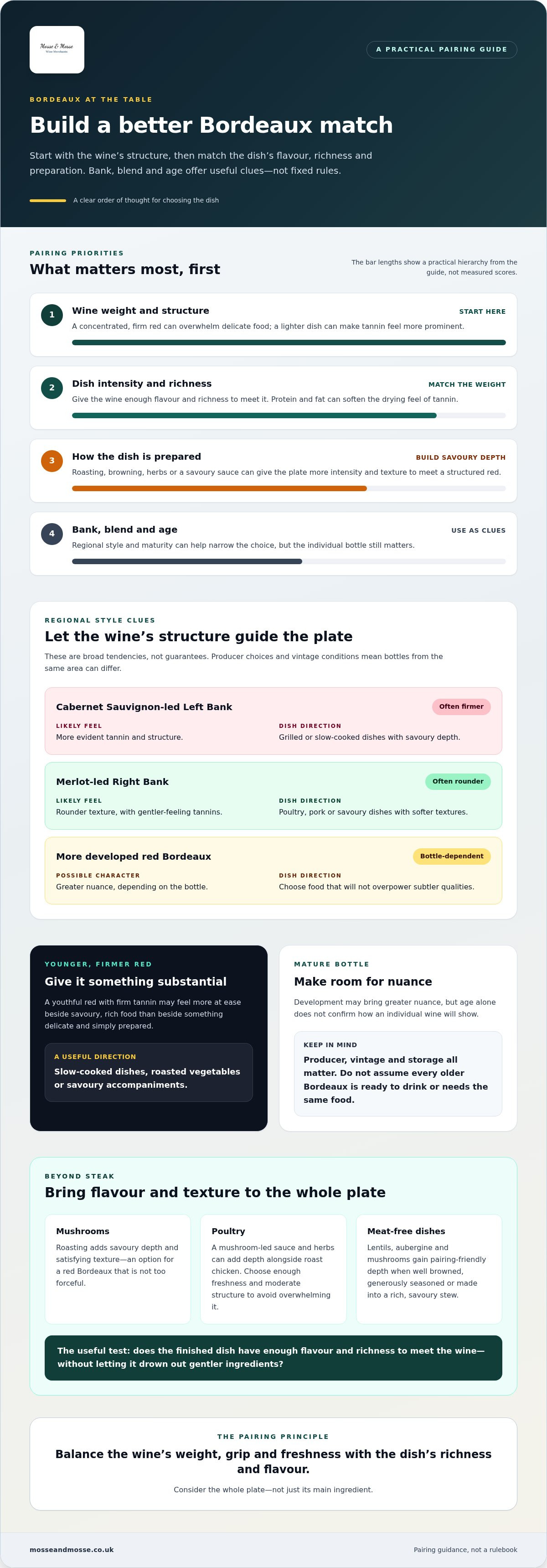
- Start with the wine’s weight and structure, then choose a dish with enough flavour and richness to meet it.
- Use Left Bank and Right Bank styles as helpful clues for classic bordeaux food pairings, not fixed rules for every bottle.
- Preparation matters: savoury, flavourful ingredients can make mushroom, lentil and aubergine dishes satisfying partners for Bordeaux.
- Build a relaxed menu by choosing the wine style first, then matching the main ingredient and how it’s cooked.
- Vintage and age can shift a wine’s feel, so consider the bottle itself rather than relying only on its region or blend.
Bordeaux food pairings: why structure matters
Start with a simple principle: match the wine’s weight and structure to the dish’s intensity. A concentrated, firm red can overwhelm something delicate, whilst a lightly flavoured dish may leave the wine’s tannins feeling especially dry. The aim isn’t to follow a rigid rulebook. It’s to find balance between what’s in the glass and what’s on the plate.
How tannin, acidity and body shape a Bordeaux pairing
Tannin is the drying, grippy sensation you may notice on your gums after a sip of red wine. Beside tender, lightly prepared food, it can feel firmer and more prominent. Protein and fat in a dish can soften that impression, which is one reason red wine often feels more harmonious with substantial food. Steak isn’t compulsory: the same principle can guide choices such as lamb, lentils or mushrooms prepared with enough savoury depth.
Acidity is the mouth-watering freshness that helps clear the palate between bites, particularly with rich or fatty food. Body describes how weighty a wine feels in your mouth. A full-bodied Bordeaux red, for instance, is likely to dominate simply poached white fish. A richer preparation, or a well-seasoned accompaniment, can bring the plate and wine into better balance. These Wine and food pairing principles are useful starting points, not hard-and-fast laws.
The classic Bordeaux matches and why they work
Structured red Bordeaux has a natural affinity with grilled or roasted beef. The meat’s protein and fat help temper tannin, while browning from grilling or roasting brings savoury intensity that can meet the wine’s structure. A slow-roasted joint with deep, savoury accompaniments is a heartier match than a lightly cooked, simply dressed slice of beef.
Lamb and game can also suit a structured red, especially when prepared with herbs, roasted vegetables or a savoury sauce. These flavours give the wine something substantial to meet. Think about the full dish: a richly flavoured lamb stew may stand up to a firm red more comfortably than delicate lamb served with little seasoning.
A food-friendly Bordeaux match brings the wine’s weight, grip and freshness into balance with the dish’s richness and flavour. That’s the useful idea behind classic bordeaux food pairings: consider the whole plate, not just its main ingredient.
Choose classic Bordeaux food pairings by bank, blend and wine age
Bank and blend offer useful clues to a Bordeaux’s structure, whilst age can alter how firm or nuanced it feels. Use them to narrow your choices, then let the wine and the preparation guide the final decision. These are regional tendencies, not guarantees: producer choices and vintage conditions mean bottles from the same area can differ.
| Broad style | Likely structure | Dish direction |
|---|---|---|
| Cabernet Sauvignon-led Left Bank, including Médoc | Often firmer, with more evident tannin | Grilled or slow-cooked dishes with savoury depth |
| Merlot-led Right Bank | Often rounder in texture, with gentler-feeling tannins | Poultry, pork or savoury dishes with softer textures |
| More developed red Bordeaux | May show greater nuance, depending on the bottle | Consider dishes that won’t overpower its subtler qualities |
Left Bank and Right Bank: different structures at the table
Médoc and Margaux are familiar Left Bank reference points, but neither name guarantees a particular taste or level of firmness. A Cabernet Sauvignon-led style may feel more structured, making it a natural choice for grilled food or slow-cooked dishes whose savoury flavours can meet that strength. Merlot-led examples can feel gentler on the palate, inviting softer textures and considered, savoury preparations. Explore the merchant’s Bordeaux wine selection to see the region’s breadth.
Young and mature Bordeaux: adapt the food, not just the serving
A youthful red with firm tannin can feel more at ease beside a dish with savoury richness than beside something delicate and simply prepared. With a mature bottle, development may bring greater nuance, but age alone doesn’t confirm how any individual wine will show. Producer, vintage and storage all matter, so avoid assuming every older Bordeaux is ready to drink or needs the same food.
Let Bordeaux’s style set the dish’s intensity, while leaving room for producer and vintage to shape the match. That’s the practical heart of classic bordeaux food pairings. If you’d like guidance applying these clues to a meal, get in touch with Mosse and Mosse.
Beyond steak: classic Bordeaux pairings for poultry, fish and vegetarian dishes
Bordeaux can accompany far more than steak and roast meat. The key is to give the dish enough flavour and texture to meet the wine, whilst choosing a style that won’t drown out gentler ingredients. Seasoning and cooking method make a real difference, so think about the finished plate rather than the main ingredient alone.
Mushrooms, poultry and meat-free dishes with Bordeaux
Roasted mushrooms bring savoury depth and a satisfying texture, making them a natural direction for a red Bordeaux that isn’t too forceful. A mushroom-led sauce can do similar work alongside roast chicken. Add herbs and choose a wine with enough freshness and moderate structure to complement the poultry without overwhelming its more delicate flavour.
Meat-free dishes can work beautifully too. For lentils, aubergine or mushrooms, favour preparations with depth: roast the vegetables until well browned, season generously, or bring the ingredients together in a rich, savoury stew. A simply steamed lentil dish or lightly cooked aubergine may feel less satisfying beside a structured red. The dish needn’t imitate meat; it simply needs enough flavour to stand alongside the wine.
Fish, sauces and sides: make the pairing more forgiving
Delicate white fish, lightly cooked and simply seasoned, can be difficult beside a firm red Bordeaux. The wine may dominate the fish, and its tannin can seem more pronounced. Richer fish preparations offer more to work with: seared salmon or grilled tuna, for example, may suit a lighter, less tannic red, especially when served with a well-seasoned accompaniment.
Smoky, earthy or concentrated flavours can help connect wine and food. Try roasted aubergine with a smoky edge, mushrooms with herbs, or a savoury sauce alongside fish. Pay attention to the sides as well: a sharp dressing or delicate vegetable may alter the balance of the whole plate. Taste the wine with the finished dish, including its sauce and accompaniments, before deciding whether the match works for you.
That flexibility is at the heart of classic bordeaux food pairings: preparation can matter as much as the ingredient. For personalised guidance choosing a Bordeaux for a poultry, fish or vegetarian meal, speak with Mosse and Mosse.
Plan a Bordeaux food pairing menu and choose a bottle with confidence
Planning dinner around Bordeaux doesn’t need to involve elaborate rules. Start with the bottle, choose a main ingredient that suits its general style, then decide how to cook and season it. This order helps you build a menu around the wine you have, rather than guessing from a recipe title alone.
A simple step-by-step method for matching Bordeaux to dinner
- Identify the style. Read the label or use what you know about the wine’s region and blend. Consider whether it seems firm and structured or more supple.
- Choose the main ingredient. Beef, poultry, mushrooms or aubergine each bring different weight and flavour to the plate.
- Decide how to prepare it. Grilling, roasting and slow cooking can bring savoury depth; a delicate, lightly seasoned preparation may call for a gentler wine.
- Finish with the details. Choose sauces and sides that support the main pairing, and keep their intensity in balance with the wine.
If you’re uncertain, aim for savoury rather than overpowering. A relaxed menu might begin with a simple seasonal starter, followed by roast chicken with herbs and mushrooms, then a modest cheese course. Choose a Bordeaux to accompany the main dish, and don’t assume that the same bottle will be the best match for every course.
When to seek a curated Bordeaux recommendation
A bottle can be easier to choose once you know the meal and the style you enjoy. An independent merchant can help connect those details, whether you’re planning around a supple red, a more structured Médoc or a meat-free main. Mosse and Mosse is a Suffolk wine merchant with a specialist focus on Bordeaux, curated wines and personalised service for private clients and events.
Example bottle: 2020 Château Laujac Médoc Cru Bourgeois Supérieur is one Bordeaux in Mosse and Mosse’s selection. Use it as a starting point for considering a Médoc alongside a meal, not as a universal pairing recommendation. The wine’s individual character and the way you prepare the food still matter.
Good classic bordeaux food pairings are guided by the bottle, the dish and the pleasure of bringing them together. For help exploring Bordeaux in the context of your menu, discuss Bordeaux wines with Mosse and Mosse.
Make your next Bordeaux pairing your own
The best classic bordeaux food pairings start with the wine’s structure and the dish’s intensity, not a rule that red Bordeaux must be served with steak. Bank, blend and age can offer helpful clues, but producer and vintage variation mean the bottle itself matters. Poultry, richly prepared fish and savoury vegetarian dishes can all have a place at the table when their seasoning and texture suit the wine.
Keep the approach simple: identify the style, choose your main ingredient, then think about how it’s cooked and what accompanies it. A little attention to those details can turn an unfamiliar pairing into an enjoyable one.
Mosse and Mosse is an independent Suffolk wine merchant with a specialist focus on Bordeaux, offering a curated selection and personalised service for private clients. For guidance on choosing a bottle to suit your meal, discuss Bordeaux wines with Mosse and Mosse.
Trust your palate, stay curious and enjoy discovering the Bordeaux that brings your meal together.
Frequently Asked Questions
What food goes best with classic Bordeaux?
Structured red Bordeaux often works well with savoury dishes that have enough flavour and richness to meet it. Grilled or roasted beef is a familiar choice, whilst lamb, game or deeply flavoured mushrooms can also make satisfying partners. Consider the wine’s firmness and the preparation: a slow-cooked dish may suit a firmer red better than a delicate, lightly seasoned plate. The best classic Bordeaux food pairings balance the wine and the whole dish.
Is Bordeaux wine only good with steak?
No, Bordeaux isn’t only for steak. The region produces varied wines, and even red Bordeaux can complement poultry, pork or meat-free dishes when the wine’s structure suits the preparation. A savoury mushroom sauce, for example, can add depth to a meal, whilst lighter, less tannic reds may be more flexible with gentler flavours. Think beyond the main ingredient and consider the seasoning, texture and richness of the finished dish.
Can you pair Bordeaux with vegetarian food?
Yes, vegetarian food can pair well with Bordeaux, particularly when the dish has savoury depth and satisfying texture. Try roasted mushrooms, a well-seasoned lentil stew or aubergine cooked until tender and richly flavoured. Herbs, roasting and a concentrated sauce can help a dish stand alongside a structured red. Very delicate preparations may leave tannins feeling more prominent, so choose a gentler Bordeaux or give the food greater intensity.
What should I serve with young Bordeaux?
Serve a young Bordeaux with food that can balance its tannin and structure, especially if the red feels firm. A savoury, substantial dish such as roast meat, grilled vegetables or mushrooms with a rich sauce can be a useful starting point. Avoid assuming every young bottle needs the same pairing: producer, blend and vintage all affect its character. If the wine feels lighter and more supple, you can choose a less hearty preparation.
Does mature Bordeaux pair with different food?
It can. A mature Bordeaux may have more nuance than a younger bottle, so a strongly flavoured dish could overshadow what makes it distinctive. Consider a thoughtful, savoury preparation with moderate richness, then adjust to the individual wine. Age alone doesn’t tell you exactly how a bottle will taste or what it needs; producer, vintage and storage also matter. If you know the wine, let its present character guide the menu.
Can Bordeaux be served with fish or chicken?
Yes. Roast chicken with herbs or mushrooms can suit a Bordeaux with moderate structure, whilst a lighter red may work with richer fish such as seared salmon. Delicate white fish can be challenging beside a firm red, especially if simply cooked, so consider the sauce and sides too. Mosse and Mosse is an independent Suffolk wine merchant serving private clients around Ipswich, Norwich, Bury St Edmunds, Sudbury, Stowmarket, Newmarket, Thetford, Diss, Attleborough, Southwold, Aldeburgh, Framlingham, Woodbridge, Long Stratton and Saxmundham.


