
The most impressive bottle isn’t necessarily the rarest or boldest. It’s the one that suits the person receiving it. To choose wine to impress your boss, start with what they enjoy, then select a well-chosen red, white or rosé that reflects their taste rather than simply picking the grandest-looking bottle. If you’re unsure, a balanced, versatile style is a thoughtful choice that won’t feel overdone.
Buying for someone who knows and loves wine can be difficult. You want the bottle to feel considered, but guessing at a grape, region or style can make the choice seem more daunting than it needs to be.
This guide will help you match a bottle to your boss’s preferences, decide when red, white or rosé makes sense, and choose a gift that feels personal and appropriate. You’ll also find practical ways to make your selection thoughtful, whether you know their favourite wines or have only a few clues.
Key Takeaways
- Use clues such as your boss’s favourite grape, region or style to make the bottle feel personal.
- A recognisable producer can make a thoughtful gift, but choose a wine that suits the recipient rather than relying on the label alone.
- Consider whether red, white or rosé best fits their preferences and the occasion.
- For a business dinner, let the food guide your wine choice and aim for a pairing that complements rather than overwhelms the meal.
- When you’re weighing up styles, explore a considered choice of red, white, sparkling or rosé wine.
Choosing wine to suit a recipient’s taste
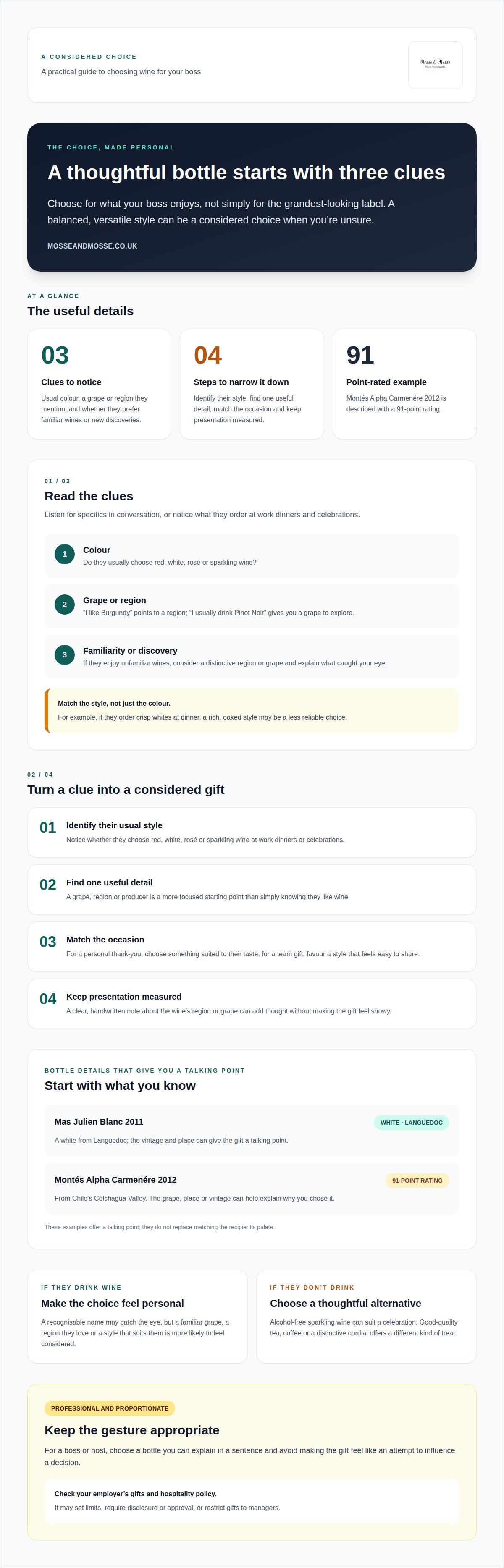
A thoughtful wine to impress your boss should reflect their preferences, not just look prestigious. Start with three clues: the colour they usually choose, the grape or region they mention, and whether they favour familiar styles or enjoy discovering something new. A bottle that fits those clues feels personal because it shows you’ve paid attention, rather than simply spent more.
Listen for specifics in conversation. “I like Burgundy” points to a region, while “I usually drink Pinot Noir” gives you a grape to explore. If they order crisp whites at dinner, a rich, oaked style may be a less reliable choice. If they enjoy trying unfamiliar wines, choose a distinctive region or grape and add a short note explaining what caught your eye.
Use these steps to narrow the choice:
- Identify their usual style. Notice whether they choose red, white, rosé or sparkling wine at work dinners or celebrations.
- Find one useful detail. A grape, region or producer gives you a more focused starting point than “they like wine”.
- Match the occasion. For a personal thank-you, select something suited to their taste; for a team gift, favour a style that feels easy to share.
- Keep presentation measured. A clear, handwritten note about the wine’s region or grape can add thought without making the gift feel showy.
When you have only a small clue, work from the detail you do know. Mas Julien Blanc 2011 is a white from Languedoc, whilst Montés Alpha Carmenére 2012 comes from Chile’s Colchagua Valley. The latter is described with a 91-point rating. These examples show how a vintage, grape or place can give a gift a talking point; they don’t replace matching the recipient’s palate.
For a boss or host, keep the gesture professional and proportionate. Choose a bottle you can explain in a sentence, such as by its region or grape, and avoid making the gift feel like an attempt to influence a decision. Follow your employer’s gifts and hospitality policy, which may set limits, require disclosure or approval, or restrict gifts to managers.
If your boss doesn’t drink, choose a thoughtful alternative rather than alcohol. Alcohol-free sparkling wine can suit a celebration; good-quality tea, coffee or a distinctive cordial offers a different kind of treat. A short note recognising their preference makes the choice considerate, not an awkward substitute.
Ultimately, the best clue is what they genuinely enjoy. A recognisable name may catch the eye, but a wine that fits their taste, such as a familiar grape or a region they love, is more likely to feel considered.
What is a good bottle of wine to give as a gift?
A good gift bottle combines a clear point of interest with a style the recipient can enjoy. A recognisable producer, a distinctive region or a small-producer Champagne can each make the choice feel considered.
Recognisable wine producers
A familiar producer gives a wine-loving recipient an immediate reference point, but the name shouldn’t be the only reason for choosing it. Look at the region, grape and style as well, then consider whether those details suit the person and the occasion. For example, Larmandier-Bernier “Longitude” Extra Brut is made from 100 per cent Chardonnay, giving the bottle a specific talking point.
Small-producer Champagne offers another route: the gift can introduce a producer or expression the recipient may not already know. Focus on the producer’s identity and the wine’s style, rather than assuming a smaller name automatically means better quality. If your recipient enjoys discovering wines, a short note explaining what drew you to that bottle makes the choice more personal.
Keep the occasion in mind. A bottle for a work milestone might call for a polished, celebratory style, while a thank-you after a shared dinner can reflect a wine or region mentioned during the evening. A recognisable name can make the gift feel special, but a relevant detail makes it feel chosen for them.
Presentation and gift notes
Present the bottle neatly, with a simple gift bag or box that protects the glass and suits the occasion. Add a handwritten note instead of a long tasting description. You could write, “Thank you for your support this year. I chose this Champagne because you mentioned enjoying Chardonnay.”
For a host, keep the message warm and brief: “Thank you for having me to dinner. I hope you enjoy this bottle.” For a boss, use professional wording and avoid overly personal language. Mention the occasion or a genuine reason for your choice, not the bottle’s supposed prestige.
Before buying, consider how the gift will be received. A bottle handed over at a restaurant is easier to manage than elaborate packaging; a gift delivered to an office may benefit from a secure, tidy presentation. If it’s Champagne, make the celebratory purpose clear in your note without suggesting it must be opened immediately.
Think about the recipient’s likely reaction, too. If they enjoy familiar producers, choose a name they recognise and explain why you selected that style. If they prefer discovery, introduce a less familiar Champagne producer with a concise note about its identity or Chardonnay composition. A thoughtful message connects the bottle to the person, making the gift feel intentional rather than generic.
Red, white and rosé wine gift choices
Start with the recipient’s preferred colour, then choose a bottle suited to their taste and the occasion. Examples such as Cahors Malbec, Mâcon-Villages and Whispering Angel show how red, white and rosé can each make a considered gift.
Red wine suits someone who usually chooses reds or enjoys pairing a bottle with dinner. Chateau Lamartine Cahors Malbec and Clos Saint Michel Châteauneuf du Pape offer French regional choices, whilst Mount Edward Pinot Noir comes from Central Otago. Marqués de Murrieta Rioja Reserva is another recognisable example. Use the grape or region as your guide: if they often mention Pinot Noir, Mount Edward gives you a relevant starting point. If they favour wines from France, a Cahors or Châteauneuf du Pape may feel more personal.
A red gift can also reflect the occasion. Choose a familiar region for a professional thank-you, or a distinctive bottle for a celebration where the recipient enjoys discussing wine. Il Bruciato Guado al Tasso is a Tuscan red example. Focus on whether its regional identity connects with what your boss already enjoys, rather than choosing a bottle only for its presentation.
White wine works well for someone who prefers whites or tends to choose them at meals. Mâcon-Villages is a French example, whilst Dog Point Sauvignon Blanc comes from Marlborough, New Zealand. The place name can give your gift a useful point of connection: select Mâcon-Villages if they enjoy French wines, or Dog Point if Marlborough Sauvignon Blanc is already among their favourites. A clear match is more thoughtful than guessing at an unfamiliar style.
Rosé can make a fresh choice for a celebratory occasion or for someone who regularly orders it. Whispering Angel is a recognisable example, available as a boxed bottle or a magnum. Choose the bottle format with the occasion in mind: a standard bottle is easy to present individually, whilst a magnum creates a more prominent centrepiece for a group celebration. Keep the gesture appropriate to your workplace and the recipient.
- Known red preference: use a grape or region they’ve mentioned, such as Pinot Noir or Rioja.
- White-wine drinker: consider whether French Mâcon-Villages or Marlborough Sauvignon Blanc better fits their tastes.
- Rosé enthusiast: choose a boxed bottle for a personal gift or a magnum for a shared celebration.
If you’re uncertain between colours, follow the recipient’s usual choice rather than treating a particular style as universally impressive. A bottle such as Mount Edward Pinot Noir, Dog Point Sauvignon Blanc or Whispering Angel feels considered when its style matches the person receiving it.
What wine and food pairings work well for a business dinner?
For a business dinner, pair the wine with the main ingredients and preparation, not just the dish’s name. Grilled sea bass with lemon calls for a different style from a rich beef stew, even though both might appear on the same menu.
Consider the sauce, seasoning and cooking method. Creamy sauces can make a crisp white such as Chablis feel refreshing, while tomato-based dishes often suit reds with lively acidity, such as Chianti. Grilled or roasted meat can work well with a structured red, while delicate fish may be overwhelmed by heavy tannins. These are starting points, not rigid rules: the balance of the whole plate matters.
For a red-meat course, try a medium-bodied red with roast lamb or beef. Cabernet Sauvignon can stand up to chargrilled flavours, while lighter Pinot Noir can suit roast chicken or duck. For a vegetarian main, consider the ingredients first. Mushroom risotto has savoury depth that can complement Pinot Noir; a dish built around roasted peppers may suit a fruit-forward red.
For fish, poultry or lighter dishes, look towards white wine. Sauvignon Blanc can complement goat’s cheese or a herb-led salad, while Chardonnay can work with roast chicken or a richer fish dish. Preparation matters: lemon, fresh herbs and a light dressing often call for a brighter style, whereas butter or cream can pair comfortably with a fuller-bodied white.
For a mixed menu, choose a versatile style that won’t dominate the first course or feel slight beside the main. Dry rosé can bridge lighter starters and grilled food, while sparkling wine can suit canapés and celebratory toasts. If the menu has several courses, a food-friendly wine with balanced acidity is often more adaptable than an intensely tannic red.
At a restaurant dinner, check the menu before choosing a bottle to bring. If you’re selecting wine for a group, account for guests who avoid alcohol and keep the bottle’s style in step with the meal. A pairing should support conversation, not become the evening’s main event.
- Match weight: pair delicate fish with a lighter wine and rich beef with a more structured red.
- Follow the sauce: cream, lemon, tomato and spice can change which wine suits a dish.
- Allow for variety: choose a flexible style when several courses or preferences are involved.
Planning a bottle around a menu? Get help choosing a wine for your business dinner.
Mosse and Mosse: Red Wine
Mosse and Mosse can help you choose a thoughtful bottle when you’re weighing regional style, occasion and recipient preference. Its curated selection includes red wine, white wine, Champagne and sparkling wines, so you can consider a celebratory bottle or a style better suited to your boss’s taste.
For a red, explore the classic character of Bordeaux or Burgundy; for a lighter direction, consider white wine. Champagne and sparkling wines can suit a professional milestone or dinner invitation. The best fit depends on what your recipient enjoys and how you plan to present the gift.
If you’d like help choosing, contact Mosse and Mosse or visit mosseandmosse.co.uk.
Choose a bottle that opens the right conversation
A bottle can be more than a formal gesture: it can show that you’ve listened, noticed what someone enjoys and chosen with care. Let that personal connection guide your decision, whether you’re marking a work milestone or thanking your boss after a shared dinner. The best choice feels natural to give and easy for the recipient to enjoy.
Choosing wine to impress your boss is less about chasing prestige and more about making a considered match. Mosse and Mosse offers red and white wines, alongside Champagne and sparkling wines, giving you different styles to explore for a thoughtful gift or business occasion.
Ready to find a bottle that suits the person and moment? Contact Mosse and Mosse about choosing wine, and take your next gifting decision forward with confidence.
Frequently Asked Questions
What do you buy someone who loves wine?
Choose something connected to what they already enjoy, such as a grape, region or producer they’ve mentioned. If you know they collect particular bottles, a different vintage from a familiar producer can be a personal choice. For someone who enjoys exploring, select a less familiar region in a style they like. A short note explaining the connection makes the gift feel considered without requiring specialist tasting language.
What wine styles are considered impressive for a business dinner in the UK?
A well-made, food-friendly wine that suits the menu is a sound choice for a UK business dinner. For a formal toast, Champagne is a classic celebratory style; for a meal, consider a restrained red or white that complements the dishes. Check whether the restaurant permits guests to bring wine, and follow workplace gift policies if the bottle is for your boss rather than the table.
Which reputable wine regions and producers offer reliable quality?
Burgundy and Bordeaux are established French regions with diverse styles, from Pinot Noir and Chardonnay to structured blends. Mosse and Mosse’s selection includes Burgundy wines such as Domaine Chanson and Albert Bichot, while Bordeaux offers a broad choice of appellations and producers. A respected name is a useful starting point, not a substitute for considering the vintage, bottle condition and whether the recipient enjoys that style.
What is a good budget for a bottle of wine to give your boss in the UK?
Set a budget that feels proportionate to your relationship, the occasion and your workplace’s gifts policy. A modest thank-you after a routine meeting calls for a different gesture from a team gift marking a major milestone. The recipient’s preferences matter more than stretching your spending: choose a bottle within your limit with a clear reason behind it, and avoid a gift that could feel excessive or create an obligation.
Treat your spending limit as a ceiling, then compare the region, producer and style rather than choosing solely by label design. On a tighter budget, look for a well-chosen regional wine; with more room, consider a recognisable producer or distinctive appellation. At any price point, match the gift to the recipient’s taste and workplace policy. A thoughtful selection needn’t mean spending up to your limit.
Is red, white, sparkling or Champagne the safest choice for a boss?
No colour or style is universally safest; let the recipient’s drinking preferences and workplace context guide you. If you know they avoid alcohol, choose a non-alcoholic gift instead. For a shared celebration, sparkling wine can suit a toast, while a bottle for one person should reflect what they actually enjoy. If their preference is unclear, a non-alcoholic alternative avoids making assumptions.


