
A Christmas party wine list works best as a thoughtful mix, not a search for one “perfect” bottle. When choosing wine for a Christmas party, match the styles to the food and format: sparkling wine suits a stand-up gathering with canapés, while a tasting can offer a balanced mix of red, white and sparkling. For a sit-down meal, let the main dishes guide your choices.
It’s easy to focus on the centrepiece, but party tables often bring together cold meats, salads, cheese, nibbles and different tastes. A few complementary styles give guests options while keeping the wines connected to the food.
Here are practical pairings for festive favourites, a simple way to build a mixed case for varied preferences, and ideas for a Christmas wine theme that makes the gathering sociable and considered.
Key Takeaways
- Start with the food: match lighter wines to seafood and nibbles, and fuller reds to hearty dishes.
- Build a mixed case around different tastes by including red, white and sparkling styles.
- For a stand-up gathering with canapés, make sparkling wine part of the plan.
- Give the party a theme, such as an around-the-world tasting with wines and small dishes inspired by different countries.
- Make a cheese-and-wine gathering more inviting with a varied cheese board and simple pairing ideas for guests to explore.
1. How Do I Choose the Right Food and Wine Pairings?
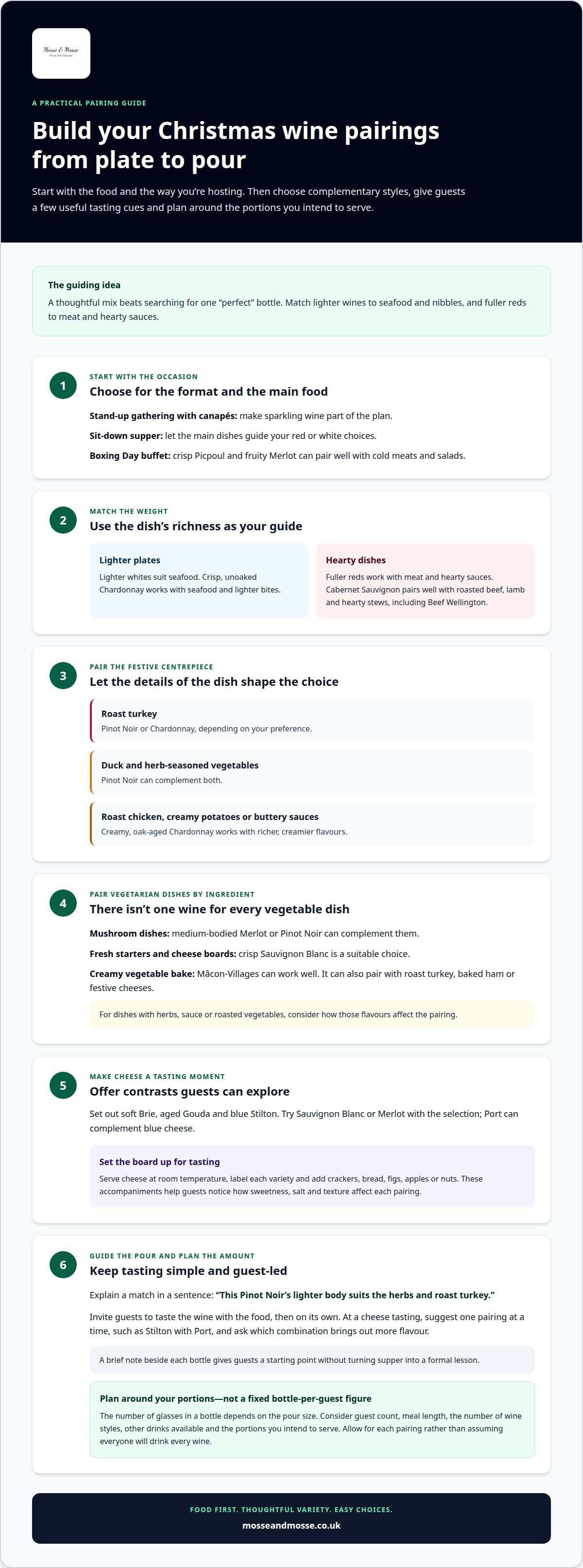
Start with the main food, then consider its weight, richness and seasoning. For a sit-down supper, choose red or white according to the meal: lighter whites suit seafood, while fuller reds work with meat and hearty sauces. For a Boxing Day buffet, crisp Picpoul and fruity Merlot can pair well with cold meats and salads.
Roast turkey can pair with Pinot Noir or Chardonnay, depending on your preference. Pinot Noir also complements duck and herb-seasoned vegetables. Creamy, oak-aged Chardonnay works with roasted chicken, creamy potatoes and buttery sauces; crisp, unoaked Chardonnay suits seafood and lighter bites. Cabernet Sauvignon pairs well with roasted beef, lamb and hearty stews, including Beef Wellington.
For vegetarian dishes, match the wine to the ingredients rather than treating every plate alike. Medium-bodied Merlot or Pinot Noir can complement mushroom dishes, while crisp Sauvignon Blanc suits fresh starters and cheese boards. Mâcon-Villages can work with a creamy vegetable bake, roast turkey, baked ham or festive cheeses. With dishes featuring herbs, sauce or roasted vegetables, consider how those flavours affect the pairing.
Cheese is a chance to explore contrasting pairings. Set out soft Brie, aged Gouda and blue Stilton, then try Sauvignon Blanc or Merlot with the selection. Port can complement blue cheese. Serve cheese at room temperature, label each variety and add crackers, bread, figs, apples or nuts. These accompaniments help guests notice how sweetness, salt and texture affect each pairing.
Explain each match in a sentence: “This Pinot Noir’s lighter body suits the herbs and roast turkey.” Invite guests to taste the wine with the food, then on its own. At a cheese tasting, suggest one pairing at a time, such as Stilton with Port, and ask which combination brings out more flavour. A brief note beside each bottle gives guests a starting point without turning supper into a formal lesson.
The number of glasses in a bottle depends on the pour size, so plan around the portions you intend to serve. To estimate how much to buy, consider the guest count, meal length, number of wine styles and other drinks available. Allow for each pairing rather than assuming everyone will drink every wine.
2. Mixed cases for guests with different preferences
A mixed case gives guests a choice without requiring you to predict one favourite. Build variety around the menu and gathering: include red for guests who prefer it, white for lighter dishes and sparkling for a celebratory pour. Rosé adds another distinct option, while a balance of familiar and less familiar styles gives curious drinkers something new to try. Keep the selection purposeful rather than choosing bottles that all taste alike.
How much wine should you buy per guest? There isn’t one useful bottle-per-guest figure for every Christmas party. Base your estimate on attendance, the event’s length, the food, other drinks and the pour size you plan to serve.
Use the guest list to help plan. Ask invitees to RSVP, setting a deadline two weeks before the party so you can organise food and drinks around confirmed numbers. Include a simple prompt about preferred wine styles and whether guests want non-alcoholic drinks. Their answers give you a practical guide to the selection, rather than relying on assumptions.
Ask about allergies and dietary restrictions before the party, then use the answers to plan the food and suitable drinks. A guest avoiding a particular dish may still enjoy the wine, but make sure there’s an alternative food pairing. Keep short notes with dishes and bottles so guests can make informed choices without repeatedly asking the host.
How should you cater for guests who prefer rosé, alcohol-free wine or other drinks? Offer rosé as a distinct choice and provide non-alcoholic beverages for those who prefer them. Water and soft drinks can sit alongside the wine, giving everyone an appealing option. Include these preferences in your RSVP prompt, then use the responses to guide your quantities and selection.
Keep a bottle of rosé ready for an unexpected guest or a late change in preference. Choose a style that works with several foods rather than one tied to a single dish. If it needs chilling, make space for it before guests arrive. This reserve gives you flexibility without changing the whole selection or opening every bottle at once.
Once you’ve settled the mix, group bottles by style and note which food or moment each suits. Mark a sparkling wine for the arrival toast, for example, and place red, white and rosé near the dishes they complement. A short tasting note can help guests choose independently. Review RSVP answers before buying so the final selection reflects your guests’ preferences and plans.
3. TL;DR, Quick Summary: What is the Quickest Way to Throw a Wine Christmas Party?
Keep the plan simple: choose sparkling wine for arrivals, then offer red and white with the food. For a stand-up party with canapés and nibbles, sparkling is a suitable choice. For a tasting, balance red, white and sparkling styles. This gives guests an easy starting point without requiring a long list of bottles.
For red, think about the weight of the menu. Medium-bodied Merlot or Pinot Noir can suit mushroom and vegetable dishes, while Cabernet Sauvignon works with roasted beef or hearty stews. Choose a style that complements the main food instead of buying several reds with similar profiles. That makes the selection easier to serve and explain.
For white wines, match freshness and texture to the food. Crisp Sauvignon Blanc can accompany fresh starters, while Chardonnay ranges from leaner, unoaked styles to richer, oak-aged examples. Serve lighter whites with seafood, and keep the bottle chilled until pouring. These distinctions make a small selection feel considered.
When buying from a UK supermarket, start with grape style and food pairing before comparing bottles. Sauvignon Blanc, Merlot and sparkling wine offer familiar starting points for a party selection. A bottle’s price depends on its style, origin and producer, so compare like with like rather than judging every wine by the same standard.
Champagne is one type of sparkling wine. Its crisp acidity can suit canapés, seafood and salty snacks, while other sparkling styles can work well for a relaxed toast. If guests are gathering around nibbles, pour sparkling wine on arrival, then serve red or white with the meal.
Plan beyond Christmas Day. For a New Year celebration, keep sparkling wine chilled and ready for the toast, with white wine available for guests who prefer a still option. Handle a bottle carefully when opening if it has travelled to the party, as it may have been shaken on the way.
Use a simple serving sequence: chill the white and sparkling wines, then open the reds for the meal. Set out glasses near each bottle. Red wine is commonly served at room temperature. Add a small card naming each style and its food match, such as “Sauvignon Blanc with fresh starters”.
Choosing wine for a Christmas party is easier when each bottle has a clear role: sparkling for the welcome, then red and white with the meal. This keeps the selection purposeful and gives guests a simple guide, whether they want a glass with canapés, supper or the New Year toast.
4. Choosing a Christmas party wine theme
A clear theme makes the wine selection part of the occasion, not just another drinks table. Start with an idea that suits your guests and menu, then let each bottle, dish and tasting note support it. A Christmas gathering could focus on festive cheeses, wines from one country or a journey through contrasting regions. The best theme is easy to explain and gives guests a simple way to join in.
For an around-the-world evening, invite each guest to bring a wine and small dish from a chosen country. A French bottle might sit beside a French-inspired bite, while an Italian selection could include its own regional food. Ask guests to share their country in advance so the table has variety rather than several similar choices. Put a small card beside each pairing with the country and one detail to look for.
A cheese-and-wine tasting makes a relaxed, hands-on theme. Choose cheeses with different textures and flavours, such as Brie, aged Gouda and Stilton, then set out wines selected to complement them. Add bread, crackers, apples, figs or nuts, and label each cheese clearly. Guests can compare a pairing, swap to another combination, and notice how saltiness, creaminess or sweetness changes the experience.
For a focused tasting, choose a grape or region as the evening’s theme. Offer contrasting styles, such as crisp and richer whites or lighter and fuller reds. Arrange the bottles in a clear tasting order, moving from fresher styles towards more structured ones. A short note beside each glass can introduce its grape, region and suggested food match without overwhelming guests with technical detail.
Make the theme visible through the room as well as the menu. A map can help guests follow an around-the-world tasting, while labelled boards can organise a cheese theme. Keep the wine and food pairings together, and leave space for guests to move between them. If you’re planning a themed party, discuss your wine selection to help shape a fitting line-up.
Choose one theme first, then select wines and food that reinforce it. Whether guests explore countries, regions or cheese pairings, clear labels and conversation prompts make the tasting welcoming and purposeful.
Mosse and Mosse: Red Wine
Mosse and Mosse can help you choose wines to suit your Christmas party menu and guests. Explore crisp whites for lighter dishes or Champagne and sparkling wines for a festive welcome as you build your selection.
Turn to Mosse and Mosse for personal guidance on matching wine to your gathering, rather than choosing bottles without a pairing in mind. Share the food and atmosphere you’re planning, then consider which styles will complement them and give guests an enjoyable choice.
For advice on choosing wines for your celebration, contact Mosse and Mosse or visit mosseandmosse.co.uk.
Make your Christmas gathering your own
Choosing wine for a Christmas party can help shape the occasion, rather than being just another item on the planning list. Think about the atmosphere you want guests to remember: a relaxed table, a lively arrival toast or a tasting that gets everyone talking. A personal touch, such as inviting guests to choose a favourite pairing, can make the wine feel part of the celebration.
Mosse and Mosse offers red wine, white wine, Champagne and sparkling wines to help you build a selection around your plans. If you’re balancing different tastes or looking for a bottle for a particular moment, thoughtful guidance can help you choose with confidence.
Share the kind of gathering you’re planning and explore a selection that feels right for it. Contact Mosse and Mosse to discuss your Christmas party wine choices, and enjoy putting your own festive touch on the occasion.
Frequently Asked Questions
How Do I Choose the Right Food and Wine Pairings?
Start with the strongest flavour on the plate, such as rich gravy, sharp cranberry sauce or fragrant herbs. Match the wine’s weight to that flavour, then consider how the food is cooked. A roast with crisp, savoury skin may call for a different pairing from the same meat served with creamy sauce. For a party menu with several dishes, prioritise the main course and choose a versatile wine for the sides.
What is the Quickest Way to Throw a Wine Christmas Party?
Choose a simple serving order: offer sparkling wine as guests arrive, then serve red and white with the food. Keep the selection manageable by giving each bottle a clear purpose, such as a welcome drink, a roast pairing or a lighter option. Place bottles where guests can find them, with a short note naming the style and suggested moment. This gives the evening structure without elaborate preparation.
Which wines are crowd-pleasers for a Christmas party?
A crowd-pleasing selection offers contrasting styles rather than several similar bottles. Consider dry sparkling wine for a toast, fresh white for lighter dishes and fruit-forward red for guests who prefer softer flavours. Rosé adds another option for those wanting something different from red or white. Keep water and non-alcoholic drinks available too, so the drinks table suits varied preferences.
What red wines pair well with traditional Christmas dinner?
For roast turkey, choose a red with enough freshness to complement the meat and accompanying dishes. Pinot Noir is a useful option for a lighter-bodied red, while a fuller, more structured style can suit beef or lamb. Consider the whole plate, including gravy, stuffing and cranberry sauce, since these can shift the balance. Serve red with the main course rather than opening every bottle at once.
What white wines pair well with Christmas party food?
Choose white wine to suit the dish’s texture and seasoning. A crisp, unoaked style can pair with seafood, fresh starters and lighter bites, while richer, oak-aged Chardonnay can complement buttery sauces or creamy sides. For a buffet, fresh white offers an adaptable choice across salads and cold dishes. Chill the bottle before serving, then bring it out with the food it’s intended to complement.
Which sparkling wines are good for a Christmas celebration?
Champagne is a classic celebratory choice, and its crisp acidity works well with canapés, seafood and salty snacks. Other sparkling wines can also suit an arrival drink or festive toast. Choose a drier style for savoury nibbles, then consider sweeter sparkling wine with Christmas pudding. Open the bottle carefully, especially if it has travelled to the party, and serve it chilled in suitable glassware.


