

The palest bottle isn’t automatically the best rosé wine for summer: colour alone doesn’t reveal quality or sweetness. Rosé is usually made to be enjoyed young, so a recent vintage can help retain fresh fruit aromas. Choose a style that suits your food and occasion, rather than paying more simply for a familiar label.
It’s understandable to want good value without choosing a bottle that feels like a compromise. A fresh, lively rosé can work as an aperitif and alongside summer food. The best match depends on the wine’s character and what you’re serving.
Here, you’ll find practical ways to choose an affordable bottle, serve it so its aromas stay bright, and pair it with easy favourites, from aperitifs to grilled food. We’ll focus on the details that make a difference at the table, including what to look for on the label and how to match the wine’s freshness and flavour to the meal.
Key Takeaways
- Choose a recent vintage to enjoy rosé while its fresh, aromatic character is at its best.
- Look beyond the wine’s colour: use the region, vintage and style to guide your choice.
- Match a crisp, lively rosé with aperitifs, salads or grilled food for an easy summer spread.
- Compare bottles by style and value, not just by familiar labels or special-offer wording.
- Use the food you’re serving to narrow down your choice, especially when dishes are spicy or richly flavoured.
1. Drinking rosé while its aromas are fresh
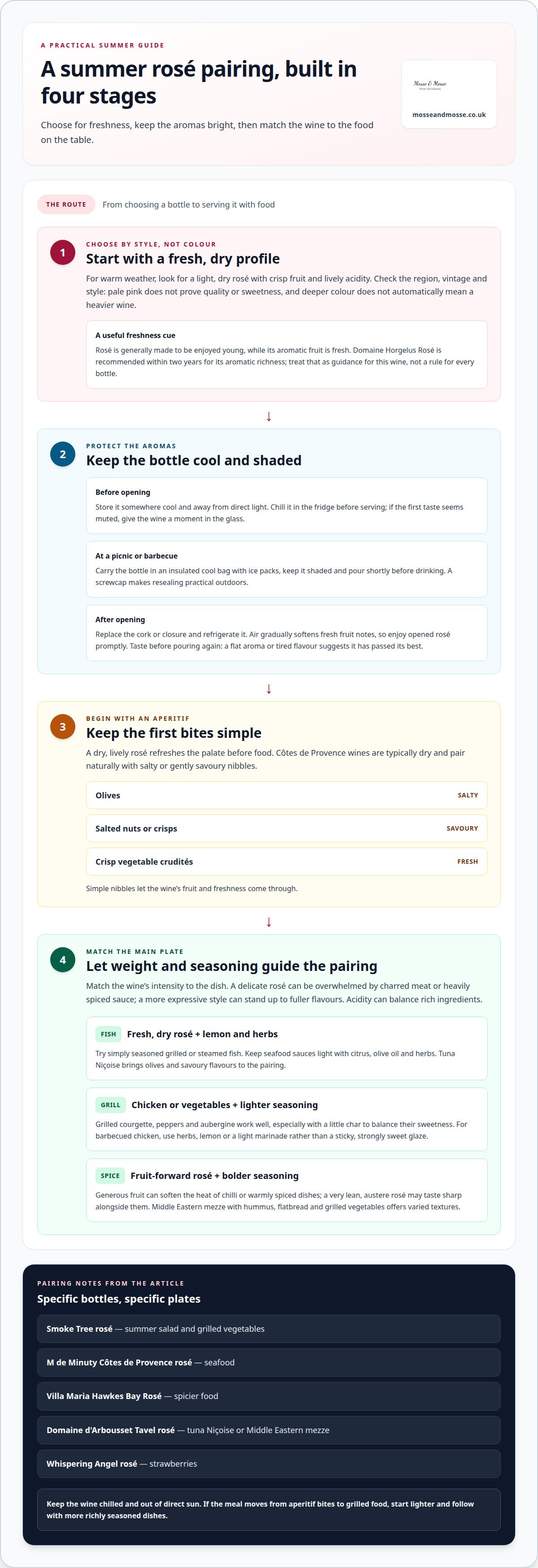
For warm weather, look for a light, dry style with crisp fruit and lively acidity. Provence rosé is a familiar example, but colour alone doesn’t indicate quality or sweetness. Check the region and vintage, and choose a wine described as dry if you want a refreshing aperitif. Pale pink can be elegant, while deeper colour doesn’t automatically mean a heavier wine.
Rosé is generally made to be enjoyed young, while its aromatic fruit is fresh. Choose a recent vintage rather than holding the bottle back for a special occasion. Domaine Horgelus Rosé is recommended for drinking within two years to appreciate its aromatic richness. Treat that as a guide, not a rule for every bottle.
Store an unopened bottle somewhere cool and away from direct light, as heat and sunlight can dull delicate aromas. Before serving, chill it in the fridge and pour a small taste. If the wine seems muted, give it a moment in the glass. Don’t leave the bottle in a sunny picnic spot or beside a warm barbecue.
After opening, replace the cork or closure and refrigerate the bottle. Air gradually softens fresh fruit notes, so enjoy opened rosé promptly rather than saving it for another occasion. How long it stays fresh depends on the wine and how much air has entered the bottle. Taste it before pouring another glass: a flat aroma or tired flavour suggests it has passed its best.
For a picnic, carry rosé in an insulated cool bag with ice packs and keep it shaded until serving. A screwcap is practical outdoors because you can reseal the bottle without a corkscrew. Pour into clean cups or glasses shortly before drinking, then return the bottle to the cool bag. This helps preserve freshness during a sunny afternoon in the park.
The IWSC National Drinks Retail Awards recognise drinks retailers, not the quality of every bottle they sell. Treat an award as one signal about the retailer, then judge the rosé by its vintage, origin and style. A recent Provence vintage, for example, may suit someone looking for a crisp, dry glass, while a richer style may work better with food.
The Chosen Vine Rosé is a French 2025 vintage made from Grenache and Cinsault, and is marked vegan and vegetarian. Vegan status and organic certification are different: for an organic choice, look for the certification on the bottle or product description. Serve either style chilled, and choose according to the freshness and flavour profile you enjoy.
2. Rosé pairings for aperitifs and grilled food
For an aperitif, choose a dry, lively rosé that refreshes the palate before food. Côtes de Provence wines are typically dry and pair naturally with olives, salted nuts and crisp vegetable crudités. Keep the nibbles simple: salty or gently savoury flavours let the wine’s fruit and freshness come through.
For rosé and food pairing, consider the dish’s weight, seasoning and cooking method together. A delicate wine can be overwhelmed by charred meat or a heavily spiced sauce, while a more expressive rosé can stand up to fuller flavours. Match the wine’s intensity to the plate, then consider whether its acidity will balance rich ingredients.
With grilled fish, try a fresh, dry rosé alongside simply seasoned fillets, lemon and herbs. The same approach suits steamed fish, chicken and summer salads. Keep seafood sauces light: citrus, olive oil and herbs complement the wine without masking its fruit. Tuna Niçoise brings olives and savoury flavours to the pairing.
Grilled vegetables pair well with rosé, especially when their sweetness is balanced by a little char. Try courgette, peppers and aubergine alongside a summer salad. For barbecued chicken, use herbs, lemon or a light marinade rather than a sticky, strongly sweet glaze. This lets both the grilled flavours and the wine shine.
Spicier food calls for a different balance. A rosé with generous fruit can soften the heat of chilli or warmly spiced dishes, while a very lean, austere wine may taste sharp alongside them. Middle Eastern mezze makes a useful spread: hummus, flatbread and grilled vegetables offer varied textures, while tuna salad is a more substantial option.
Use these practical pairings to plan a relaxed outdoor meal:
- Before dinner: pour dry rosé with olives, crisps or vegetable crudités.
- From the grill: serve fish or chicken with lemon, herbs and a lightly dressed salad.
- For a meat-free plate: pair grilled vegetables with a salad and olive oil.
- For bolder seasoning: choose fruit-forward rosé with chilli-spiced food or mezze.
Serve the wine chilled, but keep it out of direct sun during an outdoor lunch. If the menu moves from aperitifs to grilled food, start with lighter bites and follow with more richly seasoned dishes. This progression lets the rosé fit the meal without asking one style to suit every plate.
Smoke Tree rosé is recommended with summer salad and grilled vegetables, while M de Minuty Côtes de Provence rosé is recommended with seafood. Villa Maria Hawkes Bay Rosé is suggested for spicier food, and Domaine d'Arbousset Tavel rosé is recommended with tuna Niçoise or Middle Eastern mezze.
Whispering Angel rosé is recommended with strawberries.
3. Rosé wine prices and sale offers
On the UK market, rosé typically ranges from £11 to £23 a bottle, with a median of about £18. That gives a useful budgeting guide, not a rule that higher prices guarantee better wine. For an aperitif or casual barbecue, start by deciding what style you want, then compare bottles within a comfortable spend.
How much should you spend on a good bottle of rosé in the UK? The typical market range is £11 to £23, with a median of about £18. A good choice is one that suits your taste and meal, rather than the most expensive bottle on the shelf.
A wine’s price reflects more than the name Provence. Region, grape variety, vintage and production choices shape its character, while retailer pricing and promotions affect the shelf price. A pale colour or prestigious-sounding label doesn’t prove quality. Read the back label for origin and style, then compare those details with what you want in the glass.
A sale can make a bottle look appealing, but check the terms before choosing. Some promotions apply only when buying several bottles, while others reduce the price of one bottle. Compare the quantity you’ll use and whether the wine suits your menu. A multi-bottle offer isn’t a saving if you don’t want the extra bottles.
Retailers present discounts in different ways, so compare the final cost per bottle rather than focusing on a headline saving. Check the bottle size too, since offers are comparable only when the format is the same. If buying a case, consider whether you’ll serve the rosé across several meals and occasions. Buying more than you can enjoy while it’s fresh may undermine the apparent value.
Use this quick comparison when browsing UK wine retailers:
- Set your budget: use the market range as context, then choose a limit that feels comfortable.
- Compare like with like: check bottle size, vintage, origin and whether the wine is dry or fruit-forward.
- Read offer terms: note any minimum quantity and calculate the final cost per bottle.
- Match the occasion: choose a lighter, refreshing style for aperitifs or a more expressive rosé for grilled food.
When choosing Provence rosé, weigh the region’s appeal against your preferences and the food you’ll serve. A less familiar region can also be worth exploring, so don’t let a recognisable label decide for you. Whether you buy one bottle or several, good value means choosing a wine you’ll enjoy drinking.
4. Affordable summer rosé recommendations
The strongest affordable shortlist starts with style, not a famous label. For a crisp aperitif, consider dry rosé from Côtes de Provence; for more structure, explore a rosé from Bandol. These French regions are useful starting points, but the vintage and producer still shape the wine. To find the best rosé wine for summer, decide first whether you want a light glass for sipping or a fuller style for food.
For a premium summer choice in the UK, consider dry Côtes de Provence for freshness or Bandol for a more expressive wine with food. Choose by flavour and occasion, rather than assuming that a château name or higher shelf position guarantees a better bottle.
Check the vintage, appellation and grape varieties, then decide whether you prefer delicate red-fruit notes or fuller flavours. Grenache and Cinsault are useful grape names to recognise on French rosé labels; some wines use both.
The best rosé wine for summer in the UK could be a recent-vintage French rosé, such as Côtes de Provence, or a bottle from another region. Choose a dry or fruit-forward style to suit your menu, and compare label details rather than colour alone.
For a more distinctive bottle, consider Domaine de Triennes Rosé, the 2024 vintage. Its named estate and vintage make it easy to identify when comparing options; serve it with grilled food or keep it for a meal where the wine can take centre stage. A recent vintage also suits rosé’s fresh, aromatic character.
For an English summer rosé, choose a recent-vintage bottle labelled dry for a crisp aperitif, or a fruitier style to go with grilled food. Compare grape details and tasting descriptions, then match the bottle to your meal. Your preference for subtle or pronounced fruit can guide your choice.
Build a varied shortlist by choosing a bottle for each occasion, rather than buying several similar styles. For example, pair a dry Provence rosé with olives and light starters, then serve a more structured Bandol rosé with grilled vegetables or chicken. Set a budget and compare vintages before deciding.
Use these checks before buying:
- For a light aperitif: seek dry, fresh rosé, with Côtes de Provence as a regional starting point.
- For barbecue food: choose a more expressive style, such as Bandol.
- For English wine: compare vintage, grape information and dry or fruit-forward descriptions.
Mosse and Mosse: Red Wine
Mosse and Mosse can help you explore wines beyond rosé for summer drinks. Browse its white wines for a crisp alternative, or consider Champagne and sparkling wines for a celebratory aperitif. Choosing by occasion and food helps you find a bottle that fits the table, whether you’re hosting a barbecue or gathering for a relaxed lunch.
Use this guidance to narrow down the style you enjoy, then explore alternatives alongside your food plans. For a personal recommendation, contact Mosse and Mosse.
Make your summer table your own
A summer gathering needn’t revolve around one bottle or style. Let the meal set the direction: a rosé that suits a garden lunch can give way to another wine as the evening unfolds. The best rosé wine for summer is the one you’ll enjoy sharing, chosen to suit the food and atmosphere.
Mosse and Mosse also offers red wine, white wine, and Champagne and sparkling wines, giving you options for different courses and occasions. If you’re planning a meal and would like to explore a suitable selection, contact Mosse and Mosse. Bring your menu or the kind of flavours you enjoy, and take the next step towards a summer table that feels thoughtfully put together.
Frequently Asked Questions
How to choose a good rosé wine at a low price?
Compare bottles within the same broad style, then choose by producer, origin and the flavours you enjoy. A retailer’s tasting notes can help distinguish crisp citrus and red berries from rounder, riper fruit. Check whether the wine is dry if that matters to you, and look for a recent vintage. Buying one bottle to try before settling on a favourite is a practical way to avoid spending on a style that doesn’t suit your palate.
Which rosé wines pair well with summer food and barbecues?
Choose rosé to suit the seasoning as well as the main ingredient. Les Pins Couches Rosé is suggested with steamed or grilled fish, chicken and summer salads. For a spicier barbecue, consider Villa Maria Hawkes Bay Rosé. Tavel rosé also works with tuna Niçoise or Middle Eastern mezze, offering a more substantial option for a table with varied dishes.
What is the ideal serving temperature for rosé wine?
Serve rosé well chilled, but not so cold that its aromas and flavour seem muted. Take the bottle from the fridge shortly before pouring, then let the glass warm naturally as you drink. Outdoors, keep the bottle shaded in a cool bag and pour small amounts at a time. This helps preserve freshness without leaving the wine in the sun or beside a warm barbecue.
Which rosé wines are vegan or organic and widely available in the UK?
The Chosen Vine Rosé is marked vegan and vegetarian. For an organic option, check the bottle or product description for certification.


