
The best way of avoiding disappointment when buying wine online is to compare the details, not just the bottle’s name or label. Check the grape variety, appellation, vintage, wine type and tasting notes before choosing. These clues help you decide whether the wine’s style is likely to suit you.
It’s easy to feel uncertain when a photograph and a few tasting notes are all you have to go on. A familiar grape can taste quite different depending on where it was grown and how the wine was made. The vintage matters too, because it identifies the particular year in the bottle.
This guide shows you how to read those details, find approachable red, white and rosé styles, and match a bottle to your taste, food and occasion. You’ll also learn what to look for in delivery information and how to get useful advice from a wine merchant. With a little care, online browsing can become a more confident way to discover wines you’ll genuinely enjoy.
Key Takeaways
- Compare the grape, appellation, vintage, wine type and tasting notes to understand what’s in the bottle.
- Use descriptions of body, acidity, tannins and flavour to find approachable reds, whites and rosés.
- Match the wine’s style to your preferences, the food and the occasion before you order.
- Read delivery details and reviews, and ask a wine merchant for guidance when a label or style feels unfamiliar.
- Explore a curated selection of red, white, rosé and sparkling wines to find bottles that suit your plans.
1. Checking wine details such as grape variety, appellation and vintage
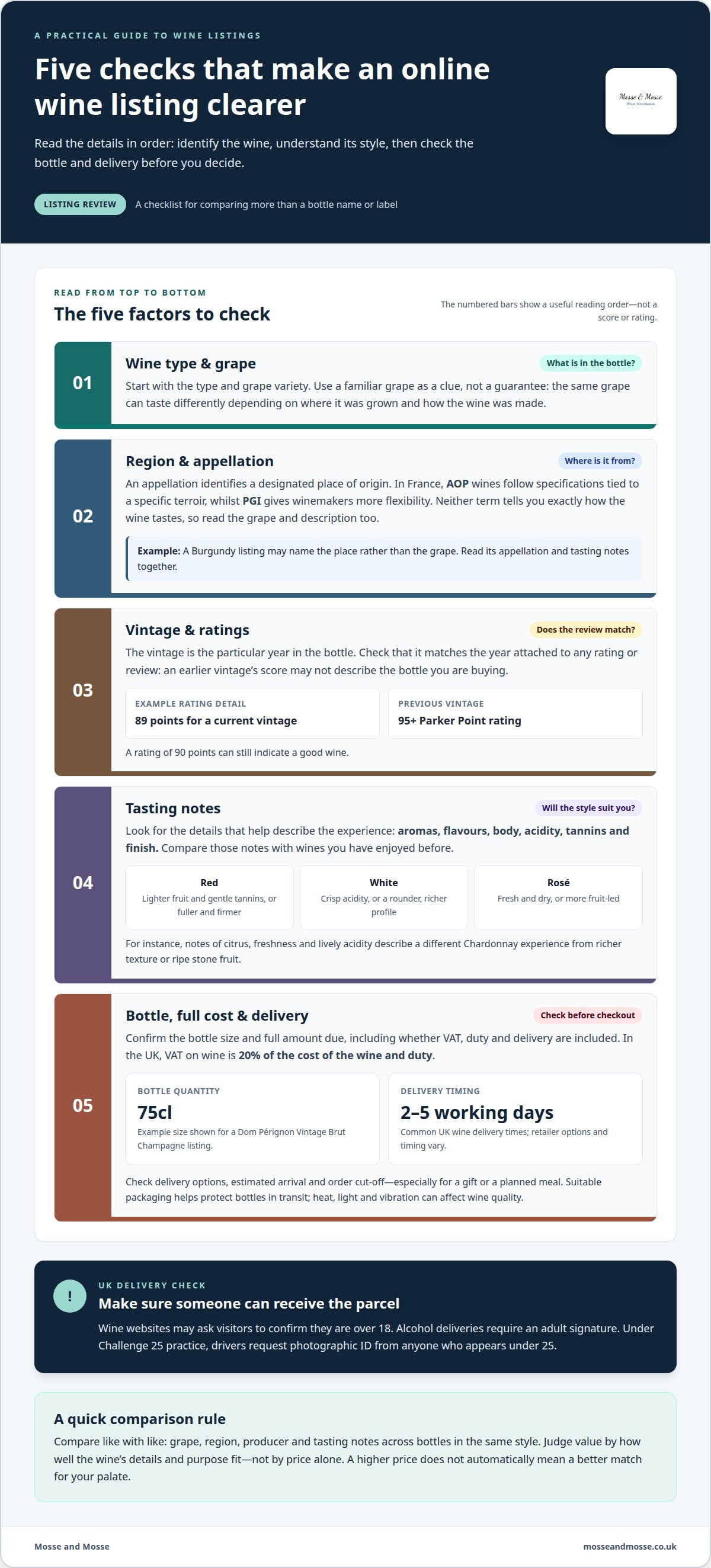
Start with the wine type, grape variety, region and vintage, then compare these details with your preferences. A Burgundy label might name the place rather than the grape, so read the appellation and tasting notes together. These give you more useful clues than a familiar-sounding name alone. If the listing leaves you unsure about the style, note what information you need before deciding.
An appellation describes a wine’s designated place of origin. In France, AOP identifies wines governed by specifications tied to a specific terroir, whilst PGI allows winemakers more flexibility. These terms give context, but don’t tell you exactly how a wine will taste. Check the grape variety and description as well. For example, the Domaine Tariquet Premières Grives listing describes a wine made from 100% Gros Manseng grapes.
Check that the vintage on the product page matches any rating or review quoted beside it. A score for an earlier year may not describe the bottle you’re buying: one example contrasts 89 points for a current vintage with a 95+ Parker Point rating for a previous vintage. A rating of 90 points can still indicate a good wine. Read tasting notes for aromas, flavours, body, acidity, tannins and finish, then compare them with styles you enjoy.
Review the bottle size and the full amount due at checkout. A Dom Pérignon Vintage Brut Champagne listing, for example, specifies a 75cl bottle, making the quantity clear. In the UK, VAT on wine is 20% of the cost of the wine and duty. Check whether the displayed price includes those charges and delivery, rather than comparing headline prices alone.
Delivery details matter, especially for a gift or a wine planned for a meal. Check the delivery options, estimated arrival and order cut-off point before paying. UK wine deliveries commonly take two to five working days, and named-day options may suit time-sensitive orders. The actual options and timing depend on the retailer’s terms. Check the packaging information too: suitable packing helps protect bottles in transit, whilst heat, light and vibration can affect wine quality.
UK wine websites may ask visitors to confirm they are over 18. Alcohol deliveries require an adult signature. Under Challenge 25 practice, drivers request photographic ID from anyone who appears under 25. Check that someone can receive the parcel and provide ID if requested. If you’re buying several bottles, compare the order details with the delivery confirmation, then inspect the bottles and packaging when they arrive.
2. Choosing approachable red, white and rosé wines
Start with a style you already enjoy, then explore a nearby variation. For red wine, check whether the description suggests lighter fruit and gentle tannins or a fuller, firmer structure. If you prefer smooth reds, don’t choose by grape name alone: look for notes describing softer tannins and ripe fruit. For white wine, decide whether you like crisp acidity or a rounder, richer profile. Rosé descriptions can distinguish fresh, dry styles from fruitier examples.
Use familiar grapes as signposts, not guarantees. Chardonnay, for example, can express itself differently depending on the region and producer. A listing mentioning citrus, freshness and lively acidity points to a different experience from one describing richer texture or ripe stone fruit. Compare the notes with a white wine you’ve enjoyed before. Use the same approach with reds and rosés: identify a flavour or texture you like, then look for it in the description.
Judge value by a wine’s details and purpose, not price alone. Compare grape variety, region, producer and tasting notes across bottles in the same style. A higher price doesn’t automatically mean a better match for your palate, and a lower price doesn’t make a bottle poor value. Consider the occasion: a dependable, easy-drinking choice may suit a relaxed supper, while a distinctive region or producer could make a more memorable gift.
Build a mixed case around individual preferences rather than treating it as a single purchase. Read each bottle’s description and choose a balance of red, white and rosé styles people will actually enjoy. For a group, include familiar flavours alongside a less familiar producer or region. For your own case, note which bottles you’d happily buy again. That simple record makes your next selection more personal and helps you avoid repeating styles that didn’t suit you.
A themed collection can introduce wines selected around a region, grape or producer. A Burgundy selection, for instance, lets you explore the character of a recognised wine region, while a collection built around Chardonnay lets you compare different expressions of one grape. Look at what connects the bottles and what varies between them. The right fit depends on whether you want a consistent style or a tasting experience that reveals contrasts.
If the descriptions still leave you undecided, ask a wine merchant to suggest approachable options based on a bottle you already like. Explain whether you prefer lighter or fuller reds, crisp or rounded whites, and dry or fruit-led rosé. These clear preferences give the merchant a practical starting point and help narrow a broad selection to wines suited to your taste.
3. Finding wines that suit personal taste and the occasion
Start with the occasion, then narrow the selection by taste. For a Sunday lunch, consider the food and whether red, white or rosé will complement it. A crisp white may suit lighter dishes, while a fuller red may work better with richer flavours. For a celebration, sparkling wine creates a different feel from still wine. These are starting points, not fixed rules: the best pairing also depends on the dish’s seasoning, sauce and intensity.
Write down two wines you’ve enjoyed and what appealed to you. Perhaps one had bright acidity, while another offered ripe fruit and a soft finish. Use those details to guide your search across regions and producers. If you enjoy a particular grape, compare examples from different places rather than assuming every bottle tastes alike. Online descriptions can help you spot familiar flavour profiles, but pay more attention to the words than the photograph.
Buying for someone else calls for a different approach. Think about what the recipient drinks, what they’ll eat and whether the wine is for immediate enjoyment or a special occasion. A connoisseur may appreciate a bottle from a region they haven’t explored, while a casual drinker might enjoy a familiar style with an interesting story. If you know they favour Champagne, choosing sparkling wine is a more grounded decision than selecting an unfamiliar red.
Check the retailer’s wine categories before choosing a style. Browse red, white, rosé and sparkling wines, then use filters for region, grape or producer where available. This helps you compare genuine alternatives rather than unrelated bottles. If the recipient likes sparkling wine, compare its style and tasting notes with other sparkling options, not still white wine. For dinner, compare wines suited to the same dish and serving moment.
Compare each candidate using the same details: region, grape variety, vintage, tasting description and bottle format. Then consider how well it suits the occasion and the person drinking it. A familiar region may feel reassuring, but a less familiar producer could offer a worthwhile discovery if the flavour profile fits. Note what you chose and why. After tasting, record whether the wine’s acidity, fruit and structure matched your expectations. This gives your next online search a personal reference point, instead of leaving the choice to packaging or a general score.
4. Getting advice from a wine merchant or vineyard
A focused question helps a merchant recommend a wine that suits your palate. Rather than asking for “a good red”, describe a bottle you enjoyed and what stood out. You might prefer soft tannins, ripe fruit or a lighter body. Mention the meal or occasion, too. “A smooth red for Sunday lunch” gives a clearer starting point than a broad request. If you’re considering an unfamiliar region, ask how its wines compare with styles you already know.
Useful advice explains why a wine might suit you. Ask what makes it a match: the grape variety, producer, region or tasting profile. If a merchant recommends Burgundy to someone who enjoys Chardonnay, ask about the wine’s body and acidity, not just its reputation. A producer’s description can provide context about its wines and growing conditions. Use that perspective alongside your preferences and the occasion.
Build a relationship by sharing what you thought after tasting a recommendation. Tell the merchant whether the wine felt too tannic, too rich or just right. Those details make future suggestions more relevant than simply saying you liked it. Keep a note of producers and regions you’ve enjoyed, then refer to it next time. Returning to the same merchant can help develop a useful conversation over time, grounded in actual bottles rather than general preferences.
Assess an online retailer through practical evidence. Read its delivery and returns terms, check that product descriptions identify wines clearly, and look for customer reviews covering both the bottles and delivery. Reviews can reveal patterns, but read them critically: a comment about a delayed parcel doesn’t necessarily say anything about wine quality. Check whether the retailer explains what happens if a bottle arrives damaged or has a fault. Clear processes help you understand how problems are handled.
Mixed cases deserve particular scrutiny. A customer ordering a mixed case of 12 wines may receive a missing bottle or a different vintage, so compare the delivered bottles with the order confirmation. If anything differs, contact the merchant promptly and explain the discrepancy. A responsible merchant should address missing bottles and help find substitutes or another satisfactory resolution. Specialist wine shops may bring focused expertise and quality control, whilst reviews can help you assess their delivery track record. Look for clear answers, consistent product details and advice that reflects what you actually enjoy.
Mosse and Mosse: Red Wine
Mosse and Mosse can help you turn your tasting preferences and occasion into a more considered wine choice. If you’re exploring Burgundy or Bordeaux, or deciding between white wine and Champagne, start with the styles and details that appeal to you. Product descriptions help you compare bottles, while a personal conversation can narrow the choice around flavours you enjoy and the meal or celebration you have in mind.
Choose a familiar style for relaxed drinking, or explore a less familiar region when you want to discover something new. Mosse and Mosse offers white wine and Champagne and sparkling wines for different tables and occasions. Share what you like, what you’re serving and who will be drinking it to help guide your choice.
For a personal recommendation, contact Mosse and Mosse or visit mosseandmosse.co.uk.
Make your next bottle a confident choice
Let your palate, rather than a label’s reputation, guide your next purchase. A little curiosity can make avoiding disappointment when buying wine online feel less like guesswork: explore a new region or producer while keeping the style you enjoy in mind. That way, discovery stays personal, and each bottle gives you a fresh point of comparison.
Mosse and Mosse offers red wine, white wine, and Champagne and sparkling wines for different tastes and occasions. If you’re choosing a bottle for a meal, a gift or a celebration, sharing what you enjoy can help narrow your options. Discovering a wine that feels right for the moment can be a pleasure, whether it’s familiar or entirely new.
Contact Mosse and Mosse for wine advice, and take your next step towards a bottle you’ll look forward to opening.
Frequently Asked Questions
How can I be sure of the quality of wine bought online?
A practical way of avoiding disappointment when buying wine online is to assess several details together, rather than rely on one score or photograph. Look for a clear producer, region, vintage and bottle format, then read tasting notes for clues about the style. Reviews can help you assess delivery and service, while storage information can show how the wine is handled. Keep your order confirmation so you can compare it with what arrives.
Can I return a bottle if I don’t like it?
You may be able to return an unopened bottle under the retailer’s terms and applicable withdrawal conditions. Wine returns can have conditions because wine is a food product, and bottles generally need to remain unopened and in their original condition. Read the returns policy before ordering, especially if buying several bottles. Keep the packaging and order confirmation until you’ve decided whether to keep the wine.
Can I return wine if I simply don’t like it?
A retailer is less likely to accept a return because you dislike the wine than because it is faulty or damaged. Taste is personal, so a bottle that doesn’t suit you isn’t automatically defective. Read the seller’s returns terms before buying, and avoid opening more bottles from the same order until you decide whether to raise a concern. For future choices, note the wine’s style and what didn’t suit you.
What happens if my wine arrives damaged?
Photograph a damaged bottle and its packaging as soon as you notice the problem, then contact the retailer promptly with your order details. Keep the packaging and affected bottles until the seller responds. Explain whether the bottle is broken, leaking or otherwise damaged, and ask what resolution is available. If a bottle appears faulty rather than physically damaged, describe the issue clearly, such as suspected cork taint.
How do I choose wine online to match my taste and occasion?
Start with a wine you already enjoy, then identify the qualities you want in your next choice. For example, if you like a fresh, lively white with seafood, look for similar descriptions for a summer lunch. For a host’s dinner, consider the main dish and ask what styles they prefer. For an adventurous drinker, a gift from an unfamiliar region in a style they already enjoy could be a good fit.
How do I read wine descriptions, tasting notes and ratings when buying online?
Translate tasting-note language into familiar preferences. “Bright acidity” suggests freshness, while references to firm tannins point to a more structured red. Notes about fruit, body and finish help you picture the wine beyond its label. Treat ratings as one person’s opinion, not a promise that you’ll enjoy the bottle. Check that a quoted score refers to the exact vintage being sold, then weigh it against the description and your own tastes.


