
A wine’s sense of place is more than the soil beneath the vines. That is what terroir in wine means: the combined influence of a place’s soil, climate, topography and biodiversity, alongside the knowledge and traditions of those who work the land. Together, these factors can shape a wine’s character, though they don’t dictate its flavour on their own.
It’s easy to credit a wine’s taste to its climate or imagine that “mineral” notes come directly from the ground. The reality is more interesting: climate is one part of terroir, alongside a vineyard’s wider setting and the choices made in the vineyard and winery.
Here, you’ll learn how terroir differs from climate and how warmth, rainfall, slope and soil can influence acidity, body and fruit character. We’ll also look at winemaking, so you can better recognise a wine’s regional identity in the glass.
Key Takeaways
- Look beyond climate: a vineyard’s soils, landscape and living environment all contribute to its sense of place.
- Notice how warmth and cooler conditions can shape a wine’s fruit, body and acidity.
- Separate a region’s enduring character from the differences a particular vintage and winemaking choices bring.
- Compare the same grape from different regions to explore how place can influence what you taste.
- Pay attention to a wine’s regional identity, not just individual flavour notes, when tasting.
What is the difference between the climate and terroir?
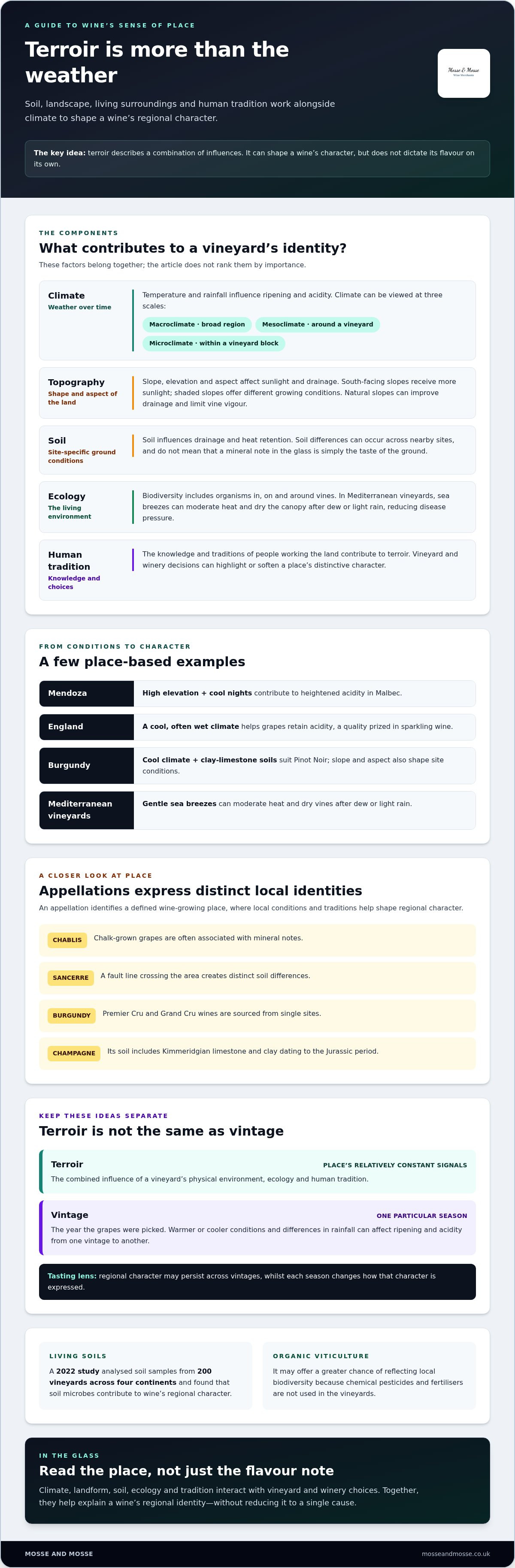
Climate describes weather patterns over time; terroir brings those patterns together with a vineyard’s geography, ecology and human tradition. Comparing Mendoza, Burgundy and England shows how these influences create distinct growing conditions and character.
Vineyard climate and surrounding conditions
Vineyard conditions include long-term climate, local landforms and the living environment around the vines. They matter because they influence how grapes ripen, retain acidity and develop character before reaching the winery.
Climate can be considered at different scales: macroclimate across a broad region, mesoclimate around a vineyard and microclimate within a vineyard block. In Mendoza, high elevation and cool nights contribute to heightened acidity in Malbec. England’s cool, often wet climate also helps grapes retain acidity, a quality prized in sparkling wine.
Ecology adds another layer. In Mediterranean vineyards, gentle sea breezes can moderate heat and dry the canopy after dew or light rain, reducing disease pressure. Breezes affect vine conditions, while temperature and rainfall influence ripening. Together, these factors help explain why wines from different places can feel distinct.
Climate, terrain and terroir
Climate means the prevailing weather; terrain describes the physical land, including slope and elevation; terroir encompasses these alongside soil, ecology and human tradition. This distinction helps you read a wine’s origin without treating climate as the whole explanation.
Pinot Noir thrives in Burgundy’s cool climate and clay-limestone soils. A vineyard’s slope and aspect also affect exposure and growing conditions, while soil influences drainage and heat retention. These details contribute to a place’s character, but they don’t mean a mineral note in the glass is simply the taste of soil.
Old World wines, particularly those from France, often foreground region and inherited tradition. New World wines often give greater prominence to grape variety. These are broad tendencies, not fixed rules: both approaches can express a vineyard’s place, and winemaking choices can highlight or soften its distinctive character.
Vintage and changing climate
Terroir refers to a place’s relatively constant signals, while vintage reflects the seasonal conditions affecting that year’s grapes. This distinction matters when tasting wines from one region across several harvests: familiar regional character may remain even as each season changes the wine’s expression.
A vintage is the year in which a wine’s grapes were picked. Warmer or cooler conditions and differences in rainfall can affect ripening and acidity from one vintage to another. Climate describes longer-term patterns; vintage describes a particular season’s influence. Neither term means every vineyard or grape variety responds identically.
Sea breezes show how local conditions can shape a season. In Mediterranean vineyards, they can moderate heat and dry vines after dew or light rain. That influence is part of terroir, while the breeze and temperature in a particular growing season help distinguish its vintage. Tasting across vintages can reveal both continuity and change.
What is ‘terroir’ and how does it affect the taste of wine?
Terroir brings together a vineyard’s physical environment and the knowledge built through working that land. Its influence reaches from grape-growing conditions to the regional character expressed in the glass.
Topography, sunlight and drainage
Topography means the shape and aspect of vineyard land, including its slopes and elevation. It matters because a site’s position affects sunlight and drainage, changing the conditions in which grapes ripen.
South-facing slopes receive more sunlight, while shaded slopes offer different growing conditions. Natural slopes can improve drainage and limit vine vigour. Together, exposure and landform help explain contrasts between nearby vineyard blocks, even within the same region. A wine’s origin is more specific than a broad climate label.
Comparing wines across appellations
Appellations identify defined wine-growing places, where local conditions and traditions help shape regional character. Comparing four examples shows how distinct these identities can be.
- Chablis: chalk-grown grapes are often associated with mineral notes.
- Sancerre: a fault line crossing the area creates distinct soil differences.
- Burgundy Premier Cru and Grand Cru: these wines are sourced from single sites.
- Champagne: its soil includes Kimmeridgian limestone and clay dating to the Jurassic period.
French vineyard classifications developed over time. Ancient Greek winemakers marked amphorae with their places of origin, and the Romans carried origin-marking into their wine-growing regions. Modern vineyard classifications were beginning to take shape in 1861. France implemented official appellation d’origine contrôlée legislation in 1936, linking wine identity to specific areas.
Biodiversity and soil microbes
Vineyard biodiversity includes organisms living in, on and around vines; soil microbes are part of this living environment. These communities contribute to the biological character of a wine region.
A 2022 study analysed soil samples from 200 vineyards across four continents and found that soil microbes contribute to wine’s regional character. Organic viticulture may offer a greater chance of reflecting local biodiversity because chemical pesticides and fertilisers aren’t used in the vineyards. These factors add ecological context to a region’s identity, alongside its grape varieties and winemaking traditions.
Flavour and aroma in wine
Terroir can influence flavour and aroma by shaping how grapes grow and ripen, while vineyard and cellar choices also affect the finished wine. For example, grapes grown in chalky sites such as Chablis are often associated with mineral notes. That doesn’t mean the wine literally tastes of soil.
Can you identify terroir in a blind tasting? Look for a recognisable regional identity, but tasting alone can’t establish a wine’s exact origin. Comparing wines from different appellations can help you notice contrasts in character, while production methods also matter. Considering a wine’s origin alongside its taste gives a richer understanding than searching for one definitive flavour.
Meaning and definition of terroir
To understand what terroir in wine means, consider how a particular place influences its grapes and wine. Grape variety and winemaking matter too: Sauvignon Blanc grown in different environments can produce contrasting wines, while cellar choices shape the final expression.
Terroir as a sense of place
Wine terroir is the character associated with a particular growing place, shaped by its natural conditions and accumulated human knowledge. It matters because a valley, slope or vineyard can give wines an identity beyond the grape variety named on the label.
According to the International Organisation of Vine and Wine, its official 2010 definition describes terroir as collective knowledge built through working a particular area over time, alongside its soil, topography, climate and biodiversity. That definition links place with generations of observation and practice, rather than treating terroir as a single flavour or ingredient.
The French word “terroir” derives from “terre”, meaning earth; Spanish uses “terruño” for the environment shaping a wine’s character. In French wine conversation, terroir is commonly pronounced “ter-wahr”. The word suggests a sense of place, but its meaning extends beyond the ground beneath the vines.
For example, Loire Valley Sauvignon Blanc reflects more than its grape name: the growing environment and local practices contribute to its identity. Terroir doesn’t mean every wine from one region tastes alike. It provides useful context for understanding why wines from a particular place may share recognisable qualities.
The components of terroir
The components of terroir are a vineyard’s natural features and the human knowledge developed there. This broader definition helps explain why two vineyards growing the same variety can produce different wines.
Soil, climate, topography and biodiversity interact rather than acting separately. Soil affects drainage, fertility and heat retention; slope and aspect influence exposure; climate shapes growing conditions. Organisms in and around vineyard plots also form part of the local environment. Together, these influences create conditions specific to a site.
Human tradition belongs in the definition because growers make choices in response to their land. Pruning, yield management and harvest decisions can reveal or mask a site’s character. Winemaking techniques are distinct from terroir’s natural factors, but they contribute to a region’s style and influence how its grapes are expressed.
That distinction is useful when tasting. Acidity in a Sauvignon Blanc, for instance, reflects the grapes and their growing conditions, while production choices can modify the finished wine. Terroir describes the place and its accumulated knowledge; variety supplies the grape’s own qualities, and winemaking shapes the result in the glass.
How terroir can influence wine flavour
Terroir influences flavour through the growing conditions grapes experience, from warmth and water to sunlight and soil. The key point is that origin helps explain a wine’s profile, but no single soil or landscape guarantees one taste. In Châteauneuf-du-Pape, rounded stones called galets roulés radiate heat, helping Grenache ripen with dark-fruit scents. This is one example of a site influencing the fruit character associated with a wine.
Water access also matters. In some vineyards, vine roots grow several metres deep as they reach for water. Limestone and other poor soils can limit vine vigour, leading to smaller berries and more concentrated flavours. Soil affects growing conditions rather than transferring a simple “soil flavour” directly into the glass. Drainage, water availability and vine growth work together to influence grape development.
Elevation and temperature create another contrast. Mendoza’s high-altitude vineyards sit around 4,000 feet above sea level, where cool air and temperature patterns influence grape development. Grapes from cooler climates generally retain more acidity and have lower sugar levels. Warmer-climate grapes generally accumulate more sugar, contributing to wines with higher alcohol, fuller body and juicier fruit. These are broad tendencies, not a recipe for every bottle.
Compare Eden Valley with neighbouring Barossa Valley in Australia. Higher-altitude Eden Valley produces fresh, elegant white wines, while Barossa suits powerful, rich reds such as Shiraz. This contrast shows how elevation and local conditions contribute to distinct regional profiles, even in neighbouring wine areas. Bordeaux’s Médoc, by comparison, is low-lying beside high-altitude Mendoza, illustrating how different origins offer different growing environments.
Winemaking interacts with what the vineyard provides. Picking grapes at different levels of ripeness changes the fruit’s balance, while oak ageing affects the finished wine’s aromas and texture. These choices can highlight or mask terroir. A wine’s cultural profile also reflects the methods and traditions associated with its region, not just its physical setting.
Sunlight and temperature can affect grape-skin compounds in different ways. In a controlled vineyard study, sunlight exposure was associated with higher grape flavonol concentrations, while temperature had a stronger effect on total skin monomeric anthocyanins. These compounds contribute to grape colour and structure, helping explain why vineyard conditions influence more than aroma alone.
For a practical tasting comparison, consider wines from contrasting origins and notice their fruit character, acidity, body and structure. Then consider grape variety and production choices alongside the growing place. This approach reveals terroir as an influence on a wine’s profile, rather than a single flavour you must identify. To explore regional wines through tasting, get in touch about a wine tasting.
Mosse and Mosse: Red Wine
Mosse and Mosse offers red wine for readers interested in exploring how origin can shape a wine’s character. Comparing regional red wines can bring terroir into focus through differences in fruit, structure and balance, while remembering that grape variety and winemaking also influence each glass.
You can also explore White Wine and Champagne & Sparkling Wines, where freshness and acidity offer another perspective on how place can be expressed. Consider each bottle’s region, then notice the aromas and flavours that stand out. Discovering the variety of wine styles can be a pleasure.
To explore the selection, visit mosseandmosse.co.uk.
Make your next tasting a discovery
Understanding what terroir in wine means can change the way you choose your next bottle. Rather than seeking one “correct” taste, follow what genuinely interests you: a grape variety, a region or a style you haven’t explored before. Notice which aromas and textures you enjoy, then let that preference guide your next choice.
A useful next step is to compare wines from different origins and pay attention to your own response. You might find that a particular style suits a meal, a celebration or simply the mood of the moment. Curiosity matters more than specialist vocabulary; tasting is personal, and your preferences are the best place to begin.
If you’d like a hand choosing a wine to explore, contact Mosse and Mosse today. Enjoy discovering the wines and places that speak to you.
Frequently Asked Questions
What does terroir mean?
Terroir means the qualities a wine gains from its place of origin and the way people work that land. In practice, it helps explain why the same grape variety can taste different across regions. Compare two wines made from the same grape but grown in separate places, then notice differences in aroma, acidity and texture. These contrasts offer clues, not a definitive test of origin.
What is Terroir and Why is it so Important in France?
In France, terroir matters because wine identity is closely tied to named growing areas and their traditions. The appellation system connects a wine’s origin with its regional character, helping distinguish one place’s wines from another’s. An appellation name can be a useful starting point when choosing a bottle: it signals a defined origin, while the producer, grape variety and vintage help explain its individual style.
Does England Have Its Own Terroir?
Yes, English vineyards have terroirs shaped by local soils, landscapes and growing conditions. The South Downs and North Downs lie on the same chalk seam that runs beneath the English Channel and resurfaces in Champagne. That geological link offers an interesting way to compare places, but it doesn’t make English wine identical to Champagne. Local climate, grape choices and winemaking also contribute to each wine’s character.
How Do People Use the Term?
People use “terroir” to describe how a place is reflected in a product’s character, especially wine. The term also applies to products such as tea and Cognac, whose qualities can be associated with local growing or production conditions. In conversation, someone might call a wine “terroir-driven” when its regional identity stands out. The phrase describes an impression, not a guarantee that everyone will taste the same thing.
What Are the Four Elements of Terroir?
A common four-part explanation includes soil, climate, topography and biodiversity. Soil affects growing conditions; climate describes prevailing weather; topography covers features such as slope and aspect; biodiversity includes organisms in and around the vineyard. Some definitions also emphasise human knowledge and tradition. Treat the four elements as a helpful framework, not a complete checklist that predicts exactly how a particular wine will taste.
What are examples of terroir?
Penedès offers a useful example: Xarel·lo is a benchmark white grape there, while Garnacha is a benchmark red grape. This shows how a region’s familiar varieties can help express its identity. To explore the idea, compare wines made from the same variety in different growing areas, then note their aromas, texture and balance. Consider the producer’s choices too, since winemaking can shape how a place is expressed.


