
The strongest cheese on the board doesn’t automatically call for the biggest red. A bold wine can overwhelm delicate flavours, whilst a lively white or sweet wine may bring a rich, salty cheese into balance. The most reliable wine and cheese pairing ideas start with matching intensity and texture, then use flavour and regional affinity to refine the choice.
With so many cheeses and bottles to choose from, putting together a board can feel more complicated than it needs to be. You don’t need specialist knowledge or a perfect match for every guest. A few thoughtful combinations are enough to make tasting relaxed and enjoyable.
Here are 12 classic matches to try, with practical pointers on why each works. You’ll see how acidity can refresh the palate, how tannin interacts with creamy textures, and why sweetness can balance salty cheese. Use the suggestions to choose a few dependable pairings and build a board to share with friends or family.
Key Takeaways
- Explore 12 approachable wine and cheese pairing ideas, including classic matches for a varied board.
- See how acidity, tannin, body and sweetness can shape the way a wine tastes alongside cheese.
- Use regional affinity as a helpful final guide when choosing between potential matches.
- Plan a manageable board with a mix of cheese flavours and textures, rather than serving too many choices.
- Follow a simple tasting approach so friends and family can discover their own favourite combinations.
Wine and cheese pairing ideas: why some combinations work better than others
Faced with a counter full of cheeses and a choice of bottles, it’s easy to wonder where to begin. The aim isn’t to find one perfect match for every person at the table. A successful pairing lets both the wine and cheese show their character, rather than allowing one to dominate.
Balance depends on the intensity and structure of both the wine and the cheese. Strength and texture make a useful first guide, but they aren’t rules to follow blindly. Your preferences matter too, as does the occasion. A bold combination might suit a tasting where you want to compare flavours, whilst a gentler match can be easier to enjoy over a long, relaxed evening.
A simple starting point: balance the strength of each
Start by considering how pronounced each flavour is. A delicate wine can be a natural partner for mild, fresh cheese, whilst a fuller, more structured wine may hold its own beside a mature cheese with savoury depth. These are starting points, not fixed pairings. A creamy cheese, for instance, can work with different wine styles depending on its richness and the wine’s character.
If one element is especially powerful, the other may seem muted. An assertive cheese can flatten the subtler aromas of a light wine; a forceful wine can leave mild cheese with little to say. For a board with several flavours, include both gentler and more pronounced options. That gives guests a chance to find a balance they enjoy, rather than expecting one bottle to suit everything.
How texture and flavour shape the first impression
Everyday words make choosing easier. Is the cheese creamy or crumbly, firm or soft? Does it taste salty, tangy or savoury? These details help you picture the experience before you pour. Creaminess can make a pairing feel rich and rounded, while freshness in a wine may bring a welcome lift. A crumbly, salty cheese can create a more vivid contrast.
Use these clues to explore wine and cheese pairing ideas without assuming there’s only one correct bottle. Fresh goat’s cheese, for example, has a tangy edge, but the wine you enjoy with it may depend on whether you prefer a crisp, bright match or a softer contrast. Describe what you notice, then let preference guide your next choice.
How wine structure changes the best cheese pairing ideas
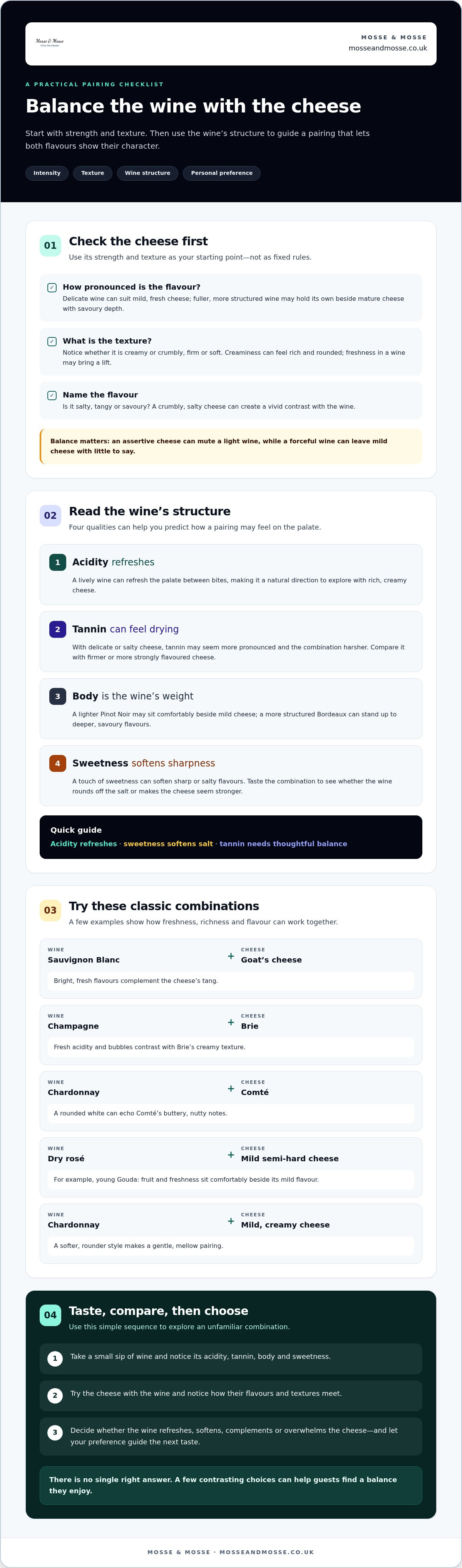
Once you’ve considered the cheese’s flavour and texture, look at what the wine brings to the palate. Four features are especially useful: acidity gives a wine freshness, tannin creates a drying sensation, body describes its weight, and sweetness can soften sharp or salty flavours. Take a small sip and notice these qualities before trying the cheese. This quick check helps you assess unfamiliar combinations, rather than relying only on a list of traditional matches.
Choose wine by acidity, tannin, and body
Acidity can refresh your palate between bites, which is why a lively white wine may feel especially good with rich, creamy cheese. Chardonnay ranges from fresh and restrained to fuller and rounder, so its style matters as much as the grape name. A guide to Côte de Beaune wines can help you explore the range of White Burgundy.
Tannin, common in red wines, can feel more pronounced alongside delicate or salty cheese, sometimes making the combination seem harsher. Body matters too: a lighter Pinot Noir may sit comfortably beside mild cheese, whilst a more structured Bordeaux can stand up to deeper, savoury flavours. If a red leaves your mouth feeling dry, try it with a firmer or more strongly flavoured cheese and compare the effect.
Use sweetness, salt, and bubbles to create contrast
A touch of sweetness can soften the sharpness of salty or pungent cheese, creating contrast rather than simply matching like with like. Taste a little of each together and notice whether the wine rounds off the salt or makes the cheese seem even stronger. Preferences vary, so let the balance on your own palate guide you.
Sparkling wine offers another route with rich, soft cheeses. Its lively acidity and bubbles can make a creamy mouthful feel fresher, rather than heavier. For more on styles to explore, see this guide to Champagne and sparkling wines.
Acidity refreshes, sweetness softens salt, and tannin needs thoughtful balance. Keep that in mind as you assemble the board: offer contrasting options, then let guests taste and decide what they enjoy. It’s a practical way to explore wine and cheese pairing ideas without turning the evening into a test with one right answer.
12 Wine and cheese pairing ideas for a varied board
Use these wine and cheese pairing ideas as a flexible menu, not a test with one right answer. The table moves from fresh, soft cheeses to firmer, more savoury choices, so you can select a few combinations that bring different flavours and textures to the table.
Fresh, soft, and creamy cheeses with bright wines
Freshness can lift creamy textures, while a rounder white offers a gentler contrast. Goat’s cheese and Sauvignon Blanc bring tang and brightness together; Champagne with Brie feels lively beside the cheese’s soft richness. For a less zesty option, try Chardonnay with a mild creamy cheese for a rounder, more mellow match.
| Wine style | Cheese | Why they work together |
|---|---|---|
| Sauvignon Blanc | Goat’s cheese | Bright, fresh flavours complement the cheese’s tang. |
| Champagne | Brie | Fresh acidity and bubbles contrast with Brie’s creamy texture. |
| Chardonnay | Comté | A rounded white can echo Comté’s buttery, nutty notes. |
| Chardonnay | Mild, creamy cheese | A softer, rounder style makes a gentle, mellow pairing. |
| Dry rosé | Mild semi-hard cheese, such as young Gouda | Fruit and freshness sit comfortably beside the cheese’s mild flavour. |
| Riesling | Feta | A touch of sweetness can soften the cheese’s salty edge. |
| Pinot Noir | Gruyère | Gentle red-fruit character can complement Gruyère’s savoury depth. |
| Bordeaux | Mature Cheddar | A structured red can stand up to the cheese’s concentrated flavour. |
| Rioja | Manchego | Fruit and savoury notes make a pleasing partner for firm, nutty cheese. |
| Port | Stilton | Sweetness contrasts with the blue cheese’s salty, savoury intensity. |
| Beaujolais | Camembert | Soft fruit and gentle structure keep the match approachable. |
| Sauternes | Roquefort | Sweetness can balance the blue cheese’s pronounced saltiness. |
Mature, firm, and blue cheeses with fuller styles
Firmer, mature cheeses often have enough flavour to meet a more structured wine, as with Bordeaux and mature Cheddar or Rioja and Manchego. Port with Stilton is a classic sweet-and-savoury contrast, though it isn’t the only possibility. Taste the cheese and wine together: if one overwhelms the other, try a different combination or choose a less intense style.
Choose three or four pairings rather than serving every option at once, and let guests compare them at their own pace. Mosse and Mosse is an independent Suffolk wine merchant specialising in Burgundy and Bordeaux, with curated mixed cases for sharing. For help choosing wines for your board, speak with the Mosse and Mosse team.
Build a relaxed wine and cheese board with confidence
A little planning makes it easier to turn wine and cheese pairing ideas into a welcoming spread. Keep the selection focused, choose wines to suit the cheeses and your guests, then give everyone room to taste and find their own favourites.
- Choose variety. Pick a manageable mix, such as three or four cheeses with contrasting textures and flavours: one soft and creamy, one firm, one tangy or crumbly, and, if your guests enjoy it, a blue or more pungent cheese. A smaller selection lets each cheese shine.
- Match the wines. Choose one or two styles that complement the cheeses you’ve selected. Consider whether the wine’s freshness, body or sweetness will refresh, echo or contrast with the cheese, rather than trying to find a separate bottle for every item.
- Arrange the board. Place the cheeses with space between them and arrange them from gentlest to most intense. Set out separate knives where practical, so stronger flavours don’t carry over to milder cheeses.
- Taste together. Start with a small sip of wine, try a bite of cheese, then taste them together. Notice what changes: does the wine feel fresher, or does the cheese seem more savoury? Encourage guests to share what they enjoy, without treating any match as the single correct answer.
Arrange the board and taste in a thoughtful order
Begin with mild, delicate flavours and move towards mature, salty or pungent cheeses. Follow the same gentle-to-intense progression with the wines, saving fuller or sweeter styles for later if they’re part of your selection. Bread or plain crackers, fruit and a little chutney can be optional accompaniments, but keep portions modest so cheese and wine remain the focus.
Find a wine selection that suits the occasion
Think about who’s coming, the cheeses on the board and the mood you want: a relaxed supper may call for a different selection from a celebratory gathering. Burgundy and Bordeaux offer useful styles to explore, alongside Champagne, sparkling wine, rosé or Port for different tastes. Based in Suffolk, Mosse and Mosse hand-selects wines by the case and offers a personal service for choosing bottles for the occasion. For a friendly conversation about your selection, contact the Suffolk wine team.
Make your next tasting your own
Let the board become part of the conversation. Invite everyone to choose a favourite bite and share what they notice in the wine beside it. The most enjoyable wine and cheese pairing ideas aren’t about passing a test; they’re a way to explore different tastes together and make the occasion feel personal.
If you’re planning a gathering, think beyond matching bottles to a shopping list. Consider the people around your table, the mood you want to create and whether you’d like to introduce guests to a region or style they haven’t tried before. Mosse and Mosse is an independent Suffolk wine merchant, with personal expertise from Tim and Sam and a specialist focus on Burgundy and Bordeaux.
Talk to Tim and Sam about choosing wines for your table. A thoughtful selection can give your guests something lovely to discover, so trust your taste and enjoy bringing everyone together.
Frequently Asked Questions
Does red wine go with cheese?
Yes, red wine can pair very well with cheese when the wine’s weight suits the cheese’s flavour. For a tasting, try a sip of Pinot Noir with Gruyère, then compare it with a fuller Bordeaux alongside mature Cheddar. If a red seems drying or sharp beside a delicate cheese, switch to a more flavourful bite or try a softer, less tannic wine.
What wine goes best with Cheddar?
There’s no single best wine for Cheddar, as a young, mild cheese tastes quite different from a mature, crumbly one. A structured red can suit a bold Cheddar, whilst a fresher white may be a better fit for a gentler version. Try the wine first, then take a bite: notice whether the cheese brings out fruit or leaves the wine tasting more astringent.
Can you serve Champagne with cheese?
Yes, Champagne can be served with cheese, either as part of a tasting or alongside a simple cheeseboard. Its lively character offers a refreshing counterpoint to Brie and other mild, soft cheeses. Cut small portions and pour modest tastes, so guests can compare the pairing without committing to a large serving. A softer cheese with a more savoury flavour may create a different impression.
Which wine pairs well with goat’s cheese?
Sauvignon Blanc is a classic partner for fresh goat’s cheese, especially if you enjoy the contrast between bright wine and tangy cheese. The cheese’s age and texture can change the experience, so taste before settling on a bottle: a soft, fresh example may call for a different balance from a firmer, more developed one. The best choice is the one that leaves both flavours enjoyable.
Should red or white wine be served first with cheese?
Serve wines in order of intensity rather than following a rigid red-before-white rule. A crisp, light white may be a gentler start than a powerful red, but a fuller white could come later in the tasting. Begin with the softest flavours, then move towards more pronounced styles. A sip of water between combinations can help guests notice each pairing more clearly.
How many wines and cheeses do you need for a tasting?
There’s no fixed number. Choose enough to give guests a little variety without making tasting feel like a chore. Two wines and a handful of cheeses can provide a useful comparison, with each wine tried beside more than one cheese. These wine and cheese pairing ideas can help you plan gatherings in Ipswich, Norwich, Bury St Edmunds, Sudbury, Stowmarket, Newmarket, Thetford, Diss, Attleborough, Southwold, Aldeburgh, Framlingham, Woodbridge, Long Stratton and Saxmundham.


