
A memorable wine tasting party doesn’t need a wine expert at the head of the table. The secret to how to host a wine tasting party is choosing a simple theme and giving guests room to enjoy each glass, share impressions and discover what they like. No quizzes or grand speeches required.
It’s understandable to wonder which wines belong together, what order to serve them in and whether the food needs to be elaborate. It doesn’t. A clear plan takes pressure off, while a welcoming, informal format makes the evening enjoyable for you as well as your guests.
This guide takes you from invitations to the final pour, with practical advice on choosing a theme and wines, preparing your glasses and serving at a comfortable pace. You’ll also find simple food ideas and an easy tasting format that encourages conversation rather than competition. With a little preparation, you can host a relaxed evening that feels thoughtful, not fussy.
Key Takeaways
- Learn how to host a wine tasting party with a clear theme that gives guests an easy starting point for comparing wines.
- Choose bottles that make a useful comparison, then use a simple table to note what differs and what guests might notice.
- Prepare the room with practical essentials, keeping specialist accessories optional and the setup manageable.
- Guide the tasting with relaxed prompts about appearance, aroma and flavour, then invite everyone to share their favourite.
Start with the kind of wine tasting party your guests will enjoy
You don’t need formal wine training to host a rewarding tasting. A little curiosity and a clear plan are enough to get people talking. Decide first what your guests would enjoy: a sociable evening with a few guided observations, or a more focused comparison of wines. The best format is the one that makes everyone feel at ease, not the one that sounds most technical.
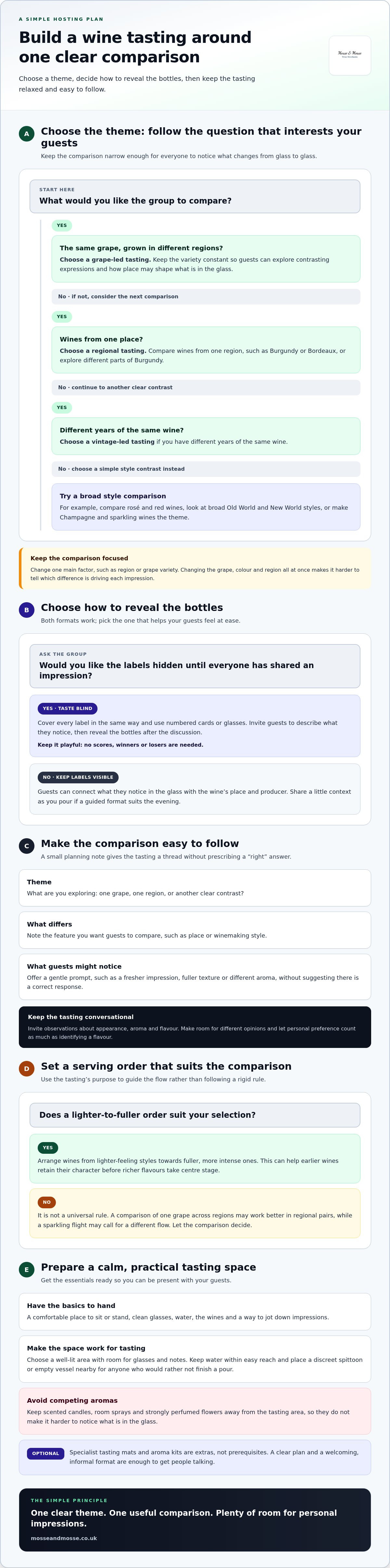
A theme gives the evening a thread. Rather than pouring unrelated bottles, invite guests to notice how a grape, region or style changes from one glass to the next. Start by choosing one simple question for the group to explore, such as whether the same grape tastes different in two regions.
- Guided: Share a little context about each wine as you pour.
- Regional: Compare wines from one place, such as Burgundy or Bordeaux.
- Grape-led: Explore one variety from different regions.
- Vintage-led: Compare different years of the same wine, if you have them.
- Blind: Conceal the labels and reveal them after everyone has shared an impression.
Choose a theme that gives the evening a clear thread
Keep the comparison narrow enough for guests to spot meaningful differences. You might explore one grape grown in two regions, compare rosé and red wines, or look at broad Old World and New World styles. A Champagne-focused tasting also gives the group a distinctive starting point, with Champagne and sparkling wines offering a natural theme.
Think about what your guests already enjoy, then build from there. Burgundy, Bordeaux and Champagne are familiar examples, not rules. Wine tasting often considers appearance, aroma and flavour. A clear theme makes those observations easier to compare without turning the evening into a lesson.
Decide whether to reveal the bottles or taste blind
With labels visible, guests can connect what they notice in the glass with the wine’s place and producer. This suits a guided tasting and gives you the chance to share a little background as you go. For a blind tasting, cover the labels or use numbered cards, then invite everyone to describe what they notice before revealing the bottles.
Keep blind tasting playful rather than turning it into a guessing game with winners and losers. There’s no need to score wines or test anyone’s knowledge. Make room for different opinions, and let personal preference count as much as identifying a flavour.
Select wines that make your tasting party coherent and enjoyable
Choose bottles to answer the question your theme raises, rather than assembling a line-up simply because each wine sounds appealing. A focused selection gives guests a fair basis for comparison. Change one main factor, such as region or grape variety, so they can more easily notice how the wines differ. A tasting flight is a sequence of wines served for comparison.
Before you buy or open anything, sketch a small comparison table. Three columns are enough:
- Theme: What are you exploring, such as one grape or region?
- What differs: Note the feature you want guests to compare, such as place or winemaking style.
- What guests might notice: Suggest an observation, such as a fresher impression, fuller texture or different aroma, without prescribing the “right” answer.
Match the wine selection to your chosen theme
For a regional tasting, select wines that help guests consider how place and style shape what’s in the glass. A Burgundy comparison, for instance, could focus on wines from different parts of the region. For a grape-led theme, keep the variety constant and choose examples that show contrasting expressions. Changing the grape, colour and region all at once makes it harder to tell which difference is driving each impression.
A sparkling-wine theme can explore differences in style within Champagne and sparkling wines. If you’re tasting blind, conceal every label in the same way and number the bottles or glasses. Reveal them only after the group has discussed its impressions. Consistency keeps the reveal fair and avoids clues from packaging.
Plan a serving sequence without overcomplicating it
Where it suits your selection, arrange wines from lighter-feeling styles towards fuller, more intense ones. This can help earlier wines retain their character before richer flavours take centre stage. It isn’t a universal rule: a tasting comparing one grape across regions may work better in regional pairs, while a sparkling flight may call for a different flow. Let the purpose of the comparison guide the order.
For practical background on tasting and wine education, the American Wine Society offers resources for wine enthusiasts. Use what’s useful, but keep your own notes simple and guest-friendly. The aim is a clear comparison, not a perfect technical sequence. Mosse and Mosse also offers in-person wine tasting events for those who would enjoy guidance from experienced hosts.
Prepare the room, glasses and food before guests arrive
A calm setup helps you stay present once guests arrive. The basics are simple: a comfortable place to sit or stand, clean glasses, water, the wines and a way to jot down impressions. Specialist tasting mats and aroma kits are optional, not prerequisites. For a useful preparation overview, Dry Creek Vineyard’s guide to hosting a wine tasting also covers practical details that help an evening run smoothly.
Set up a comfortable tasting space
Choose a well-lit area with enough room for guests to set down glasses and notes. Keep water within easy reach, and place a discreet spittoon or empty vessel nearby for anyone who’d rather not finish a pour. Avoid scented candles, room sprays and strongly perfumed flowers around the tasting area, as competing aromas can make it harder to notice what’s in the glass.
Prepare in a simple order:
- Clear a surface and arrange seating so people can see and talk to one another.
- Set out clean glasses, water, plain paper or tasting notes, and a pen for each guest.
- Open wines that benefit from a little air, and keep the rest at suitable serving temperatures.
- Put out neutral snacks and a place to discard wine before the first pour.
Light-bodied whites and rosés are generally served at 7-10°C, whilst fuller-bodied reds are often best at 16-18°C. These are useful guides, not strict rules. Adjust to the wines you’ve chosen and the conditions in your room.
Serve wine and food in a guest-friendly way
Use clean wine glasses that are comfortable to hold. Identical glasses make comparisons fairer because the shape won’t vary from one wine to the next. If you don’t have a separate glass for every wine, rinse glasses with water between pours and let them drain.
Offer plain bread or crackers and mild cheese during the tasting, then save more substantial food for afterwards. Water and neutral snacks help guests reset their palate between wines, so each new glass gets a fair chance. If the tasting is part of a larger celebration, practical wedding and party wine planning can help you think about the event as a whole. Mosse and Mosse also hosts in-person wine tastings for groups who would like expert guidance. Find out more through Mosse and Mosse.
Lead the tasting warmly, then make the next step easy
Your job is to give the evening a gentle rhythm, not deliver a lecture. Start by reminding guests of the theme and what you’ll be comparing. Keep any background brief, then let the wines and conversation take centre stage. A simple sequence gives everyone a way in:
- Introduce the theme and explain how the wines relate to it.
- Pour a small taste and give guests a moment to look, smell and taste.
- Invite a few first impressions before sharing details about the wine.
- Discuss similarities and differences, then reveal any concealed labels.
- Offer water and a pause before moving on to the next glass.
Guide conversation without turning it into an exam
Use open, everyday prompts: “What do you notice about the colour?”, “Which aromas come to mind?” or “Does it feel light or full-bodied?” Ask what guests enjoy, too. One person might find a wine crisp, whilst another notices a soft, rounded texture. Neither needs to be wrong. Share technical tasting notes or regional context after people have had their say, and only where it helps explain the theme.
There’s no need for everyone to speak after every pour. Some guests will enjoy comparing notes aloud; others may prefer to listen, jot down a thought or simply taste. Keep the pace unhurried, and make water and food available between wines. A favourite vote can be a cheerful finale, but it needn’t become a competition.
Make a tasting party part of a wider wine journey
Once the group has shared its impressions, you could offer a little more context about the places or winemaking styles behind the bottles. For a sparkling-wine theme, background on Champagne can add depth without overwhelming the conversation. The Champagne and sparkling wine range is a useful starting point for exploring that style.
Mosse and Mosse brings independent Suffolk wine expertise to its in-person tasting events. Tim Mosse sources wines and Sam Mosse leads retail and customer service. Their knowledge of regions such as Burgundy and Bordeaux can help make wine and place feel approachable.
Turn your next gathering into a wine discovery
Let the conversation carry on after the final pour. A guest’s favourite might inspire a future evening around a particular grape, region or style, giving your gathering a life beyond one night. You could invite someone else to host next time and choose a theme that reflects what the group enjoyed.
That’s the pleasure of learning how to host a wine tasting party: it can open the door to new wines and shared discoveries without needing to be formal. Keep a note of the bottles that sparked the most discussion, and use those reactions to shape your next get-together.
If you’d like to enjoy a tasting guided by people who know wine and its regions well, Mosse and Mosse offers in-person wine tasting events. Talk to Tim and Sam about arranging a wine tasting for your group. However you choose to explore, make curiosity and enjoyment the point. Your next favourite wine may be the one you haven’t tried yet.
Frequently Asked Questions
How many wines should you serve at a wine tasting party?
Four to six wines can make a manageable flight for a home gathering, giving guests enough variety without making the tasting feel long. Pour around 50ml per wine for tasting rather than a full glass. Research guidance suggests one standard bottle provides a taste for around 10-12 guests at that pour size. If you’re serving a larger group, consider splitting guests into smaller tables or repeating the flight.
Can you host a wine tasting party without being a wine expert?
Yes. You can host without knowing specialist terminology or having a definitive answer for every wine. Explain the theme in a sentence, then ask guests what they notice and which glass they prefer. If a question stumps you, treat it as something to explore rather than a test you’ve failed. Learning how to host a wine tasting party is mostly about making it easy for people to share their reactions.
Is a blind wine tasting suitable for beginners?
Yes, blind tasting can be a fun introduction because guests don’t need to recognise producers or regions before joining in. Cover bottles consistently and invite people to jot down a few impressions before you reveal the labels. Keep guesses optional, and don’t award points for identifying a wine correctly. Comparing what people imagined with the actual bottle can be an enjoyable talking point in its own right.
What should guests bring to a wine tasting party?
Usually, guests don’t need to bring anything unless you’ve asked them to. As host, you can plan the wines and tasting materials so the selection stays coherent. If you’d like guests to contribute, suggest a notebook, a favourite plain snack or a bottle for after the tasting, rather than adding an unplanned wine to the flight. Be clear in the invitation so nobody feels obliged to bring a gift.
How far in advance should you invite guests to a wine tasting party?
Give guests a few weeks’ notice if you can, especially if you’re coordinating a date around busy diaries. Ask for replies ahead of time so you can plan seating, glasses and food without guessing. If your circle includes people from Ipswich, Norwich, Bury St Edmunds, Sudbury, Stowmarket, Newmarket, Thetford, Diss, Attleborough, Southwold, Aldeburgh, Framlingham, Woodbridge, Long Stratton or Saxmundham, sharing the date early can help everyone plan their journey.
What should you do with leftover wine after a tasting party?
Recork or reseal opened bottles promptly and keep them in the fridge, including reds. Let red wine warm towards serving temperature before pouring again. The wine’s character will change with air, so enjoy leftovers soon rather than assuming they’ll taste the same later. You can also use suitable leftover wine in cooking. Keep unopened bottles stored according to their style, away from heat and direct sunlight, and save them for another occasion.


