

What if “Porto wine” and “Port” are two names for the same complex drink? In everyday use, they refer to the same fortified wine, made from grapes grown in Portugal’s Douro Valley. The wine’s journey from steep vineyard terraces to the cellar can produce very different styles, so knowing what to look for can make choosing a bottle easier.
Port is often served after dinner, but its character depends in part on when fermentation is stopped and how the wine is matured. Ruby styles tend to retain fresh, vivid fruit, whilst time in wooden casks gives Tawny Port a more developed, nutty character. White and Rosé Ports offer other ways to enjoy it, from an aperitif to a relaxed gathering with food.
In this guide, we’ll trace Port from its Douro origins through fortification and ageing, and explain terms such as LBV, Vintage and Colheita. You’ll see how the main styles differ, what to pair them with and how to choose based on when you plan to serve the wine. With a few practical clues, it’s easier to find a Port that suits the moment and your taste.
Key Takeaways
- Understand how Porto, the city, relates to the wider Douro region where Port grapes are grown.
- See how fortification and maturation shape the style of porto wine.
- Compare broad Port styles and use their typical character to guide food and occasion pairings.
- Choose with more confidence by considering when you’ll drink the bottle, what you enjoy and the producer, style and vintage details.
- Use expert guidance to connect what you’ve learnt with a Port that suits your preferences.
What does Porto wine mean, and where does Port come from?
Port is a fortified wine made from grapes grown in Portugal’s Douro wine region. “Porto wine” is a common way to refer to it, drawing on Porto, the coastal city at the mouth of the Douro River. The vineyards are not in Porto itself: they lie inland, across the wider Douro Valley.
That distinction is useful when choosing a bottle. The name connects the wine to a particular Portuguese region, rather than simply describing a style of sweet, fortified wine made elsewhere. The Port wine overview offers further background on its origins, production and styles.
Douro Valley, Porto and Vila Nova de Gaia: how the places connect
The Douro wine region stretches inland through northeastern Portugal, where vineyards follow the river and its steep valleys. The river then flows west to the Atlantic, passing through Porto. Vila Nova de Gaia sits across the river from Porto, on the south bank, and has a long association with the trade and storage of Port. Each place has a different role: the Douro is the grape-growing region, whilst Porto and Gaia are linked to the wine’s route to market.
At a glance: Douro Valley vineyards → Douro River → Porto and Vila Nova de Gaia → Atlantic coast
This route helps explain why a Port label may refer to a place that isn’t where the grapes were grown. Porto gives the wine its familiar name, but the Douro origin is central to what Port is.
Why Port is a protected regional wine name
Regional names help distinguish wines whose origin and production are tied to a specific place. “Port” isn’t just a flavour description: it identifies a wine associated with the Douro and its established production tradition. For a drinker, that origin gives useful context when comparing Port with other fortified wines.
The Instituto dos Vinhos do Douro e do Porto (IVDP) is the regional body responsible for overseeing the quality and authenticity of Douro and Port wines. Its role helps protect the connection between the name and its region. When you see “Port”, look beyond the city name to the Douro landscape behind the wine, a helpful starting point for understanding the styles explored next.
How Port wine is made: grapes, fermentation and fortification
The character of porto wine starts in the vineyard, but a decisive step happens during fermentation. Port is made from a blend of grape varieties grown in the Douro, then fortified before fermentation has finished. The timing of that addition helps retain natural grape sweetness, whilst later maturation creates further differences between styles. Here’s the process in sequence.
- Grape growing: Growers cultivate traditional Douro grape varieties, often used together in blends. The grapes provide the wine’s colour, flavour and structure. The combination and proportions can vary, so general production notes don’t describe every bottle.
- Fermentation begins: After the grapes are crushed, yeast converts some of their natural sugar into alcohol. This process starts before fortification, rather than spirit being added to unfermented grape juice.
- Fortification: A clear, neutral grape spirit, known in Portuguese as aguardente, is added to the fermenting wine. It raises the alcohol level and stops fermentation, leaving some residual sugar, meaning natural grape sugar that hasn’t been converted into alcohol. The resulting sweetness varies with the wine and its production.
- Maturation: The fortified wine matures before release, either in wood or, for some styles, in bottle. The vessel and length of maturation influence how the wine develops.
What happens during fermentation and fortification?
Fortification adds grape spirit to fermenting wine, stopping yeast activity and preserving some natural grape sugar in the finished Port. The spirit used for Port is approved by the Instituto dos Vinhos do Douro e do Porto (IVDP), the regional institute overseeing Port and Douro wines. This step helps explain why Port is fortified and often sweet, though sweetness and flavour are not identical in every style or bottle.
How cellar maturation shapes different Port styles
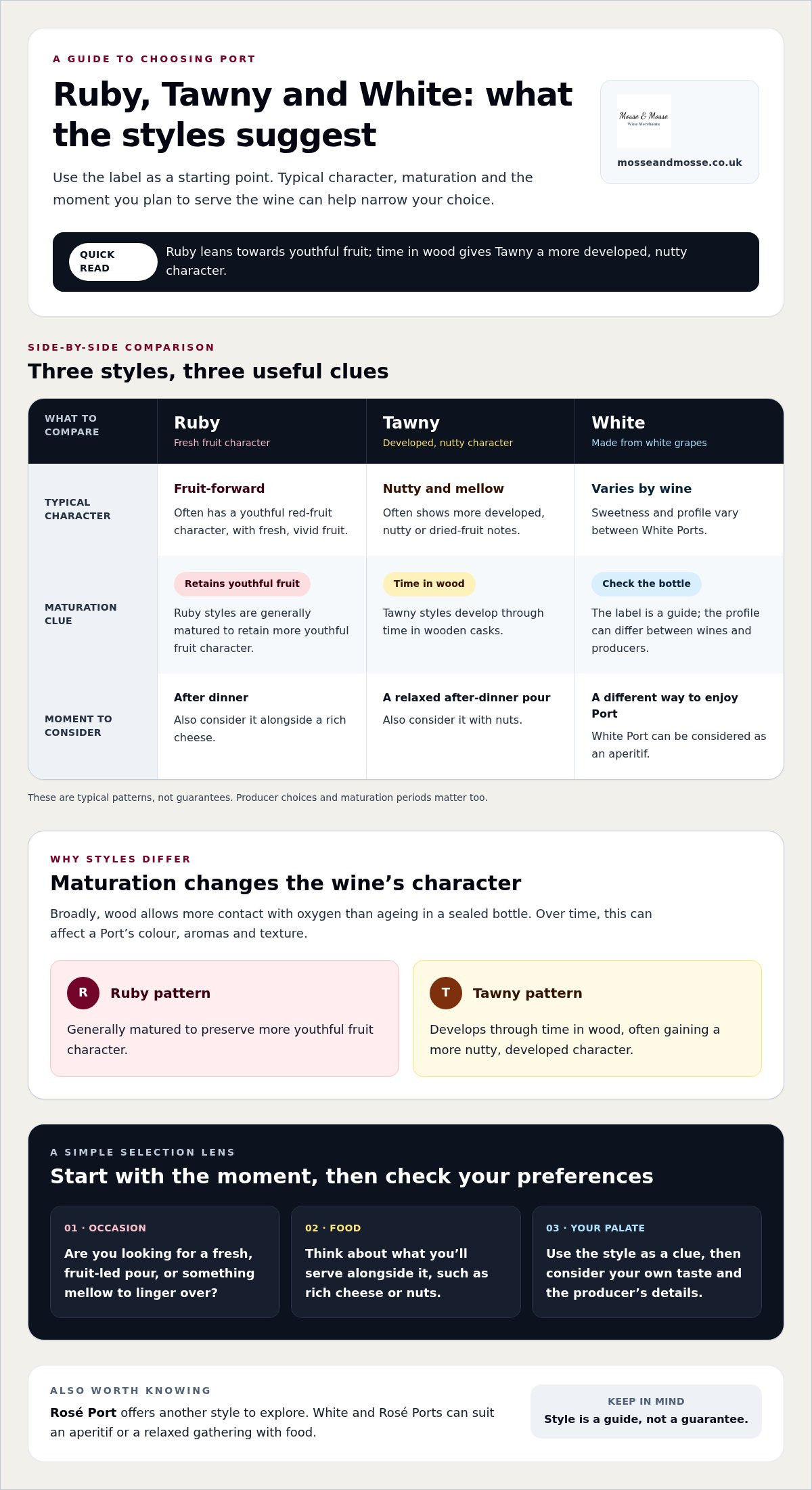
Broadly, maturation in wood allows greater contact with oxygen than ageing in a sealed bottle. Over time, that difference can affect a wine’s colour, aromas and texture. Ruby styles are generally matured to retain more youthful fruit character, whilst Tawny styles develop through time in wood. These are useful patterns, not guarantees: producer choices and maturation periods matter too.
Mosse and Mosse sells Port as part of its curated wine selection. If you’re choosing a style, discuss your Port preferences with us for personal guidance.
How to choose Porto wine by style, occasion and food
Start with the moment: are you looking for a fresh, fruit-led pour, something mellow to linger over, or a bottle for a special occasion? The style on the label gives you a useful first clue, although sweetness, colour and texture can vary between wines and producers.
Ruby, Tawny, White, LBV and Vintage: what the labels suggest
The label style is a guide to a Port’s typical character and use, not a guarantee of exactly how it will taste. Use the table as a starting point, then consider your own palate and what you’ll serve alongside it.
| Style | Typical character | A moment to consider it |
|---|---|---|
| Ruby | Often fruit-forward, with a youthful red-fruit character | After dinner or alongside a rich cheese |
| Tawny | Often more developed, with nutty or dried-fruit notes | A relaxed after-dinner pour or a pairing with nuts |
| White | Made from white grapes; sweetness and profile vary | An aperitif, including a chilled serve |
| Late Bottled Vintage (LBV) | Single-vintage character, generally made for drinking without the long cellaring associated with Vintage Port | A considered after-dinner choice |
| Vintage | A single-year style associated with selected harvests and bottle ageing | A special occasion or a bottle intended for the cellar |
LBV and Vintage both refer to wine from one harvest year, but they aren’t interchangeable terms: LBV is generally ready to enjoy sooner, whilst Vintage Port is associated with longer bottle maturation. For a deeper comparison, explore this guide to Port styles.
Pair Port with food and the occasion
Pairing is about balance. A richer, sweeter Port may work well with dark chocolate or a blue cheese, whilst a less sweet White Port can suit savoury nibbles before a meal. Ruby with cheese and Tawny with nuts are useful combinations to try, not strict rules. Consider the sweetness and structure of the wine alongside the salt, richness or sweetness of the dish.
If you’re choosing porto wine for guests, decide when it’ll be served and whether you want it to accompany food or stand alone after dinner. For guidance based on your preferences and occasion, talk with Mosse and Mosse about choosing a Port.
Where to buy Port in the UK and choose with confidence
Choosing Port gets easier when you begin with your plans, rather than a label that looks impressive. Is it for a celebration, a gift, a meal or a quiet after-dinner glass? Then think about the style you tend to enjoy and whether you’ll open it soon or keep it for another occasion. These clues help narrow the choice without assuming one bottle suits everyone.
- Occasion: Decide whether the Port is for an aperitif, a meal, after dinner or a gift.
- Style: Consider whether you’re drawn to fruit-led, nutty, white or another style.
- Drinking timing: Think about when you plan to open it, particularly if you’re considering a bottle intended for further cellaring.
- Food: Choose what you’ll serve alongside it, then look for a style that should complement the dish.
What to look for on a Port wine label
Look for the producer and named style first, then check whether a vintage year is stated. These details help you understand the wine’s category and background, but they can’t guarantee that its flavour will match your personal taste. Labels and accompanying descriptions may also offer clues about how to serve or store a particular bottle. Where that guidance is provided, use it rather than relying on a general rule for every Port.
A Port label can point towards a style, producer and, where stated, vintage, giving you a useful starting point for choosing. Treat those details as clues, not promises of a particular experience.
Choosing with an independent Suffolk wine merchant
Mosse and Mosse is an independent Suffolk wine merchant, trading since 1999, with Port among its wine categories. Tim Mosse leads buying and sourcing, whilst Sam Mosse leads retail and customer service. Their personal, expert-led service can help turn the details you’ve noticed into a choice that suits your taste, food and plans.
Whether you’re new to porto wine or already have a favourite style, start with what you enjoy and when you hope to drink it. Share your Port preferences with Mosse and Mosse for a considered conversation about choosing a bottle.
Make your next Port choice your own
Your next bottle of porto wine can be an opportunity to try something beyond your usual choice, or to find a style that feels right for a particular meal or gathering. Let your preferences lead. Think about the flavours you tend to enjoy, how you plan to serve the wine and whether you’re choosing for yourself or someone else. Those details can make the decision more considered, without turning it into a test of wine knowledge.
If you’re weighing up the options, a conversation can help turn a broad preference into a more confident direction. Describe the occasion, the food on the table or the styles you’ve enjoyed before, then explore what suits you.
Talk to Mosse and Mosse about choosing a Port wine and share what you have in mind. We’re an independent wine merchant in Suffolk, serving wine enthusiasts in Ipswich, Norwich, Bury St Edmunds, Sudbury, Stowmarket, Newmarket, Thetford, Diss, Attleborough, Southwold, Aldeburgh, Framlingham, Woodbridge, Long Stratton and Saxmundham. Get in touch to discuss the style and occasion you have in mind.
Frequently Asked Questions
Is Porto wine the same as Port wine?
Yes, the terms generally refer to the same wine, but Porto is also the name of a city. If you see “Porto wine” in an online search or description, use the producer and label details to understand the particular bottle rather than assuming it comes from vineyards in the city. Checking the wording on a listing can also help you compare like with like when browsing different fortified wines.
Does Port wine always taste sweet?
No, Port can vary in sweetness and perceived richness, so the name alone doesn’t tell you exactly what to expect. If you prefer a less sweet taste, look for a style description that suits that preference and compare bottle notes where available. For a sweeter after-dinner pour, choose accordingly. Treat tasting descriptions as a guide, not a promise, as balance and flavour vary from bottle to bottle.
Can Port wine be used in cooking?
Yes, Port can work in recipes such as sauces, reductions and desserts, where its concentrated fruit character can complement the other ingredients. For example, a small amount may bring depth to a fruit-based sauce. Choose a style that fits the dish, and taste as you cook so its sweetness doesn’t overwhelm the other flavours. Heating changes the wine, so a cooking result won’t taste exactly like a glass poured for drinking.
Does Port wine contain sulphites?
It may. Sulphites can occur naturally during fermentation, and winemakers may also use them during production. The details can differ between wines, so read the individual bottle label for relevant allergen information rather than assuming all Port has the same sulphite content. If you have a diagnosed sensitivity or are concerned about a reaction, use advice from a qualified medical professional to guide your choices.
Is Port wine suitable as a gift?
Yes, it can be a thoughtful gift for someone who enjoys wine, especially if you can match the style to their tastes and plans. If you’re unsure, consider whether they’ll open it soon, serve it with food or keep it for a special moment. Mosse & Mosse offers wine gifts and curated selections. Its Suffolk-based service is relevant to wine enthusiasts in Ipswich, Norwich, Bury St Edmunds, Sudbury, Stowmarket, Newmarket, Thetford, Diss, Attleborough, Southwold, Aldeburgh, Framlingham, Woodbridge, Long Stratton and Saxmundham.
Does Port have more alcohol than still wine?
Generally, Port has a higher alcohol content than many unfortified still wines because it is fortified. The exact strength differs between bottles, so check the alcohol by volume (ABV) figure on the label before serving. This is a practical way to compare a particular Port with other wines on your table. Pour thoughtfully and follow current UK health guidance; don’t rely on a category-wide figure for an individual bottle.


