

What if I told you that Port is actually one of the most versatile tools in your culinary arsenal, capable of elevating a spicy chorizo or a rich duck terrine just as effortlessly as a piece of chocolate cake? It's easy to feel that this storied fortified wine is a bit too old-fashioned for a modern dinner party, or perhaps you worry its intense sweetness will simply overpower your hard work in the kitchen. We understand those hesitations, but we've spent years at our family-led wine merchant business discovering that the right food pairing with port can create some of the most sublime sensory experiences in the world of wine.
In this guide, we'll help you master the sophisticated nuances of Port pairings, moving beyond the classic Stilton to explore surprising savoury matches that will delight your guests. You'll gain the confidence to serve different styles across multiple courses, backed by expert tips on serving temperatures and specific flavour profiles. We'll look at everything from the vibrant fruit of a Ruby to the complex, oxidative charm of a Tawny, ensuring you have the knowledge to select the perfect bottle for any occasion.
Key Takeaways
- Learn to distinguish between the vibrant fruit of Ruby and the complex, nutty notes of wood-aged Tawny to find the perfect weight for your dish.
- Discover the secrets of food pairing with port for savoury courses, including how its rich profile complements game meats like venison and duck.
- Understand why salt and sweetness work so well together in the classic Stilton pairing and how to choose the right chocolate for your specific glass.
- Improve your serving technique by using proper glassware and the correct temperatures to ensure every bottle shows its best character.
- Explore how an independent merchant's curation can help you find high-quality bottles that move this traditional wine into a contemporary dining setting.
The Foundation of Port Pairing: Matching Style to Flavour
Successful food pairing with port begins with understanding the architecture of the wine itself. As an independent merchant, we often see guests grabbing any bottle labelled 'Port' without realising the category is split into two very distinct personalities. At Mosse and Mosse, our philosophy centres on quality over branding; we look for producers who maintain enough acidity to keep the wine from feeling cloying. With the 2026 Douro harvest quota set at 76,000 barrels of 550 litres each, the focus remains on high-quality production rather than mass volume. This balance is crucial. If a Port is too sugary without that structural backbone, it will flatten the flavours of your food rather than enhancing them.
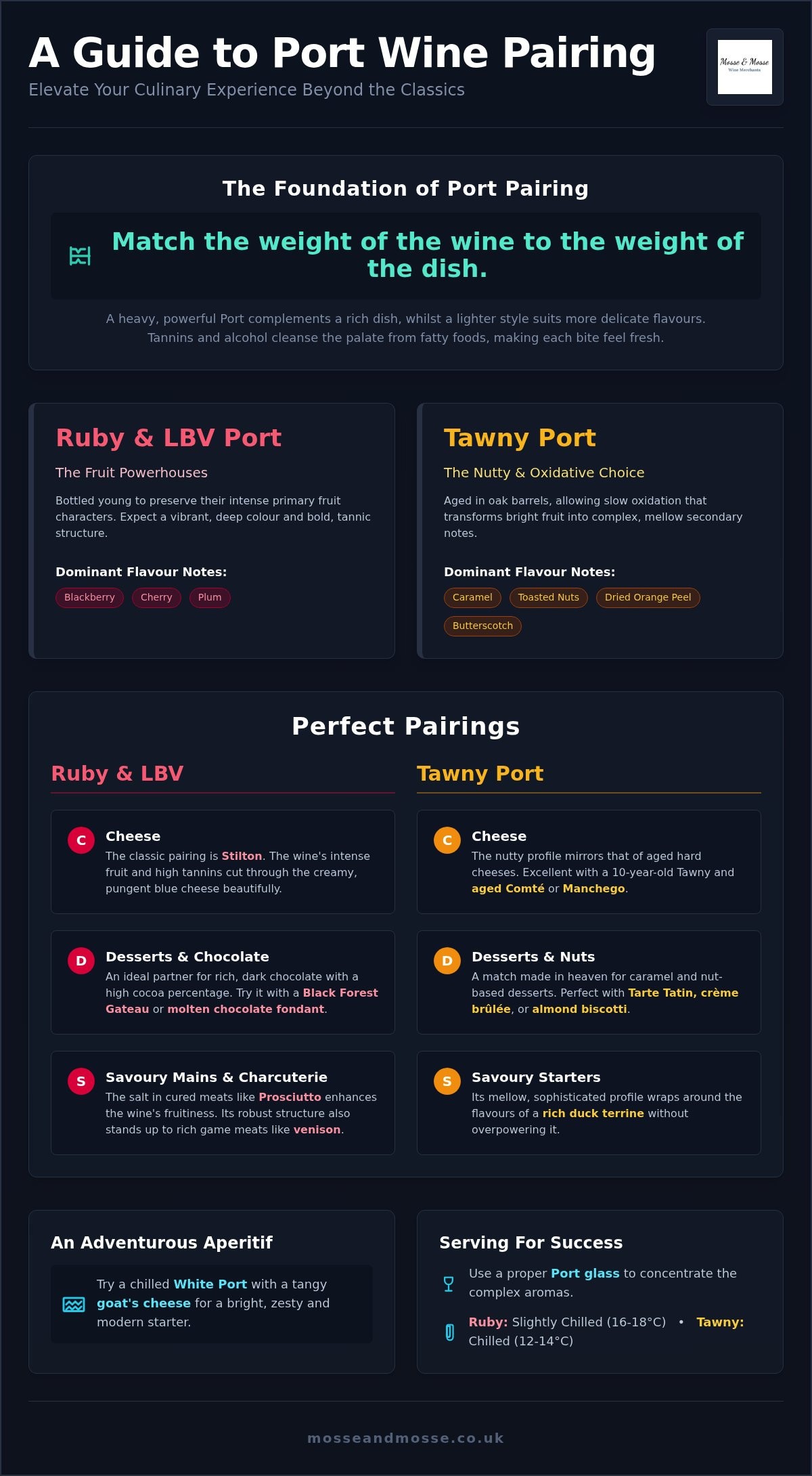
The weight of the wine must match the weight of the dish. A heavy, viscous Vintage Port would crush a delicate almond tart, but it would sing alongside a robust piece of venison. We also consider the role of tannins and alcohol. These elements act as a 'palate cleanser,' stripping away the richness of fatty meats or creamy cheeses so each bite feels as fresh as the first. This technical balance is the secret to a successful food pairing with port that feels intentional rather than accidental. When you explore the heritage of Port wine, you see how these styles evolved to suit different moments of the British dining tradition.
Ruby and LBV: The Fruit Powerhouses
Ruby Ports and Late Bottled Vintages (LBV) are bottled young to preserve their intense, primary fruit characters. Expect a riot of blackberry, cherry, and plum with a deep, vibrant colour. Because these wines are so fruit-forward and high in tannins, they demand bold partners. They are a natural companion for dark chocolate with a high cocoa percentage or heavy, salt-forward blue cheeses like Stilton. The fruit sweetness provides a beautiful counterpoint to the salt, creating a match that has stood the test of time.
Tawny Port: The Nutty, Oxidative Choice
Choosing a Tawny Port opens up a different world of flavour. These wines spend years in oak 'pipes' where they slowly breathe and oxidise. This process transforms those bright fruits into secondary notes of caramel, toasted nuts, dried orange peel, and butterscotch. Many of our corporate wine gift boxes feature these styles because they offer such a reliable bridge between a meal and the post-dinner wind-down. A chilled Tawny is a revelation with creamy or nutty desserts. Its mellow profile doesn't fight with the food; instead, it wraps around flavours like praline or crème brûlée, adding a layer of sophisticated warmth.
Classic Pairings: The Holy Trinity of Cheese, Chocolate, and Charcuterie
Whilst many big-name retailers suggest that Stilton is the only partner for your decanter, we believe your pantry holds far more potential. The chemistry of a successful food pairing with port often relies on the tug-of-war between high sodium and residual sugar. Salt doesn't just sit alongside sweetness; it actually suppresses our perception of bitterness whilst enhancing the fruitiness of the wine. This is why a slice of salty Prosciutto or a piece of bresaola can make a young Ruby Port taste incredibly lush and vibrant. If you're unsure which bottle to open first, our Types of Port guide offers a deeper dive into the specific production methods that create these distinct flavour profiles.
The Ultimate Cheeseboard Guide
Finding the right food pairing with port for your cheeseboard doesn't have to be daunting if you focus on texture. Vintage Port and Stilton remain the gold standard for a reason. The creamy, pungent blue veins need that massive hit of fruit and tannin to cut through the fat. However, if you prefer something more subtle, try an aged Comté or Manchego with a 10-year-old Tawny. The nutty, crystalline texture of the cheese mirrors the oxidative notes of the oak ageing. For a fresh twist, White Port served with a tangier goat's cheese creates a bright, zesty aperitif that feels modern and light.
Indulgent Sweet Treats
For the sweeter side of the table, contrast is key. A Ruby Port or LBV is the perfect foil for a rich Black Forest Gateau or a molten chocolate fondant. The dark cocoa notes thrive on the wine's blackberry intensity. Conversely, the caramel and butterscotch profile of an aged Tawny is a match made in heaven for a Tarte Tatin or crunchy almond biscotti. According to expert resources on Port wine pairings, the weight and cocoa percentage of the chocolate are just as important as the sugar level. To ensure the wine maintains its luscious character, it must always possess a higher sugar concentration than the food it accompanies, otherwise the Port will lose its fruit and taste unpleasantly acidic. If you're struggling to match a specific treat, please contact us for a bespoke recommendation from our cellar.
Beyond Dessert: Savoury Mains and Adventurous Matches
Most guides stop once the cheeseboard is cleared, but we think that's a missed opportunity. Whilst some technical critics argue that Port is difficult to pair with a main course, our experience at Mosse and Mosse suggests otherwise. We've found that the intense concentration of a well-made Port can be a game-changer when matched with the right savoury elements. Port isn't just a drink to finish the night; it's a sophisticated tool for the modern host. We often suggest it as a memorable Wedding and Party Wine selection for guests who want to move beyond the expected red and white pairings.
Port also shines as a culinary ingredient. The rich, concentrated fruit of a Ruby Port makes for an incredible reduction sauce, particularly when served alongside Bordeaux style red meat dishes. The sweetness of the reduction balances the iron-rich, savoury depth of the beef or lamb. This approach to food pairing with port allows you to bridge the gap between the glass and the plate, creating a cohesive dining experience that feels both traditional and fresh.
Savoury Main Courses
The "Game" match is perhaps the most rewarding savoury territory. A pan-seared duck breast with a Ruby Port and cherry reduction is a classic for a reason; the wine's acidity cuts through the fat whilst its fruit mirrors the cherries. For a hearty venison stew, try adding a splash of LBV to the pot and serving a glass on the side. The spicy depth of the wine enhances the earthy notes of the meat. Even a blue cheese burger can be elevated with a robust Reserve Ruby, where the salt of the cheese and the char of the beef find a perfect partner in the wine's fruit-forward profile.
The Adventurous Palate
If you're feeling bold, look toward global flavours and luxury starters. A chilled White Port served with salted almonds and olives is a fantastic summer starter that wakes up the palate. For a true French-inspired luxury, pair a 10-year-old Tawny with Foie Gras; the wine's nutty notes are sublime with the rich, buttery texture. Perhaps our favourite surprise is a 20-year-old Tawny with Peking Duck. The wine's caramel and dried orange peel notes provide a stunning balance to the umami and five-spice glaze. If you're planning a menu and need a specific bottle to match your main course, please contact us for our personal recommendations.
Serving for Success: Temperature, Glassware, and Longevity
Even the most expertly chosen food pairing with port can fall flat if the service isn't quite right. We've seen many hosts put hours into a menu only to serve their Port in tiny thimble glasses at a stifling room temperature. At Mosse and Mosse, we believe that independent curation isn't just about the bottle; it's about the knowledge we share to ensure your evening is a success. Choosing an independent merchant means you're getting advice from people who actually drink and test these pairings in their own homes. We want you to feel the same passion we do when that first glass is poured.
Glassware makes a profound difference to your experience. Ditch the tiny, traditional Port glasses that trap the aromas. Instead, reach for a proper ISO tasting glass or a small white wine glass. These shapes allow the wine to breathe and the complex aromatics to actually reach your nose. If you're hosting a larger group, serving from Magnums not only looks impressive on the table but often ensures the wine has aged with even greater grace and consistency.
The Perfect Pour
Temperature is where most people stumble. Contrary to some high-street advice that suggests serving all Port at room temperature, a properly chilled Tawny is a completely different, and far superior, experience. Aim for 10-12°C for Tawnies to keep them refreshing. Ruby and Vintage Ports prefer to be slightly cooler than a modern British living room, ideally around 16°C. Don't forget that Vintage Ports need time to 'breathe'. Decant them at least two to three hours before serving to allow those tightly wound layers of fruit and spice to open up fully.
Longevity: Keeping the Pairing Fresh
One of the most common questions we hear is how long a bottle stays at its best for a food pairing with port. A Ruby or LBV is best enjoyed within a week of opening, as its vibrant fruit begins to fade fairly quickly. In contrast, an open bottle of Tawny can last between four and six weeks if kept in the fridge. The oxidative nature of Tawny Port, having already been exposed to air during its years in oak, is what grants it its superior shelf life compared to fruitier styles. Always store your open bottles upright in a cool, dark place to keep the flavours as sharp as the day you pulled the cork.
Elevate Your Next Dinner Party with the Perfect Pour
You've now seen that Port is far more than a dusty bottle at the back of the cupboard. By matching the fruit-forward intensity of a Ruby with dark chocolate or chilling an aged Tawny to serve alongside a rich Peking duck, you can transform a standard meal into a connoisseur's experience. Mastering the art of food pairing with port is really about understanding balance; matching the weight of the wine to the richness of the dish whilst ensuring the serving temperature is exactly right. It's a skill that brings a genuine sense of occasion and sophistication to any table.
At Mosse and Mosse, we take pride in being more than just a retailer. We're a family-led business of passionate purists who curate a selection of traditional European wines based on quality rather than just a famous label. Whether you're planning a wedding or looking for a sophisticated corporate gift, our personal expertise is at your disposal. We offer national UK delivery for all our orders, ensuring our hand-picked selections reach your door in perfect condition.
Contact our expert team for a personalised Port and Wine consultation to find the ideal bottle for your next gathering. We're here to help you drink better, one expertly matched glass at a time.
Frequently Asked Questions
What is the best food pairing with Ruby Port?
Dark chocolate and berry-based desserts are the gold standard for Ruby Port. Its intense fruitiness and firm tannins thrive alongside the bitterness of high-cocoa chocolate or the tartness of a summer pudding. You might also try it with a rich berry compote or a black cherry tart. Because Ruby is bottled young, it retains a primary fruit energy that stands up to bold, sweet flavours without being overshadowed.
Can you drink Port with savoury food?
You can certainly enjoy Port with savoury dishes, and it's a technique we frequently recommend for modern dining. The wine's sweetness provides a brilliant counterpoint to salt-cured meats like Prosciutto or rich, gamey flavours like venison. It also works as a sophisticated base for reductions. A successful food pairing with port in a savoury context often relies on using the wine's acidity to cut through animal fats whilst the sugar balances the salt.
Should Tawny Port be served chilled or at room temperature?
Tawny Port should always be served properly chilled, ideally between 10 and 12°C. Unlike heavier Ruby styles, a Tawny's delicate notes of caramel and dried orange peel can feel heavy or cloying if the wine is too warm. Chilling it keeps the palate refreshed and highlights those complex, nutty aromatics. It's the perfect way to enjoy a glass on a summer afternoon alongside a bowl of salted almonds or olives.
What cheese goes best with Vintage Port?
A pungent blue cheese like Shropshire Blue or a mature Roquefort is an excellent partner for Vintage Port. The intense saltiness of the cheese and its creamy texture require the massive structural backbone and tannins of a Vintage Port to create a balanced match. If you want to try something different, a very mature, crystalline Cheddar offers a similar salt-to-sugar harmony that won't disappoint your guests at the end of a meal.
Does Port go well with spicy food?
Port can be a surprising success with spicy food, provided you choose an aged Tawny rather than a high-tannin Ruby. The wine's dried fruit and nutty character complement aromatic spices like cinnamon, star anise, and ginger found in many Cantonese dishes. It's particularly effective with Peking Duck or lightly spiced Moroccan tagines. You can also learn more about Emmoi Authentic Vietnamese Cuisine to see how these aromatic profiles translate into traditional dishes like Pho, which can also pair beautifully with a chilled Tawny. The key is to avoid overwhelming heat, as high alcohol can sometimes make very fiery chillies feel unpleasantly aggressive.
How long can I keep a bottle of Port open for food pairing?
A bottle of Ruby or Vintage Port stays at its best for about a week once opened, whilst a Tawny can last for four to six weeks in the fridge. Because Tawny has already undergone an oxidative ageing process in wood, it's much more resistant to air. For the best results in your food pairing with port, always keep your open bottles upright and store them in a cool, dark place to preserve the delicate flavour profile.


