
Have you ever wondered why two bottles from the same village can feel worlds apart, one offering a simple fruitiness and the other a complex, velvet-like elegance that lingers for minutes? It's a common frustration for many of our clients who feel caught between the rigid structures of the Medoc and the lush, approachable charm of a fine saint-émilion wine. We understand that the maze of Grand Cru labelling can be daunting, especially when you just want a reliable bottle for a special Sunday lunch or to tuck away in your cellar.
This guide is designed to give you total confidence when selecting your next bottle, drawing on our twenty-five years as independent merchants. You'll discover how the unique limestone plateau creates those famous plush Merlot flavours and learn to distinguish between a basic AOC and the prestigious Grand Cru Classé tiers. We will also look at which recent vintages are coming into their prime right now, ensuring your next purchase from our curated collection is a triumph of both quality and taste.
Key Takeaways
- Learn why the dominance of Merlot and Cabernet Franc gives these reds their signature velvety texture and plush fruit profile.
- Clarify the confusing labelling system so you can distinguish between a geographical Grand Cru and a top-tier Grand Cru Classé.
- Pinpoint standout vintages such as 2015 and 2020 that offer the best balance of flavour and ageing potential.
- Discover why sourcing your saint-émilion wine through a boutique merchant ensures your bottle has been handled with the care it deserves.
- Master the art of pairing these elegant reds with food to bring out their sophisticated, truffle-scented character.
Understanding the Unique Identity of Saint-Émilion Wine
Nestled on the northern bank of the Dordogne, Saint-Émilion is frequently described as the jewel of the Right Bank. It's a place where history feels tangible, particularly within the medieval village that, along with its surrounding vineyards, holds UNESCO World Heritage status. Unlike the structured, often austere wines found across the water, saint-émilion wine is celebrated for its generous spirit. It offers an immediate warmth that makes it far more approachable in its youth than its cousins in the Medoc. For many collectors, a fine bottle of saint-émilion wine represents the perfect balance between power and finesse.
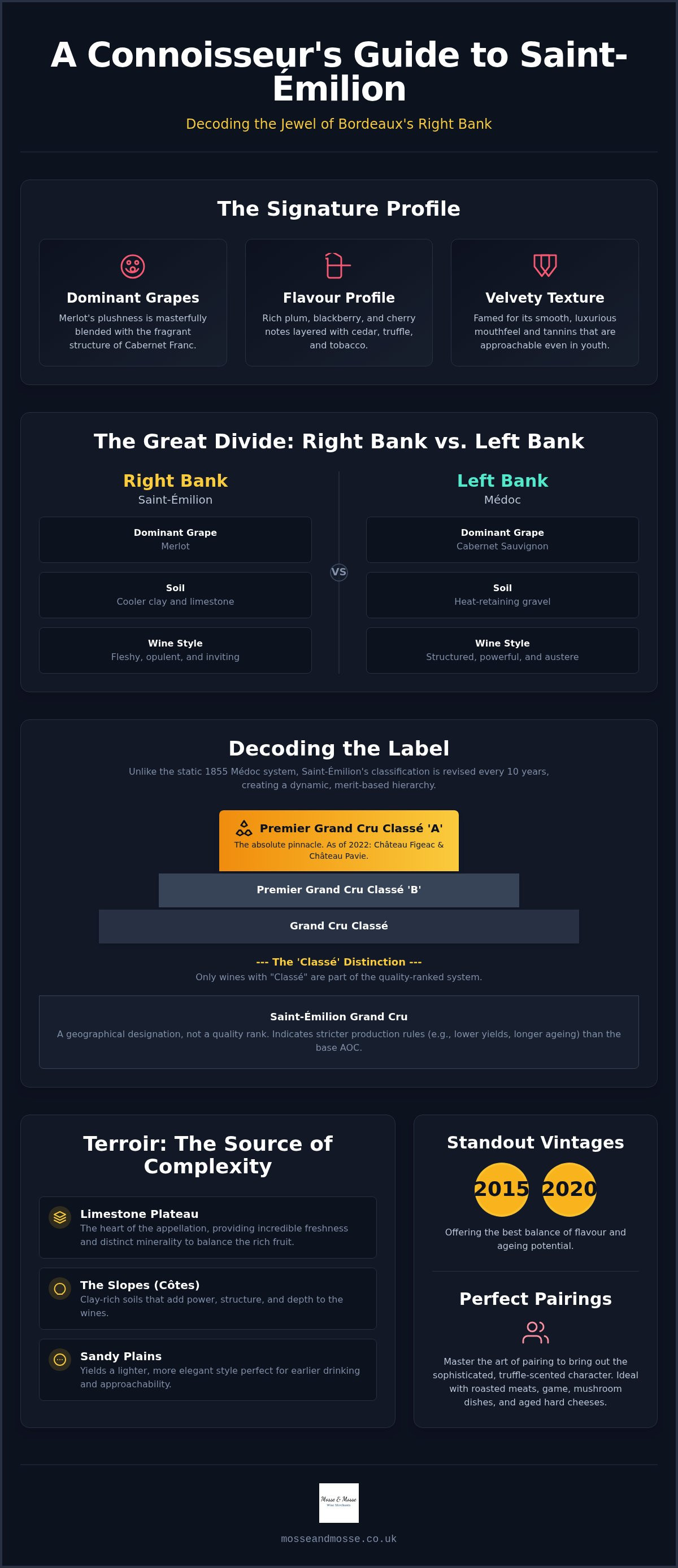
The Saint-Émilion appellation is defined by the dominance of Merlot, often blended with Cabernet Franc. This combination creates a hallmark flavour profile that we find utterly captivating. Think of rich plum and sun-ripened blackberry, layered with complex notes of tobacco and cedar. The tannins aren't aggressive; they are famously "velvet," providing a smooth, luxurious mouthfeel that lingers long after the final sip.
The Right Bank vs The Left Bank
The Gironde estuary acts as a natural boundary, splitting Bordeaux into two distinct personalities. On the Left Bank, gravelly soils demand the heat-loving Cabernet Sauvignon. However, Saint-Émilion sits on the Right Bank, where cooler, damp clay and limestone predominate. Merlot thrives here, reaching a level of ripeness and opulence that is difficult to replicate elsewhere. It's why these wines feel so "fleshy" and inviting compared to the more rigid structure of a Medoc red.
Terroir and the Limestone Plateau
Geology is destiny in this region. The terroir is generally divided into three zones. The limestone plateau, which sits at the heart of the appellation, produces wines with incredible freshness and a distinct "minerality" that balances the rich fruit. As you move down the slopes (côtes), the clay adds power and depth. Finally, the sandy plains at the foot of the hills yield a lighter, more elegant style. These sandy-soil wines are often some of our favourites for earlier drinking, as they don't require decades of patience to reveal their charm.
Navigating the Saint-Émilion Classification System
Understanding the label is the first step to finding a truly exceptional saint-émilion wine. It's often here that confusion sets in for many of our clients. Many people assume "Grand Cru" on a label indicates a top-tier quality ranking, but in reality, Saint-Émilion Grand Cru is a geographical designation. It simply means the wine was made under stricter production rules than the basic AOC, such as lower yields and a minimum of twelve months of ageing. If you want a bottle with guaranteed prestige, you must look for the word "Classé."
The hierarchy is divided into three main tiers: Grand Cru Classé, Premier Grand Cru Classé B, and the pinnacle, Premier Grand Cru Classé A. This system provides a clear map of quality, but it's the way these rankings are maintained that makes the region so dynamic. Unlike the static 1855 classification used in the Medoc, this system is revised every ten years, ensuring that producers cannot rest on their laurels.
The 10-Year Revision: A Meritocratic System
This revision cycle creates a meritocratic environment where estates can be promoted or demoted based on a rigorous evaluation of their winemaking, reputation, and impressive terroir. The 2022 revision was particularly significant, establishing a list of 85 châteaux within the classification. It saw Château Figeac finally promoted to the highest rank of Premier Grand Cru Classé A, joining Château Pavie at the top. This constant striving for excellence is why we believe the region offers such incredible consistency across its classified estates.
Premier Grand Cru Classé: The Elite Estates
These elite estates represent the absolute peak of what saint-émilion wine can achieve. Iconic names like Château Cheval Blanc and Château Ausone defined this category for decades, though they famously withdrew from the 2022 revision following disagreements over the evaluation criteria. Despite the administrative shifts, these properties continue to produce reds with legendary longevity and complexity. For those looking to explore these upper echelons, our Bordeaux collection includes several hand-picked examples that showcase this extraordinary level of craftsmanship.
Selecting the right bottle often depends on whether you're looking for immediate enjoyment or something to lay down for a decade. If you're currently building a collection and need advice on which tier fits your needs, we'd be delighted to offer a personal recommendation based on our twenty-five years of experience.
A Connoisseur’s Guide to Vintages and Culinary Pairings
The temperamental Bordeaux climate means that every year tells a unique story. We often tell our clients that a great vintage is one that achieves a harmonious balance between vibrant acidity and perfectly ripe tannins. In Saint-Émilion, this balance is what allows the saint-émilion wine to evolve so gracefully. Over time, the primary flavours of ripe plum and blackberry transform into complex, savoury notes of truffle, forest floor, and leather. Decanting is often beneficial for younger bottles to soften the structure, whilst older vintages should be handled with care to preserve their delicate secondary aromas.
Recent history has been exceptionally kind to the region. The 2010 vintage remains a powerhouse of structure; it's a year for the patient collector. In contrast, 2015 and 2016 are increasingly viewed as modern legends for their purity of fruit and elegance. More recently, 2020 has emerged as a vintage of extraordinary depth. Understanding these nuances is essential for the Saint-Émilion Grand Cru appellation, as the classification system relies on this consistency across decades.
Selecting the Right Vintage for Your Cellar
We distinguish between "restaurant vintages" and "cellar vintages." The former are lighter years that are ready to enjoy now, providing immediate pleasure without the need for long-term ageing. Cellar vintages possess the backbone required for decades of development. If you are looking to invest in a top-tier year, we highly recommend choosing Magnums. The larger format slows down the maturation process, preserving the wine's freshness and complexity far longer than a standard bottle.
Perfect Food Pairings for Merlot-Based Reds
The plush texture of Saint-Émilion makes it a versatile partner at the dinner table. Classic pairings include roast lamb with rosemary, duck confit, or a traditional beef entrecôte. For a vegetarian alternative, a mushroom risotto or an earthy lentil stew will echo the wine's developing truffle notes beautifully. Finish your meal with hard cheeses like Comté or an aged Cheddar to match the wine's intensity. Always remember to serve your saint-émilion wine at cellar temperature, ideally between 16 and 18°C, to allow the aromas to fully express themselves.
If you are unsure which vintage is currently at its peak for your upcoming dinner party, please contact us for expert advice. We have tasted these wines through every stage of their development and can help you select the perfect bottle with confidence.
Why Source Your Saint-Émilion from an Independent Merchant?
Choosing a fine saint-émilion wine shouldn't feel like a gamble. At Mosse and Mosse, we believe that the true value of an independent merchant lies in curation. We don't simply stock every label available. Instead, we taste hundreds of bottles to select only those that truly represent the soul of the Right Bank. This personal vetting process ensures that whether you're looking for an everyday indulgence or a rare vintage for your cellar, the quality in the glass is undeniable.
Provenance is equally critical. When you buy from us, you gain the peace of mind that comes from knowing exactly where your wine has been stored since it left the Château. Fine reds are delicate. They need stable temperatures and careful handling to reach their full potential. This level of oversight is something larger, impersonal retailers often struggle to provide. For those planning significant celebrations, our selection is a cornerstone of our Wedding Wine Services, offering a plush, approachable character that carries immense prestige.
The Mosse and Mosse Philosophy
Our approach is simple: we prioritise the quality of the physical product over external branding. As a family-led business, we provide the individualised attention needed to build long-term relationships. We offer national delivery across the UK, ensuring your bottles arrive with the same care we used to select them. If you're looking for a professional gesture, our Corporate Gift Boxes feature curated Bordeaux classics that never fail to impress.
Starting Your Bordeaux Journey
If you're just beginning to explore the Right Bank, we suggest starting with a mixed case. This allows you to compare different styles, from the elegant sandy-soil reds to the powerful plateau blends. For more tips on navigating the digital cellar, read our guide on How to Buy Wine Online. We are always here to help. Feel free to contact us directly for a personalised recommendation tailored to your specific palate and occasion. Your journey into the world of saint-émilion wine deserves a partner who is as passionate about the bottle as you are.
Start Your Saint-Émilion Collection Today
Finding the perfect bottle of saint-émilion wine is an invitation to experience the very best of Bordeaux's Right Bank. We've seen how the region's unique limestone plateau and Merlot-dominant blends create a profile of unmatched elegance and approachability. By understanding the rigorous ten-year classification cycle and the importance of vintage maturity, you can now select your next red with the confidence of a true connoisseur. Whether you're planning a wedding, or wish to visit Bosse Events Creative Event Concepts for professional event support, these wines offer a sophistication that few other regions can match.
As independent merchants with twenty-five years of experience, we take pride in our role as curators. We've hand-picked every bottle in our cellar to ensure it meets our personal standards for quality and heritage. With our national UK delivery service, these exceptional reds are accessible no matter where you're located. We invite you to explore our curated collection of Saint-Émilion and Bordeaux wines to find a bottle that truly speaks to your palate. We're always on hand to offer bespoke advice, so don't hesitate to reach out. Happy tasting!
Frequently Asked Questions
What is the difference between Saint-Émilion and Pomerol?
Whilst both are prestigious Right Bank neighbours, their structures differ significantly. Saint-Émilion is much larger and utilises a formal classification system that is revised every ten years. Geologically, it relies on a limestone plateau, whereas Pomerol is famous for its "blue clay" soils. You'll find that Saint-Émilion often includes a higher proportion of Cabernet Franc, providing a slightly more upright structure compared to the sheer, velvet-like opulence typical of Pomerol.
Is Saint-Émilion wine always a red wine?
Technically, any bottle labelled under the Saint-Émilion or Saint-Émilion Grand Cru appellations must be a red wine. These are almost always blends dominated by Merlot and Cabernet Franc. Some châteaux in the region do produce exceptional white wines on their estates, but these must be labelled as "Bordeaux Blanc." If you are purchasing saint-émilion wine, you can be certain you are buying a rich, complex red.
How long can I cellar a bottle of Saint-Émilion Grand Cru?
Most Grand Cru bottles are at their best between five and fifteen years after the vintage. However, top-tier classified estates from standout years like 2010 or 2016 possess the concentration to age beautifully for thirty years or more. The high Merlot content offers a plushness that makes them approachable earlier than Medoc reds, but the underlying limestone acidity provides the essential backbone for a long life in your cellar.
Does Saint-Émilion wine need to be decanted before serving?
We generally recommend decanting younger saint-émilion wine for at least one hour before you plan to drink it. This exposure to oxygen softens the tannins and coaxes out those indulgent aromas of ripe plum and cedar. For much older, mature vintages, decant just before serving to remove any natural sediment. Be cautious with very old bottles; their delicate secondary flavours can fade if they're left in a decanter for too long.
What does "Grand Cru Classé" actually mean on a label?
This term is a significant indicator of quality, distinguishing an estate from the more common "Grand Cru" designation. To be "Classé," a château must pass a rigorous evaluation of its winemaking standards, reputation, and terroir. Because the classification is revised every decade, producers are under constant pressure to maintain their excellence. It's a meritocratic system that gives you confidence that the wine in the bottle truly deserves its prestigious status.


