

A bottle of pommard wine should never be thin, acidic, or underwhelming for the price. It's a common frustration amongst those seeking the region's legendary depth without the disappointment of a poor selection. We know that feeling of hesitation when looking at a wine list or a merchant's shelf; you want a wine with backbone and longevity, yet you're wary of the high price points and the risk of opening a bottle before its prime.
Pommard is the robust heart of the Côte de Beaune. This guide will give you the confidence to select bottles that truly deliver on their reputation for being the most structured and powerful reds in the region. By understanding the unique clay-rich terroir and the "masculine" character of this village, you'll stop guessing and start investing in wines that offer genuine value. We'll explore the ageing potential of its prestigious Premier Cru vineyards, decode the best vintages to drink now, and provide the expert food pairings we recommend to our personal clients. Every bottle should be a celebration of quality rather than a gamble.
Key Takeaways
- Understand why Pommard is regarded as the "iron fist in a velvet glove" and how its unique clay soils produce the most structured reds in the Côte de Beaune.
- Learn how to navigate the classification system to find a pommard wine that offers the complexity of a Grand Cru without the inflated price tag.
- Discover the essential decanting techniques and ageing timelines that prevent you from opening a bottle too early or drinking it whilst it is still "closed".
- Identify the perfect food pairings that complement the robust tannins of these wines, moving beyond generic suggestions to specific, expert-led advice.
- Gain the confidence to buy from independent curators who prioritise the grower's skill over mass-market branding for a truly authentic Burgundy experience.
The Character of Pommard: Burgundy’s Iron Fist in a Velvet Glove
Pommard stands apart as the robust soul of the Côte de Beaune. While the surrounding villages are often famous for their ethereal whites or delicate reds, this village is dedicated exclusively to Pinot Noir. It's a place where the grape sheds its translucent, floral reputation in favour of something far more substantial. Historically, the Pommard AOC has been the benchmark for power in the region, offering a deeper colour and a more intense fruit profile than your typical Red Burgundy.
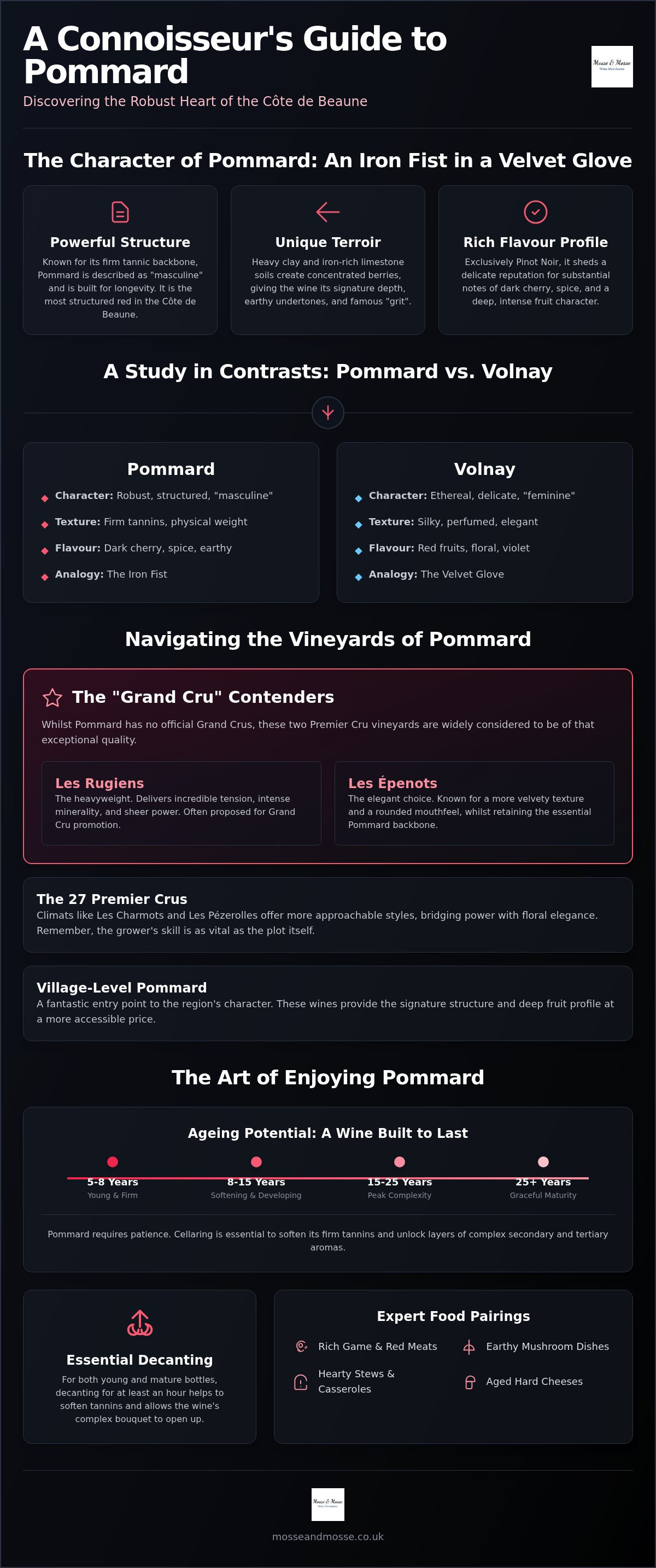
When you pour a glass of pommard wine, you'll immediately notice the weight. It's often described as "masculine" due to its firm tannic structure and concentrated notes of dark cherry and spice. This isn't a wine for the impatient. These bottles possess incredible longevity and frequently require years in the cellar to soften their edges and reveal their true complexity. Choosing a pommard wine means embracing a style that is unapologetically firm and built to last.
Geology and Grit: The Iron-Rich Soils
The secret behind this power lies beneath the vines. Pommard’s terroir is defined by heavy clay and iron-rich limestone, a combination that forces the roots to struggle and creates smaller, more concentrated berries. These minerals are responsible for the wine's famous "grit" and earthy undertones. On the lower slopes, you’ll find heavier alluvial soils that produce broader, more rustic wines. Move higher up the steeper, limestone-heavy plots, and the wines become more refined, though they never lose that signature structural backbone.
Pommard vs Volnay: A Study in Contrasts
It's one of the great mysteries of the wine world. Walk across the village boundary into Volnay and the wine transforms into something ethereal and perfumed. Despite being immediate neighbours, the two villages produce wildly different expressions of Pinot Noir. Whilst Volnay is often compared to silk or lace, Pommard is the choice for those who prefer structure, depth, and a sense of physical weight on the palate. It is the ultimate expression of power in a region often defined by its finesse.
Navigating the Vineyards: Village Wines and Premier Cru Excellence
Understanding the hierarchy of the Côte d’Or is essential when selecting a bottle that matches your expectations. In Pommard, the classification system stops at Premier Cru. Don't let that fool you into thinking the quality is lower than its neighbours. The absence of a Grand Cru label is more of a historical quirk than a reflection of the wine's potential. In fact, many of the village's top sites produce fruit that is significantly more complex than Grand Crus found elsewhere.
Village-level pommard wine offers a fantastic entry point for those who want to experience the region's character without a triple-figure price tag. These wines provide that signature structure and deep fruit profile at a more accessible level. They are perfect for drinkers who enjoy a bit of "grip" in their Pinot Noir. Geographically, the village is split into two distinct personalities. To the north, bordering Beaune, the wines are generally more refined and open. To the south, moving towards Volnay, the wines become more robust, echoing the iron-rich soils we discussed earlier.
The "Grand Cru" Contenders: Les Rugiens and Les Épenots
Les Rugiens is the undisputed heavyweight of the village. It's often mooted for promotion to Grand Cru status because of its incredible tension, intense minerality, and sheer power. If you prefer something slightly more elegant, Les Épenots (including the famed Clos des Épenots) is the answer. It delivers a more velvety texture and a rounded mouthfeel whilst maintaining that essential Pommard backbone. These specific plots are the crown jewels of Pommard's Premier Cru vineyards and are highly sought after by serious collectors.
The 27 Premiers Crus: Finding Your Style
With 27 different climats to choose from, finding your favourite style requires a bit of exploration. Vineyards like Les Charmots and Les Pézerolles are known for being slightly more approachable, offering a bridge between the village's natural power and a more floral elegance. We always remind our customers that the producer’s skill is just as vital as the plot itself. A dedicated grower can craft a masterpiece from a lesser-known site that outshines a famous label. If you're struggling to choose between a powerful or an elegant bottle, ask us for a bespoke recommendation to suit your palate.
The Art of Enjoying Pommard: Ageing, Decanting, and Pairing
Many wine lovers feel intimidated by Burgundy, fearing it’s too temperamental to get right at home. We believe that's a misconception. You don't need a professional cellar to enjoy pommard wine at its peak, but you do need a little patience and a decent decanter. Because this village produces such structured reds, a young bottle often feels "tight" or overly tannic upon first opening. Giving the wine an hour or two of air allows those firm tannins to soften, letting the fruit aromatics finally take centre stage.
The evolution of flavour in a glass of Pommard is one of life's great pleasures. In its youth, you'll find a concentrated profile of wild cherry and plum. As the years pass, these primary fruits give way to more savoury, complex notes. We often cite Domaine Parent: A benchmark Pommard domaine as a perfect example of how these wines develop beautiful secondary characters like leather, truffle, and game. For collectors who want their wine to age with maximum grace, we always suggest looking at Magnums and Larger Formats. The larger volume ensures a slower, more stable maturation process.
Patience is a Virtue: When to Drink Pommard
Timing your cork-pull is an art. As a general rule, Village-level wines are best enjoyed between five and ten years after the vintage. Top Premier Crus, however, often need ten to twenty years to reach their full potential. If you're looking to stock your cellar now, the 2022 and 2023 vintages are showing fantastic promise for long-term ageing. If a bottle feels muted or "closed," it's likely just in a stubborn middle phase and needs more time in the cellar.
Gastronomic Partners: What to Serve with Pommard
This is a wine built for the dining table. The robust tannins of Pommard demand rich, flavourful meats that can stand up to its weight; think roast beef, venison, or pan-seared duck. Whilst White Burgundy loves fish, Pommard is strictly for the carnivore. For the cheese course, skip the delicate options and choose something with character. Stronger French classics like Époisses or an aged Comté are the ideal companions for this powerful red. If you're unsure which bottle to choose for your next dinner party, contact us for bespoke advice on our current favourites.
Sourcing Excellence: The Mosse and Mosse Pommard Collection
At Mosse and Mosse, we operate with a simple belief: the skill of the grower always outweighs the fame of the label. We are passionate purists who spend our time seeking out the hidden gems of the Côte d’Or. Whilst supermarkets and large retailers often chase volume and recognisable branding, we focus on the physical quality of the liquid in the bottle. Finding a truly exceptional pommard wine requires more than just looking at a price tag; it requires a deep understanding of the producers who respect the village's traditional, structured style.
We take pride in our personal touch. Our collection is hand-selected from smaller, high-quality producers that larger merchants often overlook. We ensure that every bottle we stock reflects the depth and power we’ve discussed in this guide. To make these rare finds accessible, we offer national UK mainland delivery, bringing the best of Burgundy directly to your cellar. Our expertise also extends to bespoke services, including curated Wedding Wine selections and professional Corporate Gifting solutions where a robust red like Pommard can make a truly lasting impression.
Why an Independent Merchant Makes the Difference
The Burgundy market is famously competitive. Securing allocations from the best climats relies on long-standing, relationship-based sourcing. We do the hard work of tasting and selecting so you don't have to. Our curated list isn't about having the most bottles; it's about having the right ones. Whether you want to build a balanced cellar with individual bottles or prefer the convenience of a mixed case, we provide a level of curation that mass-market retailers simply cannot match.
Personalised Guidance for Your Next Bottle
We don't view our customers as one-off transactions. We're here to help you navigate the nuances of different vintages and find the perfect match for your palate or your next dinner party. If you're unsure whether a specific pommard wine is ready to drink or if it needs another five years in the cellar, just ask us. We thrive on these conversations and love sharing our enthusiasm for traditional European regions. Contact us today for personalised advice on our Pommard collection and let us help you find a bottle that truly delivers on its promise of power and elegance.
Elevate Your Cellar with the Robust Soul of Burgundy
Choosing a pommard wine is an investment in character. We've explored how the village's iron-rich soils and dedicated growers produce a red with unparalleled structure and an "iron fist" of power. Whether you are navigating the prestigious Premier Cru slopes of Les Rugiens or seeking a reliable Village bottle for your next dinner party, the key remains the same: prioritising the skill of the producer over the fame of the label. By allowing these wines the time they need to evolve in the cellar and the air they require in the decanter, you unlock a sensory experience that defines the very best of the Côte de Beaune.
As independent Burgundy specialists, we are here to ensure your next discovery is a memorable one. Our family-led team offers passionate, expert-led curation and reliable national UK mainland delivery for every bottle we hand-select. We believe that finding the right wine should be a personal journey, not a gamble on a supermarket shelf. Contact our experts for a personalised Pommard recommendation today and let us help you find a bottle that perfectly matches your taste and occasion. We look forward to sharing our latest favourites from the cellar with you.
Frequently Asked Questions
Is Pommard wine always expensive?
No, whilst it is a prestigious appellation, there is a broad range of pricing available to collectors. Village-level bottles offer a fantastic entry point for those wanting to experience the signature power of pommard wine without the high price tag of a top Premier Cru. We focus on sourcing from smaller, independent growers who prioritise liquid quality over external branding, which often provides much better value than the larger, more commercial houses.
How long should I age a bottle of Pommard before opening?
Most village-level bottles benefit from five to ten years of cellar time to reach their peak. For the more structured Premier Crus, such as Les Rugiens, you should ideally wait ten to twenty years for the tannins to fully integrate. These reds are built for longevity; opening them too early can result in a tight, overly tannic experience that masks the complex fruit and earthy secondary notes that develop with age.
What is the difference between Pommard and other Burgundy reds?
The primary difference lies in the structural weight and "masculine" profile of the wine compared to its neighbours. Whilst nearby Volnay is celebrated for its ethereal perfume and silkiness, pommard wine is defined by its firm tannins and deep, dark fruit. This is largely due to the heavy clay and iron-rich limestone soils in the village, which produce a more robust and concentrated expression of Pinot Noir than you'll find elsewhere in the Côte de Beaune.
Does Pommard produce any white wine?
No, the Pommard AOC is dedicated exclusively to red wine production. Every bottle produced under this appellation must be made from Pinot Noir grapes. Whilst you will find exceptional Chardonnay in nearby Meursault or Beaune, the terroir in Pommard is specifically suited to creating powerful reds. If you see a white wine from a Pommard-based producer, it will likely be labelled as a Bourgogne Blanc or under a neighbouring village's name.
What is the best food pairing for a Pommard Premier Cru?
Rich, savoury meats are the ideal partners for the robust tannins found in a Premier Cru. We recommend serving it alongside roast beef, venison haunch, or pan-seared duck breast. The wine's structure can easily cut through the fat of these dishes, whilst its earthy undertones complement gamey flavours. For a cheese course, opt for stronger French classics like Époisses or an aged Comté rather than milder, creamy varieties.
Why is there no Grand Cru vineyard in Pommard?
The absence of a Grand Cru is largely a result of historical classification decisions rather than a lack of inherent quality. During the initial mapping in the 1930s, some local growers were hesitant to seek the status due to potential tax implications and strict production regulations. Today, vineyards like Les Rugiens and Les Épenots are widely considered to be of Grand Cru quality, often outperforming official Grand Crus from other parts of the Côte d’Or.


