

Sediment in Port can be a sign of its character, not a fault. It’s common in some bottle-aged styles, but knowing how to decant Port without disturbing the deposit can feel daunting, especially when the cork looks fragile or the bottle has been saved for a special occasion.
Let the Port’s style, age and condition guide you. Vintage and Crusted Ports often benefit from decanting to leave sediment behind, while Tawny and other filtered styles can generally be poured straight from the bottle. Not every Port needs decanting, and a bottle that has been moved may need time to settle before you open it.
This guide explains which styles are most likely to contain sediment, how to prepare and pour the bottle, and how to spot sediment in the neck using a light. It also covers serving time and common problems, so you can handle the wine carefully without assuming that every bottle needs the same treatment.
Key Takeaways
- Learn how to decant port by preparing the bottle, pouring steadily and stopping before sediment reaches the decanter.
- Recognise that sediment can develop naturally in bottle-aged Port and is not, by itself, a sign that the wine is faulty.
- Choose whether to decant based on the Port’s style, age and condition, rather than following one method for every bottle.
- If sediment gets disturbed, pause and let it settle before deciding whether to continue pouring.
- Follow the producer’s serving guidance where available, and seek personalised advice from Mosse and Mosse if you need help with a bottle.
Why decant Port, and which styles actually need it?
Decanting is the careful transfer of wine from its bottle into another vessel. With Port, the main purpose is often to leave sediment behind, rather than to improve the wine. Some Ports develop a deposit as they mature in bottle. It’s not automatically a sign that the wine has gone off. Decanting aims to give you a clearer pour while the sediment stays in the original bottle.
There’s no need to decant every bottle as a matter of routine. Consider whether the style is likely to contain sediment and whether transferring it will make serving easier. The label, the Port’s age and any guidance from the producer can help you decide.
Which Port styles are most likely to need decanting?
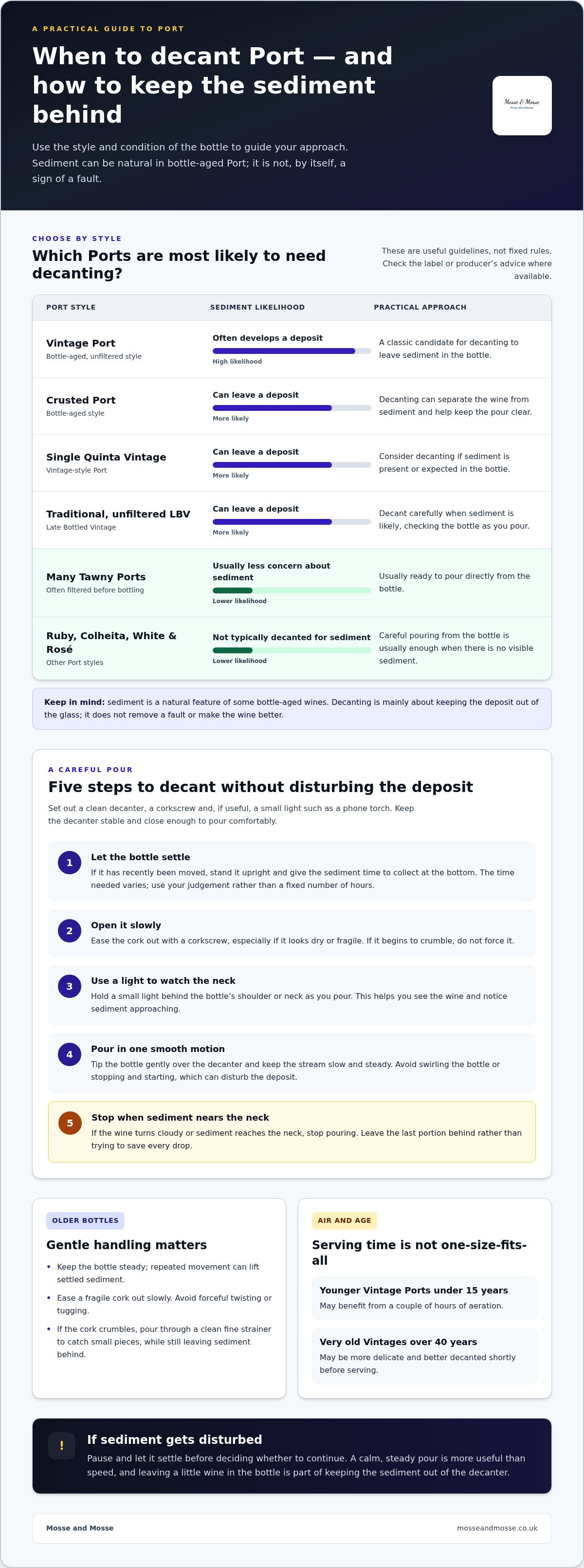
Bottle-aged Vintage Port is a classic candidate. It’s generally bottled without filtration, so sediment can collect as the wine develops. Crusted Port, Single Quinta Vintage Port and traditional, unfiltered Late Bottled Vintage Port can also leave a deposit. Decanting these styles can separate the wine from the sediment and help keep the pour clear. The Port wine sediment and decanting overview explains the connection between unfiltered styles and sediment.
By contrast, many Tawny Ports are filtered before bottling and are usually ready to pour directly from the bottle. Ruby, Colheita, White and Rosé Ports are also not typically decanted to remove sediment. These are useful guidelines, not fixed rules. Check the label or producer’s advice where available, and take the individual bottle into account.
Does Port sediment mean the wine has gone off?
No. Sediment is a natural feature of some bottle-aged wines and doesn’t, on its own, show that a Port is faulty. It may appear as fine particles or a deposit at the bottom of the bottle. Decanting helps keep that material out of your glass; it doesn’t remove a fault or make the wine better.
If the wine has an unusual or unpleasant smell or taste, sediment alone won’t tell you whether it’s sound. Consider the wine as a whole rather than treating a deposit as proof of spoilage. If the bottle has thrown sediment, decant it for a clearer pour and leave the deposit behind. That’s the practical purpose, not a test of quality.
In short, how to decant Port depends first on whether the style and bottle are likely to benefit. For a filtered Port without visible sediment, careful pouring from the bottle is usually enough. For a sediment-prone bottle, decanting can be helpful, but it isn’t a ritual every Port demands.
How to decant Port step by step without disturbing the sediment
A calm, steady pour matters more than speed. If the bottle contains sediment, keep it as still as practical before opening so the deposit can settle towards the bottom. The time needed depends on the bottle and how much it has been moved, so there isn’t one resting period that suits every Port.
Prepare the bottle, decanter and pouring area
Set out a clean decanter, a corkscrew and, if useful, a small light such as a phone torch. Choose a spot where you can pour comfortably without shifting the bottle. Handle an older bottle gently, since movement can lift settled sediment back into the wine. Make sure the decanter is stable and positioned close enough to pour into without stretching or changing your grip.
Open and pour Port carefully
Follow these steps to make how to decant Port straightforward, including when you’re opening an older bottle:
- Let the bottle settle. If it has recently been moved, stand it upright and give the sediment time to collect at the bottom. Use your judgement rather than relying on a fixed number of hours.
- Open it slowly. Ease the cork out with a corkscrew, taking extra care if it looks dry or fragile. If it begins to crumble, don’t force it. A slower, gentler approach can help keep pieces out of the wine.
- Position the light. Hold a small light behind the bottle’s shoulder or neck as you pour. This helps you see the wine and notice sediment approaching.
- Pour in one smooth motion. Tip the bottle gently over the decanter and keep the stream slow and steady. Avoid swirling the bottle or stopping and starting, as either can disturb the deposit.
- Stop as sediment nears the neck. If the wine turns cloudy or you see sediment reaching the neck, stop pouring. Leave the last portion in the bottle rather than trying to save every drop.
It’s normal to leave a little wine behind. The aim is to keep sediment out of the decanter, not to empty the bottle at all costs. For advice on handling a particular bottle, Mosse and Mosse offers personalised Port guidance. Get in touch for tailored advice.
How to Decant Older Port and Solve Common Problems
One method and serving timetable won’t suit every Port. A mature bottle may need especially gentle handling, and older wine can be more delicate once exposed to air. Decanting separates sediment and may let the wine breathe, but it won’t reliably improve every bottle or change its character in a predictable way. Let the wine’s age, condition and any producer guidance shape your approach.
What changes when the Port is old or the cork is fragile?
Keep the bottle steady and avoid shaking or moving it repeatedly, as this can lift settled sediment. Use a suitable corkscrew and ease the cork out slowly. If it feels as though it may break apart, don’t twist or tug forcefully. Take your time. If the cork crumbles, pour through a clean fine strainer to catch small pieces, while still watching for sediment and leaving the deposit behind.
Age can also affect how long a Port benefits from air. As a general guide, younger Vintage Ports under 15 years may benefit from a couple of hours of aeration, while very old Vintages over 40 years may be more delicate and better decanted shortly before serving. These are guides, not guarantees. Follow the producer’s advice where available and pay attention to how the wine is showing.
What if the sediment gets mixed into the wine?
Pause rather than pouring through the cloudiness. Set the bottle down gently and allow suspended sediment to settle again if time allows. Resume with a slower pour, using a light behind the neck to watch for the deposit. If some sediment has already reached the decanter, leave it to settle and pour carefully, or strain the wine through a clean fine sieve. Neither method guarantees a perfectly clear pour, so avoid repeatedly handling the wine in pursuit of one.
Knowing how to decant Port means adapting to the bottle, not following a rigid ritual. If you’re preparing an older Port and would value advice suited to its age and condition, get in touch with Mosse and Mosse for personalised Port advice.
After decanting Port: serving, storing and getting personal advice
Decanting prepares the wine for pouring; serving is the next decision. A decanter gives sediment-prone Port room to settle and can expose the wine to air, but more aeration isn’t automatically better. The right interval depends on the style, age and condition of the bottle. Follow the producer’s guidance where available and taste as you go. If the aromas are expressive and the wine tastes balanced, it’s ready to enjoy.
Keep serving simple. Choose a suitable glass and follow the producer’s recommendations for the Port’s style, rather than applying one temperature or timetable to every bottle. A decanter is for serving, not long-term storage. If you have Port left over, cover it and avoid leaving it exposed to air unnecessarily. Don’t store wine for a prolonged period in lead crystal, as lead can leach into the contents.
How soon should you serve Port after decanting?
There’s no universal waiting time. A younger Port may welcome some time to open up, while a delicate older bottle can lose aromatic detail if left breathing for too long. Taste a little after decanting, then check again as it develops. The aim is to enjoy the wine at its best, not to maximise aeration for its own sake. This attentive approach is just as useful as knowing how to decant Port.
Where can you get tailored Port guidance?
A guide to Port styles can help you understand what you’re serving and whether decanting is likely to suit it. The label and producer’s advice are useful starting points, while the individual bottle remains the best guide to how it’s showing.
Mosse and Mosse is an independent wine merchant in Suffolk, offering Port and personalised service to private clients. Whether you’re choosing a bottle or preparing one for an occasion, contact Mosse and Mosse for personal wine advice.
Pour with Confidence and Enjoy Your Port
The best approach to how to decant port starts with the bottle, not a fixed ritual. Sediment is natural in some bottle-aged styles, while filtered Ports are often ready to pour. If decanting will help, keep the bottle steady, pour slowly and stop when sediment approaches the neck.
Older bottles call for extra care, particularly if the cork is fragile. If sediment gets disturbed, pause and let it settle again where practical. There’s no single decanting or serving time for every Port, so follow producer guidance and taste the wine rather than leaving it to breathe simply for longer.
Mosse and Mosse is an independent Suffolk wine merchant offering Port and personalised service to private clients. For advice tailored to a bottle or occasion, get personal Port advice from Mosse and Mosse.
Frequently Asked Questions
Should all Port be decanted?
No, decanting isn’t necessary for every Port. Bottle-aged Vintage Port and other bottles that have developed sediment are the clearest candidates, as decanting can leave the deposit behind for a clearer pour. Many filtered styles, including many Tawny Ports, can usually be poured directly from the bottle. Check the producer’s guidance where available, and consider the bottle’s style and condition rather than following a blanket rule.
How long should you stand Port upright before decanting?
There’s no single waiting time that suits every bottle. Standing sediment-prone Port upright can help the deposit settle towards the base, but the time needed depends on how the bottle has been stored and whether it has recently been moved. Handle it gently and allow practical settling time before opening. As you pour, keep the bottle steady and watch the neck so you can stop before sediment reaches the decanter.
Can you decant Port the day before serving?
Don’t assume that every Port will benefit from being decanted a day ahead. Once transferred, the wine is exposed to air, and how it responds depends on its style, age and condition. Follow the producer’s advice if available, then taste the wine rather than relying on a universal timing rule. The aim is to preserve its enjoyment, not to maximise the time it spends breathing.
What should you do if a Port cork breaks?
Stay calm and avoid pushing cork pieces into the bottle if you can. Carefully remove any accessible fragment, then continue opening the bottle gently. If small pieces remain, pour slowly through a clean, fine strainer into the decanter. Keep watching for sediment as you pour: straining out cork fragments doesn’t mean you should transfer the bottle’s deposit as well. A steady hand is more useful than rushing to save every drop.
Does Port sediment mean the wine is faulty?
No. Sediment can develop naturally in bottle-aged Port and doesn’t, by itself, mean the wine has spoiled. Decanting helps keep the deposit in the bottle, giving you a clearer pour; it doesn’t improve the wine or remove a fault. Consider the Port’s overall condition and smell as well as its appearance. Sediment alone isn’t a reason to discard the bottle, so assess the wine as a whole.
Do you need a special decanter for Port?
No special decanter is essential. Choose a clean vessel that’s easy to pour from and large enough for the amount of Port you plan to transfer. A small light behind the bottle can help you see sediment approaching the neck; careful handling and a steady pour matter more than elaborate equipment. Mosse and Mosse is an independent Suffolk wine merchant serving customers in Ipswich, Norwich, Bury St Edmunds, Sudbury, Stowmarket, Newmarket, Thetford, Diss, Attleborough, Southwold, Aldeburgh, Framlingham, Woodbridge, Long Stratton and Saxmundham.


