

The most prestigious-sounding Meursault on the label may not be the bottle you’ll enjoy most. This celebrated white Burgundy is made predominantly from Chardonnay, but its character varies with the vineyard site, producer and vintage. One bottle may feel bright and finely textured, another richer and more rounded.
If village and Premier Cru names seem hard to interpret, you’re not alone. Meursault has no Grand Cru vineyards, but its Premier Cru sites are highly regarded. Classification alone won’t tell you whether a wine suits your taste, meal or budget. Looking beyond prestige is the key to choosing with confidence.
This guide explains what Meursault typically tastes like, how its styles differ and what to look for on a label. You’ll learn how to compare village and Premier Cru bottles, and how producer, vintage and occasion can help narrow your choice. Mosse and Mosse is an independent Suffolk wine merchant with a particular focus on Burgundy. Whether you’re planning a special dinner or choosing a white Burgundy to savour on its own, these pointers can help you find a bottle that feels right for the moment.
Key Takeaways
- Learn why Meursault is known for white Burgundy and how its red wines differ.
- See how vineyard location, vintage and winemaking can shape a bottle’s character.
- Compare village and Premier Cru labels, looking beyond classification to the style you enjoy.
- Use producer details and stated tasting notes to choose a wine that fits your preferences and occasion.
- Explore serving and food-pairing ideas to bring out Chardonnay’s freshness at the table.
What Is Meursault Wine? Côte de Beaune Chardonnay Explained
Meursault is a village appellation in Burgundy’s Côte de Beaune, best known for white wines made predominantly from Chardonnay. It’s a place name, not a grape variety or producer. A bottle labelled Meursault tells you where its grapes come from, rather than who made the wine.
Where Meursault sits within Burgundy
Burgundy is a wine region in eastern France, and the Côte de Beaune is its southern Côte d’Or subregion. Meursault is one village within the Côte de Beaune, not another name for the wider Côte d’Or or for Burgundy as a whole. Exploring Côte de Beaune wines can help put the village in context alongside its neighbours.
When reading a label, distinguish the appellation from the producer name: the first identifies the wine’s origin, while the second tells you who made it. Meursault also has village-level wines and designated Premier Cru vineyards, which indicate different levels of vineyard classification within the appellation. For an overview of its vineyards and grapes, see this guide to Meursault wine.
What to expect from white and red Meursault
White is the style most closely associated with Meursault. Chardonnay is the principal white grape, and the wines may show citrus or orchard-fruit flavours, lively acidity and a rounded or textured feel. These are tendencies, not a fixed recipe. Vineyard, vintage and winemaking choices all influence the result, so not every bottle will taste rich, buttery or strongly marked by oak.
Red Meursault exists, made primarily from Pinot Noir, but it’s far less prominent than the white wine. The appellation’s rules also permit Pinot Blanc in white wines, although Chardonnay dominates. In practice, if you choose a bottle labelled Meursault without further clues, you’re far more likely to encounter white Chardonnay than red Pinot Noir. The producer and label details can help you decide whether a particular bottle fits the style you’re after.
How Vineyard Site and Producer Shape Meursault’s Style
The village name gives you the broad origin, but not the whole story. Slope position and aspect affect how vines receive sunlight and warmth, while differences in soil and drainage influence growing conditions. These factors work alongside the vintage: a cooler or warmer growing season can shift the balance between freshness and ripeness.
Two Meursault wines can taste different because their vineyards, growing seasons and producers’ choices are different, even though both share the same appellation.
Village Meursault and Premier Cru vineyards
Village-level wines may be blended from eligible vineyards across the appellation or come from a named village site. Premier Cru identifies wine from a vineyard officially classified at that level. Names such as Les Perrières, Les Charmes and Les Genevrières point to specific Premier Cru origins; they aren’t separate appellations. The vineyards of Meursault offer useful local context for understanding this patchwork.
Premier Cru is a classification, not a promise that every bottle will suit every palate or occasion. A village wine may be a satisfying choice when its producer and described style match what you enjoy. Read the label for the appellation level and any vineyard name, then use those details as clues rather than a simple ranking.
Producer, vintage and winemaking choices
The producer’s choices in the cellar help shape the wine. Decisions about fermentation and maturation, including the use of oak, can affect texture and the prominence of toasted or creamy notes. Oak isn’t inevitable or uniform: some wines show it subtly, while others feel more marked by it. Tasting terms such as “fresh”, “rounded” or “toasty” are useful guides, not guarantees.
Harvest conditions matter too. Differences in warmth, rainfall and timing can affect ripeness and acidity, while cellar choices may preserve or soften the wine’s sense of freshness. Compare the producer and vintage alongside the appellation, and treat tasting notes as guidance towards the style you want. If you’re weighing up Burgundy styles, speak with our team for personal wine guidance.
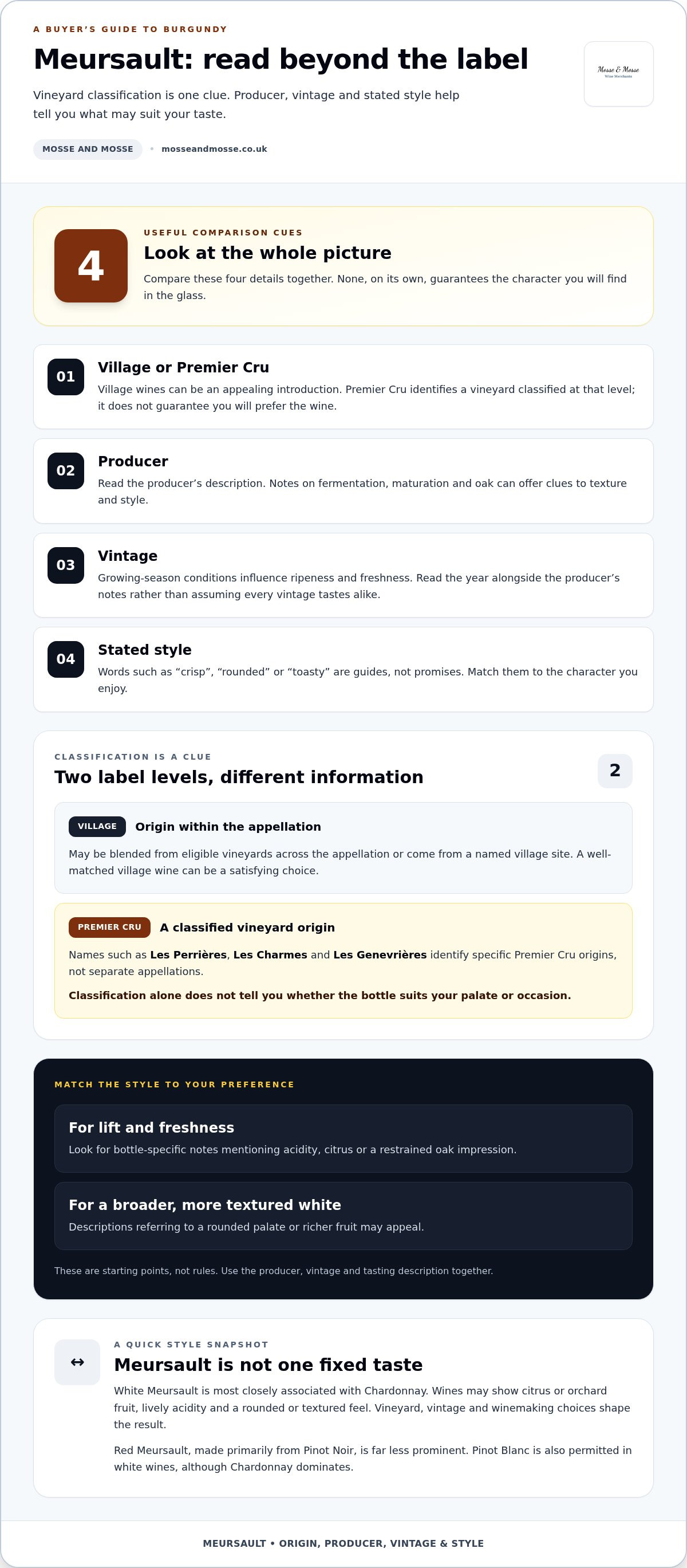
How to Choose Meursault: A Practical Comparison for Buyers
Prestige can point you towards a notable vineyard, but it can’t tell you whether a wine’s freshness, texture or oak influence will suit your taste. Compare the details together, then choose for the occasion rather than relying on the label hierarchy alone.
| What to compare | How to use it |
|---|---|
| Village or Premier Cru | Village wines can offer an appealing introduction. A Premier Cru label identifies a classified vineyard, but doesn’t guarantee that you’ll prefer it or find it better in the glass. |
| Producer | Read the producer’s description and look for details about oak or maturation to gauge the likely texture and style. |
| Vintage | Vintage conditions influence ripeness and freshness. Read the year alongside the producer’s notes rather than assuming every vintage tastes alike. |
| Stated style | Words such as “crisp”, “rounded” or “toasty” offer clues, not promises. Match them to the character you enjoy. |
Match the bottle to your taste and occasion
Prefer lift and freshness? Look for bottle-specific notes that mention acidity, citrus or a restrained oak impression. If you enjoy a broader, more textured white, descriptions referring to a rounded palate or richer fruit may appeal. For a relaxed glass, an approachable style could be a natural fit. For a considered meal, you might prefer a more structured example. These are starting points, not rules: the producer, vintage and tasting description should all support your choice.
Classification, producer reputation, vintage and provenance can all influence a bottle’s price. Rather than treating a higher price or Premier Cru status as proof of a better match, weigh those factors against the style you actually want. A white Burgundy guide can also help you place Meursault among the region’s other Chardonnay styles.
A simple checklist for comparing bottles
- Read the producer and vintage before relying on the appellation name.
- Consider the vineyard classification alongside, not instead of, the tasting description.
- Decide whether freshness, texture or oak matters most for your palate and occasion.
When buying wine online, look beyond prestige to the details that help you picture what’s in the bottle. If you’d like a personal perspective on comparing Burgundy styles, talk to our wine team.
Serving Meursault and Finding the Right Bottle with a Suffolk Wine Merchant
Serving temperature and food can bring different facets of a wine into focus. Meursault is best enjoyed cool rather than very cold: excessive chill can mute its aromas and make its freshness harder to appreciate. If the bottle has been refrigerated, give it a little time out before pouring, then let it open in the glass.
Serving Meursault with food
Chardonnay’s freshness and texture can work beautifully alongside a range of dishes. The best match depends on how the food is prepared. Consider:
- Poultry: Roast chicken or turkey can complement a rounded white, particularly with a light pan sauce.
- Fish: Simply cooked fish may suit a fresher style, while richer sauces can pair well with wines that have more body.
- Creamy dishes: A textured Chardonnay can sit comfortably alongside a creamy sauce, provided its richness doesn’t overwhelm the meal.
Seasoning matters. Lemon, herbs and delicate sauces tend to keep a dish light; browned butter, cream or stronger spices can make it feel richer. Think about the whole plate, not just the main ingredient, and treat pairing suggestions as possibilities rather than rules.
From comparison to a confident purchase
Choose in a clear order: start with the style you enjoy, then compare the producer, vineyard site and vintage. Finally, consider the occasion and food. That gives you a more useful guide than prestige alone and helps you choose a bottle with a character that fits the moment.
Mosse and Mosse is an independent Suffolk wine merchant with a particular focus on Burgundy, offering personalised service and delivery across the UK mainland. Our curated wine selection includes Burgundy alongside wines from other regions. We serve wine lovers in Ipswich, Norwich, Bury St Edmunds, Sudbury, Stowmarket, Newmarket, Thetford, Diss, Attleborough, Southwold, Aldeburgh, Framlingham, Woodbridge, Long Stratton and Saxmundham. To compare Burgundy styles for your meal or occasion, discuss your options with our team.
Choose a Meursault You’ll Love to Share
A memorable bottle isn’t chosen by classification alone. Match the producer, vineyard and vintage to the style you enjoy, then consider the meal and occasion. Paying attention to serving temperature and the character of the food can help the wine show at its best.
Choosing Meursault should feel like finding the right expression for your table, not simply reaching for the most prestigious label. If you’re weighing up freshness, texture or oak influence, personal guidance can make the options easier to compare.
Mosse and Mosse is an independent Suffolk wine merchant with a particular focus on Burgundy and Bordeaux. We offer personalised service and delivery across the UK mainland, helping wine lovers choose with confidence. Speak with our team for personal wine guidance and find a bottle that suits your next meal or occasion.
Frequently Asked Questions
What does Meursault wine taste like?
Meursault white wine often combines fresh acidity with citrus or orchard-fruit flavours and a rounded, sometimes textured feel. Some examples show a noticeable influence from oak, while others taste more restrained and mineral. The balance varies with vineyard, vintage and producer, so no single tasting note fits every bottle. Use descriptions such as “fresh”, “rich” or “toasty” as clues, rather than promises.
Is Meursault always made from Chardonnay?
No. White Meursault is made predominantly from Chardonnay, though Pinot Blanc is also permitted under the appellation rules. Most bottles are Chardonnay, which is why the name is strongly associated with that grape. Red Meursault is made mainly from Pinot Noir and is much less prominent than white. Check the bottle’s description for the grape composition and expected style of a particular wine.
What is the difference between village Meursault and Premier Cru?
Village Meursault comes from vineyards within the appellation that aren’t classified as Premier Cru, and may carry a named vineyard on the label. Premier Cru identifies wine from a vineyard officially classified at that level, often shown with a site name. The distinction tells you about origin and classification, not whether you’ll prefer the wine. Compare the producer’s style and tasting notes alongside the vineyard name to find the best fit.
Is Meursault a Grand Cru wine?
No. Meursault has no Grand Cru vineyards. Its recognised vineyard hierarchy includes village wines and Premier Cru sites, which are among the appellation’s most highly classified origins. A Premier Cru label can be useful when comparing vineyard provenance, but it doesn’t guarantee that the wine will suit your palate or occasion better than a village example. Consider the producer, vintage and stated style too.
How should you serve Meursault?
Serve Meursault cool, rather than very cold or warm. If it has been in the fridge, take it out shortly before pouring and let it gradually open up in the glass. Serving it too warm can make the wine feel heavier and obscure its freshness; excessive chill can mute aromas and flavour. There’s no need for elaborate equipment: a suitable white-wine glass and a little attention to temperature will help you enjoy its character.
What food pairs well with Meursault?
Meursault can pair well with poultry, fish and dishes with creamy textures. Try roast chicken with a light sauce, simply cooked fish with herbs, or a creamy dish alongside a wine with enough body to complement it. Consider the whole plate: lemon and delicate seasoning keep flavours bright, while cream, browned butter or stronger spices add richness. For readers planning meals in Ipswich, Norwich, Bury St Edmunds, Sudbury, Stowmarket, Newmarket, Thetford, Diss, Attleborough, Southwold, Aldeburgh, Framlingham, Woodbridge, Long Stratton or Saxmundham, the same flexible approach applies.


