
What if the most expensive bottle on the merchant's shelf is actually the poorest investment you could make for your weekend dinner? It's a frustrating reality that a steep price often reflects a massive marketing budget or a famous postcode rather than the actual craftsmanship inside the glass. Many enthusiasts find themselves stuck, wondering how to tell if wine is good value when faced with rows of identical-looking labels and cryptic regional classifications. You've likely felt that sting of disappointment after splurging on a prestige label only to find it lacks character and soul.
We've always believed that choosing a bottle should be a joy, not a stressful gamble with your money. This guide will strip away the pretension and show you exactly how to identify bottles that punch far above their weight in 2026. We'll explore the secrets of regional arbitrage, the benefits of the latest transparency mandates, and why looking toward boutique producers in places like the Médoc or Alentejo is the smartest way to fill your cellar. By the end, you'll have the confidence to ignore the hype and pick out exceptional quality every time.
Key Takeaways
- Understand that true value is the ratio of sensory pleasure to price, helping you avoid the trap where logistics and tax outweigh the quality of the wine itself.
- Learn technical markers such as "Estate Bottled" and ABV to identify producers who maintain total control over their viticultural standards.
- Master how to tell if wine is good value by utilising regional arbitrage, finding hidden gems in areas like Navarra that rival more famous, expensive neighbours.
- Discover why independent, boutique producers like Bodegas Ochoa offer far superior quality and character compared to mass-marketed brands.
- Build a smarter home collection by using curated mixed cases to explore new styles and investing in magnums for better long-term ageing.
Understanding Wine Value: Why Price and Quality Aren’t Always Linked
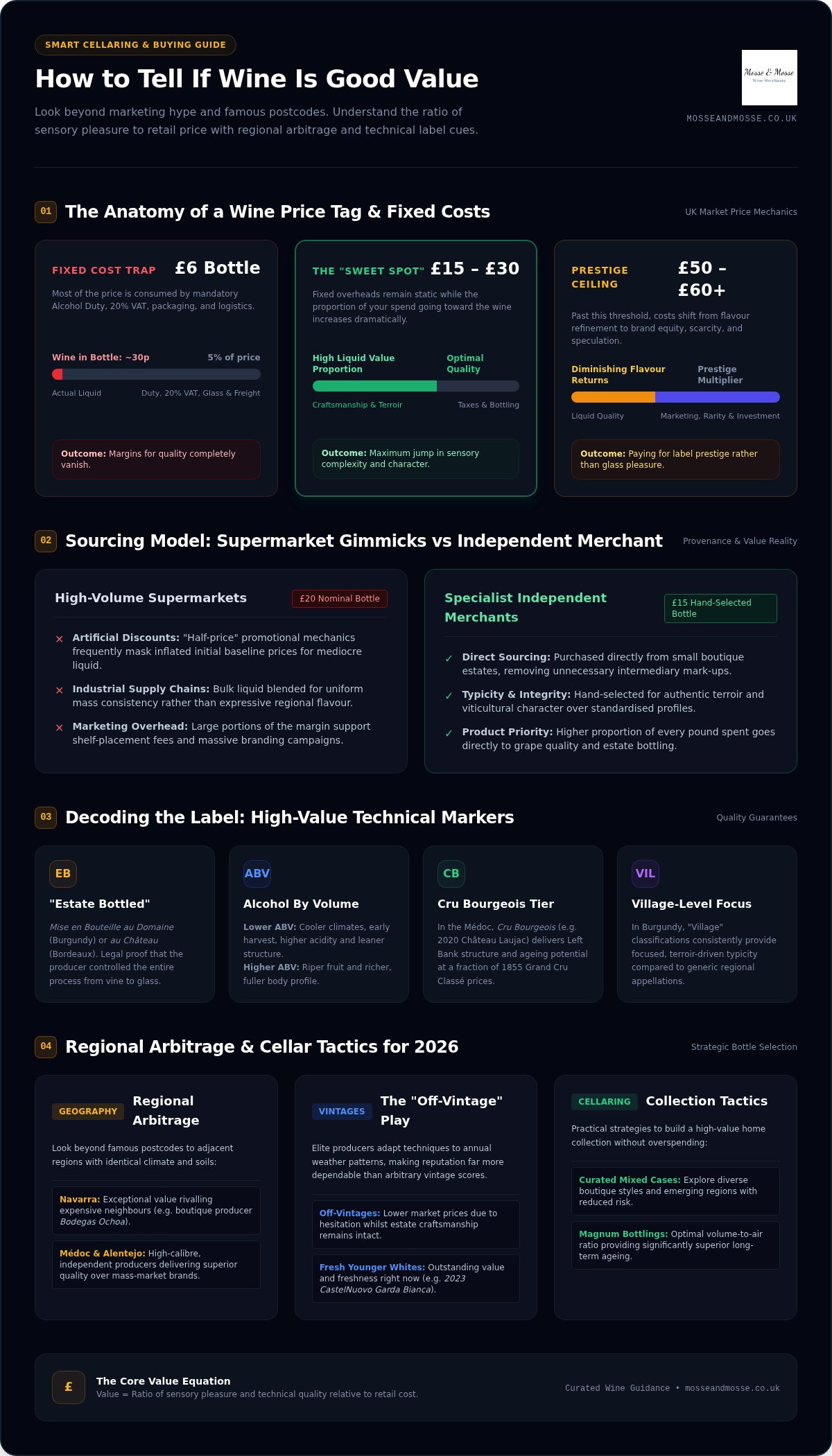
True value in wine isn't about finding the cheapest bottle on the shelf. It's the precise ratio of sensory pleasure and technical quality compared to the retail price. When we talk about how to tell if wine is good value, we're looking for bottles where the liquid inside far exceeds the cost of the packaging and branding. Many drinkers fall into the trap of assuming a higher price automatically guarantees a better experience, but the reality is more complex. Once you exceed the £50 or £60 mark, you often enter the "Law of Diminishing Returns". At this level, you aren't just paying for flavour; you're paying for prestige, rarity, and investment potential. For the everyday connoisseur, the best value lies just below this ceiling.
In the UK, the "Fixed Cost" trap is the biggest barrier to quality. If you spend £6 on a bottle, you're essentially paying for tax and glass. After accounting for Alcohol Duty, VAT, and logistics, the actual wine in that bottle might only be worth about 30p. However, as you move toward the "Sweet Spot" between £15 and £30, the proportion of your money going toward the wine itself increases dramatically. This is where you see the most significant jump in complexity and character.
The Anatomy of a Wine Price Tag
Every bottle carries a heavy burden of non-negotiable costs. In the UK, still wine duty is significant, and when you add 20% VAT, packaging, and transport, the margins for quality on cheap bottles vanish. Independent merchants often offer superior value by sourcing directly from smaller estates, bypassing the industrial supply chains used by mass-market retailers. This direct connection ensures you're paying for "Estate Bottled" integrity rather than bulk-produced liquid that's been blended for consistency rather than flavour.
The "Supermarket vs. Merchant" Debate
Supermarkets frequently use "half-price" promotions to entice shoppers, but these deals often mask inflated base prices for mediocre wines. Understanding how to tell if wine is good value involves looking past these gimmicks. A £15 bottle from a specialist like Mosse and Mosse often outperforms a £20 supermarket bottle because it has been hand-selected for its provenance and typicity. Expert curation removes the "industrial" edge common in high-volume retail, focusing instead on boutique producers who prioritise the physical product over marketing hype.
Decoding the Label: Technical Markers of a High-Value Bottle
Learning how to tell if wine is good value often starts with a single phrase on the label: "Estate Bottled". Whether it's "Mise en Bouteille au Domaine" in Burgundy or "au Château" in Bordeaux, this is your legal guarantee that the producer controlled the entire process from vine to glass. It represents total quality control. In contrast, bulk-produced wines are often blended from anonymous sources in industrial facilities, which inevitably strips away the unique character of the terroir.
The ABV (Alcohol by Volume) indicator is another subtle clue to the liquid's profile. A lower ABV often suggests a cooler climate or an earlier harvest, resulting in higher acidity and a leaner, food-friendly structure. Conversely, a higher ABV indicates riper grapes and a fuller, more indulgent body. Neither is objectively superior, but matching the ABV to your preferred style is a vital step in ensuring you aren't paying for a profile you don't actually enjoy.
Appellations and Classifications
Specific regions like the Médoc utilise strict quality tiers that savvy buyers can exploit. While a 1855 "Grand Cru Classé" carries a prestige price tag, the "Cru Bourgeois" classification offers exceptional Left Bank quality for significantly less. The 2020 Château Laujac, a Cru Bourgeois Supérieur, is a prime example; it provides the structure and ageing potential of a much more expensive estate. Similarly, "Village" level Burgundy consistently offers a more focused, terroir-driven experience than generic regional labels, making it a smarter buy for those seeking typicity.
The Truth About Vintages
Don't be frightened by so-called "off-vintages". Elite producers make excellent wine every year by adjusting their techniques to the weather. Often, an off-vintage from a top-tier estate is the ultimate value play because the price reflects the market's hesitation while the producer's expertise remains intact. Currently, we're seeing brilliant freshness in younger whites like the 2023 CastelNuovo Garda Bianca, which is drinking beautifully right now. A producer's long-standing reputation is a far more reliable indicator of quality than a "perfect" vintage score from a critic. If you're unsure which year to choose for your next delivery, get in touch for a personal recommendation from our team.
The "Second Wine" secret is perhaps the best trick in a connoisseur's arsenal. These bottles are crafted from the same vineyards and by the same winemaking teams as the world's most famous "Grand Vin" estates. They offer the same pedigree and stylistic thumbprint but are designed to be enjoyed younger and priced much more accessibly. It's the most effective way to drink world-class viticulture without the investment-grade price tag.
Regional Arbitrage: Where to Find Hidden Gems in 2026
Regional arbitrage is the connoisseur's most effective strategy. It involves identifying areas that share the same soil, climate, and grape varieties as world-famous appellations but haven't yet inherited the prestige pricing. For example, Navarra in Spain sits right next to Rioja. Producers like Bodegas Ochoa craft wines with incredible structure and elegance that often rival their more famous neighbours at a fraction of the cost. Understanding these geographic overlaps is a masterclass in how to tell if wine is good value.
In 2026, Sicily has become a primary target for value seekers. The island's volcanic soils produce vibrant Grillo whites and robust Nero d’Avola reds that offer immense character. Similarly, Southern France, particularly the Languedoc, remains a treasure trove for Syrah and Viognier. These wines provide "everyday" drinking prices without sacrificing the artisanal touch we look for in boutique estates. You're getting the same sunshine and winemaking heritage as more famous AOCs whilst keeping your budget intact.
Smarter Alternatives to the "Big Names"
If you love the crisp acidity of Sancerre, look toward a 2024 Sauvignon Blanc from Marlborough or a Belardent Picpoul de Pinet. These offer that familiar citrus zing at a much more palatable price point. For those who enjoy the weight of a Napa Cabernet, turning your attention to Bordeaux or a high-altitude Malbec from Mendoza provides better structural balance. The 2024 Rupe Secca Grillo is a particular standout this year, offering a refreshing alternative to more expensive Italian whites. To discover these hidden gems for yourself, enquire about our latest curated mixed cases.
The Value in Fortified and Sparkling Wines
Sparkling wine enthusiasts don't always need to reach for Champagne to find excellence. A Crémant, such as the Langlois Crémant de Loire, uses the identical "traditional method" and lees-ageing for a significantly smaller investment. However, if you do want the real thing, Ayala Brut Majeur represents a superb high-value entry point into premium Champagne. Don't overlook the longevity of a Tawny or Ruby Port, either. These are incredible value-per-sip investments because they remain fresh for weeks after opening, unlike still wines that fade within days.
How to Build a High-Value Wine Collection at Home
Building a cellar doesn't require a lottery win; it requires a strategy. Understanding how to tell if wine is good value becomes second nature when you stop buying random supermarket bottles and start building a curated home collection. The most effective way to begin is by establishing a relationship with an independent merchant who understands your personal preferences. We spend our time scouring vineyards so you don't have to, ensuring every bottle in your rack has earned its place through quality, not marketing.
The Power of the Mixed Case
Mixed cases are the ultimate tool for discovery. They allow you to explore prestigious regions like the Côte d’Or without the financial risk of committing to a full case of one producer. Our Summer 2026 curated cases are designed around current drinking windows, featuring "everyday" anchors like the 2024 La Ronciere Cantoalba Pinot Noir. This approach ensures variety and prevents palate fatigue, which is a common side effect of buying bulk industrial wines that lack character.
Buying for the Future
Investing in Magnums & Larger Formats is a brilliant value play for dinner parties and long-term enjoyment. These bottles have a superior wine-to-oxygen ratio, meaning they age more gracefully and slowly than standard formats. When looking for bottles with "legs" that will improve with 2 to 3 years in the cellar, focus on structured reds with balanced acidity. Learning how to tell if wine is good value also involves protecting your investment. Even the finest bottle is wasted if it's stored incorrectly; avoid the kitchen radiator or bright windows, as a cool, dark, and stable environment is essential.
Ready to find your next favourite bottle? Contact Tim at Mosse and Mosse for a personalised consultation and let us help you build a collection that truly reflects your taste.
Elevate Your Cellar with Confidence
Mastering the art of regional arbitrage and technical label markers ensures you'll never be misled by a flashy brand name again. You now have the tools to look beyond the price tag and focus on the physical quality of the liquid inside. Understanding how to tell if wine is good value means you can explore the Médoc or hidden gems in Navarra with total certainty. It's about finding that perfect balance between technical viticultural standards and pure sensory enjoyment.
As a boutique, family-led Suffolk merchant with over 25 years of expertise, we specialise in sourcing those elusive bottles from Burgundy and Bordeaux that truly stand out. I, Tim Mosse, take great pride in offering direct personal advice to help you navigate the complexities of the vine. It's about building a relationship, not just making a sale. Enquire about our curated Summer 2026 wine cases and let's find something exceptional for your table. We're here to guide you toward wines that offer genuine pleasure and lasting quality. Cheers to your next favourite discovery.
Frequently Asked Questions
How much should I spend on a bottle of wine to get good quality?
You'll find the most significant jump in quality when you spend between £15 and £30 per bottle. In the UK, fixed costs like Alcohol Duty and VAT consume almost the entire budget of a £6 bottle, leaving only pence for the liquid. By moving into the mid-teens, a much higher percentage of your money goes toward the actual wine. This range allows us to source characterful, boutique wines from independent estates rather than mass-produced industrial blends.
Is screwcap wine lower quality than cork?
Screwcaps are definitely not a sign of inferior quality; they are simply a choice for freshness and consistency. Whilst traditional corks are preferred for long-term ageing in regions like Bordeaux, screwcaps are excellent for white wines and everyday reds meant to be enjoyed young. They eliminate the risk of cork taint and keep the wine's vibrant fruit profile intact. Many high-end producers in Australia and New Zealand have used them for decades with superb results.
Why is merchant wine more expensive than supermarket wine?
Specialist merchants like Mosse and Mosse focus on curation and provenance rather than high-volume turnover. Supermarkets often use inflated base prices to offer misleading "half-price" deals on industrial wines. Our bottles are hand-selected from smaller estates, ensuring you pay for genuine craftsmanship and technical quality. When considering how to tell if wine is good value, remember that a merchant's £15 bottle often delivers a far more complex sensory experience than a generic supermarket equivalent.
How can I tell if a wine will age well just by looking at the label?
Look for specific regional classifications like "Cru Bourgeois Supérieur" from the Médoc or "Reserva" from Navarra, as these terms often mandate longer ageing periods and higher production standards. High-value bottles with ageing potential usually feature "Estate Bottled" designations, ensuring the producer has managed the wine's structure from vineyard to cellar. If you're in Ipswich or surrounding Suffolk towns, a quick chat with an expert can help identify which specific vintages will truly reward a few years in the rack.
Does a higher alcohol percentage mean a better quality wine?
A higher alcohol percentage is an indicator of grape ripeness and climate, not necessarily quality. High-quality wine is defined by its balance; the alcohol must be integrated with fruit intensity, acidity, and tannins. A 14.5% Malbec can be just as refined as a 12.5% Pinot Noir if the winemaking is precise. Quality is about the harmony of these elements rather than the strength of the spirit, so don't let the ABV figure alone dictate your purchase.
What are the best value wine regions to look for in 2026?
For 2026, we recommend looking toward Navarra in Spain, Sicily, and the Alentejo region in Portugal. These areas offer incredible regional arbitrage, providing the complexity of world-famous neighbours without the prestige overheads. Southern France also remains a treasure trove for high-quality Syrah and Viognier. Learning how to tell if wine is good value often involves stepping away from the big names and exploring boutique producers who prioritise the physical product over expensive global marketing campaigns.


