

Port isn’t simply a sweet red wine. The meaning of Port in wine is a fortified wine from Portugal’s Douro Valley. Grape spirit is added during fermentation, stopping it and retaining natural grape sweetness while giving the wine its characteristic strength. Tawny Port develops a mellow, nutty character as it ages in wood.
That sweetness and warmth can make Port seem straightforward, but the details explain why Tawny tastes different from rich, fruit-led Ruby. The grapes, timing of fortification and ageing method all shape the result.
Here, you’ll learn how fortification works, which grape varieties contribute to Port, and how ageing in wooden barrels changes Tawny’s colour, aroma and flavour. This will help you understand what’s in your glass and why the style matters when choosing a Port to enjoy.
Key Takeaways
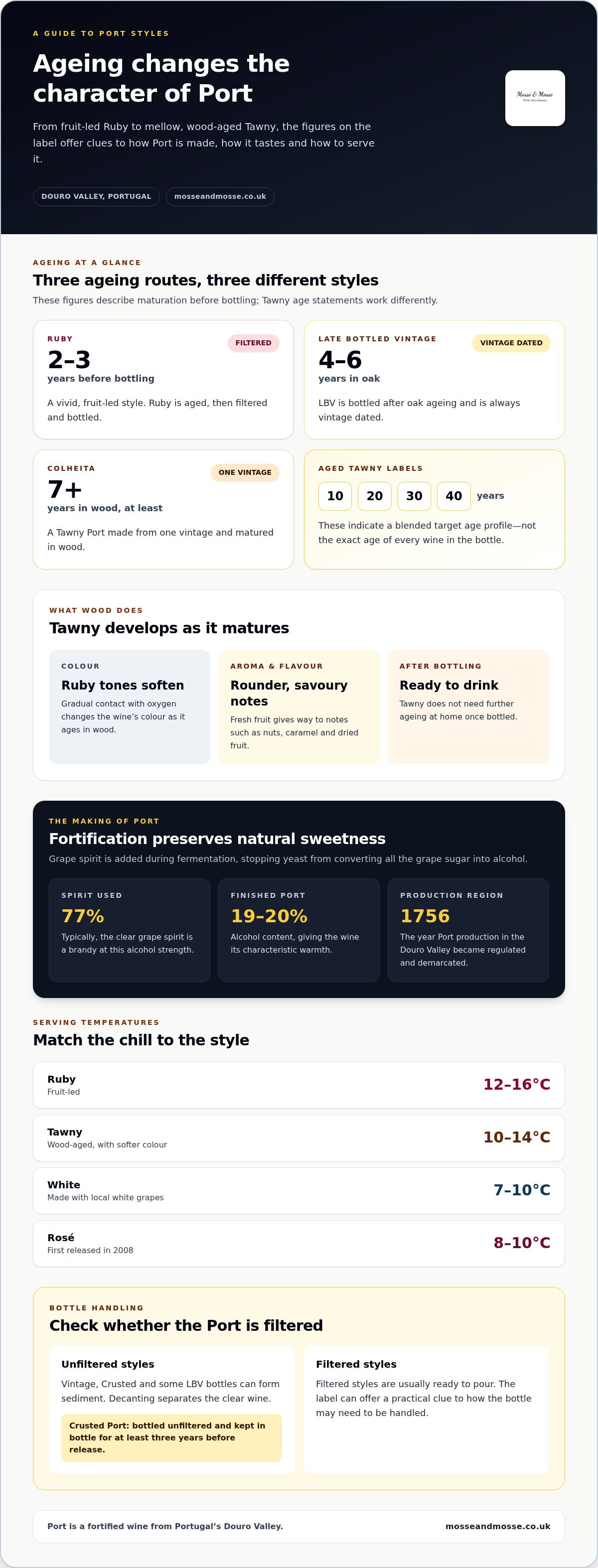
- Compare Port styles by how they mature: Ruby is aged for between 2 and 3 years before filtering and bottling, whilst Late Bottled Vintage spends 4-6 years in oak before bottling.
- Discover why Tawny’s age statement describes a blended target age profile, not the exact age of every wine in the bottle.
- Learn how a broad range of Douro grapes, including six particularly prevalent varieties, contribute to Port’s character.
- Find out which unfiltered styles can form sediment in the bottle and why they need decanting.
What is Port Wine?
Port is a fortified wine from Portugal’s Douro Valley, with styles shaped by colour and maturation. Searching for “port meaning wine” often comes down to understanding what distinguishes it from ordinary table wine: Port retains sweetness after fermentation stops, and its different styles develop distinct flavours.
Port styles and classifications
Port classifications describe how the wine is matured and bottled, helping you choose a style for the occasion. Ruby and Tawny are broad categories, while Vintage, Late Bottled Vintage (LBV), Crusted and Colheita refer to specific ageing approaches. Knowing the style helps you anticipate whether a bottle is fruit-led, wood-aged or intended to develop in bottle.
Ruby Port is aged for between 2 and 3 years before filtering and bottling. LBV spends 4-6 years in oak before bottling and is always vintage dated. Vintage Port is made only in selected years and is designed to age in bottle. These differences make the classification useful when deciding whether to open a bottle now or cellar it.
Ruby, tawny, white and rosé styles
Ruby Port keeps a vivid, fruit-led character, while Tawny develops softer colour and wood-aged notes such as dried fruit and nuts. White Port is made with local white grapes, and Rosé Port was first released in 2008. These colour and maturation differences help match a style to an aperitif, dessert or a particular flavour preference.
Colheita is a Tawny Port from one vintage, aged in wood for at least 7 years. Aged Tawny labels may show 10, 20, 30 or 40 years, describing a target age profile created by blending wines of different ages, rather than the exact age of every component. Tawny is ready to drink once bottled, so it doesn’t need further ageing at home.
Crusted Port is bottled unfiltered and must remain in the bottle for at least three years before release. Unfiltered Vintage, Crusted and some LBV bottles can form sediment, so decanting separates the clear wine. Filtered styles are usually ready to pour. The label offers a practical clue to how a bottle may need to be handled.
Serve Ruby at around 12-16°C and Tawny at around 10-14°C. White Port is best chilled at 7-10°C, while Rosé suits 8-10°C. The port meaning wine becomes clearer when you connect each style’s production and serving temperature to the experience you want in the glass.
Port and Sherry are both fortified wines, but they are distinct styles with different origins and production traditions. Port comes from Portugal’s Douro Valley, so the names are not interchangeable.
Port's meaning and fortified-wine production
Port’s identity comes from its origin in Portugal’s Douro Valley and the fortification that shapes its sweetness and strength. Its region, production method and history explain why Port describes a distinctive wine, not simply a flavour.
The meaning of Port wine
Port means a fortified wine produced in Portugal’s Douro Valley, where local grapes and a defined winemaking tradition shape its identity. That origin matters when reading a label: a ruby port, for example, is not simply any sweet, strong red wine. Port’s typical alcohol content is around 20%, and its styles range from white aperitif wines to richer bottles served with dessert.
Fortification in Port production
Fortification is the addition of grape spirit during fermentation, stopping yeast from converting all the grape sugar into alcohol. The timing determines how much natural sweetness remains, so the winemaker’s decision helps shape the finished style. A clear, neutral spirit, typically a 77% alcohol brandy, is used in the process.
After fortification, the wine continues to mature before bottling. Finished Port has an alcohol content of 19-20%, giving it more warmth than an unfortified table wine. The spirit doesn’t merely make the wine stronger: by halting fermentation, it also preserves sweetness, a defining feature across Port styles.
The Douro region and production regulation
The Douro Valley is the production region for Port, and its protected status distinguishes the wine from fortified wines made elsewhere. The Douro Valley’s distinctive heritage and protected status help set it apart as a wine region. These geographical roots explain why the name Port is tied to a specific Portuguese landscape and its established production.
Port production became regulated and demarcated in 1756. That date matters because it marks the establishment of boundaries and rules for the region’s wine production. For readers, the connection between place and regulation offers a useful way to understand the name: Port refers to both a production tradition and its Douro origin.
Port production history
Port’s history dates back to the 17th century, when trade helped bring Douro wines to wider markets. By the 18th century, the Douro Valley had become the exclusive production region for Port. This history gives the name its distinct association with Portugal, rather than with a general method of fortifying wine.
Fortification became commonplace and a standardised winemaking procedure in the early 1800s. In practice, the process connects the vineyard’s grapes to the finished wine’s texture: fermentation begins, grape spirit is added, and maturation develops the chosen style. A barrel, tank or bottle can influence that later development, which is why production choices matter as much as sweetness.
If you’re comparing wine styles for your table, talk through your preferences and what you plan to serve.
Tawny Port aging and flavour
Tawny Port develops its characteristic colour and flavour through ageing in wooden casks. Compared with fruit-forward Ruby, time in wood creates a softer profile, often described with notes of nuts, caramel and dried fruit. The maturation style and length help explain what to expect from each bottle.
How wood ageing shapes Tawny
During ageing in wood, gradual contact with oxygen changes the wine’s colour and aroma. Ruby tones become tawny, while fresh fruit flavours give way to rounder, more savoury notes. The small wooden barrels used for aged Tawny encourage this development, creating a different expression from Port matured mainly in bottle.
Entry-level Tawny is aged for about 3 years. Tawny Reserve spends at least seven years in barrel before filtering and bottling. That extended contact with wood helps build greater aromatic complexity, though sweetness remains part of the style. Tawny is ready to drink once bottled, so further bottle ageing isn’t needed to develop its intended character.
Reading aged Tawny labels
Aged Tawny labels commonly show 10, 20, 30 or 40 years. These figures describe a target age profile, achieved by blending wines of different ages, rather than the precise age of every wine in the bottle. The indication helps you compare the expected maturity and flavour style across bottles.
A 10-year-old Tawny profile generally suggests a more youthful, fruit-led character than a 40-year profile, which tends towards greater concentration and developed wood-aged aromas. The number isn’t a promise that every component has spent that exact time in cask. Instead, it indicates the overall style the blend is intended to express.
Single-vintage Tawny: Colheita
Colheita is a Tawny Port made from grapes harvested in one vintage. It ages in wood for at least 7 years and is often released at least a decade after its harvest. Unlike a blended aged Tawny, the label identifies the harvest year, giving the drinker a direct connection to one season.
Colheita can continue ageing before release, but it doesn’t form sediment like Vintage Port. Its flavour reflects both the vintage and long maturation in wood. This distinction helps when choosing between a single-harvest Tawny and a Tawny blended to achieve a consistent profile.
Choosing and serving Tawny
For a softer, more familiar style, an entry-level Tawny suits casual sipping or a dessert course. A Reserve or aged Tawny brings more developed cask character, which can complement nuts, dried fruit or caramel flavours. Serve Tawny slightly chilled, around 10-14°C, to keep its sweetness balanced and its aromas clear.
Once opened, Tawny generally lasts 3-4 weeks. Older Tawny and Colheita may last several months after opening. Wood maturation has already shaped the wine before bottling, so keeping it for further ageing at home won’t improve its flavour.
Grape varieties used for Port
Port is made from Portuguese grapes grown in the Douro Valley, and producers commonly blend several varieties. Around 30 grape varieties are commonly used in Port production, with six particularly prevalent. This diversity gives winemakers options when shaping the wine’s structure, colour and aroma, rather than relying on one grape alone.
The six principal red varieties are Touriga Nacional, Touriga Franca, Tinta Roriz, Tinta Barroca, Tinto Cão and Tinta Amarela, also known as Trincadeira. Each contributes its own balance of colour, fragrance, acidity and tannin. Blending brings these qualities together to create a coherent wine from grapes with different characteristics.
Touriga Nacional is often valued for concentrated colour and aromatic intensity. Touriga Franca can bring fragrance and structure, while Tinta Roriz contributes freshness and firm tannins. Tinta Barroca is associated with generous fruit, and Tinto Cão and Tinta Amarela add further complexity. The finished profile depends on the blend and growing conditions in the Douro, not on one grape alone.
How grape choice shapes Port styles
Grape selection influences the raw material for Ruby, Tawny, Vintage and Crusted Port, but maturation also determines the final style. Reserve Port is made from wines selected for blending, rather than from a separate grape variety. Tawny Ports gain their familiar wood-aged character in cask: the grapes provide the foundation, while ageing reshapes the flavour.
White Port uses local white grapes from the Douro Valley, rather than the red varieties used for Ruby or Vintage Port. Producers can make different styles, including drier expressions and sweeter versions. Grape choice helps set the wine’s colour and flavour direction before fermentation and fortification shape the finished drink.
Traditional grape treading
Traditional foot-treading takes place in shallow stone lagares, where people gently crush grapes underfoot. This breaks the skins and releases juice, colour and tannins while avoiding harsh treatment of the pips and stems. The method remains a vivid link between Douro grape-growing and traditional Port production, although producers also use modern techniques.
Up to 52 grape varieties may be used to make Port, and around 110 are permitted in production. Those figures describe different scopes: the first concerns varieties used, while the second refers to the broader permitted range. Knowing a grape name can offer clues, but the blend, vineyard conditions and winemaking choices all matter. Discuss wine styles that suit your taste when you’re ready to explore what to enjoy next.
Mosse and Mosse: Red Wine
Mosse and Mosse offers red wine for readers comparing Port’s rich fruit with an unfortified wine. Based in Suffolk, it brings wine choices close to home for readers in Ipswich, Framlingham and Woodbridge. If you’re choosing a bottle for a meal, consider how its body and flavour will sit alongside the food.
For a different style, explore white wine or Champagne and sparkling wines. These offer alternatives when you want freshness or a celebratory pour. Mosse and Mosse serves wine enthusiasts in Norwich, Bury St Edmunds and nearby Suffolk towns, with options for different tastes and occasions.
Whether you’re choosing wine for your table or exploring a new style, Mosse and Mosse offers a curated range to discover. Browse the selection online or call Tim Mosse to discuss a bottle or mixed case.
Choose a Bottle for Your Next Occasion
Understanding what Port means in wine can make choosing a bottle more rewarding. Think about the experience you want: a relaxed evening, a meal with friends or a celebration. Let the occasion guide your choice, then explore a style that suits your table.
Mosse and Mosse offers red and white wines, Champagne and sparkling wines for different tastes and occasions. If you’re moving from learning about Port to exploring another bottle, consider which flavours you enjoy and what you plan to serve. Choose a wine that complements the meal or gathering.
For help exploring the range, contact Mosse and Mosse. Take your time discovering new favourites, and enjoy finding a wine that feels just right for your next occasion.
Frequently Asked Questions
How long does Port last?
Once opened, Port’s keeping time depends on its style and age. Ruby is best enjoyed within a few days to a week, whilst Tawny generally lasts 3-4 weeks. Older Tawny and Colheita can keep for several months after opening. White Port can last several weeks in a cool, dark place. Reseal the bottle after pouring and store it away from heat and light.
How to drink Port?
Serve Port in a small wine glass and sip it slowly, either on its own or alongside food. A standard serving is 75ml. Tawny and Reserve Port are often served around 10-16°C; Ruby suits around 12-16°C. White Port is best chilled at 7-10°C, while Rosé is served at 8-10°C. Choose the temperature to suit the style and your preference.
Do you need to decant Port?
Decant unfiltered Vintage and Crusted Port, as well as some unfiltered LBV, because these wines can form sediment in the bottle. Pour slowly and stop when sediment approaches the neck, leaving it behind. Filtered Port is usually ready to drink on release and doesn’t need decanting. If serving an unfiltered LBV, enjoy it within a few days of decanting.
Pairing Port with Food: What to pair with Port?
Match Port’s sweetness and weight with the food. Tawny pairs well with nuts, caramel-led puddings and dried-fruit desserts, while Ruby’s fuller fruit can complement dark chocolate or blue cheese. White Port makes a lighter aperitif with savoury nibbles such as olives or salted almonds. For a simple dessert pairing, choose a Port at least as sweet as the dish.
What Makes Port Unique?
Port combines a specific Portuguese origin with fortification during fermentation, retaining grape sweetness and gaining greater strength than ordinary table wine. The range is diverse: bottle-aged Vintage develops differently from wood-aged Tawny, while White and Rosé styles offer other expressions. “Port” describes a family of distinct wines, not one fixed flavour.
What does Port taste like?
Port’s taste varies by style and maturation. Ruby often shows concentrated red-fruit flavours, while Tawny develops notes of nuts, caramel and dried fruit through ageing in wood. White Port can range from dry to sweet, with a lighter profile, and Rosé offers fresher fruit character. Across the styles, expect a warming finish, with sweetness and texture shaped by production and ageing.


