

A crisp Sauvignon Blanc and a creamy Chardonnay can both be dry, but they rarely feel alike in the glass. To understand what the difference is between Chardonnay and Sauvignon Blanc, start with body, acidity and winemaking: Chardonnay is often fuller and may be shaped by oak, whilst Sauvignon Blanc is usually lighter, zestier and more herbaceous.
You may already know which style you prefer: rounded fruit and a softer texture, or a lively, refreshing glass with citrus and green notes. The choice is not simply about sweetness, since both wines are commonly made dry. Oak ageing and malolactic fermentation can give Chardonnay richer flavours and a buttery quality, while Sauvignon Blanc is generally made to preserve its bright, aromatic character.
This guide compares their taste, texture, oak influence and dryness, then explores how New Zealand styles can vary. You’ll find practical clues for choosing a bottle to suit your palate, whether you prefer Chardonnay’s breadth or Sauvignon Blanc’s crisp freshness.
Key Takeaways
- Choose Chardonnay for a rounder, fuller-bodied style; reach for Sauvignon Blanc when you want lighter body and lively acidity.
- Look for oak ageing and malolactic fermentation if you enjoy Chardonnay with a creamy texture and richer flavours.
- Both wines are commonly dry, so use acidity, body and flavour rather than sweetness alone to guide your choice.
- New Zealand styles offer more than one flavour profile: climate and winemaking can shift a wine from green and herbal towards riper fruit.
- Match the wine to your preference: crisp and aromatic, or broader and potentially buttery.
Chardonnay vs Sauvignon Blanc: What is the Difference?
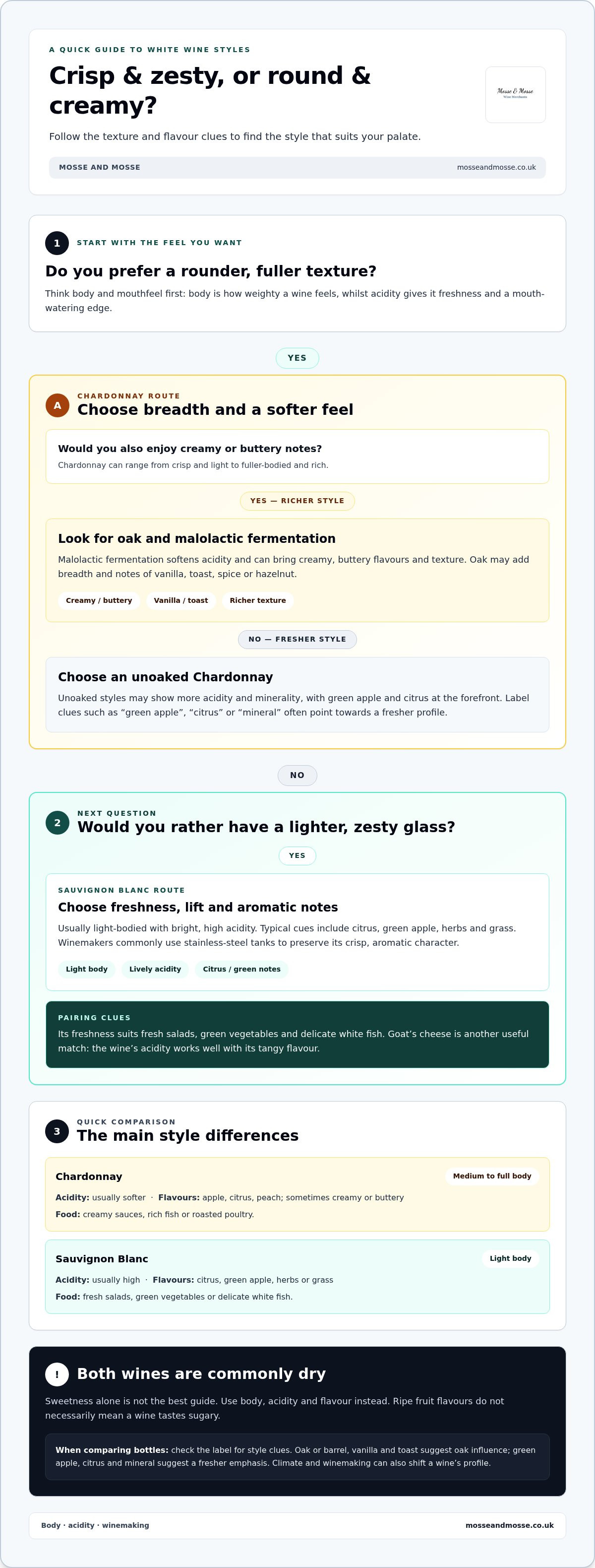
Chardonnay and Sauvignon Blanc are both white wines, but body and acidity create a clear contrast. Chardonnay often feels rounder and fuller, while Sauvignon Blanc is usually lighter, sharper and more aromatic.
Climate and winemaking can shift these profiles. Cool-climate Chardonnay, for example, may show crisp green fruit, while warmer-climate examples can taste riper and richer.
Body, acidity and mouthfeel
Body describes how weighty a wine feels; acidity gives it freshness and a mouth-watering edge. Chardonnay generally has lower acidity and a fuller texture, especially when oak-aged. Sauvignon Blanc is typically lighter-bodied, with bright acidity and citrus, green apple or grassy notes. For a simple comparison, try a mineral, cool-climate Chardonnay alongside a zesty Sauvignon Blanc.
These differences can help you choose a wine for a meal. Fuller Chardonnay can complement creamy sauces, rich fish or roasted poultry, as its texture sits comfortably alongside these dishes. Sauvignon Blanc’s lift suits fresh salads, green vegetables and delicate white fish. Goat’s cheese is another useful pairing: the wine’s acidity works well with its tangy flavour.
| Wine | Body | Acidity | Typical flavour cues |
|---|---|---|---|
| Chardonnay | Medium to full | Usually softer | Apple, citrus, peach; sometimes creamy or buttery |
| Sauvignon Blanc | Light | Usually high | Citrus, green apple, herbs or grass |
Choose Chardonnay for breadth and a softer feel, or Sauvignon Blanc for a lighter, more refreshing glass.
Typical alcohol content
Neither grape has a fixed alcohol content that applies to every bottle. The finished level depends partly on grape ripeness: warmer growing conditions can produce riper fruit, while winemaking also shapes the result. Compare the alcohol information on individual bottles rather than assuming Chardonnay is always stronger than Sauvignon Blanc.
Body and alcohol are related impressions, but they are not interchangeable. A rich Chardonnay may feel weightier because of its texture and oak influence, while Sauvignon Blanc’s high acidity can make it seem brisk and light. These sensations do not tell you the wine’s actual alcohol content.
How do they differ in price in the UK? There is no single price difference between the two grapes. UK retail prices depend on region, producer, vintage and winemaking choices, so compare bottles of similar origin and quality.
How should they be served and stored? Serve both wines chilled so their fruit and acidity show clearly. Keep bottles in a cool, dark place away from temperature swings. Sauvignon Blanc is generally enjoyed young, while some oak-aged Chardonnay can develop over several years.
Oak ageing and buttery Chardonnay
Oak can transform Chardonnay, adding breadth and layers beyond fresh fruit. The result depends on choices such as barrel fermentation and malolactic fermentation.
Oak ageing
Oak ageing means maturing wine in wooden barrels, which can contribute vanilla, toast, spice and hazelnut notes. Chardonnay may also ferment in oak, developing texture alongside those aromas. Oak-aged Chardonnay can taste richer, while unoaked styles may have more acidity and minerality.
These differences reflect winemaking styles, not separate grape varieties. Unoaked Chardonnay can foreground green apple, citrus and mineral character, while barrel-aged examples can combine fruit with a broader, more layered palate. Oak can also contribute tannins, adding structure to Chardonnay’s texture. The influence varies with the winemaker’s approach, so the word “Chardonnay” alone does not tell you whether a wine will taste crisp or rounded.
Buttery notes
A buttery character can develop through malolactic fermentation, a winemaking process that softens acidity and contributes creamy, buttery flavours and texture. Oak may add vanilla, toast or spice, complementing those sensations, but it is not the only explanation for a buttery impression. Chardonnay’s fruit, fermentation choices and barrel influence work together in the finished wine.
Check the flavour description for clues. “Creamy” or “buttery” suggests a richer style, while “green apple”, “citrus” or “mineral” often points to a fresher profile. These are cues, not guarantees: Chardonnay ranges from crisp, light expressions to fuller-bodied wines with ripe tropical fruit. That versatility is part of the grape’s appeal.
Sauvignon Blanc usually takes another route. Winemakers commonly use stainless-steel tanks to preserve its crisp zestiness, and it is rarely oak-aged because oak could obscure its green, aromatic character. The comparison is not absolute: some Bordeaux producers blend Sauvignon Blanc with Semillon to give the wine enough body for oak ageing. This shows how blends and cellar choices can alter a familiar style.
Compare the region and winemaking notes on the label to identify the style. Burgundy Chardonnay may show oak influence, whereas Chablis offers a mineral, unoaked expression. Mentions of barrels, vanilla or toast point towards oak; green apple and citrus suggest a fresher emphasis. Choose based on the texture and flavours you enjoy, rather than assuming every Chardonnay is buttery.
Sauvignon Blanc dryness and sweetness
Sauvignon Blanc is usually a dry white wine with low residual sugar, though styles can range from dry to sweet. Chardonnay is also commonly dry, so the grape name alone does not tell you whether a wine will taste sweet. Distinguish sweetness from ripe fruit flavours and lively acidity.
Residual sugar is the grape sugar left in wine after fermentation. A dry Sauvignon Blanc can smell of passion fruit, guava or ripe peach without tasting sugary. Its bright acidity often makes the fruit seem sharper and more refreshing. Chardonnay can show ripe apple or tropical fruit yet still taste dry, particularly when acidity and texture balance those flavours.
This distinction matters at the table. A fruit-forward Sauvignon Blanc can seem juicy, but citrus and herbal notes usually keep its profile crisp. Pair it with fresh seafood, green salads or goat’s cheese, where its acidity complements delicate flavours. A dry Chardonnay’s broader texture can suit creamy sauces, rich fish or roasted poultry. These pairings depend on the wine’s style as well as its sweetness.
Winemaking also shapes the result. Fermentation choices influence how much residual sugar remains, while grape ripeness affects the flavours that develop. Sauvignon Blanc commonly offers citrus, green apple and herbaceous notes; warmer-climate examples can show tropical fruit. Those aromas describe flavour, not necessarily sugar. A creamy or buttery impression in Chardonnay also reflects texture and winemaking, not proof of sweetness.
There are deliberate sweet exceptions. In Bordeaux, Sauvignon Blanc may be blended with Semillon for sweet dessert wines such as Sauternes. This differs from the familiar dry, aromatic Sauvignon Blanc style. The region and style provide important clues: a dessert wine is made for sweetness, while a fresh table wine often emphasises citrus, herbs and acidity.
Use these cues when choosing a bottle:
- For dry and zesty: look for Sauvignon Blanc described with citrus, green apple or herbaceous notes.
- For ripe fruit without obvious sweetness: tropical aromas can still belong to a dry Sauvignon Blanc.
- For a sweet style: seek a dessert wine such as Sauternes, where Sauvignon Blanc can be blended with Semillon.
- For a richer dry white: choose Chardonnay when its fruit and texture suit the meal.
For either grape, judge sweetness separately from aroma and body. A dry Sauvignon Blanc can smell intensely fruity, while a dry Chardonnay may feel rounded. If sweetness is your priority, compare the wine’s style description and intended use rather than relying on the grape variety alone.
New Zealand Sauvignon Blanc and Chardonnay styles
New Zealand is especially associated with Marlborough Sauvignon Blanc, but both grapes show how climate and winemaking shape style. Their regional differences offer useful clues when choosing between bright, aromatic fruit and a broader, more textured glass.
What are the main Chardonnay and Sauvignon Blanc wine regions and styles? Chardonnay is associated with Burgundy in France, as well as regions in New Zealand, Australia and California. Sauvignon Blanc has roots in Bordeaux and the Loire Valley in France, and is especially prominent in New Zealand’s Marlborough region.
Marlborough Sauvignon Blanc is known for expressive aromas and lively acidity. Look for citrus, green apple, passion fruit and guava, alongside herbal or grassy notes. Cooler-climate examples can show nettle, gooseberry or green pepper. These vivid flavours make this style a distinctive contrast to Chardonnay, whose fruit and texture vary with climate and cellar choices.
Climate helps explain the difference. Cool-climate Chardonnay can offer green apple, pear and lemon, with a crisp, mineral edge. Warmer-climate Chardonnay can feel fuller, with peach, melon or tropical fruit. Sauvignon Blanc also varies: cooler conditions favour green, herbaceous notes, while warmer conditions can bring riper fruit, including passion fruit. These are broad style cues, not rules that every bottle follows.
Winemaking offers another clue. Sauvignon Blanc is commonly fermented in stainless-steel tanks to preserve its fresh, zesty profile. Chardonnay may be matured in oak barrels for a richer expression, or made without oak to retain more freshness and mineral character. Read the region and tasting notes together: “gooseberry” or “grass” often points to Sauvignon Blanc, while “vanilla” or “toast” suggests oak influence in Chardonnay.
Use food pairings to make a regional choice practical. Marlborough Sauvignon Blanc’s bright acidity suits fresh seafood, green salads and dishes with herbs or citrus. Fuller Chardonnay can complement roasted chicken, rich fish or creamy sauces. For a relaxed comparison, serve the wines with dishes that highlight their differences, such as a dressed salad alongside creamy pasta.
For a simple decision, choose Marlborough Sauvignon Blanc for fragrant, crisp fruit and herbal lift. Choose Chardonnay when you prefer a broader palate, whether its style is mineral and restrained or rounded by oak. Discuss which wine style suits your taste as you explore the regional differences.
Cool-climate Sauvignon Blanc can show grassy, herbal notes of thyme, bell pepper and gooseberry, alongside flinty mineral notes. Cool-climate Chardonnay can show green apple, pear and lemon, while warmer-climate examples can offer tropical fruit such as pineapple and mango.
Mosse and Mosse: Red Wine
Mosse and Mosse offers white wines for readers comparing Chardonnay and Sauvignon Blanc. From Suffolk, it serves wine enthusiasts in Ipswich, Norwich, Bury St Edmunds, Sudbury, Stowmarket, Newmarket, Thetford, Diss, Attleborough, Southwold, Aldeburgh, Framlingham, Woodbridge, Long Stratton and Saxmundham.
Compare regional descriptions and tasting notes to find a bottle suited to your palate or meal. Champagne and sparkling wines offer another style to explore for a different occasion.
For help choosing, contact Mosse and Mosse or visit mosseandmosse.co.uk.
Choose your next bottle with confidence
Let your next choice be a small tasting, not a final verdict on a grape. Note what you enjoy in the glass, then revisit it with a different meal or occasion. Your own preferences are a useful guide, especially since oak, region and winemaking can create very different expressions from the same variety.
If you’re still weighing the difference between Chardonnay and Sauvignon Blanc, use that curiosity to explore beyond these two styles. Mosse and Mosse offers red wine, white wine, and Champagne & sparkling wines, giving you other options to consider as your tastes develop.
Contact Mosse and Mosse to explore your next wine choice. Trust your palate, stay curious, and enjoy discovering what you like.
Frequently Asked Questions
Butter in Chardonnay?
No, buttery Chardonnay does not contain added butter. That impression comes from winemaking: malolactic fermentation can create buttery aromas and a creamy sensation, while oak may contribute vanilla, toast or spice. To identify the style, look for tasting notes such as “buttery” or “vanilla” on the bottle. These clues describe aromas and texture, not ingredients added to the wine.
Sweet or dry?
Both Chardonnay and Sauvignon Blanc are usually made as dry wines, although Sauvignon Blanc can also be made in sweeter styles. Ripe fruit aromas do not necessarily mean a wine tastes sweet: passion fruit in a dry Sauvignon Blanc, for example, can sit alongside brisk acidity. For a deliberately sweet example, Sauvignon Blanc may be blended with Semillon in Bordeaux dessert wines such as Sauternes.
What are the primary flavour profiles of Sauvignon Blanc wines?
Sauvignon Blanc commonly combines citrus and green-fruit flavours with aromatic herbal notes. Depending on origin and style, you might notice lime, grapefruit, green apple, gooseberry, grass or nettle. Warmer-climate examples can lean towards passion fruit and guava. Match the flavour to a dish: herbal notes work naturally with fresh herbs, while citrus character suits seafood dressed with lemon.
What type of wine is Sauvignon Blanc?
Sauvignon Blanc is a white wine made from the Sauvignon Blanc grape. Its familiar dry style is aromatic and lively, but the grape can also contribute to sweeter wines. In Bordeaux, it may be blended with Semillon to make dessert wines such as Sauternes. The grape name identifies the variety, but the region and winemaking determine the finished wine’s style.
What does Chardonnay taste like compared with Sauvignon Blanc?
Chardonnay can taste of apple, pear, lemon, peach or tropical fruit, with oak-aged examples sometimes showing vanilla and toast. Sauvignon Blanc more often brings citrus, green apple and herbal aromas. If you’re asking, “What is the difference between Chardonnay and Sauvignon Blanc?”, compare their first impressions and finishes: Chardonnay may feel broader, while Sauvignon Blanc often leaves a sharper, fresher impression.
How do Chardonnay and Sauvignon Blanc differ in acidity and body?
Chardonnay generally has a fuller body and softer acidity, particularly when oak-aged. Sauvignon Blanc is typically lighter-bodied, with higher acidity that gives it a brisk, mouth-watering feel. For another practical answer to “What is the difference between Chardonnay and Sauvignon Blanc?”, consider climate: cool-climate Chardonnay may be crisp and mineral rather than rich. With food, choose the weight and finish you prefer.


