
The classic pairing of Blue Stilton and Vintage Port might actually be the least adventurous way to enjoy your cheeseboard this season. Whilst this duo is a time-honoured tradition, sticking solely to the "blue and red" rule means you're missing out on some of the most sublime port and cheese pairings the world of fortified wine has to offer. We understand the hesitation; many of our customers initially feel that Port is a somewhat old-fashioned choice, or they worry about the intense sweetness of a Ruby Port overpowering a delicate British artisanal cheese.
It's completely natural to feel a bit muddled by the differences between a vibrant Late Bottled Vintage and a mellow, nutty Tawny. However, once you master a few simple principles, you'll have the confidence to experiment with everything from tangy goat’s milk varieties to crystallised aged Goudas. We've curated this guide to help you move beyond the basics and embrace the incredible versatility of these historic European styles.
In this guide, we'll provide a clear framework for matching any bottle in your cellar with the perfect wedge. You'll learn which styles require decanting, the ideal serving temperatures to unlock hidden aromas, and why a chilled White Port might just be your new favourite companion for a soft, creamy Brie.
Key Takeaways
- Master the balancing act of high residual sugar and alcohol to ensure your wine enhances rather than overpowers the unique character of your cheeseboard.
- Discover why vibrant Ruby and LBV styles are the ultimate partners for tangy, creamy cheeses that mirror their intense berry flavours.
- Explore the world of aged Tawny Port to find the perfect match for hard, nutty cheeses that echo the wine's caramel and spice notes.
- Gain the confidence to serve your selection like a professional by learning the exact temperatures and decanting techniques required for each specific Port style.
- Move beyond tradition and expand your repertoire of port and cheese pairings with a versatile framework designed for the modern connoisseur.
The Fundamentals of Port and Cheese Pairings: A Balancing Act
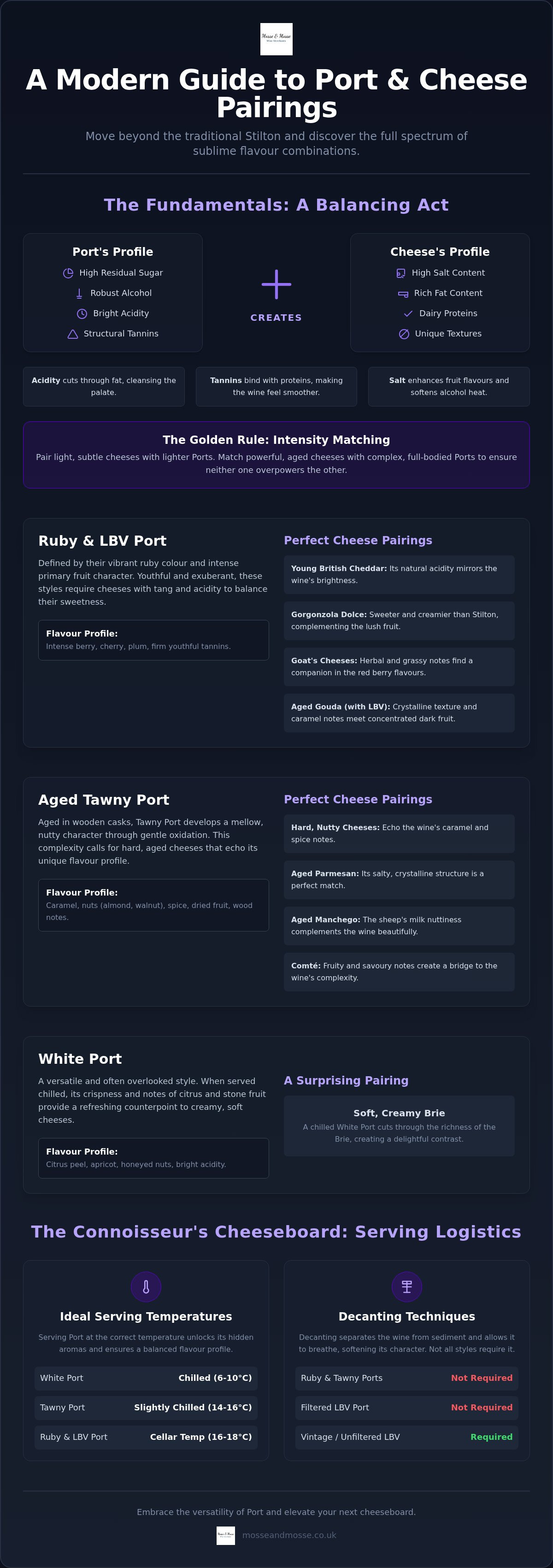
I've always believed that a truly great cheeseboard is the highlight of any dinner party. It isn't just about the food; it's about the conversation that flows as the Port decanter makes its way around the table. Achieving the perfect match requires an understanding of how distinct elements interact on the palate. The principles of wine and food pairing often rely on finding a balance between opposing forces. In the case of port and cheese pairings, we are looking at a spectacular collision of high residual sugar, robust alcohol, and bright acidity against the salt and fat of the dairy.
Younger, fruit-forward bottles carry structural tannins that interact beautifully with cheese proteins. These tannins "grip" the fats, which in turn mellows the wine, making even a powerful Ruby feel velvet-smooth. It's a symbiotic relationship where the wine provides the structure and the cheese provides the softness.
In Britain, the cheese course has long been a sanctuary for Port lovers. Whilst modern dining has become more relaxed, the tradition of serving a fortified wine alongside a selection of British and European cheeses remains a mark of a thoughtful host. It's a moment to slow down and appreciate the craftsmanship of both the cheesemaker and the cellar master.
The Science of Flavour: Salt, Fat, and Sugar
Salt is a natural flavour enhancer; it brings the primary fruit notes of the Port to the foreground whilst simultaneously softening the heat of the alcohol. When you enjoy a creamy cheese, the fat coats your tongue. The high acidity found in Port then acts as a palate cleanser, cutting through that richness so every bite tastes as fresh as the first. The caramelised, nutty profile of a long-aged cheese creates a natural bridge to the oxidative, wood-aged character of a fine Tawny Port.
Moving Beyond the Stilton Tradition
We all love Stilton, but it's a dominant personality that can sometimes mask the nuances of a more delicate wine. Texture is just as vital as taste. I often suggest matching crumbly, acidic cheeses like a young Lancashire with lighter Ruby styles, whilst saving your complex, hard cheeses for something with more age. If you need a refresher on the different categories before you start shopping, do take a look at our guide to the Types of Port.
Finding the right port and cheese pairings is ultimately about intensity matching. You don't want a powerhouse Vintage Port to drown out a subtle, artisanal goat's cheese. By considering the weight and age of both the wine and the wedge, you can create a pairing that feels intentional and sophisticated.
Ruby and LBV Port: Matching Bold Fruit with Tangy Cheeses
Ruby Port is the most exuberant expression of the Douro. It's defined by its primary fruit character, vibrant ruby colour, and firm, youthful tannins. Whilst Ruby is bottled young to preserve its freshness, Late Bottled Vintage (LBV) acts as a sophisticated bridge. It spends four to six years in large wooden vats, developing more depth and concentration whilst remaining firmly fruit-forward. Because these styles are so intensely berry-driven, they require cheeses with a certain tang or sharp acidity to cut through the sweetness. This vibrant profile makes them excellent candidates for Wedding & Party Wine selections, as they're approachable and crowd-pleasing.
The Best Cheeses for Ruby and Reserve Ports
When I'm curating a selection of port and cheese pairings, I often reach for a tangy, young British Cheddar. The natural acidity in the cheese mirrors the wine's brightness, creating a lively interaction on the tongue. If you prefer something softer, a Gorgonzola Dolce is a fantastic alternative to the traditional Stilton. It's sweeter and creamier, which complements the lush fruit of a Reserve Ruby without the aggressive peppery bite of more intense blues. I've also found that goat’s cheeses are an inspired choice; the herbal, grassy notes of the milk find a perfect companion in the red berry flavours of the wine.
Late Bottled Vintage (LBV) Pairings
LBV has a more serious structure than a standard Ruby, which allows it to stand up to more complex textures. An aged Gouda is perhaps my favourite match here. The cheese's crystalline texture and deep caramel sweetness provide a wonderful counterpoint to the concentrated dark fruit of the wine. Of course, we must mention Stilton. The pepperiness of the blue mould needs the structural backbone that an LBV provides to ensure the wine isn't lost. The concentrated, darker fruit profile of an LBV requires a cheese with more "grip" and structural integrity to avoid being overwhelmed. If you're planning a large event and need help matching your menu, feel free to contact us for expert guidance.
Tawny Port and Aged Cheeses: A Study in Nutty Complexity
Whilst Ruby celebrates the fruit of the vine, Tawny Port is a celebration of the barrel. Through a deliberate oxidative ageing process in seasoned oak, these wines shed their purple hues for amber and mahogany tones. They develop complex notes of toasted walnuts, dried figs, and warm spices that evolve beautifully over time. A basic Tawny is pleasant, but a "Tawny with an Indication of Age" (10, 20, or 30 years) offers a depth that is truly transformative for port and cheese pairings. These sophisticated bottles are my top recommendation for Corporate Gift Boxes, as they offer a level of refinement that always impresses professional partners.
Hard and Alpine Cheeses: The Perfect Tawny Match
Salt and nutty textures are the primary drivers for a successful Tawny pairing. A 10-year-old Tawny is an exceptional partner for a well-aged Manchego. The sheep’s milk richness and nutty finish of the cheese mirror the wine's wood-aged character perfectly. Savoury Alpine cheeses like Comté or Gruyère provide an umami contrast that makes the wine's caramel sweetness sing. I've found that the older the Port, the more intense the cheese should be.
| Port Age | Recommended Cheese | Pairing Profile |
|---|---|---|
| 10 Year Tawny | Manchego (Aged) | Nutty, salty, and vibrant |
| 20 Year Tawny | Comté or Gruyère | Deep umami and caramelised notes |
| 30 Year Tawny | Old Winchester | Intense salt crystals and spice |
Unexpected Delights: Soft Cheeses and Tawny
It might seem counterintuitive to pair a wood-aged wine with a soft cheese, but the results can be magnificent. A triple-cream Brillat-Savarin or Delice de Bourgogne acts like butter to the Tawny’s "toast", creating a decadent sensation on the palate. For those amongst us who prefer a more adventurous pairing, try a pungent, washed-rind Epoisses. The bold, farmyard character finds a surprisingly harmonious balance with the wine’s dried fruit and spice notes. Serving these at the centre of a festive table creates a real sense of occasion and usually sparks a lively debate amongst guests. If you are looking to source a specific style for your next gathering, do get in touch with our expert team for a personalised recommendation.
The Ultimate Connoisseur’s Cheeseboard: Serving and Logistics
I've seen many a perfect evening dampened by a bottle of Port served at the wrong temperature. To truly master port and cheese pairings, you must treat the wine with the same respect as the artisanal cheese. Whilst many people serve Port at a warm room temperature, this actually emphasises the alcohol and masks the delicate fruit flavours you've worked so hard to match. Proper presentation is the final step in moving beyond the "old-fashioned" stigma and embracing the true elegance of these fortified wines.
Temperature and Preparation
I always recommend the "20-minute rule" for a stress-free evening. Simply take your cheese out of the fridge to breathe and place your bottle of Tawny Port into the cooler 20 minutes before you intend to serve. Tawny should be enjoyed slightly chilled to highlight its nutty complexity, whilst Ruby and LBV styles prefer a "cool room" temperature of around 16 degrees Celsius. Using a proper Port decanter is essential for older vintages and Crusted styles to remove sediment and allow the wine to open up, whereas most Tawnies and LBVs are ready to pour straight from the bottle. I also suggest moving away from tiny "thimble" glasses; a larger white wine glass allows the Port to breathe and lets you fully appreciate the bouquet.
Curating the Final Selection
When I'm organising a board for guests, I follow the "Rule of Three". Select one hard, one soft, and one blue cheese to ensure you have covered all the stylistic bases discussed in this guide. Arrange your board logically, starting with the mildest pairing and moving towards the strongest blue to avoid overwhelming the palate early on. Your choice of accompaniments can make or break the experience. I've found that walnuts and dried figs are far superior to fresh fruit for oxidative Ports, as they echo the wine's own tertiary notes of spice and wood. If you're ready to host your own tasting or looking for the perfect gift, I invite you to explore our Curated Wine Selections to find the ideal bottle for your next occasion.
Elevate Your Next Evening with the Perfect Match
Mastering port and cheese pairings is a journey of sensory discovery that transforms a simple dinner party into a memorable occasion. By understanding the structural relationship between acidity, tannin, and dairy, you're no longer restricted by tradition. Whether you're matching the vibrant fruit of an LBV with a tangy Cheddar or the oxidative depth of a 20-year-old Tawny with a salty Manchego, the key lies in balancing intensity whilst respecting the serving logistics we've discussed. You've now got the framework to experiment with confidence.
As an independent family-run wine merchant, we're dedicated to sourcing the finest bottles from the heart of the Douro Valley, alongside expertly curated selections from Burgundy, Bordeaux, and beyond. We offer nationwide UK delivery on all our orders, ensuring that whether you're hosting a formal tasting or looking for a bespoke gift, the highest quality is delivered straight to your door. We take pride in being more than just a retailer; we're your partners in discovery.
Explore our curated range of Ports and fine wines for national delivery and start experimenting with your own unique combinations today. We're always here to help you find that one sublime pairing that will leave your guests talking for years to come.
Frequently Asked Questions
Which cheese is best with Tawny Port?
Hard, nutty cheeses are the undisputed champions for Tawny Port. I particularly recommend an aged Manchego or a mature Comté, as their savoury umami notes perfectly echo the wine's wood-aged character. The salt crystals found in long-aged Goudas also provide a magnificent contrast to the caramel sweetness of a 10 or 20-year-old bottle. These port and cheese pairings work because they share a similar oxidative profile, creating a harmonious and sophisticated finish on the palate.
Do I need to decant Port when serving it with cheese?
Decanting depends entirely on the style you've chosen for your evening. Vintage, Crusted, and some traditional unfiltered LBV Ports must be decanted to remove natural sediment and allow the wine to breathe properly. However, most Tawny and Ruby Ports are filtered before bottling and don't require this step. If you're unsure, check the cork; a long, driven cork usually indicates a wine that will benefit from being decanted about two hours before you serve it.
Can I pair Port with soft cheeses like Brie or Camembert?
You absolutely can, though it requires a bit of finesse to get the balance right. A creamy Brie or Camembert finds its best companion in a chilled White Port or a younger Tawny. The wine's acidity cuts through the buttery richness of the cheese, whilst the nutty undertones of a Tawny act like a spread of fruit chutney on a cracker. It's an unexpected delight that often surprises guests who expect only hard or blue varieties.
Should Port be served chilled or at room temperature?
Most people serve Port far too warm, which unfortunately emphasises the alcohol burn and masks the fruit. I recommend serving Tawny and White Ports chilled, ideally between 10 and 12 degrees Celsius, to keep them refreshing and vibrant. Ruby and Vintage styles are best at a "cool room" temperature of around 16 degrees. If your dining room is particularly toasty, put the bottle in the fridge for fifteen minutes before you plan to pour it.
How long does an opened bottle of Port last?
The shelf life of an opened bottle varies significantly based on the production style. A Vintage Port is delicate and should be finished within forty-eight hours to enjoy its full complexity. Ruby and LBV styles usually stay fresh for one to two weeks if kept in a cool spot. Tawny Ports are the most resilient; because they've already been aged in wood, they can often last for four to eight weeks once the cork has been pulled.
Is Stilton really the only cheese that goes with Vintage Port?
Stilton is the traditional choice, but it's certainly not the only option for a fine Vintage Port. A powerful, mature British Cheddar or a Gorgonzola Piccante can stand up to the intense structure of a young Vintage bottle just as well. The goal is to find a cheese with enough "grip" and intensity to match the wine's bold tannins and concentrated fruit. Exploring diverse port and cheese pairings is exactly how you'll find your own personal favourite.


