
Pauillac is the undisputed throne of Cabernet Sauvignon, a place where the marriage of deep gravel and ancient vines creates the most authoritative red wines on the planet. You've likely felt that familiar mix of awe and hesitation whilst staring at a wine list or a cellar shelf, wondering if a bottle is truly worth its price tag or if it's actually ready to be uncorked. It's perfectly normal to feel overwhelmed by the rigid 1855 Classification or the technical nuances of the Médoc.
This guide to Pauillac wines is designed to sweep away that confusion and bring you closer to the heart of Bordeaux. We'll explore why this small AOC holds three of the five legendary First Growths and how its unique terroir produces that famous powerhouse character often described as an iron fist in a velvet glove. From the prestigious châteaux to the hidden gems that offer superb value, we'll show you how to identify quality and when to pull the cork. You'll soon appreciate exactly how those deep gravel beds define every sip of these magnificent reds.
Key Takeaways
- Understand why Pauillac is considered the aristocrat of the Médoc, famously housing three of the five legendary First Growth estates.
- Use our guide to Pauillac wines to discover how deep gravel soils create the world’s most powerful and structured expression of Cabernet Sauvignon.
- Confidently navigate the 1855 Classification to find exceptional value amongst the Fifth Growths that frequently rival their higher-ranked neighbours.
- Master the specific service requirements for these robust reds, including maintaining a precise temperature of 16-18°C to preserve their aromatic complexity.
- Learn why the immense ageing potential of these wines makes them our favourite choice for meaningful cellaring or grand celebratory occasions.
Understanding the Pauillac Appellation: The Aristocrat of the Médoc
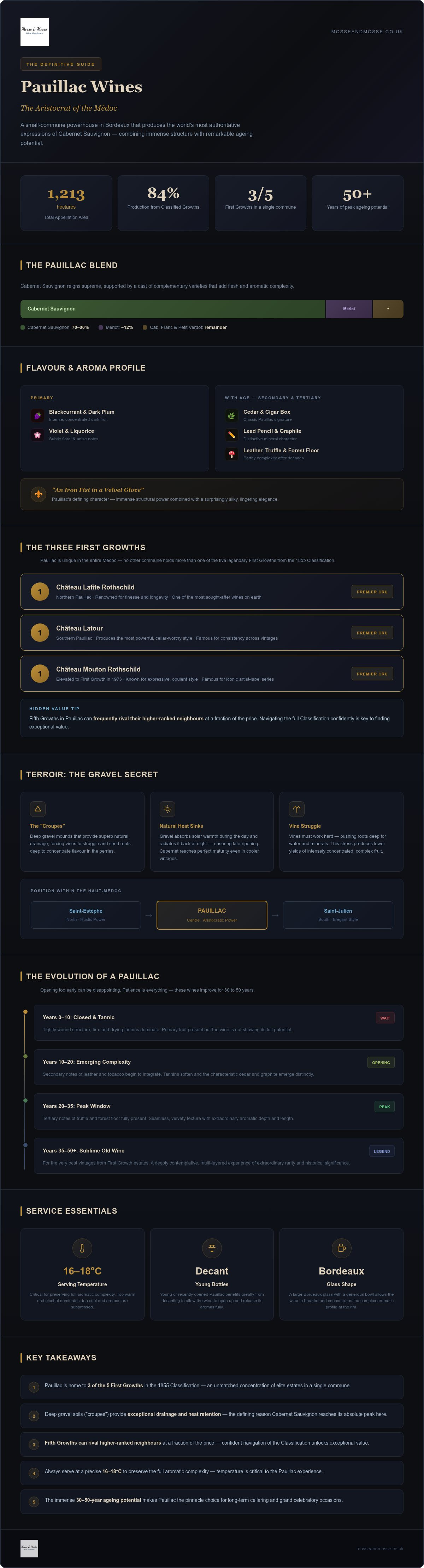
Pauillac is the spiritual home of the Médoc, a small but mighty commune that defines the very essence of Bordeaux grandeur. If you're seeking a definitive guide to Pauillac wines, you're essentially exploring the aristocracy of the wine world. This tiny area, covering roughly 1,213 hectares, is remarkable because an incredible 84% of its production comes from Classified Growths. It's a density of quality you won't find anywhere else in the region. The wines here are famous for their "iron fist in a velvet glove" character. They offer immense power and a structural integrity that allows them to age for decades, evolving from tightly wound, tannic youths into something truly sublime and complex.
The 1855 Classification: Pauillac's Golden Legacy
The Pauillac appellation d'origine contrôlée is anchored by the 1855 Classification, a hierarchy created for the Paris Universal Exhibition. Whilst other regions have their stars, Pauillac claims three of the five legendary First Growths: Château Lafite Rothschild, Château Latour, and Château Mouton Rothschild. This historical ranking isn't just a relic; it still dictates global market prices and prestige today. These estates represent the absolute pinnacle of Cabernet Sauvignon, setting a formidable standard that their neighbours strive to meet. It's this concentration of elite châteaux that has cemented the region's reputation for uncompromising excellence and investment-grade quality.
Geography and the 'Place de Bordeaux' System
Perfectly positioned in the Haut-Médoc, Pauillac is flanked by the elegance of Saint-Julien to the south and the rustic power of Saint-Estèphe to the north. Most of these prestigious Bordeaux wines move through the 'Place de Bordeaux', a unique network of brokers (courtiers) and merchants (negociants). As an independent merchant, we spend our time carefully navigating this system to hand-pick the best parcels for our clients. We look past the famous labels to find bottles where the physical quality of the wine outstrips the branding. Our goal is to ensure you get an authentic, powerful Pauillac experience without simply paying a premium for a famous name, focusing instead on the heritage and craft of the physical product.
Terroir and Technique: Why Cabernet Sauvignon Loves Pauillac
Cabernet Sauvignon is the undisputed king of this commune, typically accounting for 70% to 90% of the final blend. Whilst it provides the structural backbone, it's the supporting cast of Merlot, Cabernet Franc, and Petit Verdot that adds the necessary flesh and aromatic nuance. This combination creates a sensory profile that is instantly recognisable to any connoisseur. This guide to Pauillac wines highlights the famous "iron fist in a velvet glove" style, where immense power meets a surprising, silky elegance that lingers on the palate. Expect a sophisticated bouquet featuring:
- Cedar and cigar box
- Lead pencil shavings and graphite
- Intense blackcurrant and dark plum
- Subtle notes of violet and liquorice
The Power of Gravel: Drainage and Reflection
The magic of Pauillac is found in its "croupes," which are deep gravel mounds that offer superb natural drainage. These stones force the vines to struggle, digging their roots deep into the earth to find water and minerals. We're firm believers that vines must work hard to produce the highest quality fruit, as this struggle concentrates the flavours in the berries. These gravel beds also act as natural heat sinks. They absorb the sun's warmth during the day and radiate it back to the clusters at night, ensuring the late-ripening Cabernet reaches perfect maturity even in cooler vintages. If you're curious about how these soils might suit your own cellar preferences, feel free to get in touch with us for a personal recommendation.
Ageing Potential: The Evolution of a Pauillac
Opening a top-tier Pauillac too early can be a disappointing experience. In its first decade, the wine is often tightly wound and dominated by firm, drying tannins. It requires patience to allow the secondary and tertiary flavours of leather, truffle, and forest floor to emerge from beneath the primary fruit. True longevity in Pauillac is the rare ability for a wine to continue improving and gaining complexity for 30 to 50 years. This incredible endurance is what makes these reds the pinnacle of Médoc winemaking and a favourite for long-term collectors who value heritage over temporary trends. As we explore this guide to Pauillac wines, it's clear that this capacity for evolution is what truly separates the region from its peers.
Navigating the Châteaux: Icons and Hidden Value
Pauillac's hierarchy can feel rigid, but for the savvy enthusiast, it's a playground of varying styles and price points. Whilst the First Growths represent the ultimate aspiration, this guide to Pauillac wines would be incomplete without highlighting the estates that consistently outperform their historical rank. We often find that a "Fifth Growth" from this commune can easily humble a "Second Growth" from a less favoured appellation. It's about the physical quality in the glass, not just the label.
The Big Three: Lafite, Latour, and Mouton
Each of the titans has a distinct personality. Château Lafite Rothschild is the epitome of elegance and finesse, often showing a delicate perfume that belies its strength. In contrast, Château Latour is the "iron man" of the region, famous for its brooding power and incredible longevity. Then there's Château Mouton Rothschild, known for its exotic opulence and the cultural prestige of its artist-commissioned labels. For those planning grand celebrations or building a serious cellar, we highly recommend exploring our collection of Magnums and Larger Formats. These larger bottles are the gold standard for long-term ageing.
Beyond the First Growths: Exceptional Value
If you're looking for world-class quality without the First Growth price tag, the "Super Seconds" are your best bet. Pichon Baron and Pichon Lalande sit on opposite sides of the road but both produce wines of breathtaking complexity. We're also huge fans of Lynch-Bages and Pontet-Canet. Despite their "Fifth Growth" status, they punch far above their weight and are often the first bottles we personally reach for. You can find more of these hidden gems in our Medoc & Haut-Medoc category.
Don't overlook the "Second Wines" of these great estates. Labels like Les Forts de Latour or Echo de Lynch-Bages offer a more accessible taste of the same terroir and winemaking expertise. Remember that vintage variation is vital in this maritime climate. A "lesser" vintage from a great producer often provides better value and earlier drinking pleasure than a "legendary" year that requires decades of patience. This guide to Pauillac wines aims to help you navigate these choices with confidence. If you're struggling to decide which producer fits your palate, contact us for expert advice on selecting the perfect bottle.
The Art of Enjoying Pauillac: Service and Pairing
Pauillac isn't a wine you simply pour and drink. It demands a level of theatre that matches its aristocratic pedigree. To get the best from these structured reds, you must pay attention to the finer details of service. We always recommend a serving temperature between 16 and 18°C. Anything warmer risks "cooking" the delicate aromas and making the alcohol feel intrusive, whilst anything colder can make the tannins feel overly harsh. Using a large, tulip-shaped Bordeaux glass is equally vital. The wide bowl provides the surface area needed for aeration, whilst the tapered rim concentrates those famous graphite and blackcurrant notes. These wines are our top recommendation for Wedding & Party Wine when you want a bottle that makes a definitive statement.
Decanting: Giving the Wine Room to Breathe
Young Pauillac is often tightly wound and needs time to reveal its complexity. Giving it two to three hours in a decanter allows the oxygen to soften the tannins and release the fruit. For older vintages, decanting serves a different purpose: separating the wine from the sediment that naturally forms over decades. Be careful with very old bottles, as too much oxygen can cause fragile tertiary aromas to fade quickly. You'll find more advice on handling different vintages in our main Bordeaux guide. This guide to Pauillac wines is about ensuring every element of the experience, from the cellar to the table, is as grand as the liquid itself.
Culinary Partners: Beyond the Sunday Roast
A wine this powerful needs food with equally bold flavours. The classic British pairing is a roast leg of lamb, heavily seasoned with rosemary and garlic. The fat in the meat beautifully softens the wine's tannin structure, allowing the fruit to shine. For something more adventurous, try venison or pheasant. These gamey meats mirror the earthy, truffle-like notes that emerge as the wine ages in the cellar. To finish the meal, avoid soft, creamy cheeses that can clash with the tannin. Instead, opt for a mature Comté or a sharp, aged Cheddar. These hard cheeses have the salt and intensity to stand up to the wine without being overwhelmed, providing a perfect conclusion to a special occasion.
Elevate Your Collection with the Grandeur of Pauillac
Pauillac remains the gold standard for anyone who appreciates the sheer authority and structural elegance of Cabernet Sauvignon. This guide to Pauillac wines has highlighted how the marriage of deep gravel terroir and meticulous winemaking creates a style that's both powerful and profoundly sophisticated. Whether you're drawn to the legendary First Growths or the exceptional value found amongst the overperforming Fifth Growths, these bottles represent a true pinnacle of viticultural heritage.
As independent merchants, we take pride in focusing on the physical quality of the wine over the weight of its branding. We've personally vetted our selection to ensure it meets the high standards our clients expect, specialising in the heritage of the Bordeaux region. We offer secure national UK delivery on all our bottles, making it simple to bring a piece of Médoc history to your door. If you're ready to find the perfect bottle for a special occasion or long-term investment, please explore our curated selection of Bordeaux and Pauillac wines by getting in touch with us today. We can't wait to help you discover your next favourite vintage.
Frequently Asked Questions
Which are the three First Growth wines in Pauillac?
Pauillac is home to three of the five First Growths defined by the 1855 Classification: Château Lafite Rothschild, Château Latour, and Château Mouton Rothschild. These estates are the undisputed titans of the region, each commanding global respect for their consistency and quality. Whilst other communes like Margaux have their own stars, the sheer concentration of elite winemaking in this small area is what makes our guide to Pauillac wines so essential for serious collectors.
How long should I cellar a Pauillac wine before drinking?
Most top-tier Pauillac wines require at least ten to fifteen years of cellaring to soften their formidable tannin structure. For legendary vintages or First Growths, the ideal drinking window often doesn't open until twenty-five years after the harvest. If you drink them too young, the wine can feel tightly wound and overly drying. Patience allows the primary blackcurrant fruit to evolve into complex secondary notes of leather, cedar, and forest floor.
What is the difference between Pauillac and Margaux wines?
The primary difference lies in the balance of power versus perfume. Pauillac is celebrated for its muscular structure, offering deep, concentrated fruit and firm tannins that demand time. In contrast, Margaux wines are often described as the most feminine and elegant of the Médoc, featuring a lighter body and a floral, violet-scented bouquet. Whilst both rely on Cabernet Sauvignon, the heavier gravel mounds in Pauillac produce a far more robust and authoritative style.
Why does Pauillac wine smell like lead pencils?
That distinctive lead pencil or graphite aroma is a hallmark of high-quality Cabernet Sauvignon grown in deep gravel soils. It isn't a result of any additives; rather, it's an aromatic compound that emerges during the interaction between the fruit and the oak ageing process. This mineral-driven scent provides a sophisticated counterpoint to the wine's intense dark fruit. It's one of the most reliable ways to identify a classic Pauillac during a blind tasting session.
Do I need to decant an old bottle of Pauillac?
You should decant an old bottle, but the process requires a gentle touch. The main goal for a vintage over twenty years old is to separate the liquid from the heavy sediment that has settled in the bottle. Unlike young wines, which benefit from hours of oxygen, an old Pauillac can be quite fragile. We suggest decanting just before serving to prevent the delicate tertiary aromas from fading before they reach your glass.
Is Pauillac wine always made from 100% Cabernet Sauvignon?
No, Pauillac is almost always a blend, though Cabernet Sauvignon usually makes up seventy to ninety percent of the final wine. Merlot is the most common partner, used to add roundness and a supple texture to the mid-palate. Small amounts of Cabernet Franc and Petit Verdot are also frequently included to enhance the aromatic complexity and colour. This blending tradition is a vital part of our guide to Pauillac wines and ensures a balanced product.


