
What if I told you that Burgundy’s most prestigious white wine village doesn't possess a single Grand Cru vineyard? It's a curious fact that often baffles collectors, especially when you see bottles from this region fetching prices that rival the finest Montrachet. You likely share that same sense of intrigue; perhaps you've even felt a touch of hesitation when faced with a wine list full of "Lieux-dits" and Premier Crus that seem to defy the traditional hierarchy. This meursault wine guide is here to sweep away that uncertainty and help you master the nuances of these rich, golden Chardonnays with total confidence.
I understand the pressure of selecting a premium bottle, particularly when the styles range from lean, flinty mineral notes to that iconic, indulgent butteriness. We'll dive into the unique terroir of the Côte de Beaune and learn how to distinguish between Village and 1er Cru quality without the guesswork. I will also share my personal advice on food pairings and serving tips to ensure your next bottle is a triumph. Let's explore why this golden heart of Burgundy remains a firm favourite for any discerning collector.
Key Takeaways
- Understand why Meursault is the largest white wine producer in the Côte de Beaune and how its historic roots define its unique character amongst its neighbours.
- Use this meursault wine guide to distinguish between the classic, opulent buttery style and the modern, reductive approach favoured by many contemporary winemakers.
- Ensure every bottle reaches its full potential by learning the ideal serving temperatures and when decanting is necessary for younger, complex vintages.
- Confidently compare Meursault’s indulgent profile with the steely precision of Puligny-Montrachet to find the perfect match for your personal palate or collection.
- Gain a boutique merchant’s perspective on the best value-for-quality plots, ensuring you invest in wines that offer exceptional regional authenticity and pleasure.
The Golden Gateway: Understanding the Meursault Appellation
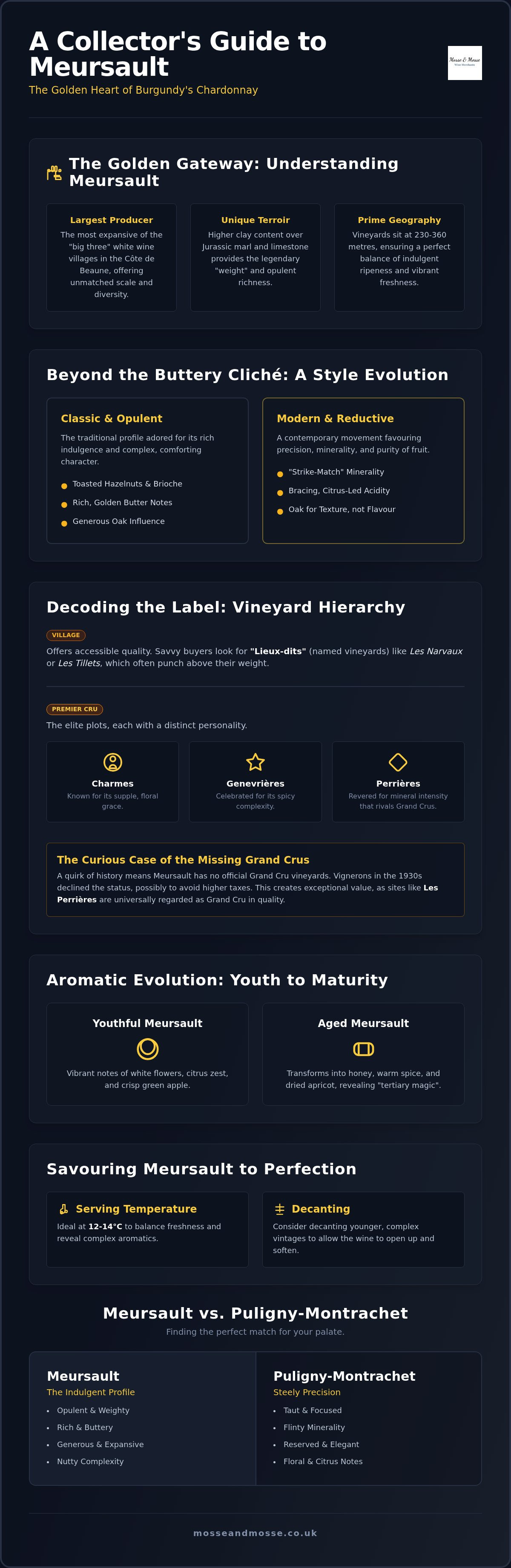
Meursault is the expansive, beating heart of the Côte de Beaune. It's the largest of the "big three" white wine villages, offering a scale and diversity that its neighbours can't quite match. The name itself is steeped in folklore. Local legend suggests it derives from Saut de Souris or "mouse jump," a reference to the tiny distance that once separated plots growing red grapes from those growing white. Whilst the village is now world-famous for golden Chardonnay, this historic divide reminds us of a time when Pinot Noir held a stronger foothold on these slopes.
The monks of Cîteaux weren't just men of faith; they were arguably the world's first terroir experts. In the 11th century, they identified this limestone-rich stretch as something extraordinary. What truly distinguishes Meursault is its higher clay content. This geological signature provides the legendary "weight" and opulence that we look for when sourcing bottles for our customers. It's a physical richness that feels structural rather than just flavour-based, providing a sensory experience that lingers long after the first sip.
Geography and the Côte des Blancs
Meursault acts as a vital bridge between the delicate red-wine haven of Volnay and the steely prestige of Puligny-Montrachet. The vineyards are perched at altitudes between 230 and 360 metres. This height is essential. It ensures the grapes maintain a vibrant freshness whilst basking in enough sun to achieve full, indulgent ripeness. Along these gentle slopes, a perfect "alchemy" occurs between Jurassic marl and limestone, creating the complex mineral backbone found in every bottle featured in this meursault wine guide.
The Curious Case of the Missing Grand Crus
It's a quirk of history that Meursault possesses no official Grand Cru vineyards. When the INAO formalised the Meursault wine appellation in the 1930s, the local vignerons reportedly declined the top-tier status. Some historians suggest they wanted to avoid the higher taxes associated with the rank, whilst others believe they preferred to let the quality of the wine speak for itself. Today, sites like Les Perrières are universally regarded as Grand Cru in quality. For the savvy collector, this lack of a formal title often translates to exceptional value for world-class complexity.
The Meursault Style: Beyond the Buttery Cliché
For decades, Meursault was defined by a specific kind of indulgence. Traditionalists still adore the classic profile of toasted hazelnuts, brioche, and rich, golden butter. However, this meursault wine guide wouldn't be complete without addressing the stylistic evolution occurring in the village. A modern movement has redefined what we expect from this Côte d'Or favourite, moving away from heavy oak influence towards something more precise.
Many contemporary producers now favour a "reductive" style. This technique limits oxygen exposure during winemaking, resulting in a distinctive strike-match minerality and a bracing, citrus-led acidity that cuts through the wine's natural weight. Oak maturation here isn't just about adding vanilla or spice; it's used as a sophisticated tool for texture. It builds a creamier mouthfeel whilst preserving the purity of the Chardonnay fruit. The "Meursault Charm" is an exquisite tension where raw power and golden opulence meet a seamless, silky elegance.
Village vs. Premier Cru: Decoding the Label
Decoding the label is essential for any collector looking for value. Meursault Village wines offer accessible quality, but savvy buyers look for "Lieux-dits," or named vineyards, such as Les Narvaux or Les Tillets. These plots sit on the higher slopes and often punch well above their weight. The Premier Crus represent the elite. Charmes is known for its supple, floral grace; Genevrières for its spicy complexity; and Perrières for a mineral intensity that many experts believe rivals the finest Grand Crus in Burgundy.
Aromatic Profile and Ageing Potential
Youthful Meursault is a vibrant affair, filled with notes of white flowers, citrus zest, and crisp green apple. As the wine ages, it undergoes a beautiful transformation. The primary fruit softens into honey, warm spice, and dried apricot. This tertiary magic is why we often suggest cellaring these bottles to experience their full evolution. The specific "Climat," or individual plot, heavily influences this complexity, with different soils yielding varied aromatic depths. If you're unsure which vintage to choose for a special occasion, you can always ask us for a personal recommendation.
Savouring Meursault: Serving, Pairing, and Cellaring
Opening a fine bottle of Chardonnay is a ritual. To truly honour the craftsmanship we explored in the previous sections of this meursault wine guide, you must pay attention to the details. The most common mistake collectors make is serving these wines far too cold. If you pull a bottle straight from a standard domestic fridge at 4°C, you effectively lock away the complex aromas of hazelnut and spice. Aim for a "sweet spot" between 12 and 14°C. At this temperature, the wine's texture softens and the bouquet truly begins to sing.
The debate over decanting white wine is often spirited amongst enthusiasts. In our experience, a young, tightly-wound Meursault benefits immensely from 30 to 60 minutes in a decanter. It coaxes out those reductive notes we mentioned earlier, allowing the fruit to step forward. Pair this with a wide-bowled Burgundy glass. The larger surface area is essential for capturing the intense, multi-layered aromatics that define this region. For storage, your investment deserves a stable environment. Maintain a constant 12°C and ensure your cellar is free from vibrations, which can disturb the delicate ageing process.
Culinary Pairings for the Connoisseur
Meursault is a gastronomic powerhouse. The "Golden Rule" is simple: match the physical weight of your wine with the richness of your sauce. Consider these standout combinations:
- Bresse chicken with morels: The wine's earthiness meets the mushroom's depth.
- Lobster Thermidor: The natural buttery weight complements a rich, creamy sauce.
- Salty blue cheese: Vibrant acidity cuts through the fat whilst honeyed notes balance the salt.
When to Open Your Bottle
Patience is a virtue, but timing is everything. Village-level wines are generally at their peak between three and seven years from the vintage. They offer a lovely balance of fresh fruit and early secondary complexity. For the elite Premier Crus, the window is much wider. The best years can easily reward 15 years or more of careful cellaring. We must mention "Premox" or premature oxidation, a phenomenon that affected some bottles from the early 2000s. Look for a deep gold colour or bruised apple scents; if you encounter these, the wine is likely past its best. If you're building a collection for a future event, get in touch for expert cellaring advice tailored to your specific bottles.
Navigating the Côte d'Or: Why Meursault Belongs in Your Cellar
When we look at the "Golden Triangle" of the Côte de Beaune, which comprises Meursault, Puligny-Montrachet, and Chassagne-Montrachet, each village offers a distinct personality. Puligny-Montrachet is often celebrated for its steely precision and laser-like focus. Whilst we admire that style, Meursault is where we turn for true indulgence. It offers a broader, more generous palate that feels like a warm welcome. From our perspective as independent merchants, this village consistently provides the most impressive pleasure-to-price ratios in the entire region. Because it lacks the formal Grand Cru titles, you can often secure a world-class Premier Cru for a fraction of the cost of a Montrachet. We invite you to explore our curated Côte d'Or collection to discover these hidden gems.
Building a collection requires a mix of vintages and vineyards. This diversity is the best way to truly learn the landscape. We suggest holding a few bottles from different "Climats" to see how the soil influences the wine's evolution over time. This meursault wine guide is intended to help you navigate those choices with the same passion we feel when we select each bottle for our own shop.
The Mosse and Mosse Selection Process
Our family-led approach is rooted in a simple philosophy. We prioritise the sensory experience and regional authenticity over the prestige of a label. We spend our time seeking out traditional producers who respect the heritage of their land and avoid the shortcuts of industrial winemaking. This personal curation is exactly what our clients value when they ask us to organise wines for weddings or bespoke corporate gifts. We don't just sell bottles; we share the stories of the vignerons we trust and ensure every selection meets our exacting standards.
Starting Your Burgundy Journey
The best way to learn about this complex region is through comparison. We often recommend starting with mixed cases, which allow you to taste the difference between various village styles side-by-side. You might compare a high-altitude, mineral-driven Meursault with one from the lower, clay-heavy slopes. To deepen your knowledge, do read our White Burgundy Wine Pillar Guide. This meursault wine guide is designed to be your first step into a lifelong passion. If you feel ready to add a special bottle to your cellar, contact us today for a personalised recommendation based on your unique tastes.
Secure Your Next Golden Discovery
Meursault remains one of the most rewarding corners of the Côte d’Or for those who value substance over a label's formal rank. By looking past the "buttery" clichés and understanding the nuanced terroir of the village, you can find wines that offer unmatched complexity and ageing potential. Whether you prefer the traditional toasted hazelnut profile or the modern, mineral-led style, this meursault wine guide has hopefully given you the tools to choose your next bottle with absolute certainty.
At Mosse and Mosse, we are passionate purists who prioritise genuine regional character above all else. As independent merchants with a specialist focus on Burgundy and Bordeaux, we hand-pick every bottle in our collection to ensure it delivers a truly sensory experience. We also provide a dedicated, personalised service for those seeking the perfect selection for weddings or corporate gifting. If you're looking for a specific vintage or need help navigating the nuances of the Côte de Beaune, please do get in touch with our team today. We look forward to helping you discover a new favourite that will shine in your cellar for years to come.
Frequently Asked Questions
Is Meursault always a white wine?
Whilst world-famous for white wine, Meursault actually produces a tiny amount of red wine from Pinot Noir grapes. These rare bottles usually come from the northern end of the village near Volnay. Red Meursault tends to be light and elegant, but it remains a niche curiosity for collectors. If you're using this meursault wine guide to stock your cellar, remember that 97% of the production is dedicated to the golden Chardonnay we all adore.
Why is Meursault wine so expensive compared to other Chardonnays?
The high price reflects the extreme scarcity of land and the global demand for Côte de Beaune fruit. Yields are naturally low. The labour-intensive nature of viticulture on these historic slopes adds significant cost. Land prices in this specific region are amongst the highest in the world. When you buy a bottle, you're paying for the unique clay-heavy terroir and centuries of winemaking heritage that simply cannot be replicated elsewhere.
How long can I keep a bottle of Meursault 1er Cru?
A top-tier Premier Cru bottle can easily reward ten to fifteen years of patient cellaring, provided it's stored at a constant 12°C. Whilst Village wines peak earlier, the structure and acidity of sites like Perrières or Genevrières allow them to evolve beautifully. You'll notice the youthful citrus and floral notes transform into indulgent layers of honey, dried apricot, and spice. Always check the vintage quality, as some years possess better structural longevity than others.
What is the difference between Meursault and Chablis?
The primary difference lies in the soil and climate. Chablis is grown on Kimmeridgian limestone in a cooler northern climate, resulting in a lean, high-acid wine with flinty notes. Meursault, situated further south on clay-rich soil, is naturally broader, more opulent, and often features a creamy texture from oak maturation. Whilst both use Chardonnay, Chablis is about steely precision, whereas Meursault is defined by its powerful indulgence and golden weight.
Does Meursault wine always taste like butter and oak?
Not anymore. Whilst the classic buttery profile remains popular, many modern producers are moving towards a reductive style. This approach emphasises freshness and mineral tension, often featuring a distinctive strike-match aromatic. Oak is now used more as a textural tool than a flavouring agent. This shift ensures the wine feels balanced and vibrant rather than heavy, making it a more versatile companion for a wider range of contemporary culinary dishes.
What is a Meursault 'Lieu-dit' and should I buy one?
A Lieu-dit is a specific, named vineyard that hasn't been granted Premier Cru status but is recognised for its superior character. In this meursault wine guide, we highly recommend them for their exceptional value. Plots like Les Narvaux sit just above the Premier Crus and often deliver similar complexity for a more accessible price. They are the perfect choice for savvy collectors who prioritise the actual quality in the glass over a formal classification.


