

A wine can be past its best without being dangerous, but clear signs of spoilage are a reason to pour it away. Knowing how to tell if wine has gone off starts with its smell and appearance: sour, vinegar-like aromas, unexpected bubbles in a still wine or cloudiness can all be warning signs. Opened red wines generally last around 3-6 days when stored correctly, while opened sparkling wine may start to deteriorate in less than a day.
It’s easy to wonder whether a bottle is simply showing its age or has become unpleasant to drink. A tired or muted flavour can point to oxidation, while a musty, damp-cardboard smell suggests cork taint. Some faults affect enjoyment rather than safety, but microbial spoilage can cause food poisoning, although this is rare.
This guide explains how to recognise common wine faults, how long different opened wines tend to keep, and when it’s safest to discard a bottle. You’ll also learn why an older wine’s colour or aroma can change naturally, so you can make a more confident decision before pouring another glass.
Key Takeaways
- Look for sour or vinegar-like aromas, unexpected bubbles in still wine, or cloudiness; these can signal spoilage.
- Opened red wine generally lasts 3-6 days when stored correctly, while sparkling wine may deteriorate in less than a day.
- Oxidation and cork taint can make wine unpleasant without necessarily making it dangerous, but rare microbial spoilage can cause food poisoning.
- A musty, damp-cardboard smell may point to cork taint, while muted, stale flavours can indicate oxidation.
- If a bottle smells or tastes spoiled, discard it rather than drinking it.
How Can You Tell if Wine Has Gone Bad?
Check the wine’s smell, appearance and taste together, as one change alone may not tell the whole story. Sour aromas, unexpected bubbles in a still wine or cloudiness are useful warning signs.
Spoiled Wine by Smell, Appearance and Taste
Spoiled wine often shows several changes: sharp or sour smells, a cloudy appearance, and harsh or stale flavours. For example, an opened bottle may smell of vinegar and taste like caramelised apple sauce. If wine that was once clear becomes cloudy, microbial activity may be occurring. Taken together, these signs can help distinguish a faulty bottle from one that has simply changed with age.
Look at the wine in a clear glass before tasting. A browner colour can indicate exposure to oxygen, but it isn’t automatically a fault: aged Sauternes can develop darker orange and brown hues, with pleasant nutty notes. If the colour change comes with stale aromas and muted flavours, oxidation is more likely to have affected the wine’s enjoyment.
Vinegar and Nail-Polish-Remover Aromas
A vinegar-like smell, or an aroma reminiscent of nail-polish remover or paint thinner, can indicate that wine left open has deteriorated. These sharp, sour aromas differ from the fresh fruit notes expected in a sound white or red wine. A similarly sharp taste, especially alongside flavours like caramelised apple sauce, strengthens the impression that the bottle is past its best.
Don’t use wine with obvious off-smells in cooking. Heat won’t restore its flavour, and sour, solvent-like notes can carry into a sauce or stew.
Unusual Aromas and Wine Faults
Rotten-egg, onion or cabbage smells can come from volatile sulfur compounds, including mercaptans, formed when wine receives too little oxygen during winemaking. Some reduction aromas fade shortly after opening, so give the glass a brief moment before deciding. If the smell persists, it may overwhelm the wine’s other flavours, even if its appearance seems normal.
Musty, mouldy or wet-cardboard aromas can suggest cork taint, while muted, stale or nutty, Sherry-like notes can point to oxidation. Smell the wine after pouring, then swirl the glass gently: aeration can make musty aromas easier to notice. A single fault can affect the whole bottle, so don’t rely on colour alone.
Checking Sparkling Wine for Spoilage
Yes, sparkling wine can go bad. After opening, its bubbles can fade as it loses freshness. Unexpected bubbles in a wine that isn’t meant to sparkle may indicate a second fermentation, often with a sour or spritzy taste. Check whether the aroma is sharp or sour and whether the flavour still seems clean rather than stale.
For an unopened bottle, check the wine after opening for cloudiness or unusual aromas. A sparkling wine’s normal fizz is expected; bubbles appearing in a still wine are the more unusual warning sign. Consider its appearance, smell and taste together before deciding whether it’s enjoyable.
How long opened wine lasts
Once opened, wine meets oxygen, and oxidation gradually changes its aromas and flavour. Refrigeration and a tight seal slow this process, but don’t stop it. The best guide is the wine’s style, how it’s stored, and whether it still smells and tastes fresh.
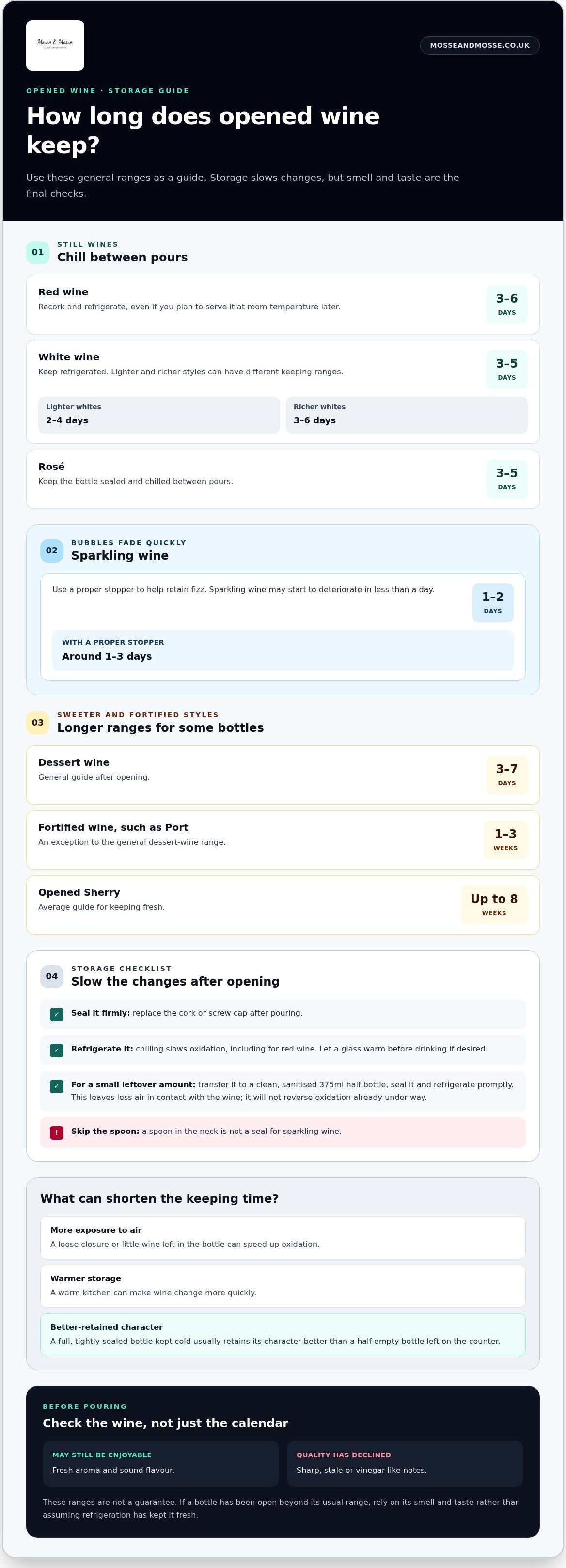
Use these general shelf-life ranges as a guide, counting from the day you open the bottle:
- Red wine: around 3-6 days when stored correctly. Recork it and keep it in the fridge, even if you plan to serve it at room temperature later.
- White wine: around 3-5 days refrigerated; lighter whites may keep for 2-4 days. Richer whites can last roughly 3-6 days after opening.
- Rosé: around 3-5 days when stored correctly. Keep the bottle sealed and chilled between pours.
- Sparkling wine: around 1-2 days after opening, or 1-3 days with a proper stopper. Its bubbles can fade quickly, and it may deteriorate in less than a day.
- Dessert wine: around 3-7 days after opening. Fortified wines such as Port are an exception, generally lasting 1-3 weeks; opened Sherry can stay fresh for up to 8 weeks on average.
These ranges don’t guarantee that every bottle will stay enjoyable for the whole period. A warm kitchen, a loose closure or little wine left in the bottle can speed up oxidation, as more wine is exposed to air. A full, tightly sealed bottle kept cold usually retains its character better than a half-empty bottle left on the counter.
After pouring, replace the cork or screw cap firmly and put the bottle in the refrigerator. This applies to red wine too: chilling slows changes caused by oxygen, and you can let a glass warm before drinking. For sparkling wine, use a proper stopper to help retain its fizz. Don’t rely on a spoon in the neck as a seal.
For a small leftover amount, transfer the wine into a clean, sanitised 375ml half bottle. A smaller container leaves less air in contact with the wine, which can help preserve it. Seal it and refrigerate it promptly; simply pouring wine into another vessel won’t reverse oxidation that has already begun.
Before serving a bottle that was opened several days ago, smell and taste a small amount. A fresh aroma and sound flavour suggest it may still be enjoyable; sharp, stale or vinegar-like notes mean its quality has declined. If the bottle has been open beyond the usual range, rely on these sensory signs rather than assuming refrigeration has kept it fresh.
Is Bad Wine Dangerous?
Wine that has lost its freshness is usually unpleasant to drink, but spoilage doesn’t automatically mean it will make you ill. The important distinction is between quality faults, such as oxidation, and rare microbial spoilage, which can cause food poisoning.
What happens if you drink spoiled wine?
An oxidised bottle may taste flat, stale or sharply sour. Drinking it is unlikely to be enjoyable, but a tired flavour alone doesn’t mean the wine is poisonous. Cork taint can also make wine musty and unpleasant without making it dangerous to consume.
Microbial spoilage is different. It’s rare, but it can cause food poisoning, so don’t drink wine that seems spoiled. Smell and appearance can help you recognise faults, but they can’t establish that a questionable bottle is safe. If you’ve already tasted a small amount, stop drinking it and discard the rest.
How to recognise a questionable bottle
Use a simple three-part check before pouring a full glass: look, smell, then taste only if the wine appears sound. Cloudiness in wine that was previously clear may signal microbial activity. A sharp vinegar or solvent-like smell, or a persistent rotten-egg aroma, is another reason to avoid drinking it.
- Look: check for new cloudiness or unexpected changes in a previously clear wine.
- Smell: notice vinegar, nail-polish remover, rotten eggs or persistent mouldy aromas.
- Taste: if the wine looks and smells normal, a small sip can reveal sour or stale flavours. Stop if it tastes unpleasant.
Comparing a sound bottle with a deliberately oxidised leftover can help you recognise the difference. Notice the fresh wine’s fruit aromas, then compare them with the opened wine’s muted, stale character. Don’t use a bottle with clear spoilage signs as a tasting exercise.
Preventing wine from going bad
Oxygen, warmth and time all affect opened wine. Seal the bottle tightly after pouring and refrigerate it, including red wine; chilling slows spoilage but doesn’t stop it. Heat matters too: wine left for just one day in a hot delivery truck can be damaged.
For unopened bottles, choose a cool, dark place and avoid temperature swings. Older cork-sealed wine is best stored on its side, which helps prevent the cork drying out. A suggested relative humidity is about 60%. These habits protect quality, but they can’t restore wine once oxidation or contamination has spoiled it.
An unpleasant bottle isn’t automatically a health hazard, but suspected spoilage is a clear reason to stop drinking and pour it away. Rare microbial spoilage can cause food poisoning, and the wine’s smell or taste can’t rule that risk out with certainty.
Cork taint and other wine faults
A wine can smell unusual for several reasons, and not every fault means the bottle is unsafe. Cork taint, oxidation and unexpected fermentation each leave different clues. Recognising those differences helps explain why an unopened bottle can disappoint, even when its seal looks intact.
Cork taint: musty, damp-cardboard aromas
Cork taint is associated with the chemical compound 2,4,6-trichloroanisole, usually shortened to TCA. Affected wine may smell musty, mouldy or like wet cardboard, with fruit aromas and flavours muted beneath it. The fault is unpleasant rather than dangerous to consume, but TCA contamination cannot be reversed, so airing or decanting won’t restore the wine.
Smell the wine after pouring, then swirl the glass gently. Aeration can intensify musty aromas and make a fault easier to recognise. Smelling the wet end of the cork may also offer a clue, but a crumbly cork alone doesn’t prove poor preservation. Nor does a screw cap rule out cork taint: TCA can transfer into barrels or cellars before bottling.
Oxidation and changes with age
Oxidation develops when wine is exposed to oxygen, including through a poorly fitting or dried-out cork. The wine can become tired, with muted fruit and stale, nutty or Sherry-like notes. A browner colour, like an apple exposed to air, can indicate oxidative stress, but colour alone doesn’t establish that wine has gone bad.
Age matters. A properly stored Sauternes can develop darker orange or brown hues and gentle, pleasant nutty notes as primary fruit fades and tertiary aromas emerge. That evolution differs from a bottle with flat, stale flavours and no appealing complexity. Judge the aroma and taste together, rather than treating every brown tint as a fault.
Other faults: vinegar, sulphur and bubbles
Heat and oxygen can prompt chemical changes that allow bacteria to grow, producing acetic acid and acetaldehyde. The result may smell sharply of vinegar or solvent. Rotten-egg, onion or cabbage aromas point to volatile sulphur compounds, including mercaptans, formed when wine receives too little oxygen during winemaking. Some reduction smells fade shortly after opening; persistent aromas remain a fault.
Unexpected fizz in still wine may indicate a second, unplanned fermentation. The wine can taste sour and spritzy, unlike champagne, where bubbles are expected. A fault can affect one bottle rather than every bottle from the same wine, so bottle variation becomes more apparent in aged wines.
If you suspect a fault, compare the wine’s smell, flavour and appearance before pouring more. Cork taint, oxidation and unwanted fermentation affect enjoyment in different ways; none can be fixed once established.
Mosse and Mosse: Red Wine
When you’re ready to choose another bottle, Mosse and Mosse offers a considered next step. Explore its white wine and Champagne and sparkling wine selections for a fresh bottle suited to your table or occasion. If you’re unsure which style to choose, Mosse and Mosse’s personalised service can help you find a wine that fits your preferences.
A sound bottle should be enjoyable for its own aromas and flavours, not simply because it replaces one that disappointed. Whether you’re choosing a crisp white or celebratory fizz, start with a style you enjoy and serve it in good condition.
Contact Mosse and Mosse to discuss your wine choice.
Choose your next bottle with confidence
Your next glass can be a chance to revisit a style you enjoy or explore something new for a meal or occasion. If you’re still wondering how to tell if wine has gone off, let its condition guide your choice rather than trying to rescue a bottle with persistent unpleasant aromas. Choose a fresh bottle that suits the moment, and serve it in a way that lets its character show.
Mosse and Mosse offers red wine, white wine, and Champagne and sparkling wines, giving you different styles to consider for a relaxed supper or celebration. Knowing how to tell if wine has gone off can also help you choose with greater confidence next time. Its personalised service can help you think through what you enjoy and what you’re planning.
Explore a new style or return to a favourite. Contact Mosse and Mosse to discuss your next wine choice, and look forward to a more enjoyable pour.
Frequently Asked Questions
How Long Does Wine Typically Last?
Most wines sold today are intended to be consumed within one to five years of release, while some fine wines can remain drinkable for decades. Bordeaux is one example of a region producing wines made to age. Whether a bottle benefits from keeping depends on its style and storage, so a general drinking window is a guide, not a reason to open every bottle by a fixed date.
Does Unopened Wine Go Off?
Yes. An unopened bottle can lose quality or spoil, particularly if stored poorly, but its age alone doesn’t decide whether it’s sound. Stored correctly, unopened white wine and rosé can often last 1-2 years past a printed expiry date; red wine can last 2-3 years. Some fine wines and fortified wines can last for decades, so assess the bottle’s style and condition rather than relying on age alone.
Does Opened Wine Go Off?
Yes. After opening, oxygen gradually alters the wine, even if the bottle is resealed. As a practical example, opened red wine generally keeps for 3-6 days when stored correctly, while rosé usually lasts 3-5 days. Record the opening day if you’re saving a bottle for another meal. A tight seal and refrigeration can help preserve its character, but won’t reverse changes that have already occurred.
Final Thoughts: Does Wine Always Go Off?
Wines don’t all go off on the same timetable. Most bottles are made for drinking within one to five years of release, while some fine wines are intended to age for decades. Proper storage matters: heat and oxygen can damage a bottle, while some high-quality reds can develop positively over time. If you find an older bottle, consider its style and storage history before deciding when to open it.
How long does it take for wine to spoil?
There isn’t one fixed time: opened wine can begin to spoil from oxidation in as little as two days, and opened sparkling wine may deteriorate in less than a day. Exposure to oxygen, warmth and the amount left in the bottle all affect how quickly its quality declines. A nearly empty bottle has more air in contact with the remaining wine, so its character may fade sooner.
What About Wine Faults?
Wine faults can affect aroma and flavour without all having the same cause. Cork taint is associated with the chemical compound TCA, while oxidation can leave wine tired and stale. Reduction may produce sulphurous aromas, and unexpected bubbles in a still wine may signal a second fermentation. A crumbly cork alone doesn’t prove the wine is faulty, and screw-cap bottles can still develop cork taint.


