
Could an open bottle be past its best by breakfast, or might it still be enjoyable with dinner? The answer to “how long does open wine last” depends on the style, how much oxygen reaches the wine and how you store it. One night doesn’t automatically spoil a bottle, but its aromas and flavours can start to change.
Different wines follow different timelines. Sparkling wine can lose its fizz within a few days, while Port may remain enjoyable for several weeks. Knowing what to expect helps you avoid pouring away good wine too soon or serving a bottle that’s no longer at its best.
This guide gives approximate keeping times for sparkling, white, rosé, red and fortified wines, plus practical storage steps to slow changes. You’ll also learn what to look for in a wine’s smell, taste and colour before deciding whether to pour another glass.
Key Takeaways
- There’s no single answer to how long does open wine last: use style-based time ranges as a guide, not a guarantee.
- Check for changes in freshness, aroma and flavour, then make a considered judgement with a small pour.
- Resealing and chilling a bottle after each pour can slow quality loss and make it easier to assess later.
- If the wine has lost some character, decide whether it’s still enjoyable or better suited to cooking.
How long does open wine last? Start with the style and storage
There’s no single lifespan for every opened wine. As a practical guide, many still wines remain enjoyable for a few days when resealed and kept cool. Sparkling wine can lose its fizz sooner, while fortified wine often lasts longer. These are approximate windows, not guarantees. How long does open wine last also depends on air exposure, temperature, the closure and the wine’s condition when opened.
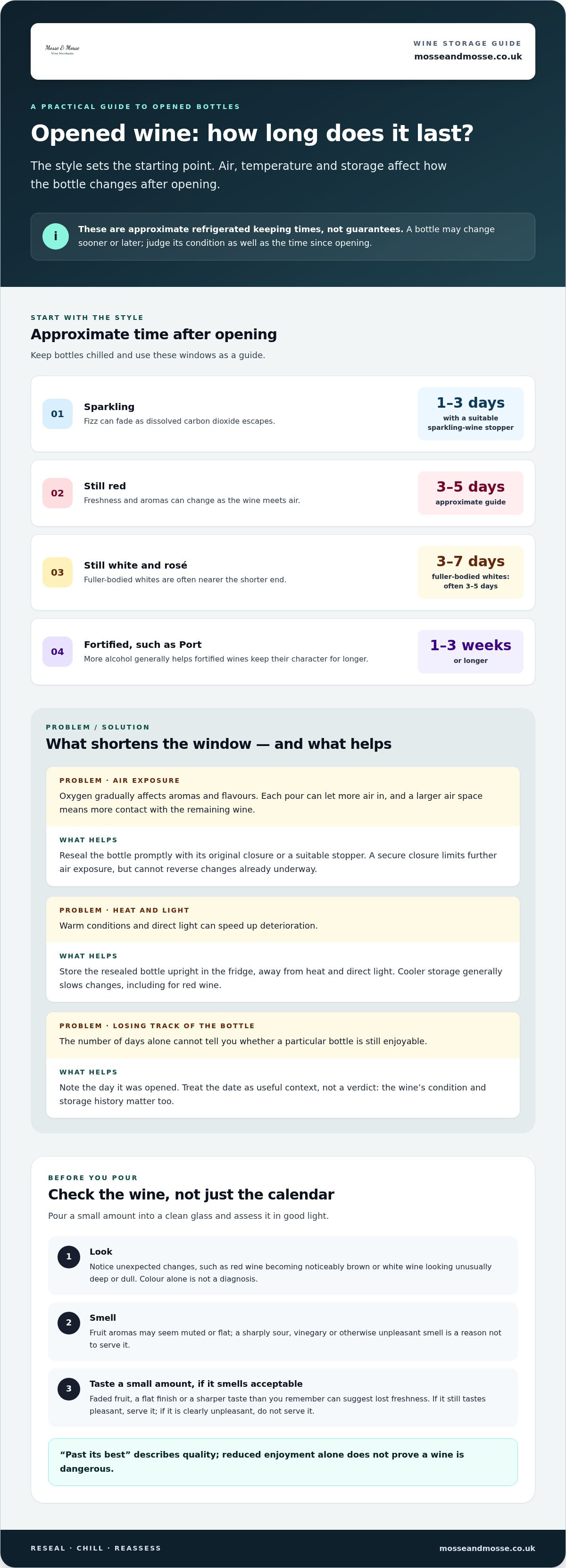
Use these refrigerated keeping times as a starting point. A bottle may change before or after the suggested window, so judge its quality rather than relying on the calendar alone.
| Wine style | Approximate guide after opening |
|---|---|
| Still red | About 3-5 days |
| Still white and rosé | About 3-7 days; fuller-bodied whites are often nearer 3-5 days |
| Sparkling | About 1-3 days with a suitable sparkling-wine stopper |
| Fortified, such as Port | About 1-3 weeks or longer |
Why different wine styles keep for different lengths of time
Once a bottle is opened, oxygen gradually affects its aromas and flavours. Still wines can lose freshness as they meet air; sparkling wines also lose dissolved carbon dioxide, so their fizz fades. Fortified wines, including Port, have more alcohol, which generally helps them keep their character for longer after opening. The production style matters too: a full-bodied white, for example, may not keep as well as a lighter style. For a plain-language overview of oxidation and other wine faults, see the linked reference. Individual bottles vary, so treat the ranges above as guidance, not a promise.
What changes the open-bottle window?
A secure closure limits further air exposure, but it can’t reverse changes already underway. Each time you open and pour from a bottle, more air can enter. The larger the air space left inside, the more contact the remaining wine may have with oxygen. Cooler storage generally slows quality loss compared with leaving wine in a warm room. Light and heat can also speed up deterioration.
“Past its best” refers to quality, not automatically to a safety concern. A wine may simply have less vivid fruit or freshness than it did when first opened. The time ranges can help you plan, but the bottle itself is the best guide to whether you’ll still enjoy a glass.
How to tell whether open wine has deteriorated
The question “how long does open wine last?” gives you a time guide, but your senses help you assess the bottle in front of you. A wine can lose some sparkle, fruit or freshness without becoming unpleasant. Check it before pouring rather than relying on the number of days alone.
Which visual, aromatic and flavour clues should you notice?
Pour a small amount into a clean glass and check it in good light. Look for an unexpected change, such as a red wine becoming noticeably brown or a white wine looking unusually deep or dull in colour. Appearance alone can’t tell you whether a wine is enjoyable. Some wines naturally have deeper hues, and a colour shift isn’t a diagnosis.
Next, smell the wine. Its usual fruit aromas may seem muted or flat, or it may smell sharply sour, vinegary or otherwise unpleasant. If it looks and smells acceptable to you, try a small taste. Faded fruit, a flat finish or a sharper taste than you remember can suggest that the wine has lost freshness. These are clues to changing quality, not definitive proof of a particular fault.
Reduced enjoyment is not, by itself, proof that a wine is dangerous. If the smell or taste is clearly unpleasant, don’t serve it. There’s no need to finish a glass just because the bottle is still within a general time range.
Is a wine fault the same as an opened bottle losing freshness?
Not necessarily. Some wine faults are present in a bottle before it’s opened, while gradual oxidation and loss of freshness can develop after air reaches the wine. The two can sometimes produce similar impressions, and one smell or taste alone isn’t enough to identify the cause. Treat your assessment as a practical decision about enjoyment, not a technical diagnosis.
If you’re unsure, compare a small taste with what you remember from the first pour, taking the wine’s style and storage into account. If it now seems stale or distinctly unpleasant, set it aside rather than serving it to guests. For personal guidance on choosing and enjoying wine, get in touch with Mosse and Mosse.
How to store open wine and reassess it later
A few simple habits make it easier to keep track of an opened bottle and judge it on its own merits. If you’re wondering how long does open wine last, remember that storage can slow changes but can’t restore freshness that has already faded. Keep the routine simple and check the wine again before serving.
A simple routine for preserving an opened bottle
After pouring, close the bottle promptly and store it upright, away from heat and direct light. Note the opening date to give yourself useful context when you return to it, especially if you have more than one bottle open.
- Reseal it. Replace the original cork or closure securely as soon as practical. A snug closure limits further air exposure, although it can’t remove oxygen already in the bottle.
- Chill it. Put opened wine in the fridge, including red. Cooler storage generally slows changes to aroma and flavour. Before serving red, let it move towards your preferred serving temperature.
- Make a note. Record the day it was opened or mark it on a label. This is a helpful prompt, not a verdict: the wine’s condition and storage history matter too.
In short, reseal the bottle promptly, keep it chilled and protected from heat and light, note when you opened it, then reassess it before serving.
How to decide whether to serve, use or discard it
When you take the bottle out again, don’t rely on the date alone. Pour a small amount and check its aroma and flavour, particularly if you’re unsure how it was stored. If it still smells and tastes pleasant, serve it. If it seems clearly unpleasant, set it aside rather than trying to cover the change with food or seasoning.
A sound wine that’s simply less vibrant may still suit cooking, provided its flavour works with the dish. A small amount can add depth to a sauce or stew, but cooking won’t improve wine that already smells or tastes unpleasant. For personal guidance on storing or enjoying wine, contact Mosse and Mosse for wine advice.
What to do when opened wine is past its best
A bottle that’s lost some vivid fruit or freshness isn’t necessarily unpleasant. Decide what to do based on the wine itself: taste a small amount and distinguish “not quite as lively” from “I don’t want another sip”. Past its best describes a decline in quality; that change alone doesn’t automatically mean the wine is a health hazard.
There’s no fixed deadline for every bottle. The answer to “how long does open wine last?” depends on its style and how it’s been kept. Use time ranges as a prompt to assess it, not a reason to pour away wine that still tastes good.
Can you still cook with wine that has been open for a while?
Yes, if it remains pleasant enough to drink. A wine that has become a little less expressive may still work in a dish where its flavour complements the other ingredients. Add a small amount to a pan or use it in a reduction, then taste as you cook. The wine’s flavour will still contribute, so cooking shouldn’t be treated as a way to remove every unwanted note.
If the aroma or taste is distinctly vinegary, musty or otherwise objectionable, leave it out. An unpleasant wine can carry that character into the food rather than improve it. When unsure, use a small quantity first or choose another ingredient.
When should you simply pour it away?
If you wouldn’t want to drink it because it smells or tastes clearly unpleasant, don’t feel obliged to finish the bottle or find a use for it. Discarding it is a reasonable choice. If it has only softened a little but still tastes agreeable, enjoy a glass or save a modest amount for a suitable dish. Let your senses guide the decision.
Opening a bottle doesn’t start one universal countdown. Wine style, storage and personal preference all affect whether it remains enjoyable, so a date on the calendar can’t make the decision for you. For help choosing or enjoying wine, ask Tim and Sam for personal wine guidance.
Make every bottle an enjoyable experience
Let your own palate be the final guide. A wine that has softened slightly may still be lovely with supper, while another may no longer offer the pleasure you want from a glass. There’s no need to treat how long does open wine last as a rigid countdown. Use the guidance as a reference, then decide whether the bottle still suits the moment.
Over time, you’ll learn which styles you enjoy revisiting and which are best shared soon after opening. That experience can make choosing and serving wine feel more relaxed, and help you waste less without compromising on enjoyment.
Mosse and Mosse is an independent fine-wine merchant in Suffolk, with a hand-selected range of wines by the case and a personal approach to service. The business serves wine enthusiasts in Ipswich, Norwich, Bury St Edmunds, Sudbury, Stowmarket, Newmarket, Thetford, Diss, Attleborough, Southwold, Aldeburgh, Framlingham, Woodbridge, Long Stratton and Saxmundham. For UK mainland orders, delivery is £9.95 to UK mainland, free on orders over £150, 2-3 working days, an adult aged 18 or over must sign for delivery. Explore Mosse and Mosse’s curated wines and get in touch with Tim and Sam.
Frequently Asked Questions
How long does red wine last once opened?
Opened red wine often remains enjoyable for around three to five days if resealed and kept cool, but treat that as a guide rather than a promise. A lighter red may seem less lively sooner, while a wine with more tannin or acidity can retain its character for longer. If you’re planning a second glass the next day, note when you opened the bottle and check it again before pouring.
Can you keep opened red wine in the fridge?
Yes, refrigerating an opened red can help slow its development, even if you wouldn’t usually serve it chilled. Seal the bottle, put it in the fridge and take it out ahead of serving so it can move towards your preferred temperature. If the bottle has been open for a few days, let a small pour warm slightly in the glass before judging its aromas and flavour.
Does open wine go bad if left out overnight?
Not necessarily. A bottle left open overnight, particularly in a warm room, may lose freshness faster, but one night alone doesn’t mean it must be thrown away. Reseal and chill it when you can, then smell and taste a small pour before serving. If you’re unsure how warm the room was or how long the bottle stood open, let its present condition guide your decision.
How long does sparkling wine last after opening?
Sparkling wine is best enjoyed soon after opening because its bubbles gradually fade. A sparkling-wine stopper and refrigeration can help it keep its character for a short time, but the result varies from bottle to bottle. Before pouring another glass, check whether it still has the liveliness you enjoy and whether its aroma remains appealing. A flatter pour may be less pleasurable without necessarily being unpleasant.
Can open wine make you ill?
Wine that has lost freshness is generally a matter of quality, not automatic evidence of danger. Still, don’t drink it if its smell or taste is distinctly unpleasant, or if you’re uncertain about its condition. A quick sensory check can help you decide whether you want to drink it, but it can’t diagnose every possible problem. If in doubt, leave it out rather than taking a chance.
Can you use leftover wine for cooking?
Yes, provided the wine still smells and tastes acceptable. A less vibrant red might suit a slow-cooked sauce, while a white could work in a dish where its flavour complements the other ingredients. Start with a small amount and taste as you cook, since the wine’s character will remain part of the dish. If it has an objectionable smell or flavour, don’t use it to try to rescue the recipe.


