

Have you ever worried that a special bottle of Vintage Port, perhaps one you've saved for a milestone celebration, might be diminished by something as simple as the temperature of the room? It's a common anxiety for hosts who want to master how to serve port wine without making a social faux pas or ruining a high-quality vintage. We understand that hesitation. Port is a complex, fortified wine with centuries of tradition behind it, and the fear of serving it too warm or failing to properly decant a sediment-heavy bottle is entirely relatable.
You deserve to feel like a true connoisseur in your own dining room. In this guide, you'll learn the art of the perfect pour, ensuring every glass is a fitting tribute to the growers who spent decades perfecting the liquid in your glass. We'll cover everything from selecting the right crystal to the traditional etiquette of passing the bottle. We'll also clear up the confusion around decanting different styles and how long your favourite bottle stays fresh once opened, so you can host your next dinner party with absolute confidence.
Key Takeaways
- Understand why modern central heating is often too warm for your favourite bottle and how to find the ideal serving temperature to unlock its complex flavours.
- Master how to serve port wine by learning which styles require decanting to remove sediment and which are ready to pour straight from the cellar.
- Discover the charming rituals of British Port etiquette, including the tradition of passing to the left and the quirky history of the Hoggit decanter.
- Learn how to preserve your Port's vibrancy after opening by managing oxygen exposure and finding the perfect cool, dark storage spot.
The Essentials: Temperature and Glassware for Port
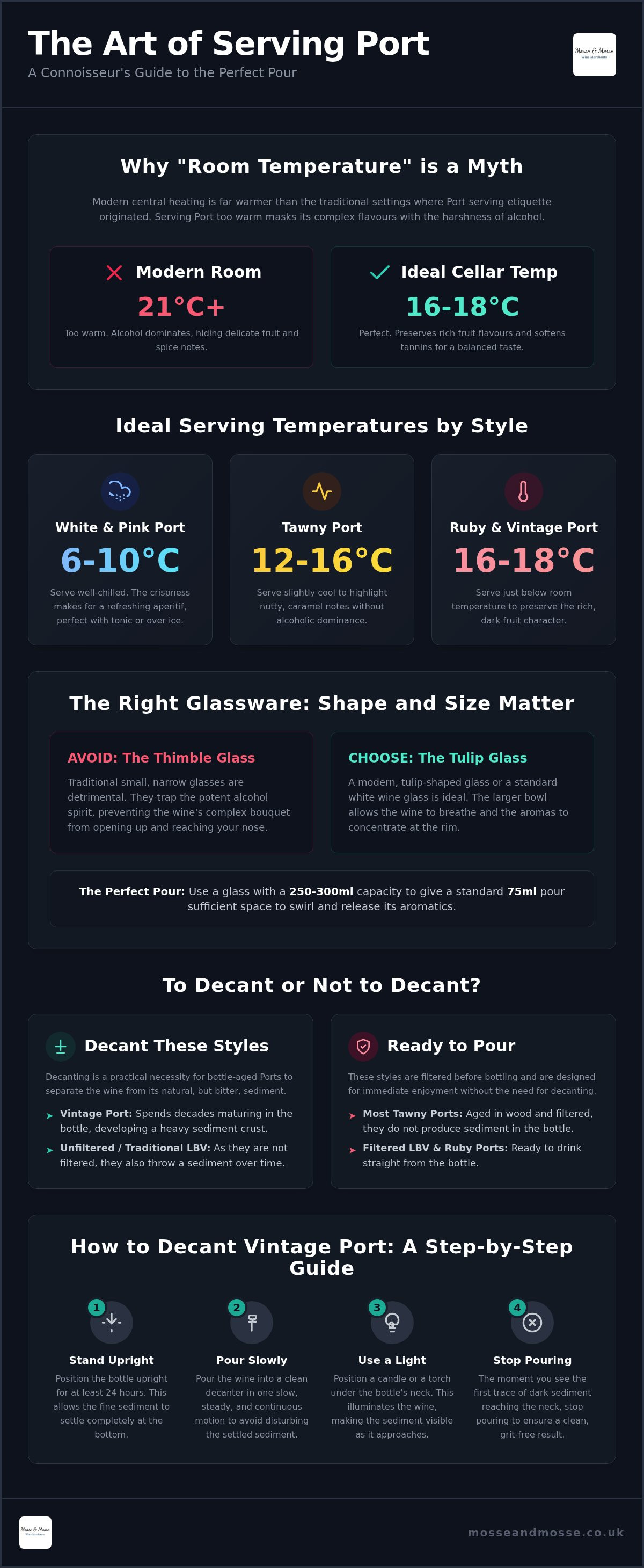
Temperature is the most critical factor in the enjoyment of Port wine. It dictates whether you experience a harmonious blend of fruit and spirit or a harsh, alcoholic burn. Many enthusiasts struggle with how to serve port wine because they rely on the "room temperature" rule. This is a common myth. Modern central heating makes our homes far warmer than the draughty European manors where these serving traditions began. If you serve a fine red Port at 21°C, the heat of the alcohol will mask the delicate primary fruit and complex spice. Instead, aim for a slight chill to keep the wine vibrant and focused.
Glassware is equally important. Those tiny, thimble-sized glasses your grandparents used are actually detrimental to the experience. They trap the spirit and prevent the wine from opening up. A larger, tulip-shaped glass allows the aromas to concentrate at the rim while providing enough surface area for the wine to breathe. This shape ensures that the first thing you perceive is the rich bouquet, not just the punch of the alcohol. We always recommend using a glass that feels substantial and allows the wine to move.
Ideal Serving Temperatures by Style
To get the best from your bottle, you must tailor the temperature to the specific style of Port you are pouring. Precision here makes a world of difference to the palate. Follow these guidelines for the perfect serve:
- White and Pink Port: Serve these well-chilled at 6-10°C. This crispness makes them a refreshing aperitif, especially when served over ice or with tonic.
- Tawny Port: Aim for slightly cool, between 12-16°C. This range highlights the nutty, oxidative notes and caramel sweetness without letting the alcohol dominate.
- Ruby and Vintage Port: These should be served just below room temperature at 16-18°C. This preserves the rich, dark fruit while softening the tannins.
The Modern Port Glass
The evolution of wine appreciation has moved us away from the "digestif" glass toward more functional shapes. A small tulip-shaped glass or even a standard white wine glass is now the preferred choice for connoisseurs. These shapes provide enough space for the wine to breathe, which is essential for older Vintage Ports that have been tucked away in a cellar for decades. When you give the wine room to swirl, you unlock layers of chocolate, leather, and berry that stay hidden in a smaller vessel. The ideal glass should have a capacity of roughly 250ml to 300ml, allowing a standard 75ml pour sufficient space to swirl and release its aromatics.
How to Decant Port: A Step-by-Step Guide
Decanting is more than just theatre; it's a practical necessity for bottle-aged wines. Unlike wood-aged styles, Vintage Port spends decades maturing in glass, where it develops a crust of natural sediment. This fine, dark deposit is a sign of quality, but it tastes bitter and feels gritty on the tongue. Learning how to serve port wine properly involves separating this liquid gold from its dregs. For grand celebrations where you might be opening Magnums & Larger Formats, decanting becomes even more vital to ensure every guest receives a clear, bright glass. Oxygen acts as a catalyst, gently waking up the wine and releasing the complex tertiary aromas of tobacco and leather that have been trapped for years.
The Decanting Process for Vintage Port
Preparation is key. You must stand the bottle upright for at least 24 hours before opening. This allows the sediment to settle at the bottom. Once you're ready, pour the wine in one slow, continuous motion into a clean decanter. Use a candle or a torch positioned under the neck of the bottle to watch the wine as it flows. The moment you see the first trace of dark sediment reaching the neck, stop pouring. Any wine remaining in the bottle can be filtered through muslin if you don't want to waste a drop.
When to Skip the Decanter
Not every style requires this level of ceremony. Most Tawny Ports and Late Bottled Vintages (LBV) are filtered before bottling and are ready to enjoy immediately. However, you should check the label for unfiltered or traditional LBVs. These wines still possess the potential for sediment and benefit from a gentle decant to show their best. If you're unsure about the specific needs of your favourite bottle, our Types of Port: A Connoisseur’s Guide provides a deeper look at these different classifications. If you have a particularly rare bottle and need tailored advice on its preparation, please feel free to contact us for a personal recommendation.
Etiquette and Pairing: Serving Port at the Table
Port is the ultimate social wine. The ritual of "passing the Port" is a hallmark of British hospitality that adds a sense of occasion to any gathering. Tradition dictates that the decanter always moves to the left, following the "port to port" rule. This ensures that every guest is served before the decanter returns to the host. If you encounter a "Hoggit" decanter, you'll notice its distinctive rounded base. It cannot be set down on the table and must be passed until it reaches its wooden stand. These charming rituals are essential to master when considering how to serve port wine at a formal dinner or when selecting Wedding & Party Wine for a grand celebration.
Traditional British Table Manners
If the decanter stalls during its journey, etiquette provides a polite, coded nudge. You might ask the guest holding the bottle, "Do you know the Bishop of Norwich?" This legendary figure was notorious for falling asleep at the table and forgetting to pass the wine. If the guest replies that they don't know him, the traditional response is, "He's a lovely fellow, but he always forgets to pass the Port." Traditionally, the bottle should never touch the table whilst it's in motion. Modern hosts often keep these rituals alive to add a layer of story and heritage to the evening, even in more relaxed settings.
Classic and Contemporary Food Pairings
Pairing Port is an exercise in balancing intensity and sweetness. The marriage of Vintage Port and Stilton is iconic because the sharp saltiness of the blue cheese perfectly offsets the wine's rich residual sugar. For a Tawny Port, nutty desserts are the natural companion. An almond tart or a caramel-heavy crème brûlée will highlight the oxidative notes of the wine beautifully. We also enjoy exploring more contemporary and surprising pairings:
- Dark Chocolate: A high-cocoa content chocolate brings out the black cherry notes in a Ruby Port.
- Charcuterie: The savoury fats of cured meats are a brilliant foil for a chilled White Port.
- Dried Fruits: Figs and dates provide a chewy texture that complements the silkiness of an aged Tawny.
Whether you are hosting an intimate dinner or a large-scale event, the right pairing elevates the entire experience. If you would like personalised advice on selecting the perfect bottles for your next event, please contact us to discuss your plans.
Storage and Longevity: After the Bottle is Opened
Many people assume that because Port is fortified, it stays fresh indefinitely. This is a mistake. Whilst the addition of grape spirit raises the alcohol content to between 19% and 22%, oxygen remains the enemy of all wine. Once you've mastered how to serve port wine at the dinner table, you must consider what happens when the guests leave. The wine begins to oxidise, losing its vibrant fruit and eventually turning flat. Proper storage in a cool, dark place is essential to slow this decline. You'll often find T-cap stoppers on wines intended for shorter-term enjoyment, whilst driven corks indicate a bottle meant for the cellar. This versatility makes Port a distinguished choice for our Corporate & Private Wine Gift Boxes, as it offers a touch of luxury that can be savoured over several evenings.
How Long Does Port Last Once Opened?
The style of Port dictates its shelf life. Vintage Port is the most fragile. Because it has spent so little time in wood, it reacts quickly to the air. You should enjoy it within 48 hours for the peak flavour experience. Ruby and Late Bottled Vintage (LBV) styles are slightly more robust, usually remaining pleasant for one to two weeks. Tawny Port is the champion of longevity. Having already spent decades in seasoned oak casks, it's accustomed to oxygen. A 20-year-old Tawny can stay fresh for up to a month if handled with care.
Preserving Your Port
To extend the life of your wine, keep it away from heat and light. Simple recorking is often sufficient, but a vacuum pump can help remove excess air from the bottle. Don't be afraid to use your fridge. Cold temperatures significantly slow down chemical reactions. This is particularly effective for White and Tawny styles. It ensures every glass tastes as good as the first pour. We always suggest keeping a bottle of chilled Tawny on hand; it's the perfect conclusion to a meal featuring our curated red wines. Follow these simple steps to ensure your collection stays as vibrant as the day it was bottled:
- Keep it upright: Once opened, store the bottle vertically to minimise the surface area exposed to oxygen.
- Control the climate: Avoid the top of the fridge or near the oven where temperatures fluctuate.
- Use the fridge: Even red Ports benefit from the cold if you plan to keep them for more than a few days.
Master the Art of the Perfect Pour
Mastering how to serve port wine is about more than just following rules; it's about honouring the craftsmanship that goes into every bottle. By keeping your red Ports slightly cool and ensuring your Vintage bottles are properly decanted, you allow the complex flavours of the Douro Valley to shine. Whether you're passing the decanter to the left or pairing a nutty Tawny with a favourite dessert, these small details transform a simple drink into a memorable social event.
At Mosse and Mosse, we're passionate about helping you find the perfect bottle for any occasion. As a family-run merchant, we provide a personalised service to help you select wines expertly sourced from traditional European regions, all available with national UK delivery on our curated cases. Explore our curated selection of fine Port and Red Wines today and prepare to host your next dinner party with absolute confidence. Cheers to your next successful pour.
Frequently Asked Questions
Do you serve Port wine chilled or at room temperature?
The ideal temperature depends entirely on the style you've chosen. White and Pink Port should always be served well-chilled, ideally between 6°C and 10°C, to remain refreshing. Tawny Port benefits from being slightly cool at 12°C to 16°C. While Ruby and Vintage styles are traditionally served at "room temperature", this actually means 16°C to 18°C. Modern homes are often too warm for these delicate fortified wines.
Should Port be decanted before serving?
Decanting is essential for Vintage Port and unfiltered LBVs because they develop a natural sediment over time. This process also allows the wine to breathe and "wake up" after years in the bottle. However, most Tawny and standard Ruby Ports are filtered before bottling. These styles are ready to pour immediately and don't require a decanter to show their best characteristics.
Why do you pass the Port to the left?
This is a historic British naval tradition often referred to as "port to port". By passing the decanter to the left, it travels clockwise around the table, ensuring the host is the last person served. It's a charming ritual that keeps the conversation flowing. If someone forgets to move the bottle along, you might politely ask if they know the Bishop of Norwich to prompt a pour.
What kind of glass do you serve Port in?
You should use a tulip-shaped glass or a standard white wine glass rather than the tiny "thimble" glasses of the past. A larger vessel provides the necessary surface area for the wine to breathe and allows the complex aromatics to concentrate near the rim. This glassware choice is a vital part of how to serve port wine to ensure you experience the full depth of its flavour profile.
How long does Port wine last once the bottle is opened?
Vintage Port is best enjoyed within 48 hours as it oxidises rapidly once the cork is pulled. Ruby and LBV styles typically stay fresh for one to two weeks. Tawny Port is the most resilient, often lasting for up to a month if stored in a cool, dark place. We always recommend keeping an open bottle in the fridge to help preserve its vibrant fruit and spirit balance.
Can you serve Port as an aperitif or only after dinner?
Port is incredibly versatile and works beautifully at both ends of a meal. Chilled White or Pink Port is a fantastic aperitif, especially when served with tonic and mint. While Vintage and Ruby styles are the classic choice for a post-dinner cheese board, a cool Tawny is also a distinguished option. It's the perfect conclusion to a meal featuring our curated red wines.


