

Napoleon famously refused to drink anything else, but you don't need an empire to appreciate why Gevrey-Chambertin wine remains the undisputed "King" of the Côte de Nuits. It's the most powerful expression of Pinot Noir found anywhere in the world, yet its prestige often comes with a side of confusion. You've likely felt the frustration of staring at a complex wine list, unsure if a specific Premier Cru justifies the leap in price or if that 2018 vintage is truly ready to pour.
We understand that navigating the intricate hierarchy of Burgundy can feel like a full-time job. That's why we've distilled our decades of experience as independent merchants into this definitive guide. You'll discover the secrets behind the nine legendary Grand Crus and learn how to spot exceptional value amongst the Village-level vineyards. We'll also share our personal insights on which bottles are showing beautifully right now, from the structured 2015s to the vibrant 2019s. By the end of this article, you'll have the knowledge to choose, cellar, and pair these majestic reds with absolute certainty.
Key Takeaways
- Master the unique terroir of the Côte de Nuits and discover how limestone-rich soils create the muscular, structured profile that defines the "King of Burgundy".
- Decipher the complex classification system and understand why this village holds a record nine Grand Crus, more than any other in the region.
- Learn to time your enjoyment perfectly by comparing the elegant 2021 vintage with the powerful 2023s and identifying the 10-15 year cellaring "sweet spot".
- Confidently select a Gevrey-Chambertin wine for your table or cellar by prioritising the producer's craft and the quality of the liquid over mere brand prestige.
- Find out how partnering with an independent specialist ensures access to curated selections and expert advice on everything from food pairing to sourcing rare magnums.
Understanding Gevrey-Chambertin: The Muscular Heart of the Côte de Nuits
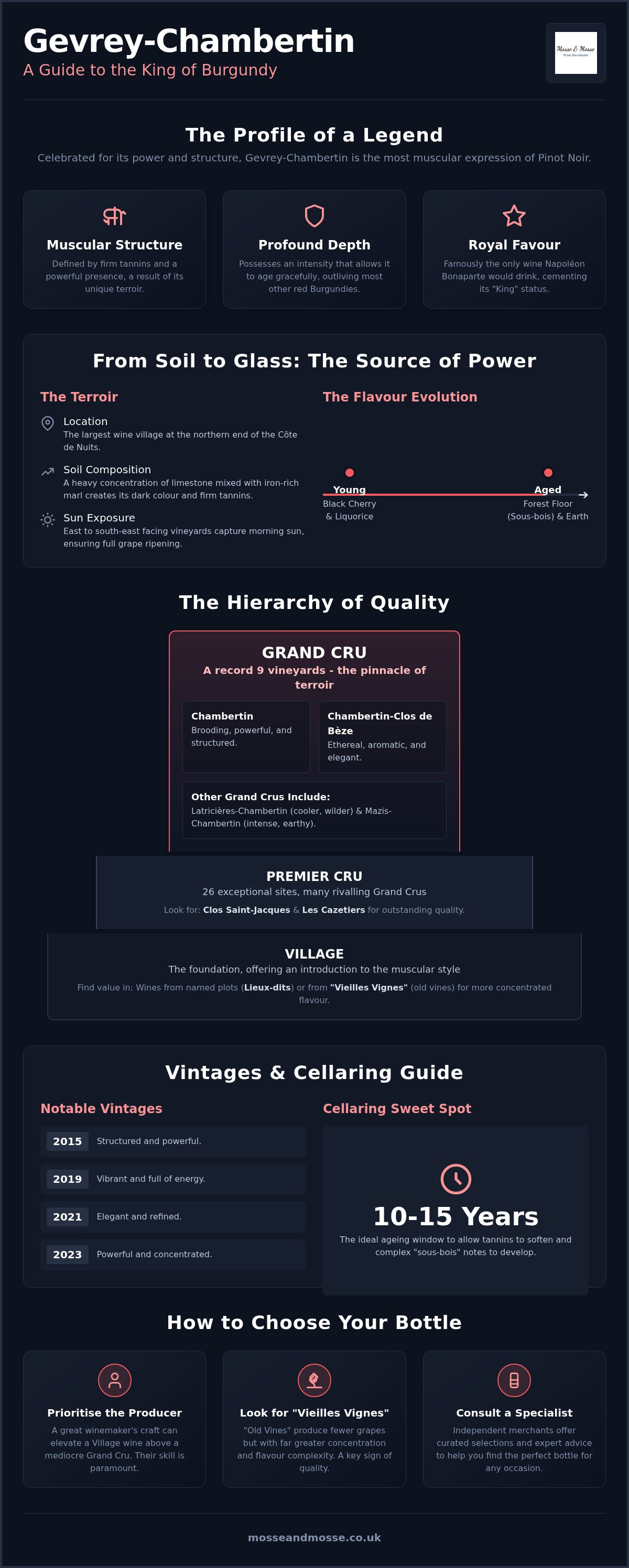
Gevrey-Chambertin sits at the northern end of the Côte d’Or, acting as the rugged, muscular heart of the region. As the largest wine-producing village in the area, it commands respect through sheer scale and intensity. Whilst other villages might focus on delicacy, Gevrey-Chambertin wine is celebrated for its "masculine" structure. This character comes directly from the earth. A heavy concentration of limestone mixed with iron-rich marl produces a Pinot Noir that is noticeably darker in colour and firmer in tannin than its neighbours.
If you compare a Gevrey to the "feminine" elegance of a Chambolle-Musigny, the difference is striking. One is a silk scarf; the other is a velvet cloak. It's still 100% Pinot Noir, but the terroir here demands a different kind of attention. The result is a wine with a broader shoulder and a more serious, brooding personality.
The Terroir and Character of the Côte de Nuits
The geography of the Côte de Nuits provides the perfect stage for this drama. Most vineyards face east or south-east, catching the morning sun. This exposure ensures the grapes ripen fully even in cooler years, whilst the limestone bedrock preserves that essential Burgundian acidity. You'll find a classic Gevrey offers a complex bouquet of black cherry and liquorice. As it ages, these primary fruits give way to the evocative, earthy "sous-bois" (forest floor) notes that collectors crave. It's a sensory experience that balances power with profound aromatic depth.
Why Gevrey-Chambertin is Known as the "King"
The "King" title isn't just marketing. It's rooted in history and physical presence. Napoléon Bonaparte famously insisted on drinking Chambertin, allegedly refusing to go into battle without a supply. Beyond imperial favour, the village earned its crown through longevity. These wines possess an intensity that allows them to outlive almost any other red Burgundy. In 1847, Gevrey became the first village in the region to append the name of its most prestigious vineyard, Chambertin, to its own. This set a trend that every other major village in the Côte d'Or eventually followed, cementing its status as the leader of the pack.
The Hierarchy of Quality: Village, Premier Cru, and Grand Cru
Grasping the Burgundy classification system is the first step toward masterfully selecting a bottle. In Gevrey, the hierarchy moves from regional Bourgogne through to Village, Premier Cru, and the elite Grand Cru. What sets this village apart is its staggering nine Grand Cru vineyards. No other commune in the Côte d’Or can claim such a concentration of top-tier terroir. This density of quality means that even at the Village level, you'll often find "Lieux-dits", specific named vineyard plots that offer a more precise expression of the land than a generic blend.
The 26 Premier Cru sites also command immense respect. Many connoisseurs consider vineyards like Clos Saint-Jacques and Les Cazetiers to be of Grand Cru quality in all but name. These sites sit on the same limestone-rich mid-slope as the legends, offering a level of sophistication that rivals the very best. Choosing a Gevrey-Chambertin wine from these high-altitude plots provides a perfect balance of power and refined acidity.
Exploring the Nine Legendary Grand Crus
At the pinnacle of the pyramid sit the "Big Two": Chambertin and Chambertin-Clos de Bèze. Whilst they are neighbours, they possess distinct personalities. Chambertin is typically more brooding and structured, whereas Clos de Bèze often displays a more ethereal, aromatic elegance. Other sites offer fascinating contrasts; Latricières-Chambertin is known for its cooler, wilder character, whilst Mazis-Chambertin often shows more intense, earthy notes. It's vital to remember that Grand Cru status is tied to the specific plot of land, though the producer's skill is what ultimately brings that potential to life.
Finding Value in Village and Premier Cru Wines
You don't always need to reach for the top tier to enjoy the "King's" presence. Village wines from elite producers provide a superb introduction to the region's muscular style. We often suggest looking for "Vieilles Vignes" (old vines) on the label. These older plants produce fewer grapes but with significantly more concentrated flavours and depth. If you're looking for guidance on which specific producers are currently punching above their weight, please reach out to us for a personal recommendation. Identifying these hidden gems amongst the Premier Crus is where the true joy of collecting begins.
The Practical Guide: Vintages, Food Pairing, and Cellaring
Buying a bottle is only half the journey; the real skill lies in knowing when and how to open it. For those looking at recent releases, the contrast between the 2021 and 2023 vintages is fascinating. The 2021s are classic, high-toned, and elegant, whilst the 2023s offer a more powerful, concentrated profile that collectors will find incredibly rewarding. To avoid "cooking" the delicate fruit, always serve your Gevrey-Chambertin wine at a cool room temperature, ideally between 15°C and 17°C. If the bottle is young, a brief decant can help soften those firm tannins, but be cautious with older vintages where the aromatics are more fragile.
Perfect Food Pairings for Muscular Pinot Noir
Because Gevrey-Chambertin possesses more structure than a typical Pinot Noir, it demands food with equal weight. Classic Burgundian dishes like Coq au Vin or a rich wild mushroom risotto are spectacular matches. If you enjoy game, a roast duck or pheasant will beautifully complement the wine's earthy undertones. For the cheese course, look no further than Epoisses. This pungent, local favourite has the richness to stand up to the wine's tannins. Aged Comté is another excellent choice for those who prefer a firmer texture. These richer pairings work because Gevrey's firm tannins provide a structural backbone that lighter reds simply lack.
Cellaring Tips for the Patient Collector
Whilst some Village-level wines are approachable after five years, the "sweet spot" for most Gevrey-Chambertin is often between 10 and 15 years of age. During this period, the wine frequently enters a "dumb phase" where the primary fruit fades before the complex secondary notes fully emerge. Don't panic if a bottle seems closed; it simply needs more time. Ensure your collection is stored in a dark space with consistent temperature and humidity to protect your investment. You can find more advice on broader storage techniques in our guide to Red Burgundy. If you are unsure whether your current stock is ready to enjoy, ask us for a vintage assessment to ensure you catch your bottles at their absolute peak.
Sourcing Exceptional Gevrey-Chambertin with Mosse and Mosse
At Mosse and Mosse, we've spent over 25 years refining our selection process to ensure every bottle we sell represents exceptional quality. We don't just follow trends; we look for the soul of the vineyard. When you choose a Gevrey-Chambertin wine from our collection, you're getting a bottle that has been personally vetted by our founders. As an independent, family-led specialist, we pride ourselves on offering the kind of personalised advice that larger retailers simply can't match. We treat our clients as partners in appreciation. Whether you're a seasoned collector or a first-time buyer, we're here to guide you toward a selection that fits your palate and your cellar. We provide reliable national delivery across the UK mainland, ensuring your wine arrives in pristine condition. For those looking to share this excellence, our Corporate & Private Gift Boxes offer a sophisticated way to show appreciation.
The Curated Selection Process
We personally taste and select every Gevrey-Chambertin in our range. Our focus remains steadfastly on traditional producers who respect the land and avoid over-manipulation in the cellar. We look for that signature muscularity and depth that defines the region, ensuring the wine reflects its true origin rather than a corporate brand. This commitment to the liquid over the label is what defines us. If you're new to purchasing fine Burgundy, we recommend reading our How to Buy Wine Online guide. It's a useful resource for understanding how we prioritise curation and quality in every single case we pack.
Gifting and Special Occasions
The power and prestige of Gevrey-Chambertin make it a perennial favourite for Weddings and milestone anniversaries. It's a wine that commands attention on any celebratory table and leaves a lasting impression on your guests. For larger gatherings or long-term cellaring, we often suggest Magnums. These larger formats don't just look impressive; they also allow the wine to age more slowly and gracefully. It's the ultimate statement of quality. Browse our current collection of Gevrey-Chambertin today and discover why we consider it the flagship of our Burgundy range.
Begin Your Journey with the King of Burgundy
You've seen why this region commands such reverence. From the iron-rich soils that forge its muscular structure to the patient decades required for its finest Grand Crus to peak, this is a terroir that rewards the thoughtful collector. Understanding the hierarchy of these vineyards is just the start; the true pleasure lies in pulling the cork on a bottle that has been handled with care and selected for its authentic character rather than just a famous label.
At Mosse and Mosse, we bring our 25 years of independent family expertise to help you navigate this complex landscape. We've done the hard work of tasting and vetting every producer in our range, ensuring you receive exceptional quality and value with every order. Whether you're looking for a single bottle to mark a milestone or a case for your long-term cellar, we provide reliable UK-wide mainland delivery to your door. We invite you to explore our curated Gevrey-Chambertin wine collection and discover a bottle that truly speaks of its origin. We're here to help you find your next favourite vintage.
Frequently Asked Questions
What does Gevrey-Chambertin wine taste like?
Gevrey-Chambertin wine is famous for its "masculine" profile, characterised by intense flavours of black cherry, liquorice, and dark berries. Unlike the silkier wines of its neighbours, it possesses a firm tannic structure and a noticeably deeper colour. As it matures, you'll notice complex secondary aromas of forest floor, leather, and game. It's a wine that balances its natural power with a long, savoury finish that makes it stand out amongst other Burgundy reds.
Is Gevrey-Chambertin a Pinot Noir?
Yes, every red Gevrey-Chambertin wine is made from 100% Pinot Noir. Whilst this is the same grape used throughout the Côte d'Or, the specific iron-rich marl and limestone soils of the village give it a unique, muscular character. You won't find any white wine produced under this specific appellation name; the village is entirely dedicated to expressing the power and longevity of the Pinot Noir grape in its most structured form.
How long can you cellar Gevrey-Chambertin?
These wines are amongst the longest-lived in Burgundy. Whilst Village-level bottles are often approachable after five to seven years, the Premier and Grand Crus typically require 10 to 15 years to reach their peak. Exceptional vintages from top sites can continue to evolve beautifully for 25 years or more. Patience is essential to allow the firm tannins to soften and the primary fruit to transform into those sought-after earthy, complex notes.
What is the difference between Gevrey-Chambertin and Morey-Saint-Denis?
Gevrey-Chambertin is typically more powerful and structured, whereas Morey-Saint-Denis is often described as the bridge between Gevrey's muscle and Chambolle-Musigny's elegance. Morey wines usually display a slightly rounder texture and more floral aromatics compared to the brooding, tannic intensity of a classic Gevrey. Whilst both villages produce exceptional Pinot Noir, Gevrey remains the choice for those who prefer a broader, more authoritative style of red Burgundy with significant ageing potential.
Why is Gevrey-Chambertin so expensive?
High prices reflect a combination of global prestige and extremely limited supply. The entire appellation covers just over 409 hectares, with the nine Grand Cru sites representing only a tiny fraction of that land. Demand from international collectors consistently outstrips production. Additionally, the labour-intensive nature of viticulture on these steep slopes and the rising costs of land in the Côte de Nuits contribute to the final price you see at market today.
Should I decant Gevrey-Chambertin?
Decanting can be beneficial for younger bottles to help soften their firm tannins and open up the aromatics. We usually recommend a brief decant of 30 to 60 minutes for wines under 10 years old. However, you should be very cautious with older, more mature vintages. These delicate wines can lose their complex bouquet rapidly when exposed to too much oxygen; it's often better to pour them directly into large glasses instead.


