

Rioja is not merely a bottle of red wine; it is a liquid timeline where the marriage of Spanish earth and seasoned oak creates a flavour profile found nowhere else on the planet. It’s perfectly understandable if you’ve felt a bit lost whilst staring at a shelf of gold-meshed bottles, wondering if the terms on the label represent a specific grape or a hidden code. If you’ve ever asked yourself what is rioja wine, you’re likely seeking more than just a simple definition. You’re looking for the confidence to choose a bottle that isn't just "oak-heavy", but perfectly balanced and full of character.
We’ll demystify the ageing hierarchy, from the classic Crianza to the prestigious Gran Reserva, whilst introducing the new 2026 "Vendimia Temprana" category and the region's rare, "liquid gold" white wines. We’ll also explore how recent regulatory changes, such as the reduction of minimum alcohol to 10% for red wines, are shaping the future of the region. This guide provides everything you need to select a standout bottle from an independent merchant and identify the perfect food pairings to make your glass sing.
Key Takeaways
- Learn why Rioja is defined by its unique geography rather than a single grape whilst answering the fundamental question of what is rioja wine.
- Master the ageing hierarchy to decode exactly how much time a Reserva or Gran Reserva spends in the cellar before it reaches your glass.
- Discover the "hidden gold" of Rioja Blanco and why these complex, barrel-fermented whites are becoming a favourite for discerning collectors.
- Understand the nuances of oak, specifically how the choice between American and French barrels dictates the aromatic profile of your favourite red.
- Learn the professional ritual for serving and decanting to ensure every bottle from an independent merchant performs at its absolute peak.
What is Rioja Wine? The Soul of Spanish Viticulture
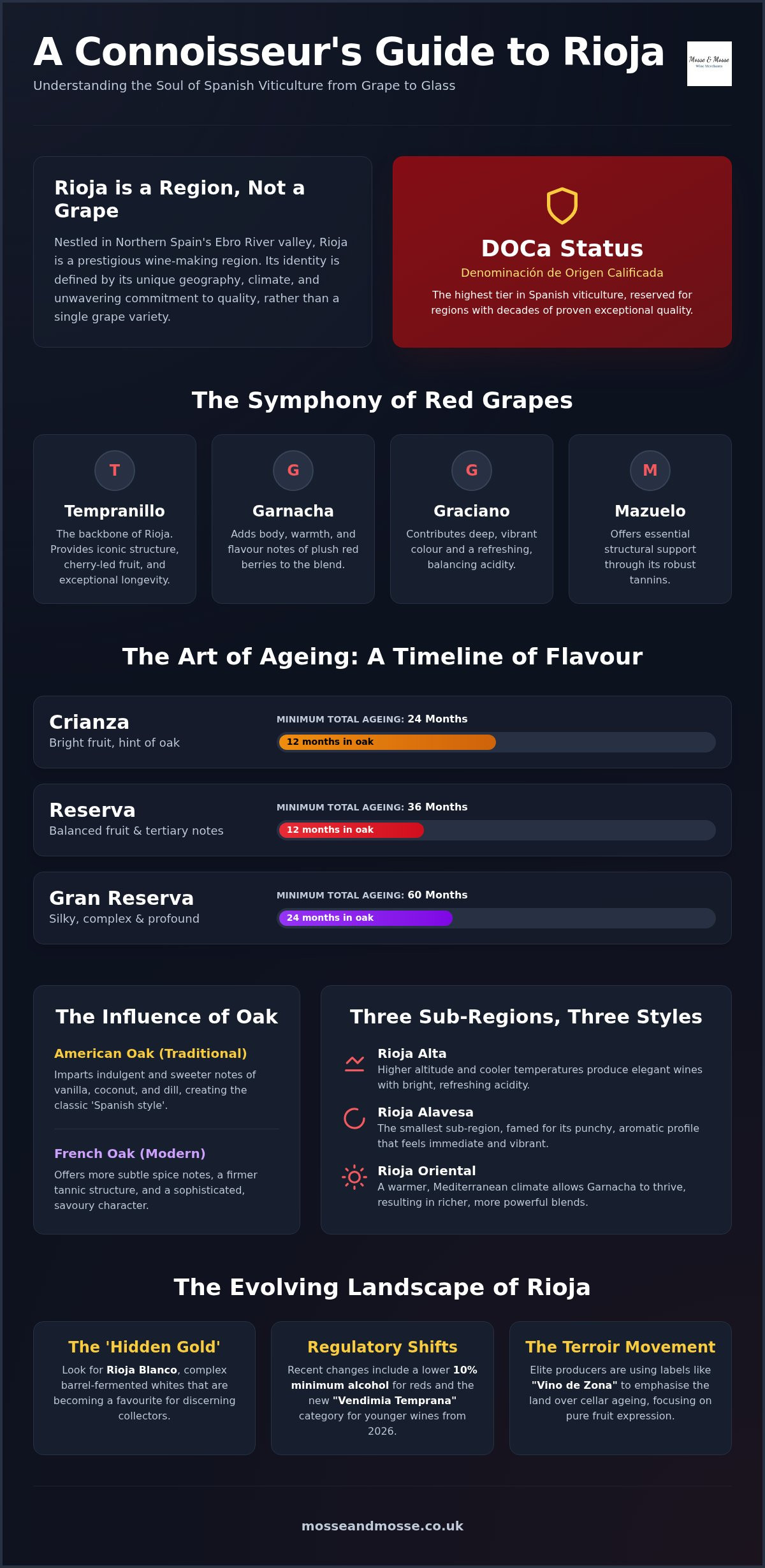
To understand what is rioja wine, one must look beyond the bottle and towards the sun-drenched slopes of Northern Spain. Rioja isn't a single grape variety. It is a prestigious Rioja wine region nestled within the Ebro River valley. It holds the esteemed status of DOCa. This is the highest tier in Spanish viticulture. It's reserved exclusively for regions that maintain exceptional quality standards over decades. For those used to the structured reds of Bordeaux, Rioja offers a warmer, more evocative alternative that has defined Spanish excellence for centuries.
Whilst Tempranillo is the undisputed king of the region, providing the iconic structure and cherry-led fruit, it rarely works alone. The 'Big Four' red grapes create a complex symphony in the glass:
- Tempranillo: The backbone, offering longevity and elegance.
- Garnacha: Adds body, warmth, and plush red berries.
- Graciano: Provides deep colour and a refreshing acidity.
- Mazuelo: Offers tannin and essential structural support.
The classic flavour profile of a fine Rioja is a beautiful marriage of primary red fruits, earthy tobacco, and that unmistakable whisper of vanilla. It's a sensory experience that balances power with grace.
The Terroir: Three Regions, Three Styles
The Rioja wine region is divided into three distinct sub-zones. Rioja Alta sits at a higher altitude. Here, cooler temperatures produce elegant wines with bright acidity. Rioja Alavesa is the smallest sub-region. It's famous for its punchy, aromatic profile that feels immediate and vibrant. Finally, Rioja Oriental experiences a warmer, Mediterranean climate. This heat allows Garnacha to thrive, resulting in richer, more alcoholic blends that add weight and ripeness to traditional bottles.
A Brief History of Rioja amongst UK Merchants
Rioja has long been a staple of the traditional British wine cellar. This connection isn't accidental. When the phylloxera plague devastated French vineyards in the 19th century, Bordeaux winemakers crossed the Pyrenees. They brought their expertise to Spain. These pioneers introduced the use of small oak barrels. However, Spanish producers famously favoured American oak for its affordability and the sweet coconut and vanilla notes it imparted. This historical preference created the 'Spanish style' we adore today. It remains a cornerstone of our curated selections at Mosse and Mosse.
The Ageing Hierarchy: Decoding Crianza, Reserva, and Gran Reserva
When newcomers ask what is rioja wine, they are often struck by the distinct labels categorising the bottles. Unlike many regions where quality is implied by price alone, Rioja uses a strict system based on time spent in the cellar. These classifications are regulated by Rioja's official wine standards. They offer a guarantee of style, ensuring consistency across different vintages. Understanding what is rioja wine means appreciating this commitment to patience.
The choice of oak is vital to this process. Traditionalists favour American oak, which imparts indulgent notes of vanilla and coconut. Modernists often lean towards French oak for its subtle spice and firm structure. Crianza is the entry-point to aged Rioja, requiring a minimum of one year in oak.
From Crianza to Gran Reserva: A Timeline of Flavour
- Crianza: These wines spend at least 24 months ageing, with one year in the barrel. They are the perfect weekday red, offering bright fruit with just a whisper of oak.
- Reserva: Sourced from superior harvests, these spend three years ageing. You'll find a beautiful balance between primary fruit and tertiary notes like leather and tobacco.
- Gran Reserva: The pinnacle of the craft, produced only in exceptional years. With five years of total ageing, they are incredibly silky and complex.
The 'Generic' Label and the Modern Terroir Movement
The landscape is shifting. From the 2026 vintage, the new "Vendimia Temprana" category introduces younger options, whilst a reduction in minimum alcohol levels to 10% ABV for reds reflects a move towards lighter styles. Some elite producers are ditching traditional labels for "Vino de Zona" to emphasise the land over the cellar. These "Generic" wines often focus on pure fruit expression without heavy oak influence, much like the rising popularity of Joven wines. To identify high-quality Generic bottles that rival Reservas, look for producers prioritising single-vineyard bottlings. If you are looking for a specific style to suit your cellar, our team can help you find the perfect producer for your palate.
Rioja Blanco: The Hidden Elegance of White Rioja
Whilst red blends dominate the global conversation, the true connoisseur knows that Rioja Blanco offers some of the most profound white wine experiences in Europe. If you have been exploring what is rioja wine, you might have initially overlooked these golden treasures. Traditionally, white Rioja was an afterthought for many. Today, it represents a sophisticated frontier for those who appreciate texture and longevity. The backbone of these wines is the Viura grape, also known as Macabeo. It is a variety that possesses a remarkable ability to absorb the character of oak whilst maintaining a core of vibrant acidity.
The unique style of barrel-fermented Rioja Blanco is nutty, creamy, and immensely complex. For enthusiasts who frequently consult our White Burgundy Guide, aged Rioja Blanco provides a compelling alternative with similar structural weight and savoury depth. According to the Official Rioja Wine Regulatory Council, the region continues to refine its standards for these whites. Recent 2026 regulations even permit lower minimum alcohol levels of 9% ABV for white wines, allowing for fresher, more delicate expressions alongside the traditional heavyweights.
The Flavour Spectrum of Rioja Blanco
Young white Riojas are crisp, citrusy, and floral. They are perfect for summer sipping or pairing with light tapas. In contrast, aged whites are golden-coloured masterpieces. They reveal notes of toasted almonds, beeswax, and honey. The deliberate, controlled exposure to oxygen whilst resting in oak barrels is what transforms the relatively neutral Viura grape into a rich, savoury experience that can rival the world's finest aged whites. This versatility makes white Rioja one of the most underrated food-pairing wines in our collection.
Sourcing Rare Rioja Varieties
We are currently seeing a thrilling revival of Tempranillo Blanco and Malvasía de Rioja. These varieties add aromatic lift and exotic fruit notes to the traditional Viura base. Because these are often small-production gems, independent merchants are essential for sourcing the best examples. White Rioja is also becoming a fantastic choice for wedding wine menus. It offers a point of difference that guests rarely expect but always admire. If you would like to explore these rare bottlings, please enquire about our current white Rioja selections today.
Serving and Selection: The Connoisseur’s Ritual
To appreciate the true depth of what is rioja wine, one must treat the serving process as a deliberate ritual. Temperature is the most frequent mistake made by enthusiasts. Whilst a robust Gran Reserva needs to be served at 18°C to allow its tertiary aromas to unfurl, a younger Crianza can be enjoyed slightly cooler, around 15°C, to highlight its vibrant fruit. If the wine is too warm, the alcohol dominates; if it is too cold, the beautiful oak-derived complexities remain muted.
Decanting is another area where nuance matters. A younger Rioja often needs an hour of air to soften its tannins and open up the fruit. In contrast, an ancient Gran Reserva may be fragile. Pouring immediately into a glass with a large bowl is often better than a long decant, which could cause delicate, aged aromas to dissipate. A wider bowl is essential for aged Tempranillo. It increases the surface area, allowing the wine to breathe and release those signature notes of leather and dried tobacco. If you are looking to build a collection of these age-worthy bottles, our guide on how to buy wine online offers essential tips on selecting curated cases that represent genuine craftsmanship.
Beyond the traditional ageing tiers discussed earlier, any modern collector must understand the 'Viñedos Singulares' classification. This single-vineyard designation focuses on the specific plot of land rather than just the time spent in oak. It represents the pinnacle of the modern terroir movement in Spain, highlighting unique microclimates that mass-produced labels simply cannot replicate.
Classic and Contemporary Pairings
The Spanish classic of slow-roasted lamb with rosemary and garlic remains the gold standard. The fat of the lamb perfectly cuts through the tannins of a Reserva. For a simpler pleasure, aged Manchego cheese and Ibérico ham provide a savoury delight that mirrors the wine's earthy notes. If you are opening a bottle from Rioja Alavesa, try a mushroom risotto or spicy chorizo. The aromatic lift of Alavesa wines handles spice and umami beautifully.
Why Independent Curation Matters for Rioja
Mass-produced commercial brands often fall into the 'oak-juice' trap. They use heavy wood to mask inferior fruit, resulting in a wine that lacks balance. Independent curation ensures you find small-scale producers who prioritise the vineyard over the branding. Whether you are planning a large event or a quiet dinner, personalised service helps you avoid the generic and embrace the extraordinary. Please contact our experts to find the perfect Rioja for your next occasion.
Elevate Your Next Spanish Wine Experience
Rioja is more than just a famous red; it's a testament to the beauty of time and terroir. By mastering the ageing hierarchy and looking beyond mass-market labels, you'll find bottles that offer perfect balance rather than just "oak juice". Whether you're exploring the nutty complexity of a barrel-aged Viura or the silky depth of a Gran Reserva, the key is knowing what is rioja wine in its truest, most artisanal form. These wines represent a liquid history that continues to evolve with every vintage.
Since 2001, our independent family-led business has prioritised traditional craftsmanship over commercial branding. We specialise in sourcing high-quality European wines and provide a personalised service that larger retailers simply cannot match. With national UK delivery available for all our curated cases, finding a rare gem from a small-scale producer has never been easier. We invite you to speak to our experts about our latest curated Spanish selections to find a bottle that perfectly suits your palate.
The world of Spanish viticulture is vast and rewarding. We look forward to helping you discover your next favourite vintage.
Frequently Asked Questions
Is Rioja a grape or a region?
Rioja is a prestigious wine-producing region in Northern Spain, not a specific grape variety. Whilst many people associate the name with the Tempranillo grape, the wine is actually a blend or a single-varietal expression from this specific DOCa territory. When asking what is rioja wine, it's helpful to think of it like Bordeaux or Burgundy. It is a place where the unique climate and soil define the character of the grapes grown there.
What is the difference between Crianza and Reserva?
The primary difference lies in the minimum ageing requirements dictated by Spanish law. A Crianza red must be aged for at least 24 months, with one year spent in oak barrels. A Reserva requires a total of three years ageing, with at least one year in oak and six months in the bottle. This extra time in the cellar allows Reservas to develop more complex, tertiary flavours like leather and spice compared to the fruitier Crianza.
How long can I cellar a bottle of Rioja Gran Reserva?
A well-made Rioja Gran Reserva has exceptional ageing potential, often lasting 15 to 20 years or more if stored in a cool, dark cellar. Because these wines have already spent at least five years maturing before release, they possess the structural integrity to evolve gracefully. High-quality examples from independent producers can even reach their peak after three decades. It's always best to check the specific vintage and producer's reputation for the best results.
Should I decant Rioja before serving?
Decanting can significantly improve your experience, but the technique depends on the wine's age. Younger Crianza and Reserva bottles benefit from an hour of aeration to soften tannins and release hidden aromatics. For older Gran Reservas, we suggest a more cautious approach. These delicate wines can lose their fleeting aromatics quickly if over-exposed to oxygen. It is often better to pour them directly into a large glass and watch them evolve naturally.
Is all Rioja wine aged in oak barrels?
Whilst Rioja is famous for its oak influence, not every bottle follows this traditional path. Joven wines, for instance, are designed for immediate consumption and often see little to no time in wood to preserve pure fruit flavours. Additionally, the new 2026 "Vendimia Temprana" category focuses on younger styles. Understanding what is rioja wine requires looking at both these fresh expressions and the classic oak-aged tiers that have defined the region's global reputation for centuries.
What is the best food to pair with a red Rioja?
Slow-roasted lamb with garlic and rosemary is the quintessential partner for a mature red Rioja. The wine's acidity and tannins cut through the richness of the meat perfectly. For a simpler pairing, try aged Manchego cheese or Ibérico ham. If you are enjoying a punchy Rioja Alavesa, it works brilliantly with spicy chorizo or a hearty mushroom risotto. These savoury combinations highlight the wine's earthy undertones and vibrant red fruit profile whilst balancing the palate.


