

What if your favourite white wine isn't actually the one sitting in your fridge right now, but a saline-streaked masterpiece from the rugged coast of Northwest Spain? Many of us find ourselves reaching for the same safe labels, yet there's a growing sense that supermarket shelves often hide the true character of authentic albariño wine. You might feel a bit lost when faced with the choice between a Spanish bottle and a Portuguese Alvarinho, or wonder if that vintage in your cellar is past its best.
We believe this grape deserves a place at the heart of any serious collection, offering a sophisticated alternative for those who usually gravitate towards White Burgundy. In this definitive guide, you'll discover the stone-fruit aromatics and bracing acidity that define the granite soils of Galicia. We'll show you how to identify quality markers on a curated list and provide the perfect seafood pairings to impress at your next dinner party. From understanding regional styles to mastering aging potential, we're here to help you navigate this coastal treasure with the confidence of a true connoisseur.
Key Takeaways
- Uncover the origins of albariño wine in the granite-rich soils of Galicia and the historical theories connecting its heritage to the Rhine.
- Learn to identify the signature sensory profile, from lush stone-fruit aromatics like white peach to that unmistakable sea-spray finish.
- Master the differences between Spanish styles and Portuguese Alvarinho, including the unique microclimates of the Monção e Melgaço sub-region.
- Gain the expertise to spot high-quality bottles on a wine list by looking for specific sub-zones and the "Sobre Lías" label designation.
- Ensure every glass is perfect by following expert serving etiquette, including the ideal temperature and the importance of using a wide-bowl glass.
The Atlantic Soul: Understanding the Origins of Albariño Wine
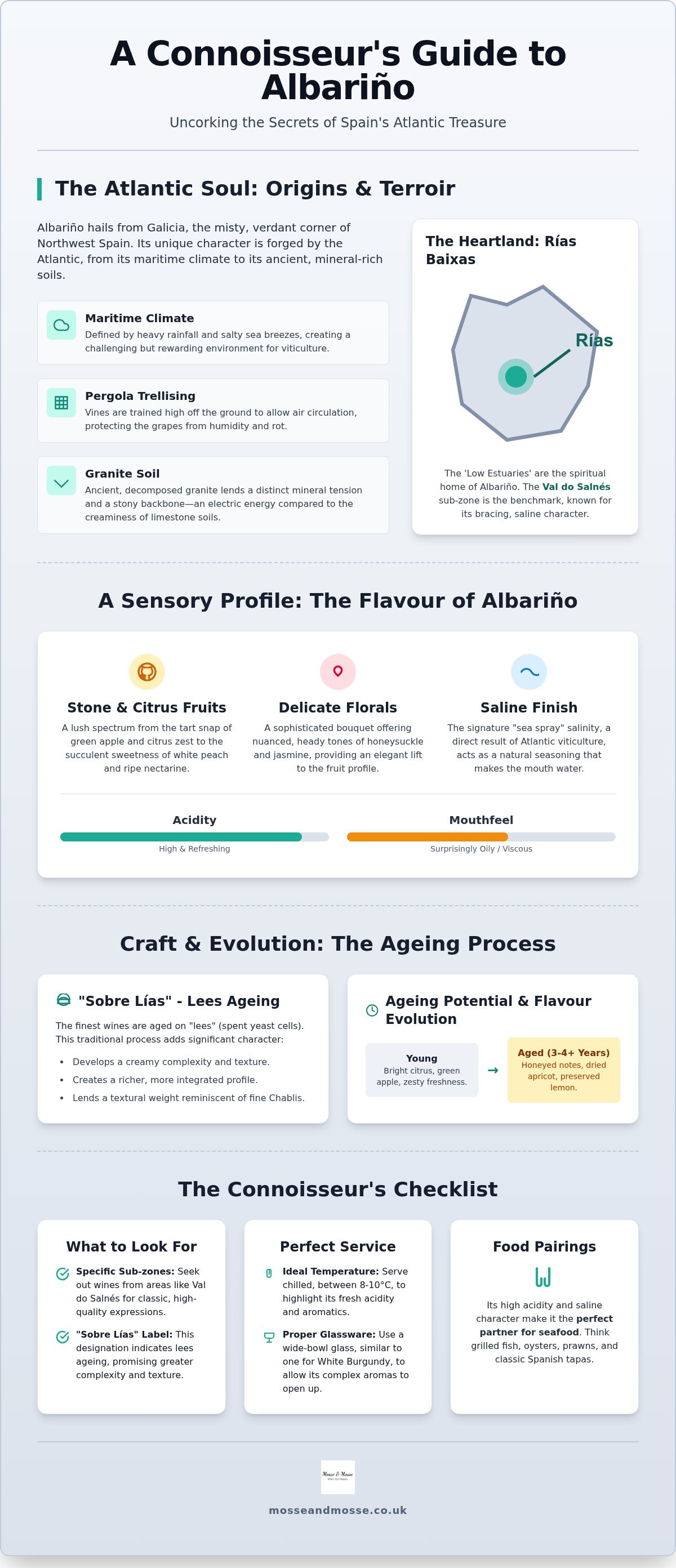
Galicia is a world away from the sun-scorched plains of central Spain. In this misty, verdant corner of the northwest, albariño wine reigns supreme as the undisputed crown jewel of the Atlantic coast. Local legend often whispers about the "Alba-Riño" theory, suggesting the grape is a "white from the Rhine" brought to the region by monks centuries ago. Whilst modern DNA testing points towards a more indigenous heritage, the romantic notion of a Riesling relative persists amongst enthusiasts because of the grape's shared high acidity and aromatic elegance.
The climate here is unapologetically maritime. Heavy rainfall and salty breezes define the landscape, creating a challenging environment for viticulture. To combat the dampness and prevent rot, growers traditionally use the pergola trellising system. By lifting the canopy high above the ground, they allow air to circulate freely beneath the fruit. This clever use of height preserves the pristine quality of the grapes, ensuring they develop their characteristic freshness without falling prey to the Atlantic humidity.
The Rías Baixas Connection
Rías Baixas is the spiritual and legal heartland where high-quality albariño wine finds its most profound expression. The name refers to the "Low Estuaries" where the sea carves deep into the land, allowing maritime influence to penetrate far inland. Amongst the five distinct sub-zones, Val do Salnés is considered the classic benchmark. As the oldest and coolest sub-region, it produces wines with a bracing, saline snap that feels like a literal breath of sea air.
The Granite Terroir Factor
The true secret of this region lies beneath the surface. The vineyards are planted on ancient, decomposed granite soils that lend a distinct mineral tension to the wine. This hard, acidic rock forces the vines to struggle, resulting in a concentrated flavour profile that balances lush fruit with a stony backbone. It's a fascinating contrast to the limestone-heavy soils found in White Burgundy. Where limestone provides a broad, creamy structure, granite offers a vertical, electric energy that keeps the palate refreshed glass after glass.
A Sensory Profile: What Does Albariño Wine Taste Like?
Pouring a glass of albariño wine is an evocative experience. It immediately fills the room with the scent of a sun-drenched orchard. Unlike the aggressive green notes often found in Sauvignon Blanc, this grape offers a more delicate, nuanced bouquet that balances citrus zest with heady floral tones. We've often found that the most compelling examples are those that don't shout, but instead reveal their character through layers of subtle aromatics.
Primary Fruit and Floral Aromas
The fruit profile spans a broad spectrum. You'll find everything from the tart snap of a green apple to the succulent sweetness of a ripe nectarine or white peach. These stone-fruit aromatics are usually accompanied by a touch of honeysuckle or jasmine, providing a sophisticated lift. The signature "sea spray" salinity is a direct result of Atlantic viticulture, acting as a natural seasoning that makes the mouth water.
The Role of Lees Ageing
Many of the finest examples we source carry the term "Sobre Lías" on the label. This means the wine has spent significant time ageing on its lees, the spent yeast cells from fermentation. This process transforms the wine. It adds a creamy complexity and a textural weight that reminds us of a fine Chablis. We always favour independent producers who allow their wine the luxury of time to settle, as it results in a more integrated and profound finished product.
If you're looking for a specific vintage to suit a special occasion, our team is always happy to offer a personal recommendation based on your taste.
Beyond the aromatics, the structure of albariño wine is truly unique. It possesses a high, refreshing acidity that keeps the palate clean, yet this is often balanced by a surprisingly oily or viscous mouthfeel. As the wine evolves in the bottle, it sheds its initial zesty leanness. After three or four years, those bright citrus notes often deepen into rich, honeyed flavours of dried apricot and preserved lemon, proving that high-quality examples possess remarkable staying power.
Regional Nuances: Rías Baixas vs. Alvarinho and Beyond
The Minho river serves as a political border between Spain and Portugal, yet it unites a shared viticultural heritage. Whilst the grape is identical, the resulting albariño wine often tells a different story depending on which side of the river the vines are planted. We've spent years exploring these nuances to curate a selection that represents the very best of both traditions, ensuring our clients experience the full spectrum of this Atlantic grape.
Spain’s Rías Baixas Sub-zones
In Galicia, the Rías Baixas appellation is divided into five sub-zones, each with a unique microclimate. Val do Salnés is the birthplace of the grape, sitting right on the coast with the highest maritime influence. It produces the leanest, most saline wines. In contrast, O Rosal often sees the grape blended with local varieties like Loureiro or Treixadura, resulting in a softer, more floral profile. If you prefer something riper, Condado do Tea is located further inland. The warmer temperatures here lead to a style with more peach-like fruit and less bracing acidity.
Portugal’s Alvarinho Heritage
Across the border, the grape is known as Alvarinho. For many years, it was associated with the light, fizzy Vinho Verde style, but the region has undergone a revolution. The sub-region of Monção e Melgaço is now the gold standard for serious, still Alvarinho. Interestingly, as of 2026, this remains the only area in the Vinho Verde DOC authorised to produce 100% varietal Alvarinho wines. These bottles typically feature a minimum of 11.5% alcohol and more physical weight than their Spanish cousins, offering a structured intensity that makes them exceptionally food-friendly.
The success of the grape has led to its emergence in "New World" regions like New Zealand and California. Whilst these producers are making impressive strides, the European "Old World" styles remain the benchmark for mineral complexity. The granite-rich soils of the Iberian Peninsula provide a tension that is difficult to replicate elsewhere. If you're unsure which regional style will suit your palate, get in touch with our expert team for a tailored recommendation.
The Connoisseur’s Guide to Buying and Pairing Albariño
Many people treat this grape as a simple, budget-friendly option to be consumed immediately. We disagree. High-quality albariño wine possesses the structure and acidity to age beautifully for three to five years, often developing a honeyed complexity that makes it a sophisticated alternative for those who usually buy White Burgundy. When browsing a wine list, look for specific sub-zones or the term "Sobre Lías". This indicates the wine has rested on its lees, gaining the textural weight and depth needed for a truly premium experience.
To experience the wine at its peak, serve it between 8 and 10°C. Avoid narrow flutes. A wide-bowl glass allows those delicate stone-fruit aromatics to fully unfurl. This level of elegance makes it an inspired choice for Wedding Wine Services, offering a memorable and high-end alternative to more predictable white varieties for your guests.
Essential Food Pairings
Oysters and scallops are the classic partners; the wine's natural salinity mirrors the sea perfectly. In Galicia, it is traditionally served with "Pulpo a la Gallega" (octopus with paprika). Don't stop at seafood. The bracing tension also cuts through the salt of Jamón Ibérico beautifully. For something more adventurous, try a Thai green curry. The wine's citrus notes stand up to the heat and coconut milk without being overwhelmed.
Selecting the Perfect Bottle
Deciding between a fresh or aged style depends on your menu. Younger bottles suit light salads, whilst older vintages pair better with grilled fish or roasted poultry. We believe independent merchants offer better value than mass-market labels. We source from producers who prioritise soil health and traditional methods over high-volume branding. These boutique selections provide a level of mineral character that elevates any dinner party.
Elevate Your Cellar with the Atlantic's Finest
Embracing the saline charm of albariño wine is about more than just finding a refreshing bottle for a summer afternoon. It's about discovering a sophisticated, age-worthy white that rivals the complexity of traditional European greats. From the granite-driven minerality of Val do Salnés to the structured weight of a Portuguese Alvarinho, this grape offers a unique sensory journey that rewards those who look beyond mass-market labels. You now have the tools to identify the best "Sobre Lías" examples and pair them with confidence; whether you're serving fresh oysters or a spicy Thai curry.
As independent wine merchants with 25 years of expertise, we specialise in traditional European terroir and prioritise product quality over branding. Every selection in our cellar is expertly curated to ensure it delivers a genuine sense of place. We offer national UK delivery on all orders, making it easier than ever to bring these boutique Atlantic gems to your table. If you're ready to explore our hand-picked selection of Spanish and European white wines, please get in touch with our team for a personal recommendation. We're here to help you find your next favourite vintage.
Frequently Asked Questions
Is Albariño wine dry or sweet?
Albariño wine is almost exclusively produced as a bone-dry white wine. Whilst its intense aromatics of sweet peach and apricot might lead you to expect sugar, the actual residual sugar content is very low. This creates a fascinating sensory experience where the nose suggests ripeness, but the palate delivers a crisp, bracing finish. It's this high-acid, dry profile that makes it such an exceptional partner for salty tapas and fresh shellfish.
What is the difference between Albariño and Sauvignon Blanc?
The primary difference lies in the aromatic profile and mouthfeel. Whilst Sauvignon Blanc is famous for its "green" notes like mown grass or bell pepper, this Atlantic grape leans towards stone fruits and delicate white flowers. Additionally, high-quality albariño wine often possesses a more viscous, oily texture compared to the leaner, zingy structure of a typical Sauvignon. The signature saline finish of a coastal Galician white is also a distinct marker you won't find elsewhere.
Should Albariño wine be chilled?
You should serve this wine well-chilled, ideally between 8 and 10°C. This temperature range preserves the vibrant acidity and delicate honeysuckle aromas without masking the subtle mineral nuances. If the wine is too warm, it can lose its characteristic snap and feel flabby on the palate. Conversely, serving it ice-cold might mute those beautiful peach and nectarine notes, so a balanced chill in a wide-bowl glass is essential for the best drinking experience.
Does Albariño wine age well in the cellar?
Whilst many supermarket bottles are intended for immediate consumption, premium examples age remarkably well for three to five years. Over time, the zesty citrus notes soften and the wine develops a richer, honeyed character with hints of toasted nuts and dried fruit. We particularly recommend cellaring bottles labelled "Sobre Lías", as the extended contact with yeast lees provides the structural integrity and complexity required for successful medium-term ageing in a stable, dark environment.
Why is some Albariño more expensive than others?
Price variations usually reflect the specific sub-zone and the artisanal production methods used by boutique growers. Wines from prestigious coastal areas or those subjected to extended lees ageing require more time and labour-intensive care. We focus on independent producers who limit their yields to ensure concentrated flavour. These smaller-scale operations prioritise the quality of the physical product over mass-market branding, resulting in a more authentic and complex wine that justifies a higher price point.
Is Albariño the same as Alvarinho?
Genetically, they are the exact same grape variety. The name simply changes as you cross the border; it's Albariño in Spain and Alvarinho in Portugal. However, the regional styles differ due to local traditions and microclimates. Portuguese versions from the Monção e Melgaço sub-region often have slightly higher alcohol levels and more physical weight than the lighter, more saline-focused Spanish bottles. Both offer a wonderful insight into how the same vine adapts to different soils.


