
If you have ever written off Chardonnay as being too buttery, oaky, or heavy, you likely haven't experienced the bracing purity of a true Chablis. It's a common frustration amongst wine lovers who crave a crisp finish but fear the weight of traditional New World styles. We understand that hesitation. At our family-run merchant, we've seen many customers surprised to learn that chablis wine is actually 100% Chardonnay, stripped of heavy makeup to reveal its prehistoric origins. With UK exports of these bottles rising by 15% in value last year, it's clear more of us are seeking this refined character.
You might find the four different tiers confusing, or perhaps descriptors like "flinty" feel vague when you're at the shelf. In this guide, we'll demystify the hierarchy and explain how the unique Kimmeridgian limestone soil creates a flavour profile you cannot find elsewhere. You'll discover the secrets to selecting the perfect bottle for any dinner party and learn which foods bring out the best in these celebrated Burgundian whites. By the end, you'll be able to navigate any wine list with the confidence of a true connoisseur.
Key Takeaways
- Learn why chablis wine is the purest expression of the Chardonnay grape, defined by its refreshing acidity and notable absence of heavy oak influence.
- Discover how ancient Kimmeridgian limestone and fossilised oyster shells create the region's signature saline and "steely" minerality.
- Master the four-tier hierarchy of Chablis to confidently choose between a bright Petit Chablis and a complex Grand Cru for your next occasion.
- Explore classic and contemporary food pairings, from the traditional oyster match to why these crisp whites are the perfect foil for rich, creamy sauces.
Understanding Chablis: The Purest Expression of Chardonnay
Chablis isn't just a bottle on a shelf; it's a testament to the power of place. Located in the northernmost reaches of Burgundy, the Chablis wine region produces exclusively white wines made from 100% Chardonnay grapes. For many, it's the ultimate expression of the variety. Whilst other regions might lean on heavy cellar techniques, Chablis relies on its cool climate and unique geology to do the talking. At Mosse and Mosse, we've always been passionate purists. We look for bottles that speak of their origin rather than the hand of the winemaker; chablis wine is the gold standard for this philosophy.
There is a common misconception amongst casual drinkers that Chablis is a grape variety in its own right. It isn't. It is a geographic location that has become synonymous with a very specific, bone-dry style. If you've ever felt overwhelmed by the buttery, vanilla-soaked Chardonnays often found in the New World, Chablis offers a refreshing alternative. It's Chardonnay stripped of its makeup, revealing a character that is lean, bright, and incredibly focused.
The Chablis Identity: Steely, Crisp, and Bone-Dry
The first sip of a well-made Chablis is often a revelation. You'll find a primary flavour profile dominated by green apple and sharp lemon zest, but it's the finish that truly sets it apart. There's a distinct "gunflint" aroma, a smoky, mineral quality that feels as though you're tasting the very stones of the vineyard. This high acidity doesn't just make the wine refreshing; it provides the structure that allows these wines to age beautifully for years. This creates a fascinating contrast with the richer, more opulent whites found in the Côte d’Or, where the climate is warmer and the wines carry more weight and texture.
Why Chablis is the Anti-Chardonnay
For decades, the "Anything But Chardonnay" movement gained traction as drinkers tired of over-oaked, heavy wines. Chablis is the perfect cure for that fatigue. Whilst some Premier Cru and Grand Cru producers use a touch of old oak for texture, the vast majority of Chablis is fermented and aged in stainless steel tanks. This preserves the grape's natural vibrancy and prevents any woody flavours from masking the delicate fruit. It's this commitment to purity that defines the region's output. The Chablis style is the perfect balance of fruit and tension.
The Secret in the Soil: Kimmeridgian Limestone and Minerality
To understand why chablis wine tastes so distinct, you have to look beneath the vines. Millions of years ago, this region was a prehistoric sea. As the waters receded, they left behind a treasure trove of tiny fossilised oyster shells embedded in greyish clay and white limestone. This is the famous Kimmeridgian soil. It's the engine room of the region's character, providing that unmistakable saline edge and mineral depth that makes Chablis a global icon.
The climate here is equally demanding. Being so far north, Chablis faces a cool, semi-continental environment where spring frosts are a constant threat. We've seen vintages where producers have had to burn smudge pots or use sprinklers to save their buds from freezing. This environmental struggle creates a high-tension wine that is both delicate and resilient. If you're looking for a specific vintage that captures this balance perfectly, feel free to ask us for a personal recommendation.
Fossils in the Vineyard: The Prehistoric Origin
In the depths of winter, the hillsides of Chablis often look as though they are covered in a light dusting of snow. This isn't always frost; it is the bright white limestone and clay reflecting the light. The vine roots must struggle through this ancient rock to find nutrients, a hardship that we believe translates directly into the glass. This terroir is split into two distinct types. The top-tier vineyards sit on Kimmeridgian soil, whilst the higher plateaus often feature Portlandian soil. Portlandian limestone is younger and typically produces the more accessible, fruit-forward Petit Chablis. If you want to dive deeper into the technicalities of the region, the Official guide to Chablis wines is an excellent resource.
Minerality: More Than Just a Buzzword
In the wine world, "minerality" is frequently used but rarely explained. In Chablis, it manifests as "flinty" or "wet stone" flavours. Imagine the smell of rain hitting a hot pavement or the strike of a flint. This isn't something a winemaker can add in the cellar. It's a gift from the earth that simply cannot be replicated in the sun-drenched vineyards of Australia or California. You can see how this compares to the plusher, more fruit-driven styles of the south in our White Burgundy Wine Guide. This unique soil ensures that every bottle offers a sense of time and place that is truly one of a kind.
Navigating the Chablis Hierarchy: From Petit to Grand Cru
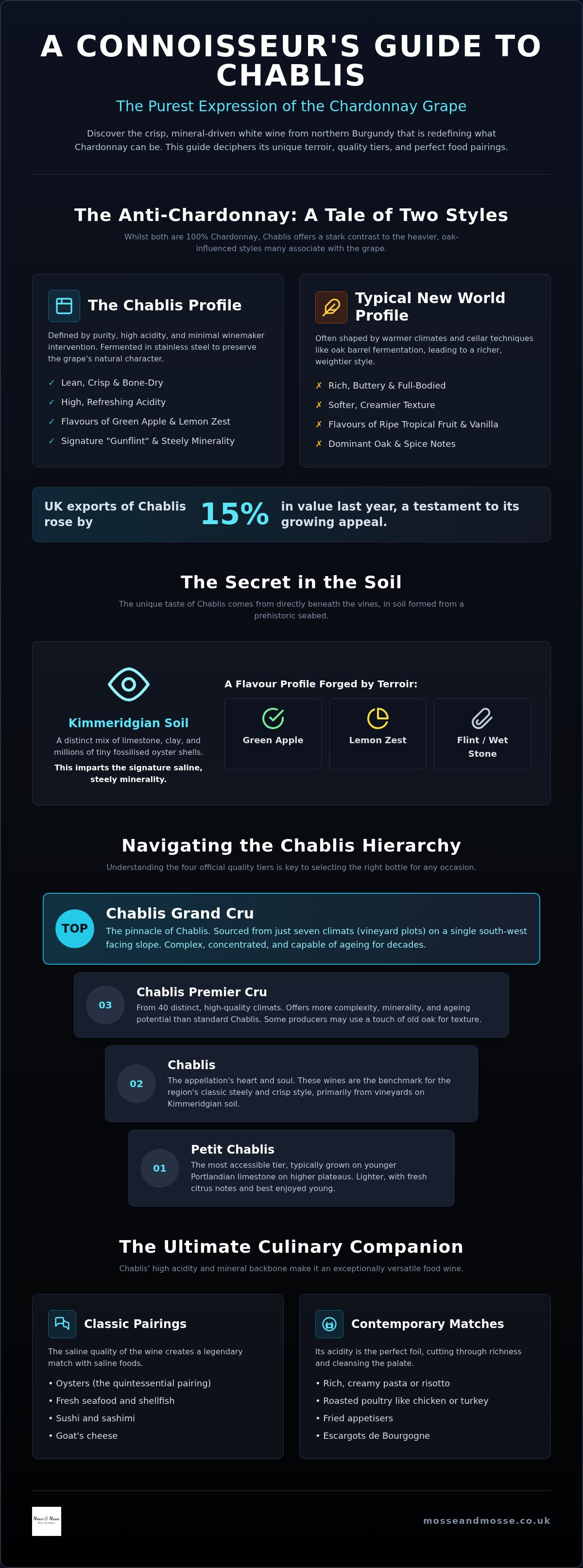
The hierarchy of chablis wine isn't just a matter of prestige; it's a geographical map of quality. Unlike many other regions where branding takes centre stage, here the land dictates the label. The system is built on the vineyard’s location and its exposure to the sun. The finest plots sit on the mid-slopes, facing south or south-east, where the grapes can ripen fully whilst retaining that essential, bracing acidity. Understanding these four tiers is the key to finding the right bottle for your budget and your palate.
Petit Chablis and Chablis AOC: The Everyday Elegance
Petit Chablis vineyards are typically found on the higher plateaus, where the soil is younger and the winds are a bit sharper. These wines are light, zesty, and incredibly refreshing; they're the perfect choice for a crisp aperitif on a summer afternoon. Moving down the slopes, we find the Chablis AOC. This is the region's quintessential expression. It delivers that classic flinty character we love, making it an ideal companion for midweek dining. We recommend enjoying these wines whilst they are young and vibrant to fully appreciate their citrus-led energy.
Premier and Grand Cru: The Collector’s Choice
For the serious enthusiast, Premier Cru vineyards like Vaillons or Fourchaume offer a significant step up in complexity. These wines possess more weight, a rounder texture, and a much longer finish. In our experience, Premier Cru often represents the best value proposition in Burgundy; it provides a near-pinnacle experience without the rarified price tag of a Grand Cru. These bottles have excellent ageing potential and develop beautiful honeyed notes over five to ten years.
At the top of the pyramid sits the Grand Cru. This is the pinnacle of the region, consisting of a single hillside divided into the "Seven Legends": Blanchot, Bougros, Les Clos, Grenouilles, Preuses, Valmur, and Vaudésir. These wines are powerful and rich, often being the only ones in the region to see a touch of subtle oak ageing to support their immense structure. They make an unforgettable statement as Wedding & Party Wine or as a centerpiece for a formal dinner. If you're looking to source a specific cru for your cellar, get in touch with our team for expert advice.
Serving and Pairing Chablis: The Ultimate Culinary Companion
Few matches in the culinary world are as legendary as Chablis and oysters. It's a pairing that feels almost predestined. Because the vines grow in soil rich with fossilised shells, the wine carries a distinct saline quality that mirrors the briny sweetness of the seafood. It's a beautiful example of terroir coming full circle on the plate. However, to truly appreciate this synergy, you must get the service right. We often see chablis wine served far too cold, which numbs those delicate aromatics. Aim for 10-12°C to let the citrus and mineral notes sing. Similarly, reach for a standard, narrow white wine glass rather than a wide-bowled Chardonnay glass. The tighter rim keeps the aromatics at the centre of the experience and focuses the wine’s precision.
The Seafood Specialist
Beyond the raw bar, this wine is a true seafood specialist. It has the nerve to stand up to the sweetness of seared scallops and the delicate flesh of sea bass. If you're serving a classic bowl of moules-frites, the wine's acidity acts like a squeeze of fresh lemon, cutting through the richness of the broth. This same principle applies to smoked salmon; the high acidity slices through the oily texture of the fish, whilst cleansing your palate after every bite. It's this versatility that makes it our favourite choice for summer garden parties where the menu is light and fresh.
Beyond the Sea: Meat and Cheese Pairings
Don't feel restricted to the coast, though. Chablis is a master at navigating rich fats. A roast chicken with a creamy mushroom sauce might seem like a job for a heavier wine, but the "acid vs fat" rule proves otherwise. The wine’s brightness provides a necessary lift to the dish, preventing it from feeling cloying. It's equally comfortable amongst a cheese board, particularly with tangy goat’s cheese or a nutty, hard Comté. We encourage you to Buy Wine Online by exploring our curated mixed cases. They're designed to help you experiment with these pairings at home, letting you discover how different tiers of chablis wine react to your favourite recipes. Whether you're hosting a formal dinner or a casual Sunday roast, these bottles are the ultimate companion for those who value quality over branding.
Elevate Your Cellar with the Purity of Chablis
Mastering the nuances of chablis wine allows you to appreciate one of the world's most honest expressions of terroir. Whether you're drawn to the zesty, approachable nature of a Petit Chablis or the profound, mineral depth of a Grand Cru, these bottles offer a precision that few other regions can match. By understanding the ancient Kimmeridgian soils and the art of serving these whites at the correct temperature, you've taken the first step toward becoming a true connoisseur.
At Mosse and Mosse, we've spent over 25 years as an independent family-run merchant specialising in the treasures of Burgundy. Our passion lies in sourcing those hard-to-find vintages that larger retailers often overlook. We invite you to explore our curated selection of Chablis and White Burgundy or ask us about our expertly tailored mixed cases, which we deliver across the UK mainland. We're here to help you find the perfect bottle that speaks of its origin and delights your guests. Cheers to your next discovery.
Frequently Asked Questions
Is Chablis wine always made from Chardonnay grapes?
Yes, authentic chablis wine is made exclusively from 100% Chardonnay grapes. This is a strict requirement of the Appellation d'Origine Contrôlée (AOC) regulations established in 1938. Whilst other regions might blend different varieties, the purists in Chablis focus entirely on this single grape to express their unique terroir. This singular focus is what allows the region to produce such a consistent and celebrated style of bone-dry, refreshing white wine that we love.
What is the difference between Chablis and Petit Chablis?
The primary difference lies in the vineyard's location and the age of the soil. Petit Chablis grapes grow on the higher plateaus in younger Portlandian limestone, resulting in a lighter, zesty wine perfect for early drinking. Standard Chablis AOC vineyards sit on the slopes, benefiting from the ancient, shell-rich Kimmeridgian soil. This provides more depth and that signature mineral edge. Both offer excellent value but serve different occasions and culinary matches.
How long can I keep a bottle of Chablis in my cellar?
Cellaring potential depends heavily on the quality tier. We recommend enjoying Petit Chablis and standard AOC bottles within one to three years whilst their acidity is at its peak. However, Premier Cru and Grand Cru selections are built for the long haul. These complex wines often require five to ten years to fully develop their honeyed, nutty secondary flavours. Always store your bottles in a cool, dark place with a consistent, steady temperature.
Why does Chablis taste like flint or stones?
That distinct "gunflint" or "wet stone" character comes directly from the region's unique Kimmeridgian limestone. Millions of years ago, the area was a prehistoric sea, leaving behind a dense layer of fossilised oyster shells. The vine roots struggle through this ancient rock to find nutrients, absorbing a saline quality that translates into a mineral finish. It's a physical connection to the earth that simply cannot be replicated in other Chardonnay-producing regions worldwide.
Should I decant Chablis before serving?
Most Chablis wines don't require decanting, but there are exceptions for high-end bottles. If you're opening a young Premier Cru or Grand Cru, a brief thirty minutes in a decanter can help the wine "open up" and soften its bracing acidity. For Petit Chablis or standard AOC bottles, it's best to pour straight from the bottle into a narrow glass. This preserves the delicate citrus aromatics and keeps the tasting experience fresh and bright.
Does Chablis wine ever see any oak ageing?
Most chablis wine is fermented in stainless steel to preserve its crisp, unmasked fruit. However, some producers use oak for their top-tier Premier Cru and Grand Cru wines. This is rarely the new, toasted oak found in the New World. Instead, they use older, neutral barrels to add texture and weight without imparting woody or vanilla flavours. It's a subtle touch used to support the wine’s natural power rather than dominate the palate.


