
The cost of exploring new wines depends on the bottles and format you choose, so there is no single set price. Discovering new wines without risk starts with understanding what you’re buying, the total cost and the terms that apply.
It’s sensible to know your likely spend before choosing unfamiliar wines. Use your own preferences as a guide, and look for recommendations that help you explore new regions, grapes and styles without straying too far from what you enjoy.
This article explains how to compare selection costs, choose a manageable way to try different wines and get useful expert guidance. It also covers the details to look for in promotional offers and guarantees, so you can understand their terms before deciding what to taste.
Key Takeaways
- Compare the bottles and selection details to understand what shapes the overall cost before choosing.
- Try unfamiliar regions, grapes or styles in a focused tasting, and note which aromas and flavours you enjoy.
- Give wine experts a sense of your preferences and budget so their recommendations can be more relevant.
- Read guarantee terms carefully to understand what they cover and how to make a claim.
- Check promotion eligibility and limits, including whether an offer is restricted to one case per customer.
Experimenting with regions, grape varieties and styles
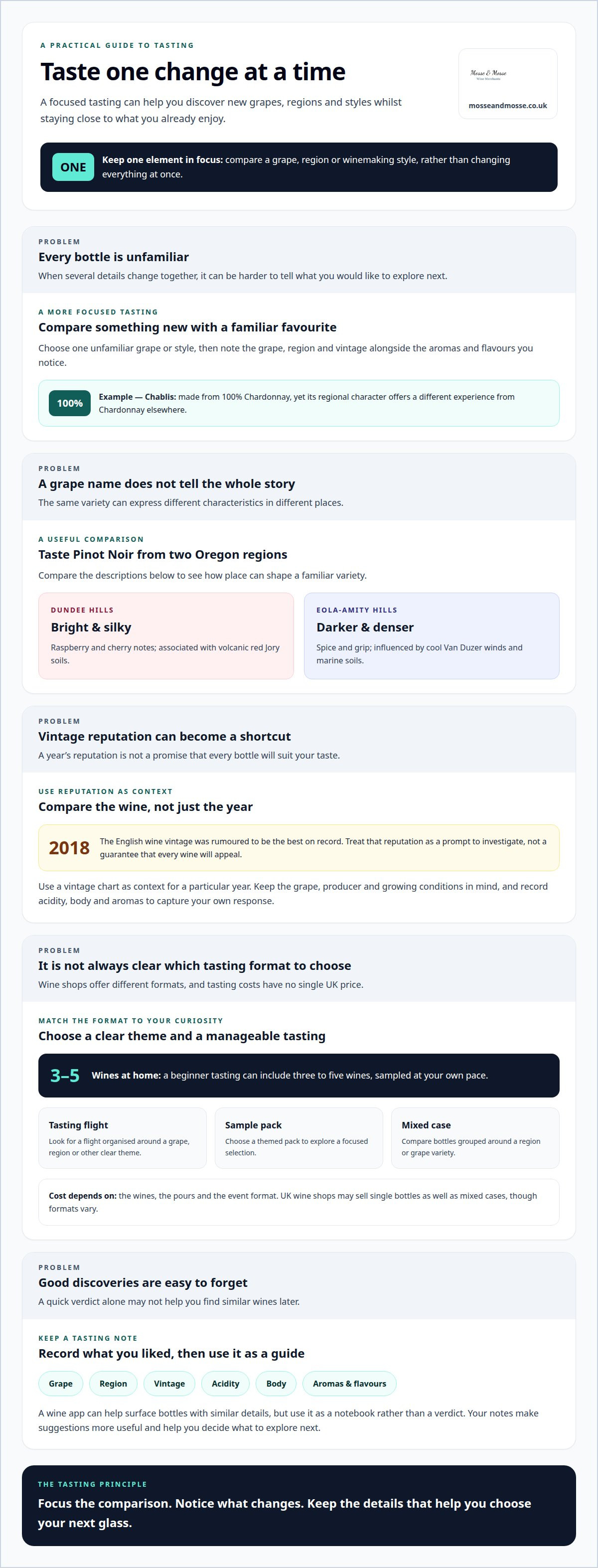
Explore one new element at a time, such as a grape, region or winemaking style. Comparing wines this way helps you identify what you enjoy without making every bottle unfamiliar.
Use these steps to plan a focused tasting, explore regional styles and choose a format that suits you.
-
Try unfamiliar grape varieties and styles
Choose a grape or style you haven’t tried, then compare it with a familiar favourite. For example, Chablis is made from 100% Chardonnay, but its regional character offers a different experience from Chardonnay elsewhere. Note the grape, region and vintage, then record aromas and flavours. Changing one feature at a time makes it easier to see what you’d like to explore next.
-
Explore tasting flights and sample packs
Look for a flight, sample pack or mixed case organised around a clear theme, such as a grape or region. At home, a beginner tasting can include three to five wines, sampled at your own pace. UK wine shops may sell single bottles as well as mixed cases, though formats vary. Tasting flights and events have no single UK price: costs depend on the wines, pours and event format.
- Compare the same grape from different regions. Pinot Noir from Oregon’s Dundee Hills is described as bright and silky, with raspberry and cherry notes associated with volcanic red Jory soils. Eola-Amity Hills Pinot Noir is described as darker and denser, with spice and grip, influenced by cool Van Duzer winds and marine soils. These contrasts show how place can shape a familiar variety.
- Browse by region before choosing a bottle. A regional collection can help you compare styles from places such as Burgundy, Bordeaux or Champagne. Use a vintage chart as context for a particular year, not as a promise that every bottle will taste alike. The grape, producer and growing conditions all shape the wine.
- Use a wine app as a tasting notebook, not a verdict. Record a wine you enjoyed, its grape, region and vintage, then look for suggestions with similar details. Apps can surface wines like your favourites, but notes on acidity, body and aromas make recommendations more useful.
Vintage reputation can be an invitation to investigate, rather than a shortcut to a choice. The 2018 English wine vintage was rumoured to be the best on record. Treat that reputation as a prompt to compare bottles and record what you notice, not as a guarantee that every wine from that year will suit you. Set it beside wines from another region or style, and keep the grape, producer and growing conditions in mind. A tasting note about acidity, body or aromas can help distinguish your own response from the expectations attached to a vintage. The exercise is useful even when you choose a bottle for its region or grape rather than its year.
Asking experts for recommendations
Supermarket shelf labels often use broad style categories, while an independent wine merchant can discuss your preferences directly. Either can help narrow your choices, but a conversation gives you room to explain what you enjoy and what you’d rather avoid.
Use these steps to turn a general request into a useful recommendation for your next tasting.
- Describe a wine you already enjoy. Name its grape, region or style if you know it, then explain what appeals to you. For example, say whether you prefer a light-bodied red, bright acidity or ripe fruit. A specific reference gives an expert more to work with than simply asking for a “nice wine”.
- Explain the occasion and food. A wine for a relaxed evening may suit different preferences from one chosen for a rich meal or celebration. Mention the dish, how many people will be drinking and whether you want red, white, rosé or sparkling. The food and occasion help narrow the options.
- Explain what you dislike, too. If heavy tannins, pronounced oak or sweetness aren’t for you, say so plainly. These details can be more useful than a long list of wines you’ve enjoyed, especially if you can name a bottle or style that felt too sharp, rich or aromatic.
- Ask why a wine suits your preferences. A useful recommendation connects the wine’s character to what you’ve said you enjoy, rather than relying only on a familiar label or reputation. Ask about its grape, region, body and flavour profile. That explanation gives you a clearer basis for deciding whether it sounds appealing.
- Use each tasting to refine your next choice. Describe what stood out: perhaps the wine felt fresh, savoury or smooth, or more tannic than expected. Make a short note of the bottle and your impression. At an in-person wine tasting, discussion with knowledgeable experts can help you understand unfamiliar styles as you taste.
For a recommendation shaped around your preferences, share what you enjoy and what you’re looking for. A few clear details can make the conversation more focused, whether you’re choosing for a meal, a gift or your own next tasting.
Money-back guarantee
A money-back guarantee is a promise with specific conditions, not a standard feature of every wine purchase. Before relying on one, find out what it covers, how to make a claim and whether opened bottles qualify.
- Read the terms before buying. Check the specific issue covered, such as a bottle arriving damaged or the wine not matching a stated description. These are different from simply disliking the taste. For example, preferring lighter Pinot Noir doesn’t automatically mean a fuller-bodied bottle is faulty.
- Check which bottles and purchase formats qualify. A policy may apply to a whole mixed case, selected bottles or a particular promotion. Find out whether you must return every bottle or only the one concerned. If a case includes red, white and sparkling wines, check whether a concern about one style affects the rest.
- Check the claim process and any evidence required. The written terms may specify proof of purchase, photographs of damage or details from the bottle’s label. Keep the receipt and packaging until you understand the process. A clear photograph of a leaking bottle, for example, can document its condition on arrival.
- Find out how opened bottles are treated. Taste is personal, so check whether you can sample a bottle before making a claim and what happens after opening. Don’t assume that finishing a bottle and then requesting a refund meets the stated conditions. Check whether the policy concerns wine quality, personal preference or another specific issue.
- Separate a guarantee from details about the vineyard, vintage or alcohol level. These help you understand the wine but don’t necessarily define a refund promise. Compare a label’s vineyard details with the product description and the written terms. A wine tasting different from your expectation, for example, is not the same as a bottle arriving broken.
- Keep a brief record if you make a claim. Note the bottle, the issue, when you noticed it and the steps you took under the written terms. If a wine tastes unexpectedly oxidised, describe its aromas and flavours rather than only saying you disliked it. Specific details make it easier to explain how your experience relates to the stated conditions.
Read the written terms before buying. A guarantee applies only to the situations and claim steps it describes.
Promotional offer terms
UK wine subscriptions may offer flexible plans or trial boxes, but the terms vary. Before choosing an offer, check what arrives, what it costs and what happens when the promotion ends.
- Read the offer description before choosing a case. Check the number of bottles, which wines are included and whether the selection is fixed or varied. A mixed case might include reds and whites, while another offer may focus on one style. Make sure the contents suit what you want to taste.
- Check the introductory Discovery Wine Club promotion’s customer limit. It is limited to one promotional case per customer. If you’re considering more than one case, that limit matters: don’t assume the introductory terms apply again to a later order.
- Work out the total cost from the offer details. Check the case price, delivery charges and any later subscription payment shown before checkout. A discounted first case may be followed by a different price for ongoing orders, so distinguish the introductory offer from later purchases. Don’t treat a saving as the total cost unless the terms show the full amount.
- Check the subscription’s renewal and cancellation details. Find out whether a trial box leads to recurring deliveries, when the next order is due and how to stop or change it. If the terms set out a delivery schedule, note the dates and payment point. This helps you decide whether an ongoing plan suits your tasting pace.
- Check how the offer handles wine preferences. Find out whether you can request red, white or sparkling wines, or whether the case arrives as a set selection. If you prefer dry whites, for example, a case with several styles may not suit you as well as a white-focused selection.
- Save the offer details with your order confirmation. Keep the terms for the promotional case, any recurring order and the cancellation process together. If the delivered wine differs from the description, these details help you explain the issue clearly. Compare the wines received with the offer, rather than relying on its headline alone.
To discuss wine choices that suit your tastes, get in touch about your preferences.
Mosse and Mosse: Champagne & Sparkling Wines
Mosse and Mosse offers Champagne and sparkling wines for exploring different styles, from Champagne to other sparkling wines. If you’re choosing a bottle for a celebration or want to try something beyond your usual pour, consider the sweetness, freshness and texture you enjoy. Comparing sparkling wine with a familiar white can help you identify what appeals to you.
Browse the Champagne and sparkling wine selection to explore the category. Mosse and Mosse also offers white wine, giving you another style to consider as you discover your preferences.
Contact Mosse and Mosse to discuss the wines you’d like to explore.
Make your next tasting your own
Let curiosity guide your next choice. Pick a style that appeals to you, then try a bottle that offers a fresh perspective. Discovering new wines without risk isn’t about predicting every glass perfectly. It’s about choosing thoughtfully, based on what you enjoy, and learning from each tasting.
Mosse and Mosse offers red wine, white wine, Champagne and sparkling wines, giving you different styles to explore as your preferences develop. Share what you usually enjoy, what you’d like to try next and the occasion you’re choosing for. That gives the conversation a personal starting point, whether you’re exploring a new region or looking beyond your usual bottle.
Contact Mosse and Mosse for advice and take the next step towards a wine discovery that feels right for you.
Frequently Asked Questions
How much are the wines in the selections?
There’s no single price for every selection. The total depends on the wines, vintage and whether you’re buying a bottle or a case. Check the product listing for the format and total, then include any delivery charge when planning your spend. A case price and a single-bottle price describe different options, so compare like with like.
What happens if I receive a wine I don't like?
Disliking a wine isn’t the same as receiving a faulty bottle. Mosse and Mosse replaces corked or broken bottles; for a change of mind, customers have 14 days from receipt to cancel, provided the wine is unopened and in sellable condition. Return postage is the customer’s responsibility unless the fault is Mosse and Mosse’s. Keep the packaging and order details while arranging a return.
What are the best low-risk ways to try new wines?
A practical way to explore new wines is to taste before choosing a full case. Try a single bottle where available, attend an in-person tasting or share a selection with someone whose preferences you know. Sample the wine and note what you like about its aroma, acidity and body. These observations can guide your next choice more reliably than the label alone.
Which UK wine retailers offer money-back guarantees or returns?
Return policies vary, so read the written terms rather than assuming a disliked wine qualifies for a refund. Mosse and Mosse replaces corked or broken bottles and accepts cancellations under its stated conditions. The business serves customers in Ipswich, Norwich, Bury St Edmunds, Sudbury, Stowmarket, Newmarket, Thetford, Diss, Attleborough, Southwold, Aldeburgh, Framlingham, Woodbridge, Long Stratton and Saxmundham.
How can you choose a new wine based on grape, region, and flavour?
Start with a flavour you enjoy, then use the grape and region to narrow your choices. If you like fresh, citrus-led whites, look for tasting notes mentioning citrus, crispness or lively acidity. Compare those details with the grape and place, then choose a bottle that changes one element at a time. This makes it easier to tell whether the grape, region or style suits you.
How can you avoid overspending when exploring unfamiliar wines?
Set a spending limit before browsing and compare the full selection price, not just the per-bottle equivalent. If a case feels like too much to commit to, look for a single bottle or share a case with friends. Include delivery charges and any recurring subscription terms in your calculations. A short list of styles you want to explore can help you avoid impulse purchases that don’t match your tastes.


