
The lowest price per bottle isn’t always the best value. Whether buying wine by the case is cheaper depends on the case price, any discount and delivery costs, as well as whether you’ll enjoy every bottle. For a gathering, a mixed case can offer variety and convenience; for a smaller household, buying more than you need may wipe out the saving.
Compare the full cost rather than assuming a larger order is automatically a bargain. This guide explains how to calculate the per-bottle price, account for delivery and storage, and decide when a mixed case suits a group or event. Variety matters too: several styles can make a case more enjoyable to share, while a case of one wine may suit a gathering with a clear favourite.
Key Takeaways
- Compare the case total and price per bottle with individual-bottle prices to see whether a discount represents a real saving.
- Factor delivery into the cost, since it can change which buying option offers better value.
- Choose a mixed case when variety matters, and consider whether everyone sharing it will enjoy the styles included.
- For an event, match the wine selection and quantity to the group’s needs to avoid paying for bottles that go unopened.
- Explore Champagne & Sparkling Wines or Mixed Wine Cases from Mosse and Mosse when planning a selection for sharing.
1. Whether mixed wine cases cost less than buying bottles individually
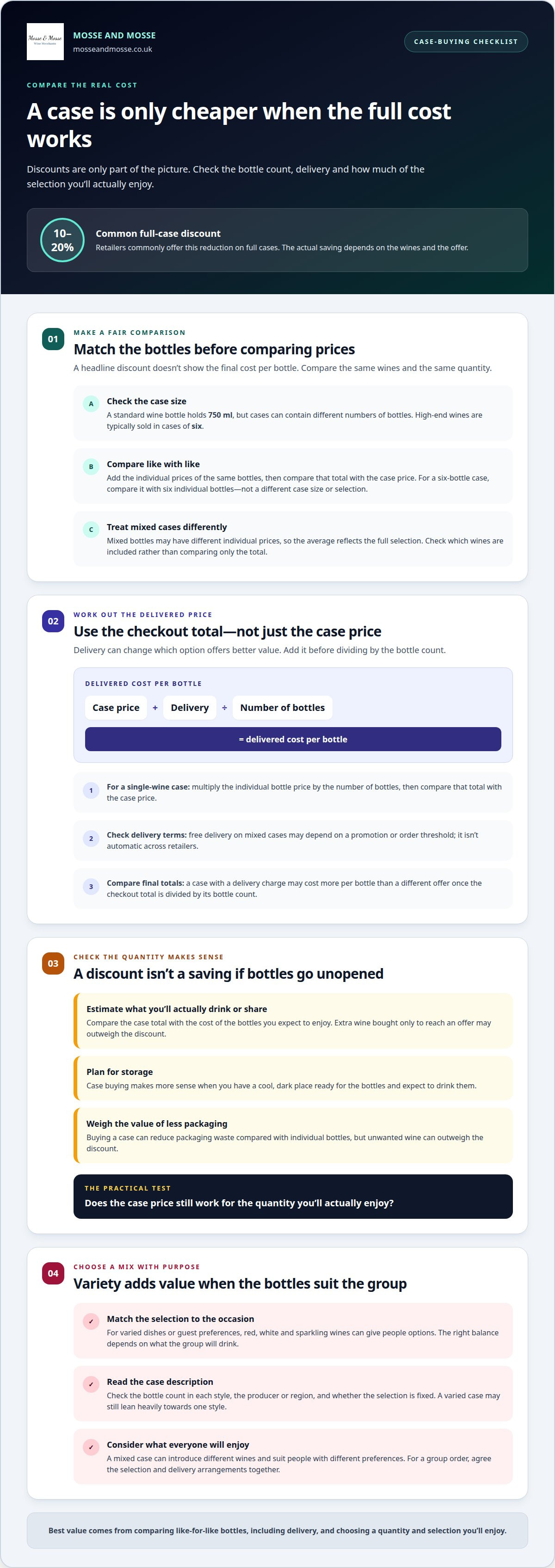
Buying a full case can reduce the price per bottle, but the saving depends on the wines and offer. Retailers commonly offer discounts of 10 to 20 per cent on full cases. Is buying wine by the case cheaper once delivery and any bottles left unused are considered? Compare the final cost with what you would spend on bottles you expect to drink.
How much cheaper is a case of wine than buying bottles individually in the UK? There isn’t one saving that applies to every case: discounts differ between offers and wines. Add the individual prices of the same bottles, then compare that total with the case price. Divide the case total by its bottle count to find the case price per bottle.
Case size matters. A standard wine bottle holds 750 ml, but a case can contain different quantities; high-end wines are typically sold in cases of six. Check the bottle count before comparing. For example, compare a six-bottle case with six individual bottles, not with a larger case or a different selection.
Do UK wine retailers offer discounts when buying a case? Yes, case discounts are commonly offered, including reductions of 10 to 20 per cent on full cases. The actual saving depends on the offer. Check the usual individual price as well as the case total, since a percentage reduction alone doesn’t show the delivered cost per bottle.
Mixed cases can be priced differently from cases containing one wine. Because the bottles in a mixed case may have different individual prices, the average reflects the full selection. For a single-wine case, multiply the individual bottle price by the number of bottles, then compare that total with the case price. Whether you’re comparing a wine merchant or supermarket, make sure the wines are like for like.
Set a total budget before balancing a special bottle with less expensive choices. Add the prices of the wines you want, then divide by the number of bottles to find the average. This lets you include a few special selections without making every bottle a higher-priced choice. Check that each wine still suits your taste and the occasion.
Can buying wine by the case save money after storage and waste? It can if you have a cool, dark place for the bottles and expect to drink them. Case buying can reduce packaging waste compared with individual bottles, but wine left unwanted can outweigh a discount. Before ordering, ask: is buying wine by the case cheaper for the quantity you’ll actually enjoy? That depends on the case total and use, not just its headline saving.
2. Bulk-buying discounts and delivery
Bulk pricing can make ordering several bottles attractive, but the saving depends on the case and retailer. Compare the case total with the cost of buying the same bottles individually, then add delivery. If a deal means buying more wine than you planned, the extra bottles may outweigh the discount if they go unopened. Choose a quantity you expect to enjoy or share.
For a UK online wine order, follow the retailer’s stated age-check and delivery process. The checkout and delivery instructions explain how verification and parcel handover work, so read both before placing an order.
Are case discounts available year-round or mainly during promotions? Retailers and wineries set their own prices, and promotions may offer additional savings. Compare the current case price with the total for the same individual bottles instead of assuming every case is discounted. If the price depends on a promotion, read its terms and check which wines are included.
Delivery charges affect the real cost of a case. Add the fee to the wine total, then divide by the number of bottles to calculate the delivered cost per bottle. A delivery charge spread across a case raises each bottle’s effective cost; a larger order may spread the charge over more wine. Compare the final checkout total, not just the product price.
Free UK delivery on mixed cases may be offered as a promotion or subject to an order threshold, but it isn’t automatic across retailers. Read the delivery terms attached to the specific case. A mixed case with free delivery could be better value than a cheaper case with a charge, particularly when both selections suit your drinking plans. The checkout total shows whether delivery changes the comparison.
Plan the delivery around where the wine will be received and stored. A case is less convenient if nobody can accept it or there’s no cool, dark place ready for storage. Ordering a case can also mean fewer trips to the shop. Shipping several bottles together is more efficient than sending individual bottles and can reduce transportation emissions.
For a shared order, agree the selection and delivery arrangements before buying. A discussion about a mixed-case selection can help match the wines to different tastes and the occasion, rather than choosing extra bottles solely to reach a delivery offer.
3. Value and variety of mixed cases
A mixed case offers a different kind of value from a case containing one wine. It can introduce you to wines from different regions or producers without committing to a full case of one label. That makes it useful for exploring styles or sharing with people who have different preferences.
Start by matching the mix to its purpose. For home, choose bottles that suit a range of meals or occasions. For a dinner with varied dishes, red, white and sparkling wines give guests options. The right balance depends on what people will drink, not on a fixed formula.
Read the case description before buying. Check the number of bottles in each style, the producer or region, and whether the selection is fixed. A varied case can still lean heavily towards one style. If you want to explore Burgundy, for example, a region-focused selection can introduce different wines without requiring a full case of one label.
Variety also changes how you judge value. The total price alone doesn’t tell you whether you’ll enjoy every bottle. Consider the per-bottle cost alongside the range of wines and the likelihood that each will be opened. A slightly higher average may make sense if the case introduces wines you’re keen to try; a low average offers little value if bottles go untouched.
If you’re sharing a case, agree on preferences before choosing. One person might favour lighter whites, while another prefers fuller-bodied reds. A selection that takes both tastes into account is more likely to be enjoyed than one chosen around a single favourite. For an event, match the wines to the food and occasion, and consider what guests will want to drink.
Mixed cases can also help you compare wines side by side. As you taste, note each producer, region and style. This turns an assortment into a practical introduction: you can identify which wines you’d buy again instead of relying on memory.
There’s a trade-off. A single-wine case offers consistency, which can suit a gathering with a clear favourite. A mixed case offers more choice and variety. Decide which matters more, then compare the selection with your plans, storage space and the number of people sharing it. The best value is the case whose bottles have a purpose, not necessarily the widest assortment.
4. Buying wine for events and groups
For a wedding, dinner or work celebration, a case can simplify planning by bringing several bottles into one order. The saving matters, but so do the guest list, menu, event length and range of preferences. Start with the occasion and choose wines people are likely to enjoy, rather than buying extra just to qualify for a bulk offer.
Build the order around the event. A seated meal may call for wines to match the courses, while a standing reception may suit a varied selection guests can choose from. A mix of red, white and sparkling wines offers more choice than a case of one style. Match the balance to the menu and guests, not a fixed formula.
Next, estimate how many bottles the event needs. Start with the guest list and serving plan, then consider whether wine will be the main drink or one of several options. Don’t assume everyone will drink wine. For a group with varied tastes, a mixed case can reduce the risk of having many bottles left in an unpopular style.
Compare case options by the final cost and number of bottles. Divide the total by the bottle count to find the average, then consider how many bottles you expect to open at the event. A lower average price isn’t useful if the wines don’t suit the food or guests. Plan delivery and storage too, including a suitable place to receive the order and a cool, dark spot for bottles arriving ahead of time.
For a corporate celebration, think beyond the event table. A shared case can serve staff or customers, while individually selected bottles may better suit a smaller guest list or a formal meal. If gifting is part of the plan, choose wines that travel well with the occasion and allow time to organise the order and handover. Clear decisions about recipients, selection and delivery help prevent surplus stock.
Wine tasting can also make a group event more participatory. An in-person wine tasting event gives guests a shared focus, while a case can provide bottles for later enjoyment. Choose the format according to the event’s purpose, whether that’s a relaxed gathering, a client occasion or staff celebration.
Plan from the guest experience backwards: set the occasion and menu, estimate the wine needed, choose styles that suit the group, then compare the delivered case cost. A full case makes sense when its bottles have a clear role at the event or afterwards. If the order exceeds those needs, a smaller selection may be better value despite a higher average price per bottle.
Mosse and Mosse: Champagne & Sparkling Wines
Mosse and Mosse offers Champagne & Sparkling Wines and Mixed Wine Cases for occasions where a range of bottles suits the table better than one style alone. A mixed selection can bring together red and white wines with sparkling choices, giving hosts options for different dishes and guests. Choose according to the event, what people enjoy and how much wine you expect to use, rather than buying extra bottles simply to make a case seem better value.
For a celebration centred on fizz, explore the Champagne and sparkling wine selection. For broader choice, a mixed case may suit a shared meal or gathering. Mosse and Mosse delivers to customers across the UK mainland.
Contact Mosse and Mosse to discuss a wine selection for your occasion.
Make your next case a considered choice
Whether buying wine by the case is cheaper depends on more than the arithmetic. The best selection fits your plans and gets enjoyed. Choose wines you’ll want to return to, whether you’re laying bottles down for a future occasion or sharing them around the table.
Mosse and Mosse offers red wine, white wine, Champagne and sparkling wines, giving you different styles to consider. Let the occasion guide your choices, from a meal that calls for a particular style to a celebration where a bottle of fizz feels at home.
Ready to shape a selection around your plans? Explore your wine options with Mosse and Mosse, and take the next step towards a case chosen for your enjoyment.
Frequently Asked Questions
Are mixed cases good value for money?
Mixed cases can be good value when the selection suits the people drinking it. They’re useful for discovering wines from different regions or producers without committing to several bottles of one label. For a gift or shared meal, a varied selection can offer guests more choice. Consider who will drink the wines and whether the styles suit the occasion.
What is the typical price per bottle for UK wine cases compared with singles?
There’s no single typical price per bottle across UK wine cases and individual bottles. Prices vary by wine, producer, region and vintage, so compare the same wine in both formats wherever possible. Divide the case total by its bottle count, then compare that figure with the individual bottle price. This avoids mistaking differences in wine selection for a case discount.
How do delivery fees affect the cost of buying wine by the case in the UK?
Include delivery fees when comparing the total cost of orders. If you’re sharing a purchase, agree how to split the delivery cost before ordering. Also consider whether everyone can receive their share promptly: bottles left unwanted with one person can undermine the value of a low delivered price. Use the final checkout total, not the displayed wine price alone.
How can you compare case prices and discounts per bottle before buying?
First, confirm the case contains the wine and bottle quantity you want. Divide its total price by the number of bottles, then compare that per-bottle figure with the same wine bought individually. Check whether the claimed saving uses the regular individual price as its comparison, and include delivery in the final total. A simple note of case size, wine and delivered cost makes options easier to compare.


