

The most thoughtful bottle for your in-laws may not be the boldest red or the most expensive-looking Champagne. To work out how to choose wine for in-laws, start with what they enjoy and what you’ll be eating, then choose a style of red, white, rosé or sparkling wine to suit. A bottle chosen for the occasion and their tastes is more personal than one picked for its label alone.
It’s understandable to want your gift to make a good impression, especially if you’re unsure of their tastes. This guide explains how different styles suit different occasions, from the celebratory feel of sparkling wine to the flexibility of rosé, and how the menu can help narrow your choice. Whether you’re bringing a bottle to dinner or choosing one for a family visit, a few practical clues can make the decision feel personal without overthinking it.
Key Takeaways
- Choose a bottle around your in-laws’ tastes and the occasion, rather than relying on an impressive label alone.
- Premium sparkling wine can make a thoughtful celebratory gift; consider whether a distinctive bottle or a classic Champagne style better suits them.
- Use their food preferences to guide your choice between red, white and rosé, with lighter dishes often pairing well with lighter styles.
- If you’re unsure what’s being served, a versatile wine can be an easier choice than a bottle suited to only one dish.
- Think about how and when the wine will be shared to make your gift feel personal and well chosen.
1. Premium sparkling wines to bring to in-laws
In the UK, bringing a bottle when invited for dinner is a considerate gesture, but your hosts needn’t open it that evening. Let them decide whether to serve it. Sparkling wine can make a celebratory gift, whether it’s opened before the meal or saved for another occasion.
There’s no single amount you should spend on wine for your in-laws. Set a budget that feels comfortable, then consider the occasion, how well you know their tastes and whether they enjoy sparkling wine. A thoughtfully chosen bottle can feel more personal than an expensive one that doesn’t suit their preferences.
For a special visit, look beyond familiar labels to the wine’s style and origin. Trentodoc, from Northeast Italy, offers a distinct regional identity; Ferrari Perle Nero and Maso Martis Madame Martis Brut Riserva are examples from this appellation. For an English sparkling option, Nyetimber 1086 Rosé is a 2013 vintage. The number 1086 refers to the vineyard’s mention in the Domesday charter. These examples can help you compare styles, rather than serve as a checklist of bottles to buy.
To learn more from a label, look at the producer and the named region. A specific appellation tells you where the wine comes from, while the producer gives you a point of reference. The vintage can offer another clue about the bottle. These details are more useful than grand-sounding packaging, though they don’t tell you whether the style will suit your in-laws.
Present the bottle neatly. A gift bag or paper wrap protects the glass and gives it a finished look; a short handwritten note adds a personal touch. If you’re taking it to dinner, keep it secure and away from anything that might knock or warm it during the journey.
If your in-laws don’t drink alcohol, don’t make wine the main gift. Choose a thoughtful non-alcoholic alternative or something suited to their interests. If you’re unsure, a warm, straightforward message before the visit can help you avoid an awkward choice and show consideration.
For serving, sparkling wine is generally best chilled to 6 to 8°C. If you’re bringing it to a meal, keep it cool during the journey and let your hosts choose when to open it. The best choice balances a clear sense of occasion with the simple details that make a gift feel considered: their preferences, the visit, and how they might enjoy sharing it.
2. Balancing red, white and rosé
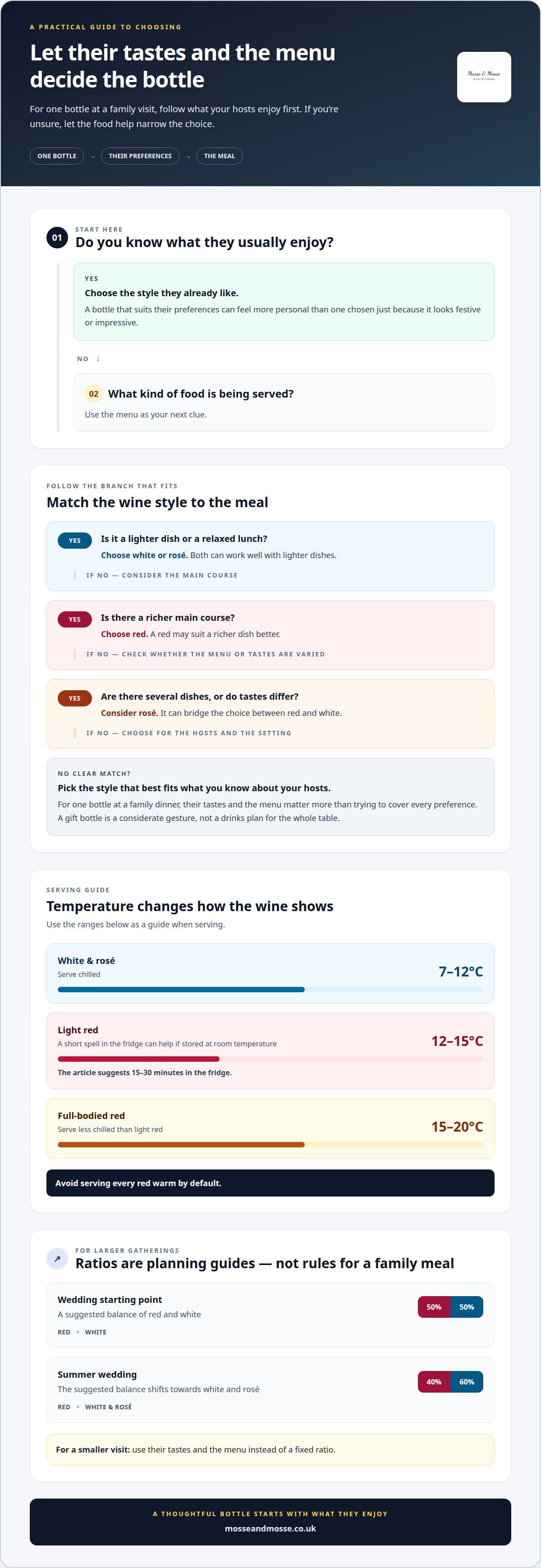
When you don’t know exactly what your in-laws prefer, start with the meal and the setting. A red may suit a richer main course, while white or rosé can work well with lighter dishes and a relaxed lunch. If you’re bringing one bottle to a family dinner, choose the style that best fits the food rather than trying to cover every preference. A gift bottle is a considerate gesture, not a drinks plan for the whole table.
For a larger gathering, the balance between styles becomes more useful. A 50/50 split between red and white is a safe starting point for a wedding. At a summer wedding, the suggested red-and-white split shifts to 60/40 in favour of white and rosé. These proportions are planning guides for an event, not a rule for a meal with your in-laws. For a smaller visit, their tastes and the menu matter more than a fixed ratio.
Think about who will be drinking and what they usually enjoy. If your in-laws tend to choose red, a bottle of red may feel more personal than rosé chosen simply because it looks festive. If you’ve seen them enjoy white with lunch, use that as a clue. When their tastes differ, let the meal help you decide: white can suit a lighter menu, while red may work better with a richer dish.
Serving temperature can change how these wines show. White and rosé are best served at 7 to 12°C. Light red wine is suggested at 12 to 15°C, while full-bodied red is suggested at 15 to 20°C. If a lighter red has been stored at room temperature, a short spell of 15 to 30 minutes in the fridge can bring it closer to serving temperature. Avoid serving every red warm by default.
Rosé can bridge the choice between red and white, especially when the menu includes several dishes or tastes differ. Its colour alone doesn’t tell you how it will taste, so consider the style and the food rather than choosing by appearance. A dry rosé, for example, can suit a light meal, while a fuller-bodied red may be a better match for a richer main course.
For one bottle, match the style to the hosts; for a gathering, use the guest mix and season to guide the selection. If you’d like a hand narrowing down a white wine choice for the meal, get in touch with Mosse and Mosse.
3. Champagne
Champagne can make a fitting gift for a family celebration, milestone dinner or first visit. The choice involves more than the name on the label: style, producer and occasion all matter. If your in-laws enjoy dry, crisp wines, a brut style is a sensible direction. If they prefer richer or more expressive bottles, read the cuvée description rather than choosing by prestige alone. A familiar producer can feel thoughtful, while a new one offers something to discover.
Champagne labels can offer useful clues. Ruinart Blanc de Blancs, for example, identifies a blanc de blancs style made from white grapes. The grape variety and blend influence the wine’s character, so the label can help you match it to your hosts’ preferences. Rosé Champagne offers a different style for a festive meal. Vintage Champagne may suit a particularly significant occasion, while a non-vintage bottle can be a versatile choice if you don’t know their cellar or tastes. Treat these terms as guidance, not a ranking of quality.
Consider what will be served. A crisp Champagne can work as an aperitif or alongside savoury starters, while a sweeter style may sit more comfortably with dessert. For a meal centred on rich food, think about whether the wine’s freshness will provide a pleasant contrast. Champagne is best served at 6 to 8°C. Chilling it helps keep the wine refreshing, but avoid leaving the bottle in the freezer, where it can be forgotten or chilled unevenly.
Think about when your in-laws might enjoy opening a bottle. A Sunday lunch, birthday meal or family toast gives Champagne a clear purpose. A bottle chosen without a particular occasion can still be welcome, but may feel less personal. If you know they prefer red wine or rarely drink sparkling wine, another style may suit them better. Let their tastes guide the decision, rather than assuming Champagne is always the most impressive choice.
When comparing bottles, consider the producer, cuvée name and style together. Delamotte and Moët & Chandon Collection Impériale are examples of named Champagne choices, but a recognisable name alone can’t tell you whether your in-laws will enjoy the wine. Look for a style that suits their palate and the occasion. If you’re choosing Champagne for dessert, match its sweetness to the pudding rather than selecting by label or presentation alone.
4. How can I choose wine based on what food my in-laws are serving?
Start with the main dish, then consider its weight, richness and seasoning. Roast beef with gravy usually calls for a fuller-bodied red, while grilled chicken with herbs can suit white, rosé or a lighter red. You don’t need to match every ingredient. Choose a wine that complements the dish’s strongest flavours without overwhelming them. When deciding how to choose wine for in-laws, let the menu guide your first choice.
Rich meats such as beef or lamb tend to pair well with fuller-bodied reds. Their deeper flavours can stand up to roasted meat, gravy and savoury sauces. For a Sunday roast, consider how the wine will work with both the meat and its accompaniments. A red chosen for beef may feel heavy beside delicate vegetables, so think about the whole plate, not just the centrepiece.
Lighter foods often pair more comfortably with white wine, rosé or lighter reds. A simple roast chicken, grilled fish or vegetable tart, for example, can make a versatile white a thoughtful choice. A lighter red may suit chicken with mushrooms, where earthy flavours add depth. With a summer salad, rosé can be flexible, especially if the table includes several different dishes.
Sauce can change the pairing. A creamy chicken dish may suit a white with enough body to complement its richness, while a tomato-based sauce can make a bright, fresh red feel more at home. Strong spices matter too: heavily peppered or chilli-rich dishes can overwhelm a delicate wine. If your in-laws are serving boldly seasoned food, choose a wine with enough character to hold its own.
If the invitation doesn’t mention food, ask what’s on the menu. A simple message about the main course can quickly narrow your options. Then consider whether the wine is for dinner or to share beforehand. Champagne may suit a welcome toast, while a still wine may make more sense when you’re choosing to accompany the meal.
If the menu includes several courses, choose for the dish that matters most, such as the main course, rather than trying to find one perfect match for everything. For a meal with both fish and roast meat, ask whether your in-laws would prefer a white or red; their tastes can break the tie. The answer to how to choose wine for in-laws often comes down to matching their preferences with the food. Get help choosing a wine for their menu when you’d like a considered recommendation.
Mosse and Mosse: Champagne & Sparkling Wines
Mosse and Mosse can help you narrow your choice when you know the occasion but aren’t sure which bottle will suit your in-laws. Explore the Champagne and sparkling wine selection for a celebratory gift, or consider white wine if it better suits the meal. The right style depends on what your hosts enjoy and when they’re likely to open it.
If you’re weighing sparkling wine against a still wine, think about your in-laws’ usual preferences and the food you’ve discussed. Knowing those details makes it easier to choose a bottle that feels personal rather than simply formal.
Contact Mosse and Mosse to discuss a suitable wine for your visit.
Make your choice with confidence
Knowing how to choose wine for in-laws starts with a personal detail: what they enjoy sharing at home. Let that guide your final choice instead of assuming a family visit calls for a particular label or style. A bottle chosen with their tastes in mind can start an easy conversation and become part of a warm moment together.
If you’d like help finding a suitable bottle, Mosse and Mosse offers red wine, white wine, and Champagne and sparkling wines. Share the occasion and any preferences you know, then explore a choice that feels right for your hosts and the meal. A little thought goes a long way, and the right bottle can help you arrive feeling prepared.
Contact Mosse and Mosse to discuss your wine choice, and enjoy making the visit your own.
Frequently Asked Questions
What types of wine should I choose?
Choose a style that suits the occasion and the people receiving it. Red, white, rosé and sparkling wines each have a different character, so consider whether the bottle is for a meal, a toast or a gift to enjoy later. If you know a grape or region they already like, use that as a starting point rather than choosing solely by a prestigious name.
What wine styles are safest to bring as a gift when meeting in-laws?
There isn’t one style that suits every household, but a familiar, balanced wine can be a thoughtful choice for a first meeting. Avoid an unusually sweet, powerful or unconventional style unless you know they enjoy it. A gift bottle needn’t be opened during your visit, so choosing one they can keep for another occasion can also take the pressure off the meal.
What wine should I buy if I don't know my in-laws' tastes?
If you’re unsure of their preferences, choose a versatile bottle rather than a highly distinctive style. A straightforward dry white or medium-bodied red can be easier to enjoy with familiar dishes. You could also ask your partner what their parents tend to order or keep at home. That small clue can help you avoid guessing about grape varieties or sweetness.
Should I choose red, white, rosé, sparkling wine or Champagne as a host gift?
Let the occasion and your hosts’ habits decide. Champagne or sparkling wine can suit a celebration, while still wine may be more fitting if you know they prefer it with meals. Rosé can make a relaxed seasonal gift, and red or white can feel personal when you know their tastes. If alcohol isn’t welcome in their home, choose a different kind of gift.


