

That bottle uncorked over Christmas is likely still sitting on your sideboard, leaving you wondering: exactly how long does opened port last before its splendour begins to fade? It's a familiar worry for anyone who loves fine fortified wine, especially when you dread the thought of wasting an exceptional bottle through mere hesitation.
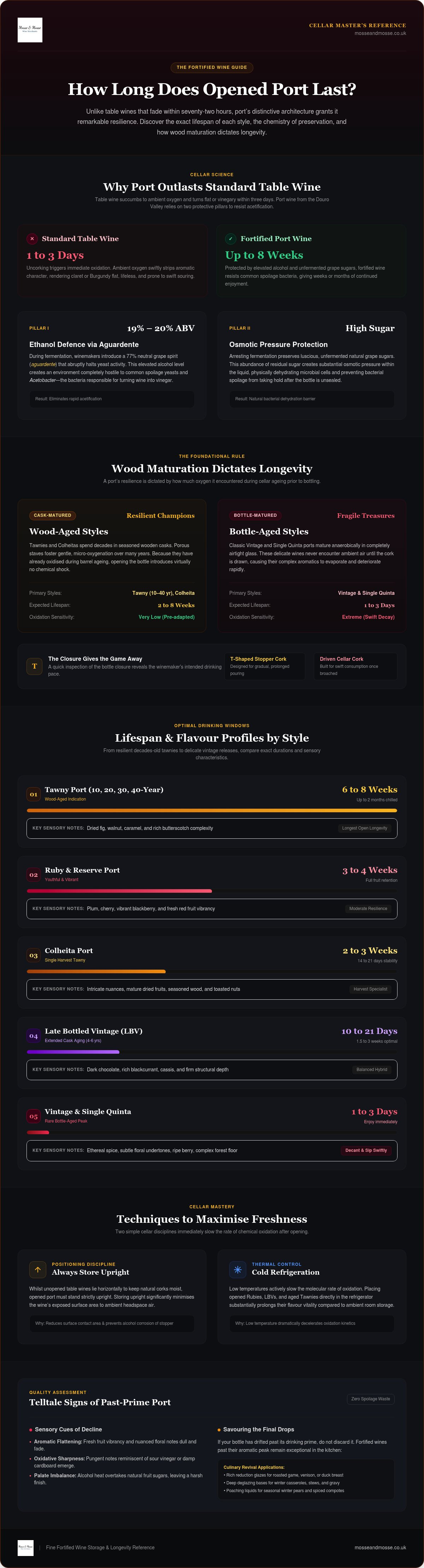
Much of the confusion comes from treating every style identically. The foundational rule of the cellar is that wood maturation dictates longevity; cask-aged ports comfortably endure, whereas delicate, bottle-aged treasures perish swiftly once exposed to air. In this guide, you'll discover the exact lifespan of your specific style, from youthful Rubies to aged Tawnies, paired with proven storage methods to preserve every nuanced aroma and rich flavour.
We'll also show you how to spot the telltale signs of spoilage, along with delicious ways to repurpose any pour that has drifted past its prime, ensuring not a single drop is lost.
Key Takeaways
- Understand why fortification with neutral grape spirit and natural residual sugars grant port far greater resilience than standard table wines.
- Discover precisely how long does opened port last across every major style, comparing fragile vintage bottles with resilient, cask-matured tawnies.
- Master simple cellar techniques, including upright bottle positioning and cold refrigeration, to actively slow down oxidation and preserve freshness.
- Learn the unmistakable sensory cues that reveal when a bottle has spoiled, alongside delicious culinary ways to revive wine past its absolute prime.
Why Opened Port Wine Behaves Differently from Table Wine
Uncork a standard bottle of claret or Burgundy, and the countdown begins immediately. Within three days, ambient oxygen turns the wine flat, lifeless, and vinegary. Fortified wines march to an entirely different beat. Traditional Port wine from Portugal's Douro Valley incorporates a deliberate winemaking intervention that fundamentally alters how it interacts with the atmosphere. When considering how long does opened port last, the liquid's ultimate shelf life is determined entirely by how much oxygen it encountered before bottling versus how much air enters the glass once the stopper is pulled.
Rather than spoiling into sour vinegar through swift acetification, an opened bottle of port endures. Its unique chemical architecture shields the delicate liquid against bacterial spoilage, giving you far more time to savour each pour. Understanding this resilience requires examining both its fortified composition and its historical cellar maturation, topics detailed further in our overview of types of port.
The Preserving Power of Fortification and Residual Sugar
Port's stamina comes down to two vital elements: distilled grape spirit and natural sweetness. During fermentation, winemakers add a 77% neutral grape spirit known as aguardente. This abruptly halts fermentation, preserving luscious unfermented grape sugars whilst raising the final strength to between 19% and 20% ABV.
This potent chemistry protects the wine in two distinct ways:
- Ethanol defence: Elevated alcohol levels create an environment hostile to common spoilage yeasts and Acetobacter, the bacteria responsible for converting ethanol into acetic acid.
- Osmotic pressure: High residual sugar levels generate substantial osmotic pressure, dehydrating microbial cells and preventing bacterial spoilage from taking hold.
Cask-Aged vs Bottle-Aged: The Core Distinction
How a port was matured before release defines its vulnerability to air. Wood-aged styles, such as Tawnies and Colheitas, mature in seasoned wooden casks where porous staves encourage gentle, micro-oxygenation over many years. Because these wines have already oxidised during barrel ageing, uncorking them at home introduces little chemical shock.
In contrast, bottle-aged treasures, including classic Vintage Port, mature anaerobically in sealed glass. These fragile wines never encounter significant air until you draw the cork, meaning their intricate aromatics deteriorate rapidly once exposed. Knowing this distinction is the secret to knowing how long does opened port last in your personal cellar.
How Long Each Port Style Truly Lasts Once Opened
Every style responds differently once unsealed, with lifespans ranging from forty-eight hours to several months. As a cellar rule: oxidative, wood-aged styles endure for weeks, while bottle-aged vintage ports require immediate enjoyment. The closure often gives the game away. T-shaped stopper corks signify bottles designed for gradual pouring over time, whereas traditional driven corks mark cellar treasures meant for swift consumption once broached. Industry guides evaluating how long port lasts after opening confirm that matching storage to style prevents needless waste.
| Port Style | Optimal Drinking Window | Key Sensory Notes |
|---|---|---|
| Tawny (10, 20, 30, 40-year) | 6 to 8 weeks | Dried fig, walnut, caramel |
| Ruby & Reserve | 3 to 4 weeks | Plum, cherry, blackberry |
| Late Bottled Vintage (LBV) | 10 to 21 days | Dark chocolate, blackcurrant |
| Vintage & Single Quinta | 1 to 3 days | Ethereal spice, floral, ripe berry |
Tawny and Colheita Ports: The Resilient Cask Champions
Extended cask ageing gives Tawny ports remarkable stability. Bottles carrying an age indication (10, 20, or 40 years) thrive for up to two months when kept chilled, retaining their rich walnut and butterscotch complexity. Colheitas, which are tawnies from a single harvest, maintain their intricate nuances for two to three weeks, making them ideal companions across long autumn evenings.
Ruby, Reserve, and Late Bottled Vintage (LBV) Lifespans
Youthful Ruby and Reserve bottlings keep their vibrant hedgerow fruit for three to four weeks. Late Bottled Vintage (LBV) ports vary by bottling technique. Filtered LBVs drink gracefully for up to three weeks, while unfiltered expressions display greater depth but decline after ten to fourteen days.
Vintage Port and Single Quinta: The Fragile Rarities
True Vintage and Single Quinta bottlings are rare masterworks. Having matured undisturbed for decades, their delicate aromatics fade swiftly when air enters the bottle. Plan to finish them within forty-eight to seventy-two hours of pulling the cork. If you are preparing to unseal an exceptional anniversary vintage, you can always speak to our team for bespoke decanting advice to ensure every glass pours perfectly.
Essential Storage Techniques to Maximise Open Bottle Freshness
How you store an unsealed bottle fundamentally dictates how long does opened port last in your home. Leaving a bottle on its side in a standard wine rack or atop an exposed kitchen counter invites rapid degradation. Always store opened bottles strictly upright. Standing the bottle upright minimises the liquid's surface area exposed to trapped oxygen inside the headspace, immediately slowing the oxidation process. If you are preparing a celebratory spread or choosing bottles for friends, exploring our bespoke gift selections provides a wonderful starting point for acquiring classic, well-tended cellar styles.
Temperature, Light, and Upright Refrigeration Rules
Modern central heating can ruin good fortified wine within days. Keep opened bottles far from warm radiators, sunlit drinks trolleys, and vibrating kitchen appliances. Chilling your opened Ruby and Tawny ports in a refrigerator dramatically retards oxidation kinetics, locking in nuanced aromatics. Aim for storage temperatures between 10°C and 14°C. Simply pour a measure fifteen minutes prior to drinking, allowing the liquid to warm gently in the glass to release its full bouquet.
Preservation Tools: Vacuum Stoppers vs Inert Gas Sprays
Inert gas systems offer the gold standard for cellar longevity. Argon gas canisters spray a dense, non-reactive blanket directly over the liquid, shielding it from ambient oxygen. Handheld vacuum stoppers work well for youthful Rubies, though we advise caution with mature vintages, as aggressive pumping can strip delicate volatile esters. When decanting older bottles, always pour through a funnel lined with fine muslin to remove sediment that might otherwise catalyse unwanted flavour changes in the remaining wine.
To learn more about proper cellar conditions or caring for older bottles, contact our wine advisors today for personalised recommendations.
Telltale Signs of Spoilage and Savouring the Final Drops
Even fortified wines reach a point where air takes its toll. While opened port won't become toxic or make you ill, past-prime bottles lose their luscious fruit core, aromatic lift, and velvety balance. When assessing how long does opened port last in practical terms, trusting your senses remains the ultimate test.
Sensory Clues: Detecting Oxidation, Flavour Loss, and Acidity
Three straightforward sensory markers reveal whether a bottle has slipped past its best:
- Sight: Check the rim of the glass. If a vibrant ruby port has morphed into a dull, tawny-brown shade, excessive oxygen has broken down its anthocyanins. In a cask-aged tawny, look for dull turbidity rather than clear amber brilliance.
- Aroma: Fresh bramble fruit and toasted hazelnut give way to sharp vinegar, nail polish remover, bruised apples, or damp cardboard.
- Palate: The finish turns thin and flat. Rather than integrated spirit and sweet fruit, you'll encounter a sharp, burning alcohol sensation alongside harsh sourness.
Repurposing Past-Peak Port in Fine British Cooking
Never discard tired fortified wine down the sink. Fortified wine that has lost its fresh bouquet still contains concentrated sugars, acidity, and rich fruit undertones that perform wonderfully in the kitchen. Simmer it slowly with finely diced shallots and rich venison stock to yield a glossy, decadent gravy for roast game. Alternatively, poach hard English autumn pears with cinnamon, star anise, and tired ruby port, serving the spiced fruit alongside a wedge of salty blue Stilton. Even a splash tossed into slow-braised red cabbage or sweet red onion marmalade adds incredible depth to Sunday roasts.
Personalised Cellar Guidance from Mosse and Mosse
Choosing the right format and style prevents wine wastage before you even draw the cork. At Mosse and Mosse, we take pride in acting as personal advisors for classical European wine regions. Based at Fentons Farm in Dennington, Suffolk, founder Tim Mosse works directly with private clients across East Anglia and mainland Britain to source dependable, age-worthy bottlings tailored to celebratory gatherings and private collections. Whether you are seeking a resilient wood-aged tawny for leisurely weeknight sipping or a historic vintage bottle for an upcoming banquet, you can secure tailored advice by contacting our wine specialists today.
Savouring Fine Fortified Wine with Confidence
Understanding how long does opened port last removes the hesitation that so often leaves magnificent bottles neglected. The rule remains simple: robust, wood-aged Tawnies reward unhurried sipping across several months when kept chilled, whereas delicate vintage masterworks call for joyful sharing over two or three days. Storing bottles upright in cool conditions ensures every glass retains its intended balance, structure, and depth.
At Mosse and Mosse, we take pride in curating exceptional European producers directly from Fentons Farm in Dennington. Drawing on decades of personal consultation for private cellars, weddings, and special events across East Anglia and mainland Britain, founder Tim Mosse helps collectors and enthusiasts discover truly remarkable wines. Speak with our independent wine specialists today to source exceptional cellar-aged ports and bespoke mixed cases tailored precisely to your table.
Frequently Asked Questions
Does opened port need to be refrigerated once uncorked?
Yes, keeping opened port inside a refrigerator significantly extends its drinking window. Chilled temperatures between 10°C and 14°C slow the chemical kinetics of oxidation, protecting delicate fruit esters and aromatic nuances across both ruby and tawny styles. Always store the bottle upright on a shelf rather than in the door racks, as constant opening creates unwanted movement. Allow the wine fifteen minutes to warm in the glass before serving.
Can drinking old, opened port wine make you unwell?
Drinking port that has spent months opened will not make you ill. Fortified wine possesses between 19% and 20% ABV alongside concentrated residual sugars, creating an inhospitable medium for pathogenic bacteria. However, heavy oxygen exposure strips all aromatic vibrancy, leaving the remaining liquid dull, harshly alcoholic, and sour. While perfectly safe, past-peak wine offers little sensory pleasure as a digestif and belongs in your cooking pot instead.
How long does an opened bottle of vintage port keep after decanting?
True Vintage Port lasts roughly two to three days once broached. Because it matured anaerobically in glass for decades without air contact, its complex fruit bouquet and fine tannic structure unravel rapidly upon exposure to oxygen. Single Quinta bottlings behave similarly. To experience these rare bottles at their majestic peak, uncork and decant them for immediate enjoyment alongside dinner guests across East Anglia, rather than saving measures for subsequent weeks.
What is the difference in shelf life between Tawny and Ruby port?
Tawny ports last significantly longer than Ruby styles once broached. Because aged Tawnies spend years undergoing gentle oxidation in seasoned wooden casks, they remain remarkably stable, drinking beautifully for six to eight weeks when refrigerated. Youthful Ruby ports mature inside large vats or bottles with minimal oxygen contact. Consequently, their vibrant red fruit profile fades faster, meaning they should be enjoyed within three to four weeks of uncorking.
Can you freeze leftover port wine to use later in cooking?
Yes, freezing leftover port is an effective way to preserve rich cooking stock for future meals. Due to its 20% alcohol content, port wine will not freeze solid in standard domestic freezers; instead, it forms a thick, slushy reduction. Spoon this concentrated essence directly into ice cube trays. You can then drop individual cubes into winter stews, game gravies, or onion marmalades whenever your recipes require rich fruit sweetness.
How can you tell if an opened bottle of port has gone bad?
When assessing how long does opened port last, rely directly on visual and aromatic shifts. Spoiled port loses its primary fruit, presenting sharp aromas reminiscent of vinegar, nail polish remover, bruised apples, or musty cardboard. In the glass, vibrant ruby hues turn a lacklustre muddy brown, while tawnies lose their amber clarity. On the palate, expect a harsh alcoholic burn that completely overpowers the wine's natural sweet fruit core.


