
A wine gift that looks expensive doesn’t need an extravagant bottle. Fine wine can be a thoughtful choice for birthdays, dinner invitations and other special occasions. A distinctive bottle, presented with care, makes the gesture feel considered and celebratory. The box, ribbon and message card matter too: they show you chose the gift with the recipient in mind.
It’s easy to assume that a high price or famous label is what makes a wine gift impressive. In practice, polished presentation and a personal touch can make a bottle memorable, while the wine itself gives the recipient something lovely to open and enjoy.
In this guide, you’ll learn how to choose a premium bottle for the occasion, elevate it with gift-ready presentation and add a personal detail that feels genuine rather than overdone. We’ll look at wine styles, boxes, ribbons and message cards, so you can put together a gift that feels special from the moment it’s received.
Key Takeaways
- Match the wine style and level of formality to the occasion and the recipient’s tastes.
- Choose a bottle for its quality and regional character, not just a prestigious-looking label.
- Use a gift box, ribbon and message card to make the presentation feel polished and personal.
- Small, thoughtful details can make a wine gift feel special without making it seem overdone.
- Explore Champagne & Sparkling Wines, alongside red, white and rosé options, to find a fitting celebratory bottle.
1. Are fine wine gifts suitable for special occasions?
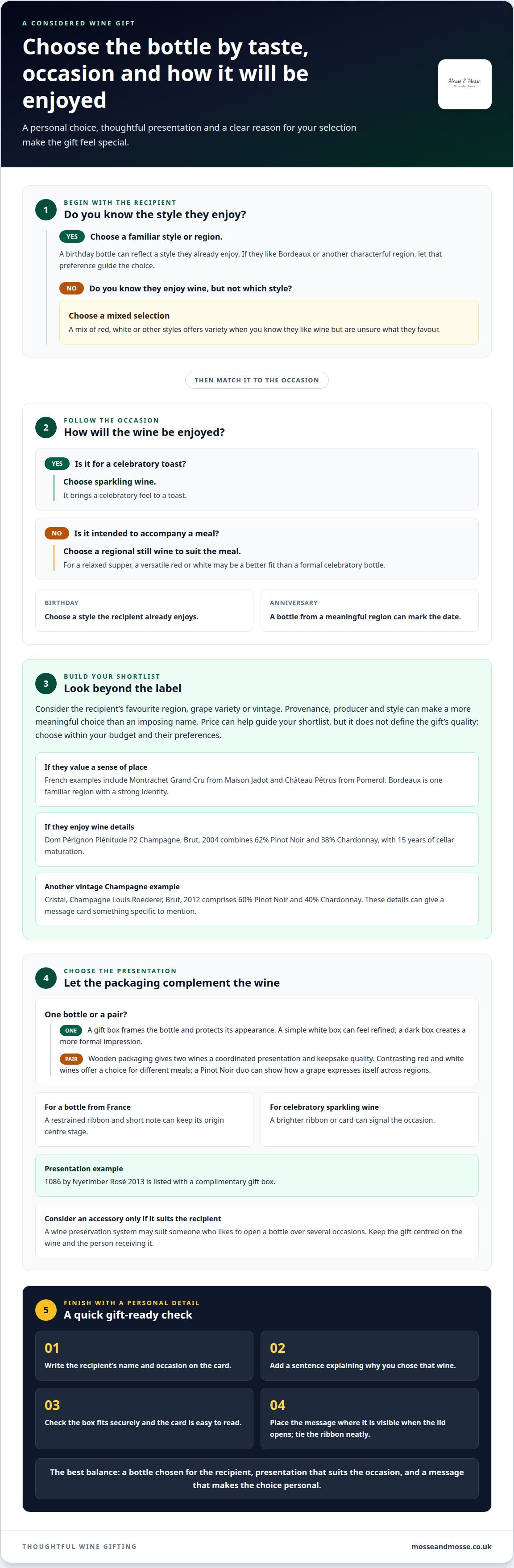
Yes. Fine wine suits birthdays, anniversaries and celebrations because it combines something to enjoy with a sense of occasion. For a birthday, choose a style the recipient already enjoys; for an anniversary, a bottle from a meaningful region can mark the date. A considered choice feels more personal than selecting a bottle solely for its label.
Bordeaux is one familiar example of a region with a strong identity, while other regions offer different expressions of grape and place. The occasion matters too: a relaxed supper may call for a versatile red or white rather than a formal celebratory bottle.
Sparkling wine brings a celebratory feel to a toast, while a regional still wine can suit a meal. Choose according to how the recipient plans to enjoy it, not simply the scale of the event.
Red, white and mixed wine gifts each make a different impression. A red can suit someone who enjoys Bordeaux or other characterful regions; a white may better suit a recipient who prefers freshness. A mixed selection offers variety, making it useful when you know the person likes wine but aren’t sure which style they favour.
To choose a premium bottle, start with the recipient’s taste, then match the wine to the occasion and meal. For example, select sparkling wine for a celebratory toast or a regionally distinctive still wine for a birthday dinner. Fine wine doesn’t have to mean the rarest bottle. Provenance, producer and style can make a more meaningful choice than an imposing name.
Price can help guide your shortlist, but it doesn’t define a gift’s quality. These are broad market ranges, not a rule for every recipient. The best choice fits both your budget and their preferences.
Personal touches can make a wine gift feel considered, even when the bottle is the main present. Add a message card that names the occasion, such as a wedding anniversary or promotion, and explain why you chose that style. For a business celebration, a discreet branded tag can identify the sender without taking attention away from the wine.
Think of presentation as part of the complete gift. A carefully chosen bottle, a neat box and a message written for the recipient create a coherent impression. For example, pair a regional red with a birthday note about a shared meal, or give sparkling wine for a family celebration. These details connect the wine to the person and occasion.
2. Luxury bottle presentation and gift sets
Bottles with presentation packaging make distinctive gifts, including 1086 by Nyetimber Rosé 2013, listed with a complimentary gift box. Wine duos in wooden boxes are another example, giving two bottles a coordinated, substantial presentation.
A gift box frames the bottle and protects its appearance. Choose a finish that suits the occasion: a simple white box can feel refined, while a dark box creates a more formal impression. Wooden packaging gives a pair of wines a keepsake quality, especially when they share a theme, such as Pinot Noir from different regions.
Luxury wine gifts work best when the presentation complements the wine inside. For a bottle from France, a restrained ribbon and short note can let its origin take centre stage. For celebratory sparkling wine, choose a brighter ribbon or card that signals the occasion. Aim for balance: packaging should add polish without distracting from the bottle.
Personalisation can be simple and specific. Write the recipient’s name on the card, mention the birthday or anniversary, and add a sentence explaining why you selected the wine. For a work occasion, a discreet company mark can identify the sender; keep it smaller than the recipient’s message. Carefully chosen colours and matching tissue paper can bring the box, ribbon and card together.
Gift sets create a fuller experience than a single bottle. Pair contrasting wines, such as a red and a white, to give the recipient a choice for different meals. Alternatively, a Pinot Noir duo can invite them to discover how the grape expresses itself across regions. Make the selection feel deliberate rather than simply adding accessories.
Wine preservation systems may suit a recipient who likes to open a bottle over several occasions. Choose one as a practical companion to wine, not as decoration; the gift should still centre on the bottle and the person receiving it. If you’re assembling a set, consider whether the recipient will value a useful accessory more than extra packaging.
Before wrapping, check that the box fits the bottle securely and that the card is easy to read. Place the message where it’s visible when the lid opens, then tie the ribbon neatly rather than layering on extra decoration. These small steps give a wine gift a composed, considered finish. For help choosing wine for a celebration, share the occasion and your preferred style.
3. Premium wines from recognised producers and regions
A recognised producer or appellation gives a gift a story beyond its label. French classics such as Montrachet Grand Cru from Maison Jadot and Château Pétrus from Pomerol carry a clear sense of place. For a thoughtful selection, consider the recipient’s favourite region, grape variety or vintage, then choose a bottle that reflects it.
Vintage Champagne offers another route to a distinctive present. Dom Pérignon Plénitude P2 Champagne, Brut, 2004 combines 62% Pinot Noir with 38% Chardonnay. It has also undergone 15 years of cellar maturation. Those details give the recipient something tangible to discover, particularly if they enjoy discussing how blending and ageing shape a wine.
Cristal, Champagne Louis Roederer, Brut, 2012 is another notable example. Its blend comprises 60% Pinot Noir and 40% Chardonnay, making the vintage and grape composition useful details to include on a message card. A large-format bottle can create added impact at a shared celebration, while a standard bottle suits a more intimate gift.
For still wines, look beyond famous names to the region and style. Montrachet Grand Cru represents white Burgundy, while Château Pétrus is associated with Pomerol. These names can guide a gift for someone who already enjoys French wine. A producer and vintage chosen with their taste in mind feel more personal than a label selected only for recognition.
A presentation case should protect and frame the wine without obscuring its identity. Choose a fitted case for one bottle or a wooden presentation box for a pair. Keep the producer’s label visible, and place a short card beside the bottle rather than covering it. This lets the wine remain the centrepiece.
Premium Champagne can make a fitting gift for a wedding, milestone or formal celebration. Match the vintage to the recipient’s interest: a well-known house may appeal to someone who enjoys familiar names, while a distinctive cuvée suits a curious enthusiast. Explore Champagne and sparkling wine styles to compare regional character and bottle choices.
Wine glasses can complete a gift, but choose them to suit the wine rather than simply adding extra pieces. A tulip-shaped glass is a practical partner for sparkling wine, while a larger bowl gives still wine room to open. For a mixed gift, match the glassware to the bottle the recipient is most likely to serve first.
Make the selection feel considered by pairing one clear detail with the bottle: its vintage, producer or region. For example, a note about the 2004 vintage and extended maturation gives Dom Pérignon P2 context without lengthy tasting claims. A well-chosen wine, suitable glass and restrained case create an exceptional presentation through substance as well as appearance.
4. Wine gift boxes, ribbons and message cards
A wine gift box turns gifting into a small presentation, with the bottle revealed as part of the occasion. In the UK, options include a fitted single-bottle box, a multi-bottle case, tissue paper, ribbon and a message card. Choose pieces that suit the recipient and wine, rather than adding decoration without a purpose.
For a classic look, pair a dark box with a restrained ribbon and handwritten note. A lighter box can feel fresh for a summer celebration, particularly with a crisp Chardonnay. Keep the label visible and avoid crowding it with oversized bows or extra packaging. A clean, balanced finish gives the bottle room to stand out.
Make the card specific. Name the occasion, then add a short reason for choosing that bottle, such as its region, vintage or connection to a shared meal. “For your anniversary, a Chardonnay to enjoy with dinner” feels more personal than a generic greeting. For a work gift, include the sender’s name clearly and keep any branding discreet.
Delivery costs and times vary by destination, delivery option and packaging. Choose a delivery date that gives the gift time to arrive before the birthday, wedding or celebration, and make sure the recipient’s address is clear on the order.
For a coordinated presentation, follow a simple sequence: select the box, secure the bottle, add tissue, write the card, then finish with ribbon. A snug fit helps the bottle sit neatly inside its packaging. Place the card where it’s easy to see when the box opens, rather than letting it slide beneath the bottle.
Prestige packaging doesn’t need to be elaborate. A quality box and one well-chosen ribbon can look more polished than several competing colours. Match the ribbon to the card, or choose a shade that echoes the wine label. For example, a burgundy ribbon beside a classic red-wine label creates a cohesive impression without changing the bottle itself.
For two bottles, choose a case that secures and presents them together. Pair contrasting styles, such as a red with a white, and use consistent tissue and matching cards to make the set feel intentional. If the gift is for a couple, address the message to both recipients and connect the wines to the celebration.
Before sending, read the message aloud and check the recipient’s name, occasion and address. These practical details matter as much as the ribbon: a beautifully wrapped gift loses its personal touch if the card is impersonal or misaddressed. For a considered wine gift, get in touch to discuss your selection.
Mosse and Mosse: Champagne & Sparkling Wines
Mosse and Mosse offers Champagne and sparkling wines for celebrations and thoughtful gifts. Its selection also includes white wine, giving you another style to consider when matching a bottle to the recipient’s taste and occasion.
With a particular focus on Burgundy and Bordeaux, Mosse and Mosse sources well-regarded wines and offers personalised service. Turn to its expertise when you have a region in mind, need help narrowing down a style or want to choose a thoughtful gift for someone who enjoys discovering wine.
Ready to choose a bottle for a special occasion? Contact Mosse and Mosse to discuss your selection.
Make the gift feel personal from the first moment
The most memorable gifts create a connection between the person giving the bottle and the person opening it. Before you choose, picture the moment it will be received: a birthday meal, a celebratory toast or a quiet evening at home. Let that moment guide the wine and message, so the presentation feels individual rather than simply formal.
A wine gift that looks expensive can still feel warm and genuine when it reflects the recipient’s taste. Mosse and Mosse offers red wine, white wine, and Champagne and sparkling wines to suit different preferences and occasions. Share the style or region you have in mind to help shape your choice.
Contact Mosse and Mosse to discuss a wine gift, and take the next step towards choosing something they’ll be pleased to receive.
Frequently Asked Questions
Are fine wine gifts suitable for special occasions?
Yes, fine wine is a suitable gift when you choose it for the recipient and occasion. For a host, select a bottle they can enjoy with a planned meal; for a celebration, choose one suited to a toast. If you’re unsure of their taste, a familiar grape or region can be a safer choice than an unusual style. A personal note explaining your choice makes the gesture feel individual.
What makes a fine wine gift different from a standard wine gift?
A fine wine gift is distinguished by the care behind the selection, not simply a higher price or grand packaging. Look for a named producer, a clearly identified region and vintage details where relevant. These give the recipient useful context about what they’re opening. A standard bottle can still be an excellent present, but a considered choice connects the wine’s style or origin to the person receiving it.
What makes a wine bottle look expensive as a gift?
A wine bottle can look refined when its label is legible, its glass is clean and its packaging fits neatly. Choose a box that holds the bottle securely, then use one complementary ribbon rather than layering on decorations. A short, handwritten message adds a personal finish. A wine gift that looks expensive relies on these coordinated details, not a claim about the bottle’s value.
Choose a bottle with a clear region and producer on the label, then add a handwritten card. A neat paper wrap can look polished without requiring a presentation box.
What are the best English sparkling wines for an impressive wine gift?
Choose an English sparkling wine from a recognised producer, with its region, vintage and style clearly shown. A vintage bottle can suit someone interested in how a particular harvest shapes the wine; a non-vintage style can be a straightforward choice for a celebratory toast. Brut is a useful direction for recipients who enjoy a dry style, while rosé offers a different colour and presentation. Match the choice to their preferences.


