
The most memorable christening wine isn’t necessarily the grandest bottle. The best wine for a christening reflects the parents’ tastes and suits the occasion: a crisp white or lighter red is an easy-going choice, while sparkling wine makes a fitting toast. A thoughtfully chosen bottle can also be saved for a quieter moment or a future family milestone.
It’s natural to want a personal gift, especially when new parents are receiving so many things for the baby. Wine can mark the occasion and give them something to enjoy together when the time feels right. Choose for the people receiving it, rather than following a rigid rule about what a christening bottle should be.
This guide explains how to match wine to the meal, the parents’ preferences and the mood of the celebration. You’ll find ideas from classic European regions, tips for choosing a style when tastes differ, and suggestions for including guests who don’t drink alcohol. The result can be a bottle chosen with genuine thought.
Key Takeaways
- Choose a bottle as a personal gesture for the parents, with a style they can enjoy when the time feels right.
- Match the wine’s body and regional character to the celebration meal, from a fresh white to a lighter red or sparkling choice.
- Let the recipients’ tastes guide you; a thoughtful favourite can be more meaningful than a bottle chosen by rigid pairing rules.
- For a toast, consider an elegant sparkling wine and make space for guests who prefer not to drink alcohol.
- Explore red, white, rosé and sparkling wines from Mosse and Mosse to find a style suited to the occasion.
1. Why is a bottle of wine considered a meaningful gift for new parenthood?
A bottle chosen for the parents can mark the christening and give them something to enjoy after the celebration. Add a handwritten note with the baby’s name and christening date, or suggest saving it for a future family milestone. That personal detail turns a festive bottle into a keepsake tied to the day.
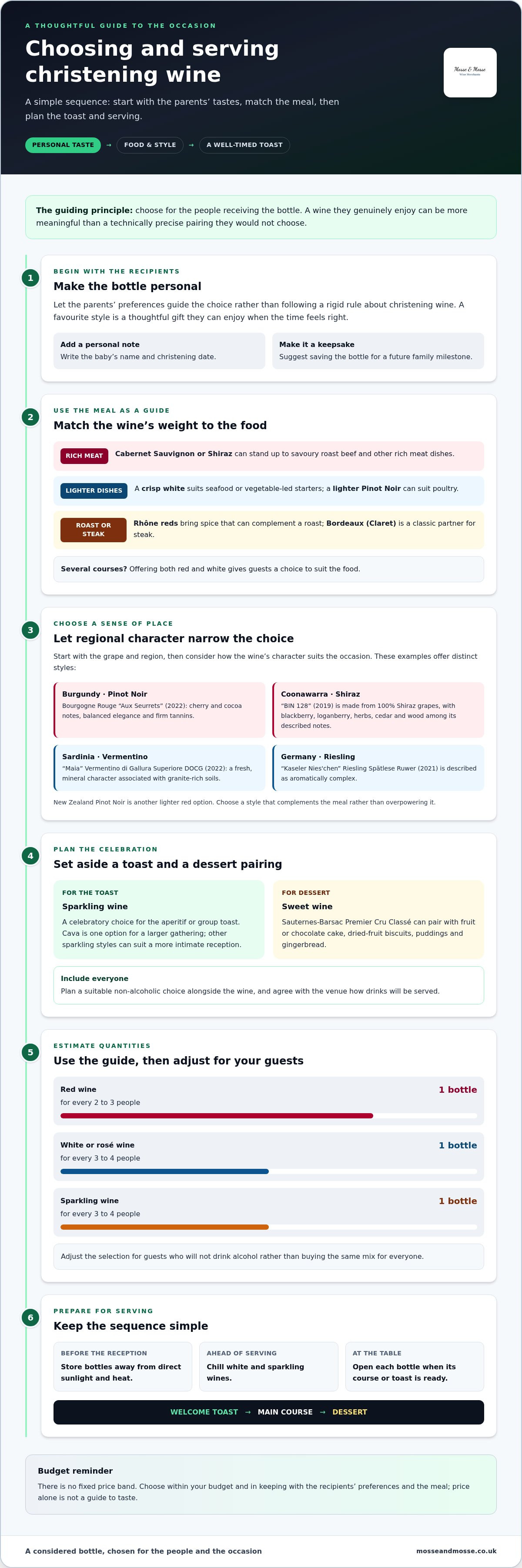
Start with the main course when choosing a red or white. Cabernet Sauvignon or Shiraz can stand up to the savoury flavours of roast beef and other rich meat dishes. A crisp white is a better fit for seafood or vegetable-led starters. If the menu includes several courses, offering both red and white gives guests a choice to suit the food.
For a festive meal, Rhône Valley reds bring spice that can complement a roast. Bordeaux red, also known as Claret, is a classic partner for steak, while lighter Pinot Noir can suit poultry. Consider the parents’ tastes as well as the menu: a wine they genuinely enjoy makes a more personal gift than a technically precise pairing they wouldn’t choose.
Sparkling wine sets a celebratory tone for the aperitif and works well for a group toast. Cava is one option for a larger gathering, while other sparkling styles can suit a more intimate reception. Match the bottle to the occasion, and plan a non-alcoholic option alongside it so everyone can join the toast.
For dessert, consider a sweet wine such as Sauternes-Barsac Premier Cru Classé. Its sweet style can pair with fruit or chocolate cake, dried-fruit biscuits, puddings and gingerbread. Match the wine to the dessert’s flavours: a rich pudding calls for a different balance from a light fruit cake. Dessert wine can also make a distinctive gift for parents who enjoy exploring regional styles.
There isn’t one wine style prescribed for a UK christening reception. Agree with the venue how drinks will be served, and include suitable non-alcoholic choices for guests who don’t drink.
A suitable budget depends on the recipients’ preferences and the meal, not a fixed price band. Choose a straightforward red for a roast or a fresh white for lighter dishes, then spend within your own budget and in keeping with the occasion.
For mid-range or premium gifts, choose by regional character. A bottle of Burgundy can appeal to someone who enjoys elegant Pinot Noir, whilst Bordeaux suits a recipient who favours structured red wines. The best choice is the one that matches their palate, not simply the highest-priced label.
For quantities, allow 1 bottle of red wine for every 2 to 3 people, or 1 bottle of white or rosé for every 3 to 4 people. Sparkling wine can also be estimated at 1 bottle for every 3 to 4 people. Adjust the selection for guests who won’t drink alcohol, rather than buying the same mix for everyone.
In the UK, christening wine is available from wine merchants and retailers; current prices depend on the region, producer and vintage. Choose a retailer with styles that suit the meal and recipient, then compare bottles within your budget without treating price alone as a guide to taste.
Before the reception, store bottles away from direct sunlight and heat. Chill white and sparkling wines ahead of serving, and open each bottle when its course or toast is ready. For example, serve sparkling wine for the welcome toast, then bring out red or white with the main course.
2. Wine varieties and regional origins
Start with the grape and region, then consider how the wine’s character suits the occasion. Burgundy, Bordeaux and the Rhône offer distinct French styles, while Sardinia and Germany provide fresh alternatives. A named appellation gives the gift a sense of place, and a vintage adds a detail the parents can remember.
For Pinot Noir with a Burgundian identity, Bourgogne Rouge “Aux Seurrets” is a concrete example. The 2022 wine comes from the Auxey-Duresses area and is described with cherry and cocoa notes, balanced elegance and firm tannins. That combination can appeal to recipients who enjoy a red with finesse as well as structure.
Shiraz offers a fuller, more expressive direction. The 2019 “BIN 128” Coonawarra Shiraz is made from 100% Shiraz grapes. Its described fruit notes include blackberry and loganberry, with hints of mulberry blossom, herbs, cedar and wood. This profile gives the gift a clear Australian regional identity.
For a lighter red, Pinot Noir can suit delicate vegetarian dishes as well as poultry. New Zealand produces fresher, lighter examples, offering an alternative to richer styles. This can work well if the parents enjoy red wine but usually choose something less weighty. The pairing should complement the meal, not overpower it.
White wine also carries a strong regional signature. “Maia” Vermentino di Gallura Superiore DOCG is a 2022 wine from Sardinia, where granite-rich soils contribute to its fresh, mineral character. It can make a distinctive choice for someone who enjoys bright, precise whites rather than overtly rich flavours.
Germany’s “Kaseler Nies'chen” Riesling Spätlese Ruwer, a 2021 wine, is described as aromatically complex. Riesling’s expressive profile makes this style a talking point at the table. For a christening meal with several courses, consider whether its character will sit comfortably alongside the dishes and the recipients’ usual preferences.
Sweet wines can make memorable gifts, too. Sauternes-Barsac Premier Cru Classé is a French sweet wine with a golden colour and aromas of citrus, exotic fruit, peach, flowers, vanilla and brioche. Its layered aromas offer more to discover than sweetness alone, making it a thoughtful choice for someone curious about classic regional wines.
Use a simple three-step pairing: identify the main ingredient, assess the dish’s intensity, then choose a wine with complementary weight. A delicate vegetable dish may suit fresher Pinot Noir or Vermentino, while a richer meal can welcome a more structured red. This makes the regional choice practical, not merely decorative.
A beautiful bottle can mark the occasion, but its origin can make the gift more personal. Choose Burgundy for Pinot Noir, Coonawarra for Shiraz, Sardinia for mineral Vermentino, or Ruwer for aromatic Riesling. A short note naming the region and vintage gives the parents a detail to revisit when they open it.
3. Choosing wine according to personal preference
Wine pairing is guidance, not a strict test, so start with what the parents enjoy. Think about bottles they’ve chosen before: do they favour fresh whites, classic reds or sparkling wine? Their usual preferences make a more personal present than choosing solely by tradition. If you’re unsure, consider the meal and choose a style that suits both the food and their tastes.
For someone who appreciates wine, red Burgundy can be a thoughtful gift. Pinot Noir from Burgundy offers a classic regional expression, while lighter Pinot Noir styles may suit recipients who prefer fresher reds. Consider what they already enjoy: a familiar grape from a distinctive region can be more appealing than an unfamiliar bottle chosen only for prestige.
A friend who enjoys exploring unusual wines may appreciate Savagnin. Its distinctive character can make it a conversation piece for someone curious about different grapes and regional styles. Add a short note explaining why you chose it, such as its grape or origin, for a personal detail to discover when they open the bottle.
For a reception with varied tastes, a balanced mixed case gives the hosts options. Combine reds and whites, then include sparkling wine if a toast is planned. A lighter red can suit guests who avoid fuller styles, while a crisp white offers a different direction. Build the selection around the food and the people attending.
Use a simple preference check before choosing: recall wines the recipient has praised, note the grapes or regions, then select a bottle with a related profile. If they often choose Bordeaux, a classic French red may feel familiar. If they favour Champagne at celebrations, sparkling wine continues that festive style. The aim is recognition, not guesswork.
When the parents have different tastes, choose for the person most likely to enjoy the gift, or select two contrasting styles. A red alongside a white gives them options for different meals. Sparkling wine can mark the christening, while a still wine may be saved for a later dinner. That personal timing can make the gesture feel especially considered.
Presentation can reinforce your choice without making the wine feel formal. Write the recipient’s name and the christening date on a card, then add a brief reason for your selection. Mention a shared meal, a favourite grape or a region they’ve enjoyed. That small explanation connects the bottle to its recipient, rather than leaving the label to tell the whole story.
Ultimately, let preference lead and pairing follow. A well-chosen Pinot Noir, a distinctive Savagnin or a bottle of Champagne can each suit a different recipient. Match the style to their palate, the celebration and the moment they may choose to open it.
4. What wine is suitable for a christening toast, including non-alcoholic options?
For a christening toast, choose sparkling wine with appealing aromas and a smooth finish. Champagne is a familiar celebratory choice, while South African Cap Classique offers a different regional style. Match the bottle to the atmosphere: a formal reception may suit classic fizz, while a relaxed family gathering can welcome something fresher and more informal.
Consider the timing of the toast before choosing the style. A welcome drink calls for something lively and easy to serve on its own. If the toast follows a meal, choose a sparkling wine that also works alongside dessert. For a varied menu, a Touraine white wine is suggested as a versatile match for 80% of baptism starters.
Make inclusion part of the drinks plan. Children, pregnant women and designated drivers can represent 20 to 30% of christening guests who don’t consume alcohol. Offer an appealing alternative, such as chilled sparkling grape juice or another alcohol-free celebratory drink. Serve it in a suitable glass, so everyone can join the toast without feeling singled out.
Ask the hosts which guests will be drinking, then plan the mix accordingly. Keep the alcoholic toast brief and offer the non-alcoholic choice at the same moment. This makes it easy for everyone to join in, including guests who prefer not to explain their choice. A clearly labelled drinks table can also help guests choose confidently.
When choosing the bottle, consider freshness, balance and how it will be served. Crisp sparkling wine can feel bright at an afternoon reception, while a richer style may suit a longer meal. Chill it ahead of time and open it just before the toast. Have glasses ready and pour modest servings so the host can raise a glass promptly.
Don’t assume every guest wants Champagne simply because the occasion is special. Cap Classique brings South African character to the choice, while sparkling white wine offers a straightforward alternative. Choose to suit the hosts’ preferences, the reception and the toast’s place in the day. Consider whether they favour citrus-led freshness or softer, rounder flavours.
For a personal touch, pair the toast with a short message about the baby and family. A handwritten card can name the christening date and explain why you chose that particular style. If you’re selecting a sparkling bottle for the occasion, get help choosing a celebratory wine that suits the moment.
Mosse and Mosse: Red Wine
Mosse and Mosse can help you choose a wine to suit the christening meal, the parents’ tastes and the mood of the toast. If you’re weighing a fresh white against celebratory fizz, consider which style the recipients are most likely to enjoy. The choice needn’t follow a rigid rule: matching their preferences makes the gift personal.
For a meal with varied dishes, white wine offers a different option from sparkling wine served for the toast. Mosse and Mosse’s curated selection includes both, helping you compare styles for the occasion. Consider whether you’re choosing a bottle for the parents to keep or wine to serve at the reception.
For help choosing a wine for the celebration, get in touch with Mosse and Mosse.
Choose a bottle that becomes part of the family story
A christening gift can be enjoyed on the day or kept for a future family moment. Let the parents’ preferences guide your choice, then make it personal with a note explaining why you selected the bottle. The best wine for a christening is the one that feels meaningful to its recipients, rather than one chosen simply to follow convention.
If you’re ready to choose, Mosse and Mosse offers red wine, white wine, and Champagne and sparkling wines for different tastes and occasions. A considered bottle can mark the celebration while leaving the parents free to decide when to open it.
Contact Mosse and Mosse to discuss a wine for the occasion, and choose a gift that feels personal to the family.
Frequently Asked Questions
Baptism: Which Wine to Choose?
For the best wine for a christening, choose according to the parents’ tastes and the reception menu. Burgundy Pinot Noir suits someone who enjoys elegant reds, while dry Riesling may appeal to a white-wine drinker. If you don’t know their preferences, a mixed selection gives them options for different occasions. Include a note explaining your choice to make the gift personal.
What characteristics should I look for in the wine profiles?
Look for appealing aromas and a smooth finish, then consider balance and intensity. Fragrant Riesling can suit someone drawn to aromatic whites, while structured Bordeaux may please a fan of fuller reds. Sweetness matters, too: dessert wine makes a different impression from dry sparkling wine. Think about the recipient’s familiar favourites and choose a profile that feels inviting rather than challenging.
What kind of wine case is recommended to celebrate the arrival of a new baby?
A mixed case gives new parents a choice of styles for future meals and celebrations. Mosse and Mosse’s The Sunday Six is a 6 × 75cl case priced at £89.95, with Picpoul de Pinet, Ochoa Blanco, Solas Syrah Viognier, Côtes du Rhône Les Forots, Château du Moulin Rouge and St Sidoine Rosé. Its wines come from France and Spain. Gift-givers in Ipswich, Norwich, Bury St Edmunds, Sudbury, Stowmarket, Newmarket, Thetford, Diss, Attleborough, Southwold, Aldeburgh, Framlingham, Woodbridge, Long Stratton and Saxmundham can consider this option.
Why is a bottle of wine considered a meaningful gift for new parenthood?
A bottle can mark a family occasion without being opened at the reception. The parents might save it for a future dinner or another milestone, making it part of a memory beyond the christening day. Add a card with the child’s name and a personal message. The note connects the bottle to the family, even if they choose to enjoy it much later.
What wines are traditionally served at a christening in the UK?
There isn’t one wine that every UK christening traditionally serves. Families usually choose according to the reception menu, their own tastes and the style of gathering. Sparkling wine may suit a toast, while still red or white can accompany the meal. Hosts can also offer non-alcoholic drinks so guests who don’t drink wine have a suitable choice.
What are the best sparkling wines for a UK christening?
The best sparkling choice depends on the hosts’ tastes and the tone of the reception. Champagne is a classic option; Crémant de Loire and Crémant de Bourgogne offer French alternatives, while Exton Park RB32 Brut NV comes from Hampshire. For a different regional style, South African Cap Classique can suit a celebratory toast. Consider the food and serve a non-alcoholic sparkling option alongside the wine.


