

The best dessert wine for chocolate is usually sweet enough to match it, rather than a dry red that may taste bitter beside it. Ruby or Tawny Port is a natural choice with dark chocolate, while sweet sparkling wine or Moscato can suit milk chocolate. White chocolate often pairs well with late-harvest dessert wine or sparkling wine.
Choosing a bottle can feel tricky: chocolate ranges from creamy and sweet to intensely cocoa-rich, and wines vary in sweetness, fruit and acidity. The key is balance. Match the wine’s sweetness and weight to the chocolate, then use flavours such as berries, caramel or nuts to refine your choice.
Here, you’ll find pairing ideas for red, sparkling and dessert wines, practical tasting notes, and a guide to what shapes prices in the UK. We’ll also look at how to avoid bitter clashes and choose a good match for chocolate desserts and filled chocolates.
Key Takeaways
- Match the wine’s sweetness to the chocolate: a wine that’s less sweet can taste sharp or bitter beside it.
- For white chocolate, explore sweet late-harvest wines or sparkling styles, then compare how their acidity balances its creamy richness.
- Port and other fortified wines are strong options for dark chocolate; fruit-forward reds can work when the chocolate or dessert is less sugary.
- Fruit, nuts, caramel and other fillings can guide your choice towards wines with complementary fruit, toasted or nutty notes.
- Tasting notes help explain a wine’s character, while style, origin and ageing all influence what you’ll pay in the UK.
1. What red, sparkling and dessert wines pair best with chocolate and sweets?
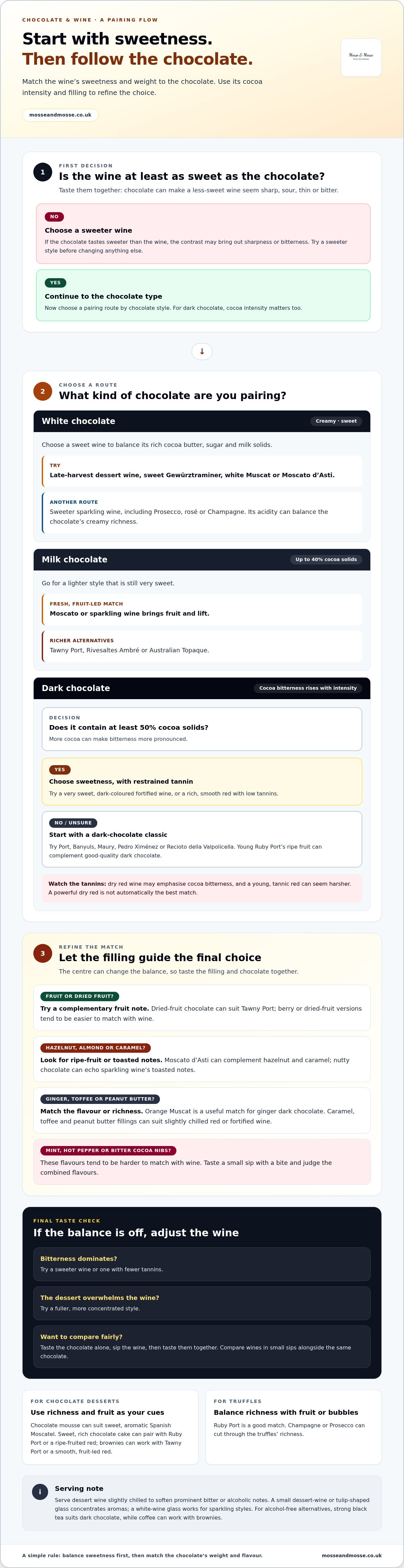
Start with sweetness: the wine should be at least as sweet as the chocolate, or the chocolate can make it taste sharp or bitter. With white chocolate, try late-harvest dessert wine, sweet Gewürztraminer, white Muscat or Moscato d’Asti. Sweeter sparkling wine, including Prosecco, rosé or Champagne, can also balance white chocolate’s rich cocoa butter, sugar and milk solids.
Milk chocolate, which can contain up to 40% cocoa solids, suits lighter but still very sweet wines. Moscato and sparkling wine bring fruit and lift; Tawny Port, Rivesaltes Ambré or Australian Topaque offer richer alternatives. With dark chocolate, try Port, Banyuls, Maury, Pedro Ximénez or Recioto della Valpolicella. Young Ruby Port’s ripe fruit can complement good-quality dark chocolate, whilst dry red wine may emphasise cocoa bitterness.
Spanish Moscatel makes a sweet, aromatic match for chocolate mousse, while sparkling Italian red brings juicy red-berry flavours and delicate bubbles. A rich dark chocolate torte may pair well with a full-bodied red wine with ripe fruit flavours. Choose enough body to match the torte’s intensity without letting either one dominate.
Let the filling guide your pairing. Chocolate with dried fruit or berries tends to be easier to match with wine than versions with mint, hot pepper or bitter cocoa nibs. Orange Muscat is a useful match for ginger dark chocolate; Moscato d’Asti can complement hazelnut and caramel. Caramel, toffee and peanut butter fillings also suit slightly chilled red or fortified wine, while nutty chocolate can echo sparkling wine’s toasted notes.
Pair sweet, rich chocolate cake with Ruby Port or a ripe-fruited red; brownies can work with Tawny Port or a smooth, fruit-led red. Chocolate truffles pair well with Ruby Port, while Champagne or Prosecco can cut through their richness. Treat these as starting points: taste a small sip with a bite, then try a sweeter or fuller wine if the chocolate overwhelms it.
In the UK, look for styles such as Moscato d’Asti, Tawny or Ruby Port, late-harvest Riesling and sparkling Brachetto d’Acqui. These offer different pairing routes, from fresh bubbles to raisined, fortified richness.
Serve dessert wine slightly chilled to soften prominent bitter or alcoholic notes. A small dessert-wine or tulip-shaped glass concentrates the aromas; a white-wine glass works for sparkling styles. For alcohol-free alternatives, try strong black tea with dark chocolate or coffee with brownies. Their roasted flavours provide contrast without wine.
2. The sweetness balance between wine and dessert
Start with a simple test: the wine should be as sweet as, or slightly sweeter than, the dessert. If the chocolate tastes sweeter, it can make the wine seem sour, thin or bitter by contrast. Sweetness also lingers on the palate, so a wine that seemed balanced on its own may taste sharper after a bite. Sip the wine with the chocolate and judge the combined flavours.
Chocolate’s cocoa solids bring bitterness, which grows more pronounced as cocoa content rises. A dark chocolate bar containing at least 50% cocoa solids can suit very sweet, dark-coloured fortified wine, or a rich, smooth red with low tannins. Tannins create a drying sensation; together with cocoa’s bitterness, they can make a young, tannic red seem harsher. Avoid assuming that a powerful dry red will automatically stand up to intense chocolate.
Consider the whole dessert, not just its chocolate. Sweetened chocolate mousse softens cocoa’s bitter edge, so it can pair with a fruit-led wine that has more acidity. Unsweetened dark chocolate, by contrast, can magnify acidity and tannin. Caramel adds sweetness and toasted flavours, so choose a wine that matches its richness rather than relying on acidity alone. A small tasting portion makes the contrast easier to judge.
Fortified sweet wines work because their concentrated sweetness and flavour can meet chocolate’s intensity. Port, Sherry and Madeira are classic options, but their characters differ: fruity Port offers a rounded match, while Pedro Ximénez Sherry is deeply sweet. Is Port or Pedro Ximénez Sherry better with chocolate? Port suits a fruitier, more rounded pairing; Pedro Ximénez is a better fit when you want pronounced sweetness. Let the chocolate’s intensity guide you.
Residual sugar offers another clue, although it isn’t the only measure of how sweet a wine tastes. Sweet wine is described as having around 35–40 g/l of residual sugar at bottling. Acidity, alcohol and aroma also shape the impression: bright acidity can refresh a rich dessert, whilst ripe fruit aromas can make a pairing feel sweeter. Compare wines in small sips alongside the same chocolate, so sweetness and texture are easier to assess.
Use this tasting sequence: try the chocolate alone, sip the wine, then taste them together. If bitterness dominates, choose a sweeter wine or one with fewer tannins. If the dessert overwhelms the wine, try a fuller, more concentrated style. With dark chocolate, these adjustments often matter more than choosing red, white or fortified wine by category alone.
3. Dessert wines with fruit- or nut-filled chocolate
Fruit and nuts give chocolate flavours for a dessert wine to echo. With dried-fruit chocolate, try a sweet fortified wine such as Tawny Port; with hazelnut or almond, look for ripe-fruit or toasted notes in the wine. Pistachio and almonds can also work with dessert wines, especially when the chocolate itself isn’t intensely bitter. Taste the filling and chocolate together before choosing, since the centre can change the balance.
For fruit tarts and berry desserts, choose a wine that complements their freshness without losing sweetness. The 2020 “Rosis” Moscato Rosa Alto Adige DOC is suggested with fruit tarts or berry desserts. Brachetto d’Acqui “Gatiè” DOCG, identified as the 2021 vintage, suits fruit and chocolate. Both point towards aromatic, fruit-led styles when berries meet cocoa.
Late-harvest and botrytised wines offer another option. Botrytis cinerea, known as noble rot, concentrates grape juice as affected grapes dry. Sauternes and Tokaji are examples of botrytised dessert wines that can pair with chocolate. Their rich, concentrated character suits fruit-filled pieces, though the chocolate’s sweetness still matters. A delicate fruit filling may be overwhelmed by a particularly intense wine, so take a small sip with each bite.
Moscato d’Asti and Passito di Pantelleria are suggested with spoon desserts and fried desserts. Try them with a fruit-led spoon dessert or fried pastries, where their sweetness can match the richer texture. For chocolate with hazelnut or caramel, Moscato d’Asti is a useful pairing to explore. Pour a small taste first, then notice whether the wine’s fruit remains clear after the dessert.
For a vintage-led fortified pairing, consider Domaine Mas Amiel alongside Maury, a sweet wine style recommended with dark chocolate. Maury’s rich, concentrated profile can complement cocoa and dried-fruit flavours; a vintage bottling also brings the wine’s age and development into the experience. Match the chocolate’s intensity to the wine, and remember that vintage and style shape the aromas and texture in the glass.
For filled chocolates, smell the wine, taste the centre, then take a sip. Notice whether fruit, nut or caramel comes forward, or whether cocoa bitterness dominates. With berry-filled chocolate, compare a fruit-forward Moscato Rosa or Brachetto; with dried fruit, try fortified Maury or Tawny Port. Tasting them side by side helps you find a match for the filling, not just the chocolate shell.
4. Dessert wine tasting notes and prices
Use tasting notes to judge how a dessert wine might meet chocolate’s texture and intensity. Aged Port can show sultana, prune, roasted coffee and cocoa aromas, making it a classic direction for dark chocolate. With white chocolate, compare sweeter Muscat styles or a fresh dessert wine, so its fruit and acidity complement the creamy sweetness.
Muscat-based wines often bring floral, grapey and citrus notes, while Madeira can lean towards toasted, nutty flavours. The Society’s Full Rich Madeira, 3 Years Old, is one example of the style; Henriques and Henriques Malvasia, 10 Years Old, is another. Pedro Ximénez from Montilla-Moriles is exceptionally sweet and is best enjoyed in small sips, particularly beside an intense chocolate dessert.
For a red option, Bleasdale Langhorne Creek Sparkling Shiraz combines red-wine depth with bubbles. Its alcohol level is 13.5% vol, while Maydie Tannat 2018 is 16.5% vol. These examples show why checking the label matters: sparkling reds, fortified wines and sweet still wines differ in style, strength and serving character.
UK prices for dessert wines vary with origin, production method, ageing and bottle size. A 50cl bottle, such as Samos Anthemis 2019 or Henriques and Henriques Malvasia, holds less wine than a standard 75cl bottle, so compare like with like. Older wines can involve longer ageing, while late-harvest and fortified styles reflect different production choices. These factors explain why prices span a broad range without one figure representing every style.
Compare examples by category rather than treating all dessert wines as interchangeable. The 2014 Botrys Moscadello di Montalcino is a late-harvest wine; the 2018 Montefalco di Sagrantino Passito is recommended with milk chocolate. Klein Constantia Vin de Constance Natural Sweet Wine, Constantia 2022, offers a further contrast. Vintage, grape variety and winemaking shape each bottle’s aromas and texture.
To assess value, first decide what the pairing needs: intense sweetness for dark chocolate, fruit for truffles, or freshness alongside creamy white chocolate. Then compare bottle volume, style and tasting notes together. A higher price alone doesn’t tell you whether a wine will suit the dessert. For a personal tasting focused on wine styles and pairings, get in touch to discuss a wine tasting.
Mosse and Mosse: Red Wine
Mosse and Mosse can help you explore red wine and sparkling styles for chocolate pairings. With a dark chocolate torte, a ripe, fruit-led red may complement its intensity; with truffles, sparkling wine offers a fresher contrast. The right choice depends on the chocolate’s sweetness and the wine’s fruit, body and tannins. Use the pairing principles above to guide your selection.
For a different direction, consider white wine with white chocolate, or rosé when the dessert features fruit flavours. Mosse and Mosse’s selection lets you compare styles and choose a bottle to suit your table. For advice on choosing a wine for your chocolate pairing, contact Mosse and Mosse or visit mosseandmosse.co.uk.
Make your next chocolate pairing your own
Make your favourite chocolate the starting point for a tasting, rather than choosing wine by label alone. The best dessert wine for chocolate depends on the chocolate’s character and the occasion, so compare contrasting pieces and note which flavours you want to bring forward. Your best dessert wine for chocolate may differ between a relaxed after-dinner treat and a celebration.
Mosse and Mosse offers red wine, white wine, and Champagne and sparkling wines, giving you different styles to explore alongside chocolate. If you’d like a hand choosing a bottle or discussing an in-person wine tasting, contact Mosse and Mosse today. Enjoy experimenting and discovering a pairing that feels just right for your table.
Frequently Asked Questions
What red, sparkling and dessert wines pair best with chocolate and sweets?
For a varied dessert board, serve a sweet fortified wine, a sparkling red and a fruit-forward still red as contrasting options. Ruby Port brings ripe fruit to chocolate truffles; sparkling Brachetto d’Acqui suits chocolate-covered strawberries. With a lightly sweetened chocolate pudding, try a red with generous fruit rather than firm tannins. Choose according to the dessert’s sweetness and richness, then taste the wine and dessert together.
Which wine should you drink with chocolate?
Choose by the chocolate’s flavour and texture, not simply by whether the wine is red or white. Try a small glass of Tawny Port with caramel-filled chocolate, then compare it with a fruity sparkling red. If you’re serving several chocolates, pour small tastes and move from lighter, creamier pieces to more intense cocoa. This order helps keep delicate flavours distinct.
Which dessert wines pair best with chocolate?
Port, Muscat-based dessert wines, Madeira and Pedro Ximénez offer different pairing routes. Muscat can bring floral or grapey aromas, while Madeira may contribute toasted notes. Choose according to the chocolate’s accompanying flavours: fruit-filled pieces may suit aromatic wines, while roasted or caramel notes can complement a more developed fortified style. A small pour is useful because concentrated dessert wines can be powerful beside a modest serving.
What wine styles pair best with dark, milk and white chocolate?
With dark chocolate, try Port or a rich red with ripe fruit; with milk chocolate, compare Moscato or a sweeter sparkling style. White chocolate’s creamy sweetness can suit late-harvest wines or sparkling wine. Adjust for the recipe: salted milk chocolate brings a savoury edge, while dark chocolate with berries may welcome more freshness. Pair the wine with the finished dessert, not just the chocolate percentage.
What are the best-value dessert wines for chocolate in the UK, and how much do they cost?
Value depends on bottle size, origin, ageing and winemaking, so compare wines in the same format and style. A younger sweet wine and a long-aged fortified wine reflect different production choices, not like-for-like alternatives. For a chocolate tasting, serve small measures and consider whether one bottle can suit several desserts. That practical fit can matter as much as the shelf price.
Should wine be sweeter than the chocolate for a good pairing?
Usually, yes: aim for a wine that tastes at least as sweet as the chocolate. A dry red beside a sweet chocolate brownie, for instance, can seem austere, especially if it has firm tannins. A fruit-led sweet wine is often a better starting point. Taste a bite, then sip the wine; if it seems sour or thin, choose a sweeter style.


