
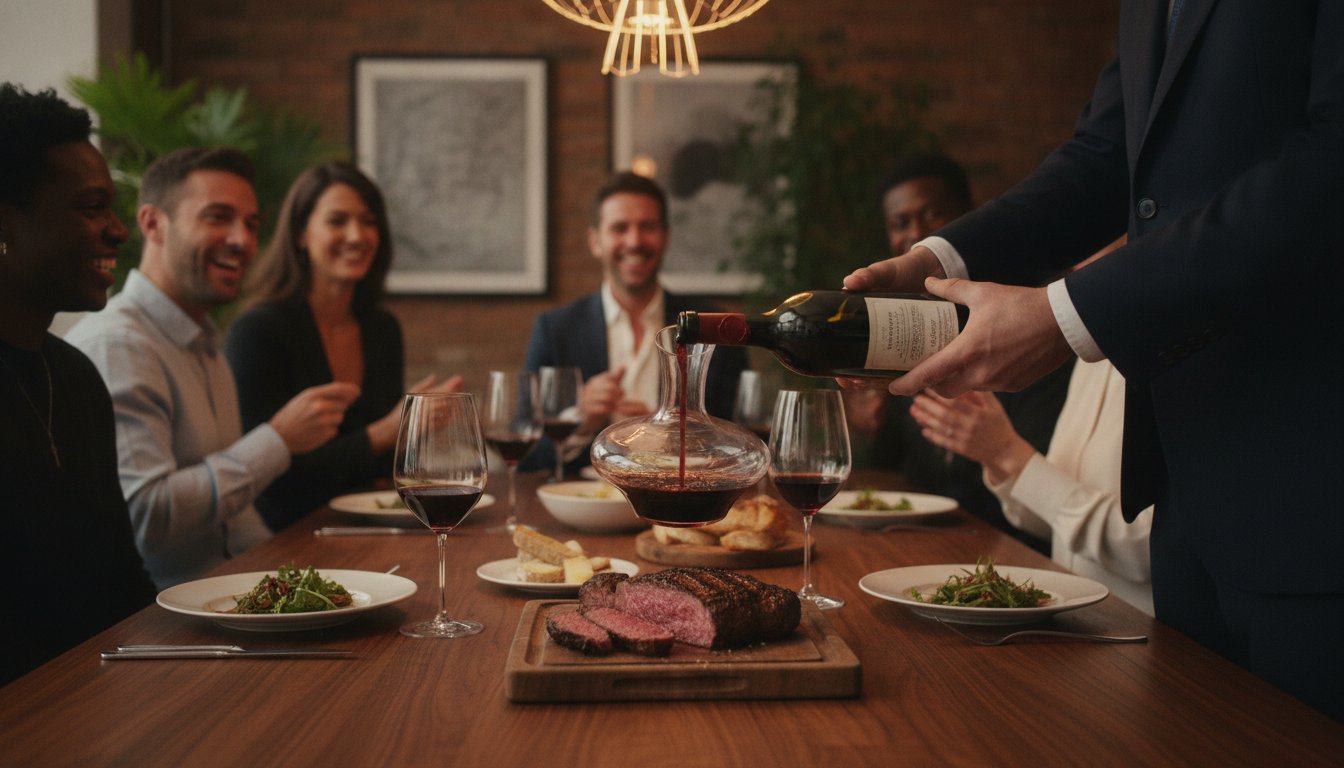
Most hosts believe the meat dictates the bottle, but a truly memorable dinner party is actually a narrative where the wine serves as the lead protagonist. It's perfectly natural to feel a flicker of anxiety when standing before a wall of complex regional classifications, worrying if your chosen red will be too acidic or if you've accidentally served it at the wrong temperature. We've all been there, second-guessing whether a bold Bordeaux or a silky Burgundy will actually provide the perfect wine pairing for steak or if it will simply overwhelm the palate.
This guide is designed to sweep away that confusion so you can host your next evening with genuine confidence and flair. I've spent years curating quality vintages and believe that the right bottle should do more than just match the food; it should spark conversation amongst your guests. You'll learn how to explore traditional European regions, master the delicate art of decanting, and create a clear plan for an evening that feels both sophisticated and deeply personal. By the time your guests arrive, you'll be ready to pour with the expertise and warmth of a true connoisseur.
Key Takeaways
- Learn why the best wine for a dinner party balances bold character with accessibility to ensure every guest feels included in the experience.
- Understand the distinct roles of Burgundy and Bordeaux as the two pillars of the classic British dinner table.
- Master the art of wine pairing for steak by matching specific cuts with the right tannins and structure for a seamless dining experience.
- Discover the practical secrets of temperature control and decanting that prevent even the finest reds from being served too warm.
- Explore how large formats and curated mixed cases can remove the guesswork from hosting whilst adding a touch of theatre to the evening.
Mastering the Art: Why Wine Pairing for Steak Defines the Evening
A dinner party wine acts as the essential bridge between the plate and the flow of conversation. When you host, your choice of wine pairing for steak isn't just about matching fat to tannin; it's about setting a mood that evolves as the evening unfolds. The best selections balance a bold, individual character with an accessibility that ensures every guest feels welcome. You might find yourself debating between a safe classic and a more adventurous choice. Pouring a legendary Bordeaux offers a sense of security and tradition, whilst surprising your guests with a lesser-known appellation can ignite curiosity and become a talking point in itself. Understanding the art of wine pairing allows you to guide your guests through a narrative, starting with light-hearted excitement and moving towards the deep, savoury satisfaction of the main course. It's about creating a sequence that builds anticipation rather than overwhelming the senses too early.
The Arrival: Setting the Tone with Fizz
A bottle of Champagne remains the ultimate ice-breaker for any British dinner party. Its crisp acidity and fine bubbles instantly lift the spirit and signal that the evening has truly begun. Lately, I've noticed more connoisseurs turning to high-quality English sparkling wines, which offer a fascinating local alternative with similar complexity and a bright, zesty profile. When you serve small nibbles like salted almonds, olives, or warm gougères, the sharp acidity in these bubbles cleanses the palate. This preparation is vital, as it clears the way for the richer, more intense textures of the wine pairing for steak that will eventually take centre stage.
The Crowd-Pleaser Myth: Quality Over Quantity
It's a common mistake to think you need an endless supply of "safe" bottles to please everyone. In my experience, investing in one exceptional bottle of white burgundy wine is far more rewarding than serving three mediocre ones. These wines serve as brilliant bridge bottles because they possess enough weight to complement fish starters or poultry courses without the divisive impact of heavy oak. Overly oaked whites can often clash with delicate first courses, whereas a refined Chardonnay from the Côte d'Or provides a sophisticated transition. By choosing quality over volume, you show your guests that their enjoyment is your priority, keeping their palates fresh and ready for their favourite main event.
The Perfect Match: Pairing Burgundy and Bordeaux with Your Favourite Cuts
Whilst many hosts reach for a New World Malbec by default, the classic British dinner table has always been anchored by the two pillars of French viticulture: Burgundy and Bordeaux. Finding the ultimate wine pairing for steak often comes down to a choice between these two legendary regions. Selecting a burgundy red wine offers a level of versatility that's hard to beat when hosting guests with diverse palates. Its lighter body and soaring aromatics provide an elegant counterpoint to the meal, whereas Bordeaux brings the structure and gravitas required for serious evening discussions. I've always found that sharing the story of a wine's terroir, the unique heritage of the vineyard, is the perfect way to engage guests whilst you pour. It transforms a simple drink into a shared experience.
Red Burgundy: Elegance and Versatility for Leaner Cuts
For leaner cuts like Fillet or Sirloin, the Côte d’Or is my first port of call for reliable, world-class quality. Pinot Noir from this region possesses a delicate earthiness that pairs beautifully with mushroom sauces or lighter steak preparations. It's about finesse rather than brute force. The aromatics of a fine Burgundy can fill a room, enhancing the atmosphere before the first sip is even taken. This makes it an exceptional wine pairing for steak when you want the meat's subtle flavours to shine through. Despite broader market shifts, Burgundy vineyard prices rose by 3.9% in 2025, which really underlines the enduring prestige and value connoisseurs place on these bottles.
Bordeaux: Structure and Tradition for Richer Meats
When your menu features a marbled Ribeye or a substantial T-bone, you need the architectural tannins of a classic Bordeaux. The choice between Cabernet-led and Merlot-led wines depends on the texture you desire for your evening. Cabernet offers more grip and structure, whilst Merlot provides a plusher, more velvet-like feel. I consider Medoc and Haut-Medoc the gold standard for formal steak dinners. Choosing a slightly older vintage adds a layer of cedar and leather sophistication that a young wine simply can't match. If you're struggling to decide on the right bottle for your guest list, do reach out to us for a tailored suggestion.

The Host's Ritual: Decanting, Temperature, and Glassware for the Perfect Pour
The host's ritual is where the true connoisseur separates themselves from the casual drinker. You've carefully selected the perfect wine pairing for steak, but the final execution lies in how that liquid meets the glass. Planning quantities is your first practical hurdle. I always suggest the half-bottle per person rule as a baseline, but you should always have a contingency bottle of a similar style ready in the wings. There is nothing worse than the conversation peaking just as the last drop is poured. The shape of your glassware also plays a vital role; a wide bowl allows the complex aromatics of a Cabernet or Pinot Noir to breathe, directing the bouquet towards your nose rather than letting it dissipate into the room.
Decanting 101: Red vs. White
Decanting is both a science and a piece of theatre. A young, tannic Bordeaux thrives on aeration, which softens its structural edges before it meets the rich fats of your steak. Conversely, a delicate old Burgundy is far more fragile. Decanting it too early might cause those ethereal secondary flavours to fade before your guests even take a seat. Surprisingly, some full-bodied white wines, particularly those with significant age, benefit from a quick decant to open up their hidden layers. Beyond the chemistry, a crystal decanter serves as a stunning centrepiece, signalling to your guests that the wine is a guest of honour at your table.
The Importance of Serving Temperature
Most red wines in British homes are served far too warm. Room temperature in a modern, centrally heated house is often 21 degrees, which is several degrees higher than the ideal 15 to 18 degrees for full-bodied reds. I swear by the 20-minute rule: put your reds in the fridge for 20 minutes before serving, and take your whites out 20 minutes before pouring. If a high-alcohol red gets too warm, it begins to feel flabby and unrefined, losing the precision needed for a successful wine pairing for steak. To maintain that perfect chill throughout the evening, a marble cooler or a discreet ice bucket is an essential companion. If you're unsure about the specific needs of a particular vintage, ask us for advice on the perfect pour.
Large Formats and Bespoke Selections: The Mosse and Mosse Approach to Entertaining
Entertaining shouldn't feel like a logistical chore. At Mosse and Mosse, we believe the best wine pairing for steak is one that arrives with a personal story and a genuine sense of occasion. Whilst large supermarkets focus on high-volume labels and generic discounts, we pride ourselves on our status as an independent merchant. We spend our time hunting down the gems that offer true character and heritage. Our approach to your evening is about removing the guesswork through carefully curated mixed cases and our bespoke Wedding and Party Wine service. We want you to feel as though you have a professional partner in your cellar, ready to provide a specific recommendation that suits your unique menu and guest list.
Magnums: The Ultimate Dinner Party Centrepiece
There is nothing quite like the theatre of placing a Magnum on the table as the steak is served. Choosing Magnums and Larger Formats isn't just about the visual impact, though that is certainly impressive for your guests. Wine actually stays fresher and develops more complex, nuanced flavours over time in these larger vessels. This is because the ratio of air to liquid is lower than in a standard bottle, slowing the ageing process beautifully. Practically speaking, one Magnum serves roughly 10 to 12 glasses. This makes it the ideal volume for a single course amongst a group of six to eight friends, ensuring no one is left with an empty glass during the height of the conversation.
Seasonal Curation and Concluding the Meal
Our cases are never static. We organise our selections to reflect the changing seasons and the specific accompaniments you might serve alongside your meat. A winter ribeye with rich truffle mash demands a different structure than a summer sirloin served with a vibrant chimichurri. By focusing on these details, we ensure your wine pairing for steak feels intentional and harmonised. As the main course concludes, the narrative of the evening should continue. Transitioning to a cheese course provides the perfect opportunity to explore different Types of Port. Whether you prefer a nutty tawny or a structured late-bottled vintage, it provides a sophisticated finish to the night. I always encourage our hosts to pick up the phone; a short chat about your plans can transform a simple dinner into an unforgettable event.
Host Your Next Evening with Connoisseur Confidence
A successful dinner party isn't just about the menu. It's about the atmosphere you create. We've explored how the right wine pairing for steak acts as a bridge between your guests, whether you're pouring a structured Bordeaux or an elegant Burgundy. You've seen how simple rituals like decanting and temperature control can elevate even a modest gathering into something truly sophisticated. By choosing quality over quantity and perhaps adding the theatre of a magnum, you ensure your evening is remembered long after the last glass is cleared, much like the vibrant Mediterranean atmosphere cultivated at Venezia Exeter.
As independent specialists in Burgundy and Bordeaux, our family-led team is here to provide the personalised service you won't find at larger retailers. We take pride in finding exceptional bottles and offer national UK delivery on all our curated cases to make your hosting duties effortless. Contact our experts to curate the perfect wine selection for your next dinner party. We look forward to helping you select wines that don't just match the meat, but spark genuine joy and conversation amongst your friends.
Frequently Asked Questions
How many bottles of wine should I buy for a dinner party of six?
You should plan for three to four bottles for a party of six. This follows the standard half-bottle per person rule, which provides roughly three generous glasses each. I always suggest having a fourth bottle as a contingency; it is far better to have one left over for your own cellar than to run dry whilst the conversation is still peaking.
Should I ask my guests what they prefer, or just choose myself?
It is usually best to choose the wine yourself to ensure it complements your specific menu. As the host, you are curating a narrative for the evening, and a well-considered wine pairing for steak shows your guests that you've put genuine thought into their experience. A quick check for any strong dislikes or allergies amongst your guests beforehand is all you need to ensure everyone is comfortable.
What is the best all-rounder red wine that will not clash with most steak cuts?
A medium-bodied red from the Côte Chalonnaise is an exceptional all-rounder that won't clash with different cuts. These wines possess enough acidity to cut through fat without the aggressive tannins that can sometimes overwhelm leaner preparations. It is a sophisticated choice that bridges the gap between the subtle elegance of a Fillet and the robust richness of a Ribeye.
Can I serve rosé at a dinner party, or is it too informal?
You can certainly serve a high-quality dry rosé, particularly as an aperitif or with lighter starters. Whilst it might not be the primary wine pairing for steak, a structured rosé adds a refreshing, elegant touch to a summer dinner party. It isn't too informal as long as the quality of the producer and the vintage reflects the standard of the rest of your meal.
How long can I keep an opened bottle of wine if we don't finish it?
Most red wines will stay fresh for three to five days if you recork them tightly and store them in the fridge. The cold slows down the oxidation process that eventually dulls the flavours. For older, more delicate vintages from Burgundy or Bordeaux, I recommend finishing them within 24 hours, as their ethereal aromatics are much more sensitive to oxygen exposure once the bottle is opened.
Is it okay to serve a screw-cap wine at a formal dinner?
It's perfectly acceptable to serve a screw-cap wine at a formal dinner, as many premium producers use them to guarantee freshness and eliminate the risk of cork taint. The quality of the liquid inside is what truly matters to a connoisseur. If you find the aesthetic of a screw-cap bothersome, simply decant the wine before your guests arrive to maintain a traditional feel for your table setting.


