
You might be surprised to learn that the world's most prestigious Sauvignon Blanc rarely features the name of the grape on its bottle. It's perfectly natural to feel a little lost amongst the complexities of French labelling laws, or to wonder if a bottle of sancerre wine truly justifies its premium price when compared to the mass-market options found in every local shop. We've all stood in front of a wine rack feeling overwhelmed by choice, unsure if we're paying for the heritage or just a famous name.
I've spent my career as a curator of quality, seeking out wines that offer more than just a brand. Sancerre is a liquid map of the Loire's ancient seabed, and its elegance is something I'm deeply passionate about sharing. By the end of this guide, you'll understand how the region's unique terroir shapes every sip and how to confidently select a bottle that will elevate your next dinner party. We'll look at the heritage of the AOC, the flavour profiles that define it, and the best ways to pair it with food correctly.
Key Takeaways
- Discover why Sancerre’s identity as an Appellation d’Origine Contrôlée (AOC) is rooted in its historic geography rather than simply the Sauvignon Blanc grape.
- Understand how the ancient "seabed" soils of flint and limestone create the unmatched mineral tension that defines world-class sancerre wine.
- Explore the elegant world of Sancerre Rouge and Rosé, produced from Pinot Noir to provide a lighter, sophisticated alternative for your cellar.
- Learn how to confidently select bottles from independent vignerons to ensure your choice reflects true artisanal quality for any special occasion.
- Gain practical advice on the perfect serving window to ensure you enjoy these expressive wines whilst their fruit and acidity are at their peak.
What is Sancerre Wine? The Crown Jewel of the Loire Valley
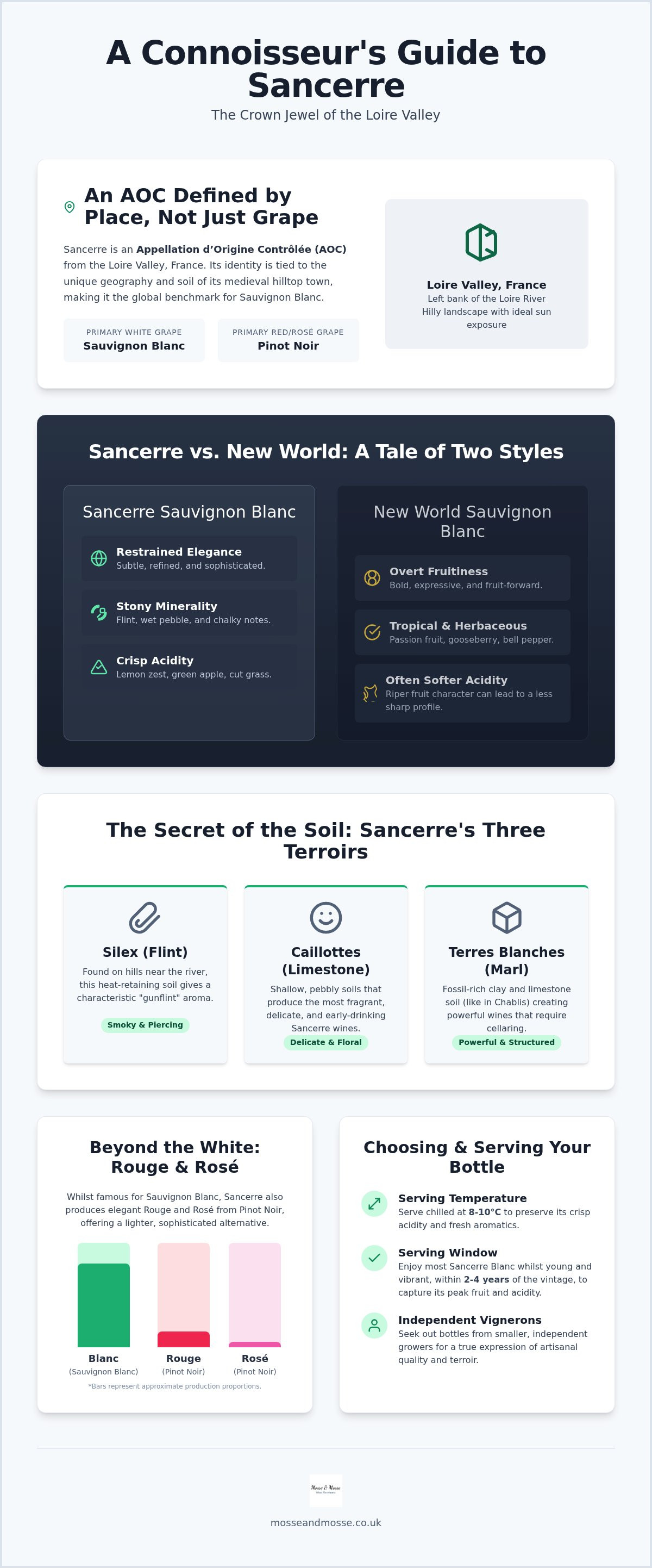
Sancerre isn't just a bottle of white wine; it's a statement of heritage. Situated in the eastern reaches of the Loire Valley, Sancerre is an Appellation d’Origine Contrôlée (AOC) that has become the global benchmark for Sauvignon Blanc. Whilst the grape is famous, the soul of Sancerre wine is inextricably linked to the medieval hilltop town that shares its name. It's a place where history and geology collide to create something truly special.
Interestingly, the region wasn't always a bastion of white wine. Before the devastating phylloxera outbreak in the late 19th century, the hillsides were dominated by Pinot Noir. When the time came to replant, Sauvignon Blanc proved exceptionally well-suited to the local soils and climate. This shift transformed sancerre wine into the "gold standard" for the variety, offering a level of sophistication that few other regions can match.
This sophistication extends to the region's hospitality; for those exploring the wider region, Domaine Plessis Gallu offers luxury 5-star gîtes that provide an elegant base in the heart of the Loire Valley.
The Geography of the Loire’s Left Bank
The vineyards of Sancerre sit on the left bank of the Loire River, directly across the water from its neighbour, Pouilly-Fumé. This hilly landscape is vital. The undulating slopes provide various aspects, allowing growers to find the perfect sun exposure to ripen grapes in what can be a challenging continental climate. These cold winters and warm summers are the secret behind the wine's characteristic high acidity and vibrant freshness. It's this specific environment that ensures the grapes never lose their zingy personality.
When you're enjoying that zingy freshness on a bright day, staying cool and comfortable is part of the experience; iverose offers casual summer apparel that perfectly matches the relaxed, outdoor lifestyle often associated with these crisp wines.
The Sauvignon Blanc Connection
What sets Sancerre apart from New World Sauvignon Blanc is its restrained elegance. You won't find the overt tropical fruitiness of a Marlborough bottle here. Instead, expect a refined palette of lemon zest, cut grass, and an intense, stony minerality. It's a profile that makes it a superb wedding and party wine, as it pairs beautifully with a wide range of dishes without overpowering them.
I've always found that the best examples of this region offer a tension between fruit and earth that's hard to find elsewhere. Sancerre is the purest expression of the Sauvignon Blanc grape, where the fruit steps back to let the voice of the earth speak. It's this commitment to terroir that keeps connoisseurs coming back vintage after vintage.
The Secret of the Soil: Flint, Limestone, and Terroir
Terroir is more than just a buzzword; it's the very heartbeat of sancerre wine. When you taste a glass, you're experiencing a liquid history that dates back 150 million years. During the Jurassic period, this region was a shallow tropical sea. Today, that ancient seabed provides the complex foundation for Sancerre's unique terroir, giving the wines a depth and character that mass-produced versions simply cannot replicate. I've always believed that the best wines are made in the vineyard, and in Sancerre, the soil does most of the talking.
Silex, Caillottes, and Terres Blanches
Every connoisseur should recognise the three primary soil types that define the region's output. They aren't just geological curiosities; they dictate exactly what you'll find in your glass.
- Silex (Flint): Found on the hills closest to the river, flint absorbs heat during the day. It produces wines with a famous "piercing" quality and a smoky, gunflint aroma that is absolutely unmistakable.
- Caillottes (Stony Limestone): These shallow, pebbly soils create the most delicate and floral expressions. If you're looking for a wine that's charming and ready to drink whilst young, look for vignerons working these plots.
- Terres Blanches (Kimmeridgian Marl): This is the same white, fossil-rich soil found in Chablis. It produces the most powerful and structured sancerre wine, often requiring a little more time in the cellar to reveal its full potential.
Minerality vs. Fruit: A Delicate Balance
Experts often use the term "mineral" when describing these wines. It refers to that clean, stony sensation on the finish that feels like licking a wet pebble. In a great Sancerre, this minerality acts as a backbone, providing a necessary tension against the ripe citrus and green apple fruit flavours. It's a sophisticated balance that makes the wine incredibly versatile for food, particularly amongst those who appreciate a drier, more intellectual style of white.
If you find yourself drawn to these mineral-driven profiles, you might also enjoy exploring the high-end Chardonnays of the Côte d'Or, where the relationship between soil and vine is equally revered. Finding the right bottle for a particular palate is what we do best as a family business. If you're planning a special event and need a curated selection, please get in touch with us for personalised advice.
Beyond the White: Discovering Sancerre Rouge and Rosé
While Sauvignon Blanc takes the limelight, roughly 16% of sancerre wine production is actually dedicated to Pinot Noir. As a curator of quality, I find these bottles particularly exciting. They offer a window into the region's past, before the phylloxera crisis reshaped the vineyards in the late 19th century. These wines aren't just curiosities; they're sophisticated expressions that often provide exceptional value compared to their more famous neighbours. They have become firm favourites amongst boutique wine merchants who value artisanal quality over mass-market branding.
Sancerre Rouge: The Elegant Pinot Noir
When you pour a glass of Sancerre Rouge, you're greeted with a vibrant palette of red cherry and raspberry. It's a light-to-medium bodied wine with soft tannins and a subtle earthy undertone that reflects the region's unique soil. For those who enjoy the finesse of Red Burgundy, these wines serve as a wonderful, often more accessible alternative. I often suggest serving them slightly chilled during the summer months. It brings out the crunchiness of the fruit and makes for a remarkably refreshing red experience.
Sancerre Rosé: A Food-Friendly Favourite
Sancerre Rosé is a different beast entirely from the sweet, mass-market bottles often found on supermarket shelves. Using the direct-press method, vignerons create a wine with a pale, elegant salmon-pink colour. It's bone-dry with crisp acidity and delicate strawberry notes, distinguishing it from the often riper styles found in Provence. This elegance makes it a standout choice for Wedding & Party Wine. It has a broad appeal that satisfies both the casual drinker and the seasoned connoisseur, whilst maintaining the mineral tension that defines this historic region.
These boutique selections are the hidden gems of the Loire. If you're looking to diversify your cellar or need a sophisticated choice for corporate gift boxes, these Pinot Noir based wines are hard to beat. Please get in touch with us to discuss which vintage or style would best suit your needs for your next event.
Choosing and Serving the Perfect Bottle
Selecting a truly exceptional sancerre wine requires moving beyond the supermarket shelf. While large cooperatives produce vast volumes, the real magic happens in the cellars of independent vignerons. At Mosse and Mosse, our philosophy is built on personal curation. We spend our time sourcing directly from trusted estates where the winemaker's signature is as clear as the terroir. This approach ensures that every bottle we offer reflects the quality and heritage we've championed for over 25 years.
Freshness is paramount. Most Sancerre is designed to be enjoyed young, typically within one to three years of the vintage, when the fruit is at its most vibrant. To experience this at its best, pay close attention to serving temperatures. White and rosé varieties should be served crisp at 8 to 10°C. For Sancerre Rouge, a slightly warmer 12 to 14°C allows the delicate Pinot Noir aromas to bloom without the wine feeling heavy or flat.
Classic Food Pairings for Sancerre
The local saying "what grows together, goes together" is never truer than with Crottin de Chavignol. This small, pungent goat's cheese is the ultimate partner for the wine's high acidity. If you're serving seafood, the mineral tension of a Sancerre Blanc is a natural match for oysters, grilled sea bass, or smoked salmon. For those exploring the red side of the region, Sancerre Rouge is incredibly versatile. Its soft tannins and red fruit profile pair beautifully with roast chicken or a well-curated charcuterie board.
A Merchant’s Advice on Gifting
Sancerre is a safe yet sophisticated choice for Corporate Wine Gift Boxes because it carries an air of effortless class. It's a name that clients recognise and respect. For special celebrations or large weddings, I often recommend Magnums. Not only do they look impressive on a table, but the larger format actually slows the ageing process, keeping the wine fresher for longer. Buying through an independent merchant gives you the confidence that your gift has been hand-selected for its merit. If you're unsure where to start, our guide on How to Buy Wine Online offers deeper insights into finding quality amongst the noise.
Elevate Your Cellar with the Purity of the Loire
Sancerre remains the global benchmark for Sauvignon Blanc because it prioritises the voice of the earth over mass-market trends. By understanding the geological nuances and the surprising versatility of the region's Pinot Noir, you can move beyond the supermarket shelf with confidence. Finding the right bottle of sancerre wine is about more than just a label; it's about connecting with the heritage of the vignerons who tend these historic slopes. Quality always speaks for itself.
As an independent family-led boutique with over 25 years of expertise in corporate gifting and personal curation, we're dedicated to helping you discover these artisanal gems. We source directly from trusted estates to provide expertly curated cases delivered across the UK mainland. Our personalised service ensures you receive the individualised attention that a connoisseur deserves. Explore our curated selection of Sancerre and Loire Valley wines today. We look forward to helping you find your next favourite vintage.
Frequently Asked Questions
Is Sancerre wine always a Sauvignon Blanc?
No, Sancerre isn't exclusively made from Sauvignon Blanc. Whilst white wine accounts for approximately 84% of the region's production, the remaining output is dedicated to red and rosé wines crafted from Pinot Noir. These red expressions are light-bodied and elegant, offering a sophisticated alternative for those who appreciate the delicate fruit and earthy undertones characteristic of the Loire Valley's unique climate.
Why is Sancerre more expensive than other Sauvignon Blancs?
The higher price reflects the prestige of the AOC and the limited scale of its production. Unlike mass-produced varieties from larger global regions, sancerre wine comes from a strictly defined 3,053-hectare area where land is scarce and artisanal winemaking is the standard. You're paying for the unmatched mineral complexity derived from ancient flint and limestone soils that simply cannot be replicated elsewhere.
How long can I keep a bottle of Sancerre in my cellar?
Most bottles are best enjoyed whilst they are young and vibrant, typically within one to three years of the vintage. This is when the citrus fruit and crisp acidity are at their most expressive. However, premium bottlings from "Terres Blanches" or "Silex" plots possess the structure to evolve beautifully in a cellar for five to ten years, developing deeper honeyed and nutty characteristics over time.
What is the difference between Sancerre and Pouilly-Fumé?
The primary difference lies in the geography and the resulting soil character. Sancerre sits on the left bank of the Loire and produces both white and red wines with a reputation for elegance and variety. Pouilly-Fumé, located on the opposite right bank, produces only white wine and is famous for its "fumé" or smoky aroma, which is attributed to the higher concentration of flint in its vineyards.
Should I decant Sancerre before serving?
Decanting isn't generally necessary for the crisp, young white styles. For a vibrant sancerre wine, serving it straight from the bottle at 8 to 10°C preserves its delicate aromatics and zingy freshness. If you've selected a particularly structured red or a complex white from an older vintage, thirty minutes in a decanter can help the flavours unfurl and soften any tight tannins before you pour.
Is Sancerre wine dry or sweet?
Sancerre is almost exclusively a bone-dry wine. It's celebrated for its high acidity and refreshing mineral finish rather than any perceptible sweetness. This dry profile makes it an exceptional partner for a wide range of dishes, particularly local goat's cheese or fresh seafood, as it cleanses the palate effectively without leaving any sugary residue behind. It's the ultimate choice for those who prefer a crisp, intellectual style.


