

Why should you pay a hefty premium for a famous label when the same grapes, grown in the same prestigious soil, offer identical elegance at a fraction of the price? It is a question we often discuss with our clients who are increasingly frustrated by the rising costs of Champagne and the hit-or-miss quality of mass-market supermarket fizz. If you want authentic character and traditional craftsmanship without the brand tax, crémant de bourgogne is the savvy connoisseur's choice for a sophisticated cellar.
We have spent decades sourcing French regional specialities, and we believe this sparkling gem remains Burgundy's best-kept secret. This guide will help you understand why these wines are a high-value alternative, rooted in the same terroir that produces the world's finest Pinot Noir and Chardonnay. You will discover the secrets of the "Méthode Traditionelle" and the strict quality tiers, such as the 36-month "Grand Eminent" ageing classification. We will also explore the best sub-regions to look for, giving you the confidence to serve these bottles at your next wedding or dinner party with the pride of a true expert.
Key Takeaways
- Understand how the traditional bottle-fermentation method creates the same elegant texture found in premium Champagne whilst maintaining a distinct regional character.
- Discover why crémant de bourgogne is the ultimate "smart choice" for weddings and large events, offering world-class quality that respects your budget.
- Explore the unique roles of Aligoté and Gamay in adding vibrant freshness and fruit notes to the classic Chardonnay and Pinot Noir blend.
- Learn the professional secrets to serving, including the "sweet spot" temperature and the specific glassware that lets the wine's delicate bouquet truly breathe.
What is Crémant de Bourgogne? Understanding the Appellation
Burgundy is world-renowned for its legendary still wines, yet its sparkling heritage is just as deep-rooted. Since the early 19th century, vignerons in this region have been perfecting the art of the bubble. Today, crémant de bourgogne stands as the official AOC for these exceptional sparkling white and rosé wines. It isn't merely a "second choice" to Champagne; it's a distinct expression of Burgundian terroir crafted with the same level of obsession and care.
The secret to its quality lies in the Méthode Traditionelle. This process involves a secondary fermentation that takes place inside the individual bottle, creating the delicate, persistent fizz that connoisseurs adore. If you are curious about the broader category and asking What is Crémant?, it refers to high-quality French sparkling wines made outside the Champagne region under strict regional rules. For those of us who value substance over branding, these wines provide a "Champagne experience" with incredible complexity, whilst remaining far more accessible for your Champagne & Sparkling Wines collection.
The Rules of the AOC: Quality over Quantity
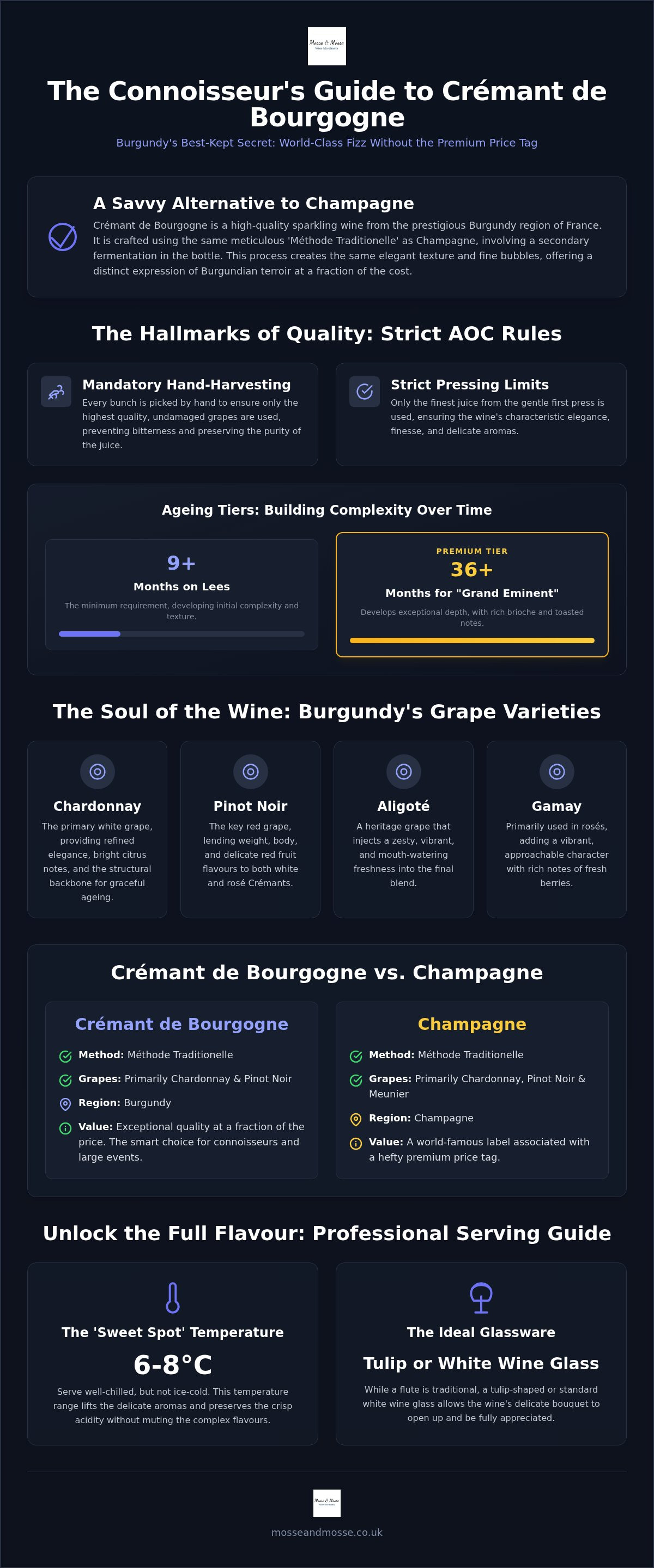
To carry the name, producers must adhere to some of the most stringent regulations in France. Every bunch of grapes must be hand-harvested; this is a mandatory rule that prevents bruised fruit or bitter skins from tainting the juice. Once in the winery, pressing limits are strictly enforced. Only the finest juice from the "first press" is typically used to ensure the wine retains its characteristic elegance and purity. Complexity is further built through time. While the standard requirement is 9 months of ageing on the lees, many of the bottles we select spend significantly longer in the cellar to develop those indulgent, brioche-like notes.
Crémant vs. Bourgogne Mousseux
It’s easy to get confused by French labelling, but there is a clear hierarchy here. The primary difference is often one of colour and intent. Whilst Crémant is strictly reserved for white and rosé styles, the term "Bourgogne Mousseux" is now almost exclusively used for sparkling red wines. Crémant is generally considered the higher quality tier due to its more demanding production standards. The Crémant de Bourgogne appellation was officially created in 1975 to provide a rigorous, quality-focused framework that distinguished premium sparkling wines from simpler versions.
The Grapes and Terroir: Why Burgundy Fizz is Unique
The soul of any great bottle lies in the soil. Whilst many associate the region exclusively with world-class still reds and whites, the geological complexity of the area is perfectly suited to sparkling production. In Burgundy, the interplay between limestone and marl creates a mineral tension that is difficult to replicate elsewhere. This unique environment ensures that Burgundy's sparkling wine possesses a crispness and depth that sets it apart from other European sparklers.
The diversity found within crémant de bourgogne is a direct result of its wide-reaching geography. From the cool, chalky slopes of the Yonne in the north to the sun-drenched granitic soils of the south, each sub-region contributes something different. We carefully curate our selection to reflect this variety, ensuring every bottle tells a story of its specific origin. If you are planning a special event and need guidance on which style best suits your menu, get in touch with our team for a personal recommendation.
The Noble Grapes: Chardonnay and Pinot Noir
Much of the prestige behind crémant de bourgogne comes from its reliance on the same "noble" grapes used in the world’s most expensive wines. Chardonnay brings a refined elegance, offering bright citrus notes and a structural integrity that allows for graceful ageing. Pinot Noir provides the essential weight and backbone, often introducing delicate red fruit flavours to the blend. Many of these premium grapes are sourced from the heart of the region, the Côte d’Or, where the fruit reaches peak maturity and complexity.
Beyond these two giants, Burgundy’s heritage varieties play vital supporting roles. Aligoté is a personal favourite of ours for its ability to inject a zesty, mouth-watering freshness into a blend. For those who enjoy a fruit-forward rosé, Gamay is often included to provide a vibrant, berry-rich character that is both indulgent and approachable.
Sub-Regional Stars: Where the Best Fruit is Grown
Identifying where your grapes are grown is the first step to becoming a true connoisseur. The Côte Chalonnaise is arguably the most important area for high-quality sparkling production, offering a perfect balance of limestone-rich soil and value. Further south, the Mâconnais benefits from a warmer climate, producing riper fruit profiles that result in a more generous, accessible style of wine. Conversely, the Yonne produces crisp, high-acid fruit that closely mimics the lean, mineral profile of Chablis, making it an ideal choice for those who prefer a drier, more linear finish.
Crémant de Bourgogne vs. Champagne: A Comparison
Choosing between these two legendary regions often comes down to the occasion and your personal palate. Both regions utilise the same "Méthode Traditionelle," involving secondary fermentation within the bottle to create that signature sparkle. However, the results are delightfully distinct. Champagne is celebrated for its intense biscuit and brioche aromas, a byproduct of longer mandatory ageing. In contrast, crémant de bourgogne often prioritises a fresher, fruit-forward elegance that celebrates the purity of the Burgundian harvest.
The value proposition is where the comparison becomes truly compelling. Because you aren't paying for the global marketing machine of the "Big Houses," your money goes much further. It is entirely possible to secure a "Prestige" or "Grand Eminent" bottle, featuring extended lees-ageing and incredible texture, for the same price as a basic, non-vintage Champagne. For the savvy drinker, this represents an opportunity to enjoy top-tier craftsmanship without the inflated price tag. If you are planning a large celebration and want to ensure your guests are drinking something truly special, speak to us about our curated event packages.
When to Choose Crémant de Bourgogne
This wine is the ultimate "House" sparkler. It offers a reliability and sophistication that makes even a quiet Tuesday evening feel like a celebration. We frequently recommend it for wedding and party wine because it maintains a sense of luxury whilst respecting a sensible budget. If you want to understand the other side of the coin, you can also explore our A Guide to Champagne to see which style best fits your specific requirements.
Styles to Look For: Brut, Blanc de Blancs, and Rosé
- Blanc de Blancs: Crafted from 100% white grapes, typically Chardonnay. Expect maximum purity, zest, and a crystalline acidity that pairs beautifully with seafood.
- Blanc de Noirs: A white wine produced from red grapes like Pinot Noir. These bottles offer more power, structure, and a "food-friendly" weight that stands up to richer dishes.
- Rosé: Often featuring a touch of Gamay, these are vibrant and berry-scented. They are our absolute favourite for summer garden parties and alfresco dining.
Serving and Pairing: Getting the Most from Your Bottle
To truly appreciate the nuances of crémant de bourgogne, you must treat it with the same respect as a fine vintage still wine. We spend months visiting small, independent vignerons to find bottles that reflect the authentic character of their specific plots. Once you have selected a bottle from our curated Champagne & Sparkling Wines range, the final step is ensuring it is served to perfection in your own home.
Temperature is vital. We recommend a "sweet spot" of 6–8°C for most styles. If the wine is too warm, the bubbles become aggressive; if it's too cold, the delicate floral notes are muted. Whilst the traditional flute is a popular choice for weddings, we often encourage our clients to use a tulip-shaped glass. The wider bowl allows the aromas to develop fully, giving you a much richer sensory experience than a narrow flute can provide.
Classic Culinary Pairings
The high natural acidity of Burgundy fizz makes it an incredible partner for a variety of dishes. It acts as a palate cleanser, cutting through rich textures and balancing saltiness with ease. We often suggest these three classic pairings to our customers:
- Seafood and Shellfish: The mineral tension in a Blanc de Blancs is the perfect partner for fresh oysters or grilled prawns.
- Creamy Poultry: The wine's acidity effortlessly cuts through the heavy, indulgent sauces found in traditional Burgundian chicken dishes.
- Aperitif Snacks: For a truly authentic French experience, serve your bottle with warm gougères. These cheese choux buns are a staple in Burgundy cellars for a reason.
Storage and Cellaring
Most of the bottles we source are released only when they are at their absolute peak of expression. Unlike some heavy reds from the region, crémant de bourgogne doesn't require years of cellaring to show its best. It's ready to enjoy the moment it arrives at your door. Simply keep your bottles in a cool, dark place with a consistent temperature to preserve the integrity of the bubbles.
If you are interested in exploring other French regions and want to know What Is Crémant? in a broader sense, you'll find that Burgundy remains the gold standard for those seeking a sophisticated, terroir-driven alternative to the big Champagne houses. Whether you are stocking up for a dinner party or looking for the perfect gift, we are here to help you find a bottle that delights the palate.
Elevate Your Next Celebration with Burgundy's Finest Fizz
Burgundy's sparkling tradition offers an unmatched combination of heritage and value. By choosing crémant de bourgogne, you are embracing a wine that prioritises the quality of the liquid over expensive external branding. It's a philosophy we hold dear as independent specialists in the wines of Burgundy and Bordeaux. From the zesty purity of a Blanc de Blancs to the indulgent weight of a Pinot Noir dominant blend, these wines prove that high-end craftsmanship doesn't always require a Champagne price tag.
We take great pride in our expertly curated cases, designed to suit every occasion from intimate dinners to large-scale weddings. With nationwide UK delivery on all orders, bringing the authentic taste of a French cellar to your home has never been easier. If you need assistance selecting the perfect bottle or want to discuss a bespoke order for a special event, we'd love to help you find the ideal match. Explore our curated selection of Champagne and Sparkling Wines and discover a new level of elegance today.
Frequently Asked Questions
Is Crémant de Bourgogne as good as Champagne?
Yes, in many cases the technical quality and complexity of these wines are indistinguishable from premium Champagne. Because producers use the same traditional bottle-fermentation method and identical noble grape varieties, the resulting liquid offers similar depth and fine bubbles. We often find that a high-quality crémant de bourgogne outperforms entry-level non-vintage Champagnes, providing a more authentic expression of terroir without the inflated price tag associated with famous global labels.
What grapes are used in Crémant de Bourgogne?
The blend is primarily composed of Chardonnay and Pinot Noir, which are the same prestigious grapes found in the finest French sparkling wines. Regulations require that at least 30% of the wine must consist of these two varieties to maintain quality. Producers also utilise Aligoté for its zesty, mouth-watering acidity and Gamay to add vibrant red fruit notes to rosé styles. This combination ensures the wine remains deeply rooted in Burgundian tradition.
How long does an open bottle of Crémant last?
An open bottle will typically stay fresh for one to three days if stored correctly with a professional stopper. You must use a high-quality pressure seal and keep the bottle chilled in the refrigerator to preserve the carbonation. Whilst the bubbles will naturally soften over time, the underlying flavours should remain pleasant for a short period. We don't recommend keeping it longer than three days, as the wine will eventually lose its characteristic vibrance and lift.
Is Crémant de Bourgogne sweet or dry?
The vast majority of these wines are produced in the "Brut" style, which is elegantly dry and refreshing. These bottles have very little residual sugar, resulting in a crisp finish that is perfect for sophisticated food pairing. Whilst you might occasionally encounter a "Demi-Sec" version with more noticeable sweetness, the dry style is the regional standard. It is this bone-dry character that makes it such a favourite amongst connoisseurs looking for a refined aperitif.
Can I use Crémant de Bourgogne for a wedding toast?
What is the difference between Crémant and Prosecco?
The main difference lies in the production method and the resulting texture of the bubbles. Crémant is made using the traditional method, where secondary fermentation happens in the individual bottle to create fine, persistent bubbles and complex, yeasty flavours. Prosecco is typically made in large tanks, which produces a fruitier, simpler wine with larger, frothier bubbles. Most experts prefer Crémant for its structural depth and its ability to pair beautifully with a wide range of dishes.


