

Most wine lovers believe the best bottle is simply the oldest, but in the heart of Spain, a label tells a far more intricate story of patience and craft than a mere date on a cork. It is easy to feel overwhelmed by cryptic terms like Crianza or Reserva, especially when you are worried about ending up with a bottle that tastes more like a dusty cellar than vibrant fruit. You want a wine that sings with character, yet finding those hidden boutique gems amongst a sea of supermarket brands often feels like a daunting task.
We understand that frustration. This guide will strip away the confusion surrounding rioja wine, helping you navigate the latest 2026 classification updates and "Vino de Pueblo" labels with the confidence of a seasoned collector. You'll discover the rich heritage of the region, decode the complex ageing laws, and learn expert pairing secrets to ensure your next bottle is a triumph. Whether you are seeking a powerful Gran Reserva or a terroir-focused single vineyard selection, we'll help you find your new favourite Spanish red.
Key Takeaways
- Understand the prestigious DOCa status and the historical link between Rioja and Bordeaux winemaking that defines the region's style.
- Confidently navigate the four official ageing categories to select a bottle that perfectly matches your palate and occasion.
- Master the art of serving rioja wine at the correct temperature to ensure its complex flavours and aromas are fully expressed.
- Discover why choosing curated mixed cases from independent merchants can lead you to exceptional boutique bottles often missed by high-street shoppers.
The Allure of Rioja: Why it Remains Spain’s Premier Red Wine
Rioja isn't just a bottle on a shelf; it's a legacy of patience that we've admired for decades. Nestled in North-Central Spain, this region has long been the standard-bearer for Spanish viticulture. What sets rioja wine apart is a commitment to tradition that feels both regal and deeply personal. It's a place where the landscape dictates the character of every drop, from the iron-rich clays of the valley floor to the limestone heights of the mountains. For us, the magic lies in how these wines evolve. They possess a structural integrity that allows them to age gracefully, transforming from vibrant fruit-forward reds into complex, savoury masterpieces.
A Legacy of Quality: The DOCa Status
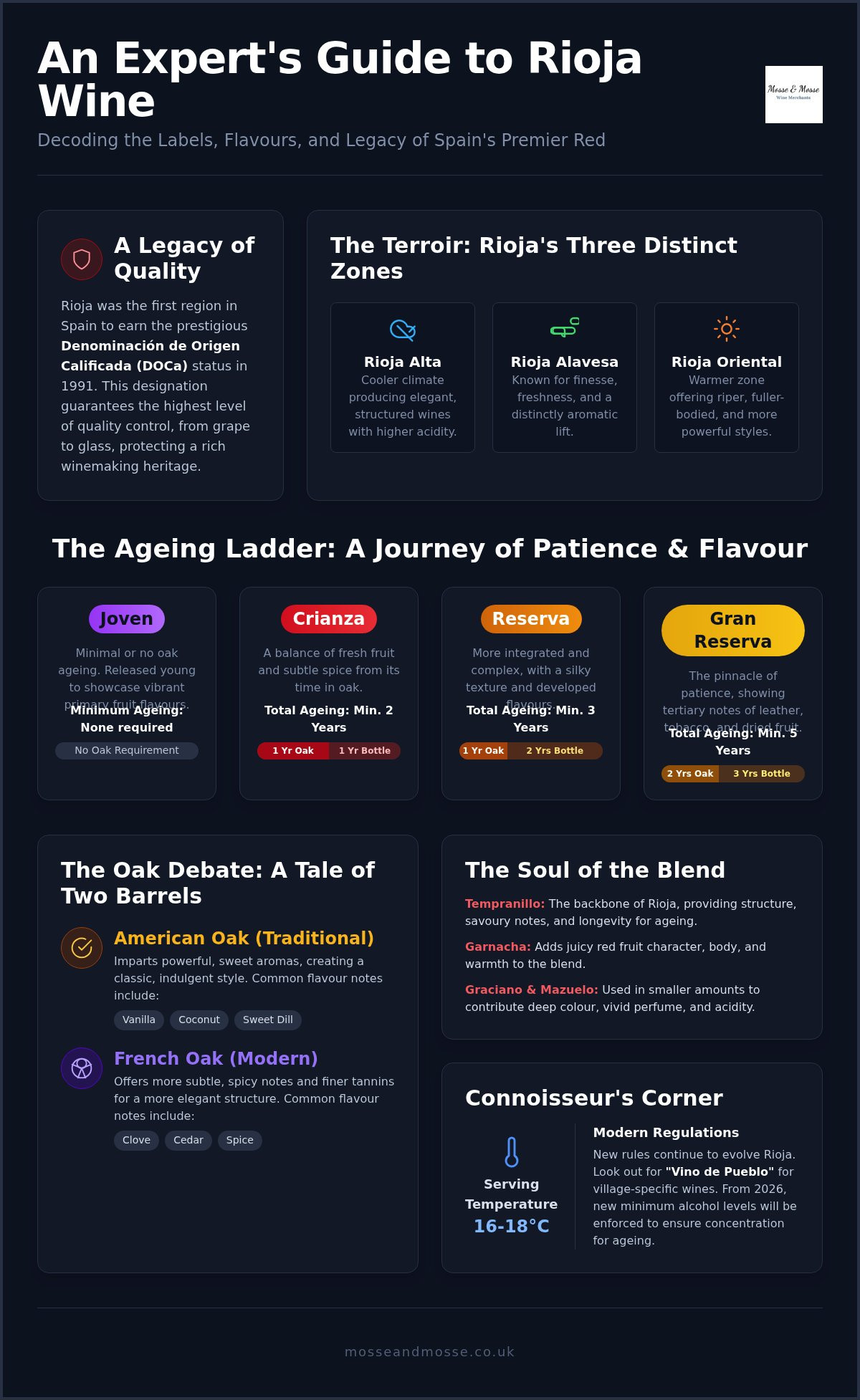
The Rioja wine region was the first in Spain to receive the prestigious Denominación de Origen Calificada (DOCa) status back in 1991. This isn't just a bureaucratic title. It's a guarantee of strict quality controls that govern everything from grape yields to ageing durations. The region is traditionally split into three distinct zones:
- Rioja Alta: Known for its cooler climate and elegant, high-acid wines.
- Rioja Alavesa: Produces wines with a distinct freshness and aromatic lift.
- Rioja Oriental: Formerly Rioja Baja, this warmer zone offers riper, fuller-bodied styles.
The DOCa framework ensures that every vintage maintains a level of excellence that protects the consumer whilst honouring the land's heritage.
The British Connection: A Long-Standing Love Affair
British collectors have held a special affection for Rioja since the late 19th century. When the phylloxera plague devastated French vineyards, many winemakers from France crossed the Pyrenees, bringing their oak-ageing techniques with them. This historical crossover is why many connoisseurs find the structure and complexity of Rioja remarkably similar to a fine Bordeaux wine.
At its heart is Tempranillo. This grape provides the backbone and longevity that we look for in a serious cellar addition. Whilst prices for top-tier French regions have soared, Rioja remains one of the few places where you can still find world-class "Fine Wine" at exceptional value. It's a versatile choice that feels just as at home at a grand wedding celebration as it does on a quiet Sunday afternoon. Even after the difficult 2025 harvest, which saw the shortest yields of the modern era, the region's resilience continues to produce bottles that define Spanish excellence.
Decoding the Label: Sub-regions, Grapes, and the Ageing Ladder
Understanding a bottle of rioja wine begins with the label, which acts as a roadmap for the liquid inside. The region is divided into distinct zones that define a wine's personality, recently bolstered by the 2024 "Vino de Pueblo" designation for village-specific bottlings. Rioja Alta sits at a higher altitude, producing wines with a hallmark elegance and structural acidity. In contrast, Rioja Alavesa, nestled in the foothills of the Sierra de Cantabria, is celebrated for its finesse and lighter, aromatic profile. For the most up-to-date regional maps and producer details, the official Rioja wine website is an invaluable resource.
The soul of the wine lies in its blend. Whilst Tempranillo provides the essential backbone, Garnacha adds juicy fruit and warmth, and the rare Graciano contributes a vivid perfume and acidity. These grapes must meet strict standards before they even reach the cellar. As of August 2026, the minimum alcohol strength for traditional barrel-aged reds is set at 10.5% ABV for Crianza and 11% ABV for Reserva and Gran Reserva wines. These regulations ensure that every bottle possesses the concentration required for the region's famous ageing process.
Crianza vs Reserva vs Gran Reserva
The ageing ladder is where the magic happens. A Crianza spends at least one year in oak, offering a balance of fresh fruit and subtle wood. Reservas age for three years, with at least one in the barrel, resulting in a more integrated, silky texture. The Gran Reserva is the pinnacle of patience. These wines age for at least five years, developing tertiary notes of leather, tobacco, and dried plum. It's vital to remember that more ageing doesn't always mean "better"; it simply means "different" and more complex.
The Oak Debate: American vs French Barrels
Historically, Rioja was synonymous with American oak. It's what gives traditional bottles those indulgent aromas of vanilla, coconut, and sweet dill. Many modern bodegas now favour French oak, which imparts more delicate notes of clove, cedar, and fine-grained tannins. This choice defines a winemaker's signature style and determines how the wine will evolve in your glass. If you're unsure which profile suits your palate, feel free to ask us for a recommendation to help you find your perfect match.
A Connoisseur’s Guide to Serving and Pairing Rioja
To truly appreciate the nuances of rioja wine, one must treat the serving process with the same respect the winemaker showed the grapes. A common mistake is serving these reds too warm. A dining room at 22°C will mask the delicate tertiary aromas of leather and spice we explored in the previous section. We recommend a slight chill; aim for 16-18°C to keep the fruit vibrant and the alcohol in balance. Glassware also plays a vital role. Choose a glass with a generous, large bowl. This increased surface area allows the Tempranillo aromatics to breathe and fully express their complexity.
Decanting is another tool in the connoisseur's arsenal. Whilst a youthful Crianza is often ready to pour, an older Reserva or Gran Reserva benefits immensely from thirty minutes of aeration. This process softens the tannins and coaxes out the deeper, more elusive notes developed during years of cellar ageing. For those interested in the technical standards of the region, the Official Rioja Wine Website provides excellent guidance on maintaining the integrity of these prestigious bottles from cellar to glass.
The Classic Match: Rioja and Lamb
Lamb is the undisputed soulmate of Rioja. The natural acidity found in these wines is essential for cutting through the succulent fat of roasted meats. If you are hosting a celebratory dinner, serving a magnum not only adds a sense of theatre to the table but often provides a superior ageing environment for the wine itself. A well-chosen Reserva is the ultimate companion for a traditional Sunday roast, where its oak-derived vanilla notes perfectly complement the caramelised edges of the meat.
Tapas and Small Plates
The versatility of the region extends far beyond heavy roasts. Younger Crianza wines possess a punchy fruit profile that handles the salt of Manchego cheese and the smoky heat of chorizo with ease. For lighter summer dining, a crisp Rosé Rioja offers a refreshing alternative that pairs beautifully with olives, grilled prawns, or even spicy vegetarian dishes. If you are planning a special event and need a bespoke selection to match your menu, get in touch with us for expert advice to ensure every bottle is a triumph.
Finding Your Perfect Bottle Amongst Our Curated Collections
Our approach at Mosse and Mosse has always been personal. We believe that choosing a rioja wine should be about more than just picking a recognisable label from a shelf; it's about discovering the dedication of the families behind the vines. Our philosophy prioritises quality and provenance over mass branding. We spend our time searching for boutique producers who honour traditional methods whilst embracing the unique terroir of their specific plots. By focusing on these smaller estates, we ensure that every bottle in our collection offers a genuine taste of Spain's most celebrated region.
Selecting the right wine for a season or a specific mood can be a challenge. To help you navigate this, we offer curated mixed cases that provide a balanced journey through the ageing ladder we've discussed. These cases are hand-selected to offer variety, from the bright fruit of a Crianza to the complex, savoury depths of a Gran Reserva. It's our way of sharing our expertise directly with you, ensuring your cellar is always stocked with bottles that have earned their place through merit rather than marketing budget.
Why Buy From an Independent Merchant?
The "supermarket trap" is real. Large retailers often stock generic labels that prioritises volume over character, resulting in wines that can feel "dusty" or over-oaked. As an independent, family-led merchant, we offer a level of service and curation that big brands simply can't replicate. Our expertise isn't limited to Spain. We bring the same passion for quality to other traditional European regions, including our specialism in Red Burgundy. This broad knowledge allows us to guide you toward bottles that truly suit your palate, providing a trusted partnership that builds over many years.
Rioja for Celebrations and Gifts
Rioja possesses a natural versatility that makes it an exceptional choice for Wedding & Party Wine. Its ability to pair with a wide range of dishes, as we've explored, ensures it will please a diverse crowd. For those landmark celebrations in 2026, we have specifically curated a stock of magnums. These larger formats don't just provide a visual impact at the table; they offer a superior environment for the wine to age. Beyond events, a fine Reserva or Gran Reserva is a sophisticated choice for Corporate & Private Wine Gift Boxes. A well-aged bottle of Rioja is a timeless gift that conveys a deep appreciation for heritage and craftsmanship.
Elevate Your Cellar with Spain’s Finest
You now have the knowledge to navigate the stunning diversity of Spain's premier red with absolute confidence. From decoding the ageing ladder to mastering the nuances of serving temperatures, you've seen that the secret to a perfect glass lies in understanding the patience and craft behind the label. Whether you're drawn to the vibrant fruit of a Crianza or the complex, tobacco-laced depths of a Gran Reserva, choosing the right rioja wine is a rewarding journey of discovery that goes far beyond a simple date on a cork.
Finding a bottle that transcends the ordinary requires looking past generic supermarket labels. As independent wine specialists for over 25 years, we take pride in our ability to curate cases that celebrate quality and provenance over mass branding. We provide a personal service from passionate connoisseurs and deliver our expertly curated cases UK-wide, ensuring that world-class boutique bottles are always within reach. If you're ready to find your next favourite bottle or need a bespoke selection for a landmark celebration, we're here to help you find something truly exceptional.
Explore our curated selection of fine Rioja wines and let us guide you toward a bottle that tells a story. We look forward to sharing our passion with you.
Frequently Asked Questions
What is the best year for Rioja wine currently available?
2019 and 2021 are currently regarded as exceptional vintages for those looking to balance immediate enjoyment with long-term cellaring. Whilst the 2025 harvest was the shortest of the modern era and proved quite difficult for growers, the 2019 bottles now reaching their peak offer incredible structure and poise. If you're searching for a Reserva with plenty of life ahead of it, the 2021 vintage is showing fantastic promise across the region's top estates.
Can I age Rioja wine at home, or is it ready to drink?
Most rioja wine is released only when the winemaker believes it's ready for the table, especially at the Gran Reserva level where the wine has already spent years in the cellar. However, high-quality Reservas from boutique producers can certainly evolve and improve for another decade if stored in a cool, dark place; many collectors find that custom wine cellar design is the most reliable way to maintain these ideal conditions. If you've purchased a youthful Crianza, it's generally best to enjoy its vibrant fruit within a few years rather than cellaring it long-term.
What is the difference between Rioja and Ribera del Duero?
The main distinction lies in the climate and the resulting weight and power of the wine. Rioja usually offers more elegance and higher acidity, often blending Tempranillo with other varieties like Garnacha to create a balanced, layered profile. Ribera del Duero sits on a higher plateau with more extreme temperatures, producing bolder, more muscular wines that are almost entirely Tempranillo. If you value finesse and acidity, Rioja is typically the connoisseur's choice.
Is white Rioja (Rioja Blanco) worth trying?
White Rioja is absolutely worth discovering, particularly the traditional barrel-aged styles made from the Viura grape. These wines provide a sophisticated alternative to Chardonnay, offering a nutty, honeyed complexity and a silky texture that pairs beautifully with firm cheeses or poultry. New 2026 regulations ensure these whites maintain a minimum of 9% ABV, preserving the essential freshness and zip that makes them such a versatile partner for seasonal dining.
Why does some Rioja wine come in a gold wire mesh?
The gold wire mesh was originally an anti-fraud measure introduced in the 19th century to prevent people from tampering with the cork. It was designed so the wire would have to be broken to open the bottle, ensuring the wine inside was the genuine article from the stated bodega. Today, it's kept as a mark of prestige and a nod to the region's long history, appearing on bottles from some of the most traditional producers.
How long does a bottle of Rioja last once opened?
A bottle of rioja wine will typically stay fresh for three to five days if you use a vacuum stopper and keep it in a cool spot. Older Gran Reservas are more fragile and can lose their delicate aromas of leather and dried fruit within twenty-four hours of being exposed to oxygen. We always suggest finishing older vintages sooner to enjoy them at their absolute best, whilst younger, more robust bottles can often handle an extra day or two.


