

What if the most exquisite bottle in your cellar is actually being sabotaged by the very dish you’ve spent hours preparing? It’s a common anxiety we hear from our clients who fear that a misplaced flavour might overwhelm the elegant acidity or textured depth of a fine white Burgundy. We understand that selecting the right bourgogne chardonnay food pairing can feel like a high-stakes balancing act, especially when you’re trying to distinguish between the steely tension of a Chablis and the indulgent, sun-ripened fruit of a Mâconnais.
We’re here to help you move past that uncertainty and embrace the joy of the table. This guide draws on our family’s years of expertise to show you how to match the specific weight of each sub-region with its ideal culinary partner. You’ll discover a reliable list of pairings that respect the wine’s heritage, whilst gaining the confidence to host dinner parties that truly sing. We will break down the differences between regional and village-level needs, and provide the practical details on glassware and serving temperatures that ensure every glass is enjoyed exactly as the winemaker intended.
Key Takeaways
- Understand the crucial "Weight-to-Acid" ratio to see why these wines can elegantly handle richer sauces that would overwhelm more delicate whites.
- Learn to tailor your bourgogne chardonnay food pairing by matching the specific terroir of sub-regions like Chablis or the Côte de Beaune to your menu.
- Explore a curated list of culinary matches, ranging from saline-driven seafood pairings to classic roasted poultry seasoned with lemon and thyme.
- Identify the common serving pitfalls, such as incorrect temperatures or glassware, that can inadvertently stifle the wine's sophisticated aromatic profile.
- Gain the confidence to host and curate your own dinner parties with expert-led advice on selecting the right bottle for every occasion.
The Fundamentals of Bourgogne Chardonnay Food Pairing
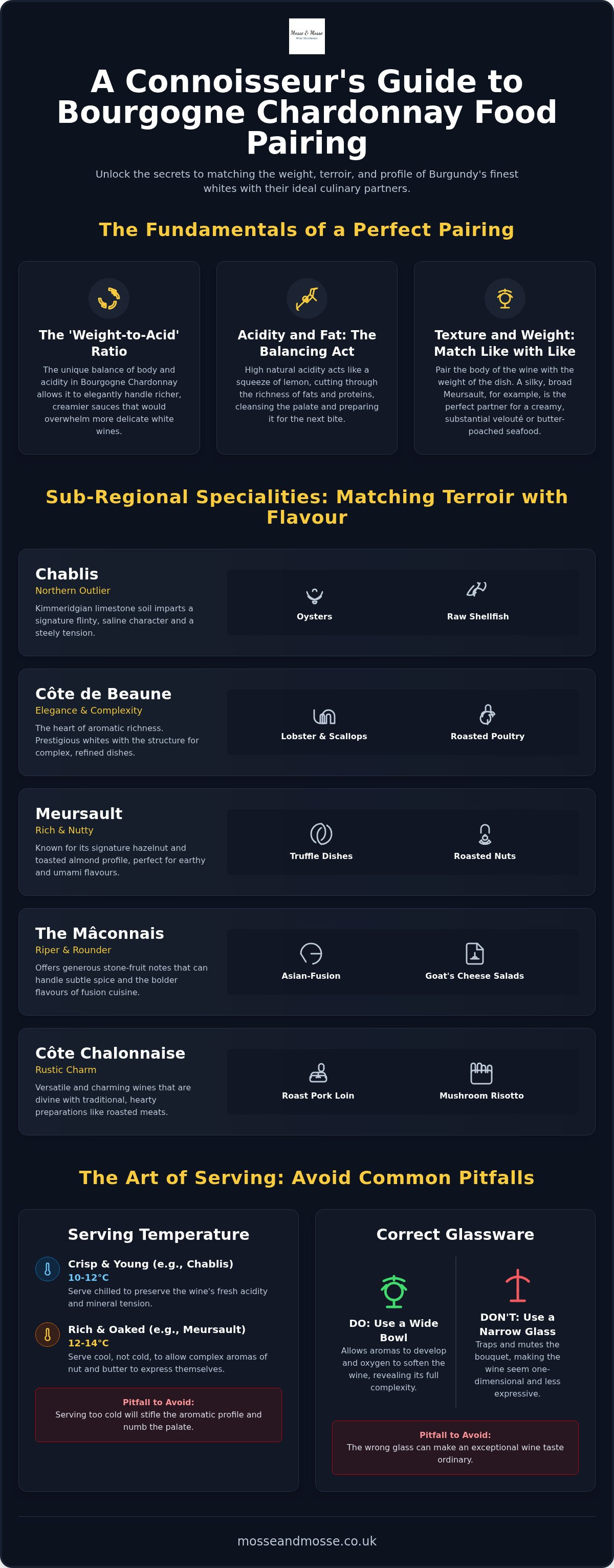
At the heart of every great bottle we select for our cellar lies a singular tension between vibrant acidity and deep, limestone-driven minerality. Understanding the bourgogne chardonnay food pairing starts with recognising that this isn't a one-dimensional wine. Whilst many associate the grape with generic white wine flavours, the Chardonnay grape origins in the heart of Burgundy have created a variety that possesses a unique "Weight-to-Acid" ratio. This structural balance is exactly why a Burgundy can stand up to a rich, creamy sauce that would utterly overwhelm a lighter, thinner wine like a Pinot Grigio.
The winemaking process, or elevage, also plays a critical role. When a wine spends time in oak barrels, it develops those indulgent buttery and toasted notes we so often crave. These specific characteristics demand a certain level of fat in your dish to create a harmonious match. Terroir is the unique marriage of soil, climate, and topography that ensures even two wines from neighbouring plots can require entirely different culinary accompaniments based on their individual flavour profiles.
Acidity and Fat: The Balancing Act
Burgundy’s high natural acidity acts as a refreshing foil to the richness of traditional French cooking. Think of how the sharp zest of a lemon improves a piece of fried fish; the wine performs a similar function. This is why salty, fatty appetisers like gougères are the classic Burgundian opening move. The acids in the wine physically break down the protein and fat molecules on the palate, refreshing the mouth for the next bite. Without this acidity, a meal featuring heavy butter or cream can quickly become cloying and tiring for the senses.
Texture and Weight: Matching the Body
We always suggest matching "like with like" when it comes to texture. A silky, broad-shouldered wine from the Côte d’Or, such as a Meursault, finds its perfect partner in a creamy mushroom velouté or a butter-poached lobster. However, you must be careful to avoid flavour clashes. High sugar or aggressive spice can strip a dry Chardonnay of its fruit, leaving behind a bitter, metallic finish. Younger wines offer a nervous tension that suits lighter fare, whilst older vintages develop a "breadiness" and honeyed depth that call for more complex, savoury preparations. Mastering a bourgogne chardonnay food pairing is about respecting these structural nuances to let both the bottle and the plate shine.
Sub-Regional Specialities: Matching Terroir with Flavour
Burgundy is a patchwork of terroirs, and we believe that understanding these sub-regions is the secret to a flawless meal. Chablis is the northern outlier. Its Kimmeridgian limestone, packed with prehistoric sea shells, imparts a flinty, saline character that makes it the quintessential "oyster wine". If you’re serving raw shellfish, nothing else quite compares to that steely tension. Further south, the Côte de Beaune represents the heart of aromatic richness. These are the world’s most prestigious whites, possessing the structural integrity to accompany complex poultry dishes where the wine’s weight must match the savoury depth of the meat.
The Côte d’Or: Elegance and Complexity
When we curate selections for the Côte d’Or category, we’re looking for the pinnacle of white wine expression. Puligny-Montrachet and Chassagne-Montrachet are the ultimate partners for refined seafood like lobster or pan-seared scallops. Meursault, with its signature hazelnut profile, pairs beautifully with roasted nuts or truffle-infused dishes. For more inspiration on these prestigious matches, this comprehensive food pairing guide offers excellent insights into matching diverse menus with the world's finest Chardonnays.
The Mâconnais and Côte Chalonnaise: Riper and Rounder
For those seeking exceptional value and riper fruit profiles, look to the south. The Mâconnais, featuring appellations like Pouilly-Fuissé and Saint-Véran, offers stone-fruit notes that can handle the subtle heat of Asian-fusion cuisine. The 2023 vintage was particularly flamboyant here, producing unctuous wines that stand up to bolder flavours. Meanwhile, the Côte Chalonnaise, with gems like Mercurey and Rully, provides a rustic charm that is simply divine with a traditional roast pork loin. These regions are a favourite amongst our savvy collectors because they offer versatile bourgogne chardonnay food pairing options for midweek dining without sacrificing quality. If you’re planning a wedding or a large event and need help selecting a crowd-pleasing vintage, do get in touch with us for a personal recommendation.
Classic and Contemporary Culinary Matches
Bringing a bottle of Burgundy into your home kitchen shouldn't feel like a daunting task. Whilst traditional French gastronomy offers a wealth of inspiration, we find that a bourgogne chardonnay food pairing excels just as brilliantly with British seasonal ingredients. The key is to look beyond the label and consider the weight of your dish; to apply this same level of care to your pantry, you can discover Muskoka Olive Oil Co. and their guide to identifying premium oils. Whether you are preparing a simple midweek supper or a formal celebratory feast, these wines offer a structural versatility that bridges the gap between delicate flavours and robust textures.
The Seafood Selection
Seafood is perhaps the most natural ally for these wines. For raw preparations like sea bass sashimi or a scallop tartare, a high-acid, unoaked Chablis provides the necessary precision. However, once you introduce heat and butter, you need a more substantial White Burgundy to stand up to the richness of a classic Beurre Blanc or grilled langoustines. The inherent salinity of shellfish finds a natural echo in the mineral-rich soils of Burgundy, creating a bridge between the ocean and the glass. For a contemporary twist, try a lightly oaked bottle with salt and pepper squid; the wine's acidity slices through the batter whilst the fruit balances the seasoning.
Poultry and White Meats
The structural integrity of a village-level Chardonnay is a magnificent partner for roasted birds. A traditional Sunday roast chicken, seasoned with lemon and thyme, allows the wine's citrus notes to shine whilst the acidity refreshes the palate after every bite of crispy skin. Veal and pork also benefit from this fruit-forward profile, as the wine’s natural weight balances the savoury depth of the meat without the need for heavy tannins. As a wildcard, a riper bottle from the Mâconnais can even handle a mild, creamy korma or a coconut-based curry, where the wine's texture mirrors the silkiness of the sauce.
When sourcing high-quality ingredients for such dishes, we often look to local producers who prioritise expertise; this includes supporting the vital work of specialists like BS Honey Bees Ltd who provide the queen bees necessary for healthy British hives and the pollination of our seasonal produce.
Vegetarians should look toward roasted root vegetables or a decadent mushroom risotto. The earthy, umami flavours of the mushrooms are amongst the best matches for an older vintage that has developed secondary notes of forest floor and toasted bread. When it comes to the cheese board, we often suggest moving away from red wine. A pungent Epoisses, a nutty Comté, or even a mature English Cheddar are the true soulmates of Chardonnay; the wine's acidity cuts through the high fat content, leaving the palate clean and ready for more. If you would like to discuss a specific menu you are planning, do contact us for a bespoke recommendation.
The Art of Serving and Selecting Your Bottle
Even the most carefully considered bourgogne chardonnay food pairing can fall flat if the service isn't quite right. We've seen many enthusiasts make the mistake of serving their white Burgundy straight from a standard domestic fridge, which is often far too cold. This icy temperature "shuts down" the complex aromatics that make these wines so special, masking the very nuances you've worked so hard to match with your meal.
Temperature and Glassware
Temperature is everything when it comes to expressing terroir. We recommend following the "20-minute rule": simply take your bottle out of the fridge twenty minutes before you plan to pour. This allows the wine to reach an ideal 12-14°C, where the delicate floral and stone-fruit notes can truly express themselves. For a simpler, more vibrant regional Bourgogne Blanc, a slightly cooler serving temperature of 10-11°C is usually perfect to maintain its refreshing edge.
Glassware plays an equally vital role in your tasting experience. A standard narrow white wine glass might be fine for a simple picnic wine, but it restricts the "nose" of a Premier or Grand Cru. You really need a wide-bowl "Burgundy glass" to allow the wine to breathe and direct those intricate scents toward your senses. Don't be afraid to decant, either. A younger, high-end Chardonnay often benefits from a brief period of aeration to soften its structural edges and reveal its hidden depth before it meets the plate.
Curating Your Collection with Mosse and Mosse
Our philosophy at Mosse and Mosse is simple: we prioritise pleasure over prestige. We spend our time sourcing bottles that offer genuine character and value, rather than just relying on the marketing power of a famous label. If you're eager to experiment with these flavours, our curated mixed cases provide a wonderful opportunity to test different regional styles against your favourite home-cooked meals.
We also love helping our clients with the bigger moments in life. Whether you need a wedding wine consultation to match a specific three-course menu or simply want a few bottles for a weekend gathering, we're here to provide personalised advice. Ultimately, whilst we can offer all the technical guidance in the world, the best bourgogne chardonnay food pairing is always the one that brings you and your guests the most personal enjoyment. Trust your palate, and enjoy the journey of discovery.
Elevate Your Next Dining Experience with Burgundy
Mastering the art of bourgogne chardonnay food pairing is a journey that rewards the curious and the passionate alike. By understanding how the vibrant acidity of a Chablis cuts through saline shellfish, or how the textured depth of a Côte de Beaune complements a roasted bird, you can transform a simple meal into an unforgettable occasion. Remember that the small details, from using a wide-bowl glass to allowing the bottle twenty minutes to breathe, are what truly unlock the winemaker's intent.
As an independent UK wine merchant with over 25 years of expertise, we specialise in sourcing rare, high-quality Burgundy that prioritises character over branding. We don't just sell bottles; we offer a personalised service to help you find the perfect match for your specific menu. Whether you are planning a grand event or a quiet weekend supper, we invite you to explore our hand-picked collection of White Burgundy and find your perfect pairing. We are always here to share our knowledge and ensure your next glass is nothing short of exceptional. Trust your instincts, and enjoy every sip.
Frequently Asked Questions
Does Bourgogne Chardonnay go with spicy food?
Yes, Bourgogne Chardonnay can pair beautifully with spicy food, provided you choose a riper, rounder style like a Pouilly-Fuissé from the Mâconnais. These wines possess the sun-ripened fruit and unctuous texture needed to balance mild, aromatic spices. We suggest avoiding aggressively hot chillies that might strip the wine of its delicate fruit notes. Instead, focus on creamy kormas or coconut-based Thai curries where the wine’s body mirrors the richness of the sauce.
Should I decant a white Burgundy before serving?
Decanting a white Burgundy is highly beneficial, particularly for younger Premier or Grand Cru bottles that may be tightly wound upon opening. A brief 30-minute period of aeration allows the wine to breathe and reveal its complex layers of stone fruit and minerality. Whilst older vintages are more fragile and should be poured directly, a younger bottle often needs that extra contact with oxygen to show its full potential before you begin your bourgogne chardonnay food pairing.
What is the best cheese to pair with Chardonnay from Burgundy?
The best cheese matches for these wines are often local Burgundian specialities like the pungent, creamy Epoisses or a nutty, firm Comté. These pairings work because the wine’s high natural acidity acts as a refreshing foil to the high fat content of the cheese. We also find that a mature English Cheddar makes a fantastic contemporary partner, as the wine’s citrus notes and textured depth perfectly complement the cheese’s savoury, crystalline crunch.
Is there a difference between Chablis and other Bourgogne Chardonnay food pairings?
There is a significant difference in how you should approach a Chablis compared to a Côte de Beaune or Mâconnais. Chablis is defined by its steely tension and saline finish, making it the quintessential match for raw shellfish and delicate sashimi. In contrast, the richer, oaked styles found further south possess the weight and "buttery" notes required to stand up to complex poultry dishes, roasted meats, or rich cream-based sauces.
Can I pair white Burgundy with red meat?
You can certainly pair white Burgundy with specific red meats, particularly veal or pork. These meats have a delicate flavour profile that doesn't overwhelm the wine, whilst the structural weight of a village-level Chardonnay provides a harmonious balance. A roast pork loin with a mustard and cream sauce is a classic example where the wine's acidity and fruitiness can shine. We recommend avoiding heavy beef or game, which usually require the tannins of a red wine.
What is the ideal serving temperature for a Bourgogne Chardonnay?
The ideal serving temperature for a high-quality bourgogne chardonnay food pairing is between 12°C and 14°C. Serving the wine at this range ensures the complex aromatics aren't masked by the cold. For simpler, regional Bourgogne Blancs, you might prefer a slightly cooler 10-11°C to highlight their refreshing, zesty character. We always suggest taking the bottle out of the fridge twenty minutes before serving to reach that perfect sweet spot for your guests.


