
Chablis isn't simply a grape variety; it is a geological miracle where ancient Kimmeridgian fossils meet cool-climate Chardonnay to create what we passionately call "liquid stone." If you've ever felt overwhelmed by the four distinct classification levels or worried about overpaying for a bottle that lacks that signature flinty edge, you aren't alone. Many enthusiasts find themselves confused by the nuances of this unique region, especially when trying to distinguish between the crisp, unoaked styles and the rare, structured bottles of the higher tiers.
In this guide, we'll demystify chablis wine so you can select your next bottle with the confidence of a seasoned collector. You'll discover how the prehistoric soils of the Yonne valley shape every sip and why the 2025 vintage, despite an exceptionally early harvest starting on 18 August, shows such incredible ageing potential. We'll break down the hierarchy from Petit Chablis to the prestigious Grand Cru sites, ensuring you understand exactly what makes this the world's most distinctive expression of Chardonnay. Whether you're looking for a vibrant partner for fresh oysters or a magnum to serve as a dinner party centrepiece, you'll soon recognise the true value of Burgundy's northernmost treasure.
Key Takeaways
- Learn why chablis wine is defined by its "uncooked" purity and how the unique Kimmeridgian soil creates its world-renowned flinty character.
- Master the four levels of the regional hierarchy to confidently navigate wine lists and select the perfect bottle for any budget or occasion.
- Discover the ideal serving temperatures and glassware choices that unlock the complex mineral aromas of these northern Burgundy treasures.
- Understand why choosing the right vigneron is more important than the vineyard name and how boutique curation ensures you avoid generic, mass-market labels.
- Explore why premium Chablis is an essential addition to any serious cellar and the impact of serving magnums as a sophisticated dinner party centrepiece.
What is Chablis Wine? Understanding the "Uncooked" Chardonnay
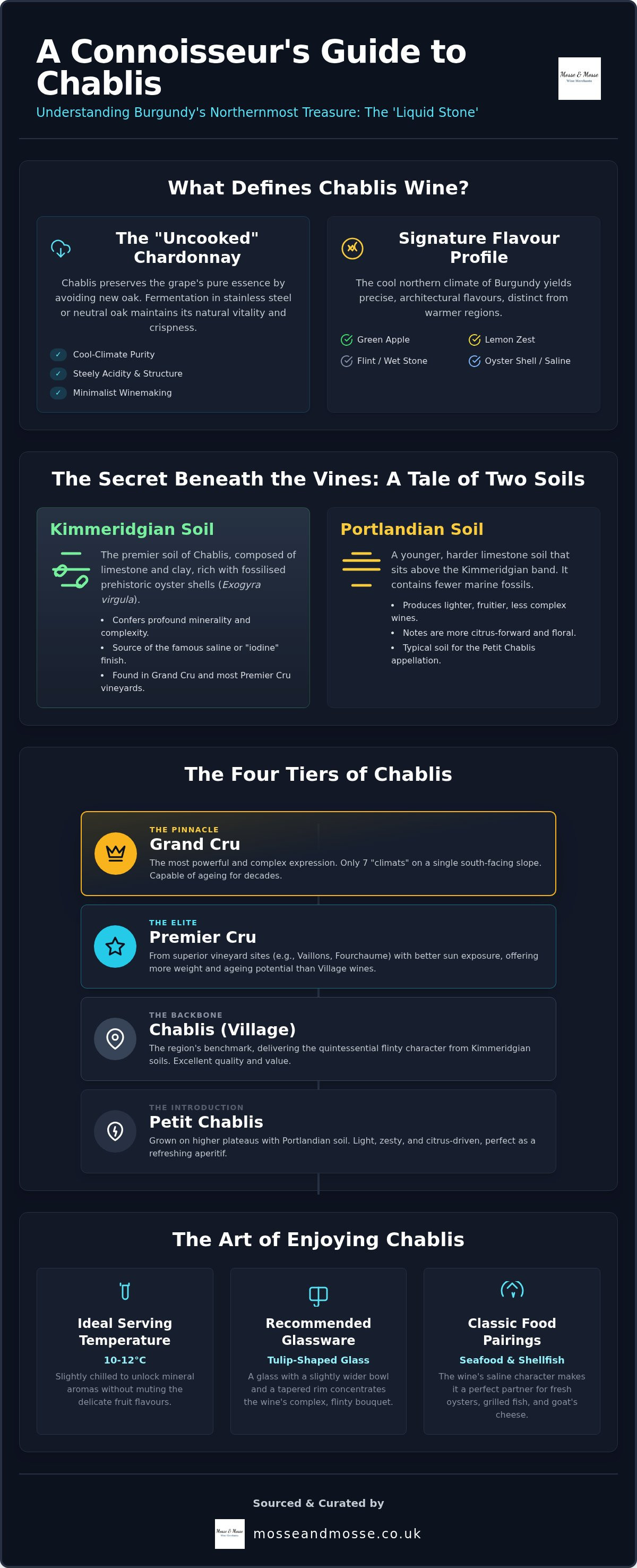
Chablis is often described as Chardonnay in its purest, most naked form. Located in the northernmost district of Burgundy, this region produces 100% Chardonnay wines that are worlds apart from the rich, buttery styles found elsewhere. The signature of chablis wine is its "uncooked" nature. Whilst many global producers use oak barrels to add vanilla and toast, Chablis vignerons traditionally use stainless steel or very old oak. This approach preserves the grape's natural vitality, resulting in a wine defined by steely acidity and a distinct flinty minerality.
The geography plays a vital role here. Being so far north, the vines face a cool climate that restricts sugar development and protects fresh fruit flavours. You'll find vibrant notes of green apple, lemon zest, and white flowers rather than the tropical fruit common in sun-drenched regions. It's a precise, architectural style of wine that we find essential for any serious cellar.
The Chardonnay Connection: A Varietal in Disguise
It's a common misconception that Chablis is a grape variety. In reality, it is a protected geographic region, and Chardonnay is the only grape allowed to grow there. If you've previously said you "dislike Chardonnay," you might actually be a Chablis lover in waiting. The crispness found in the Chablis wine region offers a refreshing alternative to the heavier, more opulent styles of the Côte d’Or. We often see customers surprised by the lean, athletic structure of these wines, which lack the oily texture often associated with the grape.
Kimmeridgian Soil: The Secret of the Ancient Seabed
What truly sets this region apart is the ground beneath the vines. Millions of years ago, this area was a shallow sea. Today, the best vineyards sit on Kimmeridgian soil, a unique mix of limestone and clay packed with fossilised prehistoric oyster shells. This geological heritage is the source of the famous "iodine" or saline finish that makes chablis wine so distinctive. It isn't just marketing; you can actually taste the sea in the glass.
Not all soil in the region is equal. The premium appellations grow on Kimmeridgian marl, whilst Petit Chablis often comes from Portlandian soil. This younger limestone lacks the same density of fossils, leading to wines that are fruity and bright but without the profound mineral depth of their higher-tier cousins. Recognising this difference is the first step toward becoming a true connoisseur.
The Chablis Hierarchy: Navigating the Four Appellations
Selecting a bottle of chablis wine becomes far simpler once you grasp the four-tier pyramid that defines the region. This classification isn't arbitrary; it reflects centuries of observation regarding which slopes catch the most sun and which soils offer the deepest mineral complexity. As an independent merchant, we often find the best value lies in knowing exactly when to choose a zesty entry-level bottle versus a structured Cru for the cellar.
Petit Chablis vs. Chablis Village
Petit Chablis sits at the base of the hierarchy. These vines typically grow on the higher plateaus in Portlandian soil, producing wines that are light, zesty, and perfect as a refreshing aperitif. Chablis (Village) is the region's backbone. It's here you'll find that quintessential flinty character. Under the regulations effective from December 2025, standard Chablis yields are capped at 75 hectolitres per hectare to ensure quality remains high even during unpredictable harvests. For everyday enjoyment, Village-level wines offer a superb price-to-quality ratio.
The Elite: Premier Cru and Grand Cru
Moving up to Premier Cru, you'll encounter famous vineyard names like Vaillons or Fourchaume. These sites enjoy superior sun exposure, resulting in more weight and ageing potential. The pinnacle, however, is Chablis Grand Cru. There are only seven official "climats" (vineyard plots) located on a single, steep, south-facing slope overlooking the town. These wines are powerful, complex, and capable of evolving for decades in the cellar. Whilst most Chablis is unoaked, some Grand Cru producers use a touch of old wood to add texture and breadth.
If you're looking for a specific vintage or something truly special for a gift, speak with us about sourcing rare magnums from these elite plots. For more technical details on vineyard boundaries and local laws, you can visit the Official site for Chablis wines. In 2025, premium Chablis exports to the UK rose by 26% in value, proving that British connoisseurs are increasingly seeking out these high-end classifications for their unique character and longevity.
The Art of Enjoying Chablis: Serving, Pairing, and Cellaring
Getting the most out of a bottle of chablis wine requires more than just a corkscrew. It's about respecting the wine's delicate, athletic structure. We recommend serving Petit and Village levels at a crisp 8-10°C. For Premier and Grand Crus, let them warm slightly to 12°C. This allows the complex aromatics to unfurl. Use a tulip-shaped glass rather than a flat, wide bowl; the tapered rim concentrates those flinty scents we find so evocative. For enthusiasts seeking high-quality stemware to match these wines, Stellez Vine Singapore offers a selection of premium glasses designed to enhance the tasting experience.
Don't be afraid to decant. Younger Premier Crus can be tightly wound upon release. A quick splash in a decanter softens the high acidity and lets the fruit breathe. Whilst many drink Chablis young, top-tier bottles have surprising longevity. A well-made Grand Cru can evolve beautifully for 15 years or more, as detailed in the official Chablis classification. Over time, the steely edge develops into honeyed, nutty complexity.
Classic and Creative Food Pairings
The "terroir match" with oysters is legendary. The saline finish of the wine mirrors the brine of the shellfish perfectly. However, the high acidity makes it a versatile partner beyond the sea. It cuts through the richness of creamy chicken fricassee or the tang of a local goat's cheese. Because of this adaptability, it's a sophisticated choice for Wedding and Party Wine. It pleases both the casual drinker and the connoisseur at any gathering.
Magnums and Large Formats for Collectors
If you're serious about cellaring chablis wine, Magnums are the gold standard. The larger volume of liquid compared to the surface area of the cork means oxidation happens much more slowly. This preserves that vital freshness for much longer than a standard bottle. We often suggest magnums as the "expert's choice" for special gifts or as a centrepiece for a celebration.
Contact us for personalised advice on building your Chablis collection or selecting the perfect bottle for your next event.
Sourcing Exceptional Chablis: Why Curation Matters
Finding a truly exceptional bottle of chablis wine requires looking beyond the grand labels. In this region, the name of the vigneron often carries more weight than the vineyard itself. We've seen how two neighbouring plots can produce entirely different results based on the producer's philosophy. Whilst one might focus on high-yield production, our focus is always on the boutique makers who prioritise the soul of the Kimmeridgian soil. We spend our time hunting for the latter, and we love to organise bespoke selections for our private and corporate clients.
Independent merchants like us offer a level of scrutiny that mass-market retailers can't match. We hand-select every bottle, ensuring it meets our standards for purity and tension. This expert-led curation provides a narrative and a guarantee of provenance that a supermarket shelf simply cannot replicate. It's about building a relationship with the wine and the people who make it.
This appreciation for craftsmanship often extends to the culinary world, where artisanal producers like Conserverie Maison Marthe share their expertise on traditional techniques like smoking, allowing you to create gourmet pairings that match the quality of your cellar.
Building a Balanced Burgundy Collection
Cellars are rarely complete without a sense of balance. Integrating Chablis alongside structured Red Burgundy creates a versatile collection capable of pairing with any menu. For those seeking other high-end Chardonnay, exploring the Côte de Beaune is a natural next step. Chablis is also a star performer in our Corporate and Private Wine Gift Boxes. Whether it's a thank-you to a client or a treat for a friend, a curated bottle speaks volumes about quality over branding.
How to Buy Chablis Online with Confidence
When you're browsing for chablis wine online, keep these points in mind:
- Check the Vintage: Look for years like 2025, which showed strong potential despite the exceptionally early harvest that began on 18 August.
- Research the Producer: A respected name is your best insurance against a generic, acidic bottle.
- Provenance: Ensure the merchant understands how the wine has been stored and shipped.
We offer national delivery across the UK, making it easy to receive expert-curated cases at your doorstep. If you're unsure which level of the hierarchy suits your palate, contact Mosse and Mosse for a personalised Chablis recommendation. We're always here to help you find that perfect, flinty expression.
Elevate Your Cellar with Burgundy's Purest Expression
Mastering the nuances of chablis wine means looking beyond the label to the ancient seabed and the dedicated vignerons who tend it. You've seen how the unique Kimmeridgian soil creates a mineral tension found nowhere else on earth, and why understanding the four-tier hierarchy is essential for matching the right bottle to the right occasion. Whether you're seeking a zesty Petit Chablis for immediate enjoyment or a structured Grand Cru magnum for long-term cellaring, the focus should always remain on quality over commercial branding.
As independent specialists in Burgundy and Bordeaux, we take pride in our personalised, expert-led selection process. We're passionate purists who believe that the heart of a great wine lies in the vineyard's heritage rather than a marketing budget. With our reliable national delivery across the UK mainland, bringing these boutique treasures to your table is simple and secure. Speak to our experts for a bespoke Chablis recommendation today. We look forward to helping you discover a bottle that truly resonates with your palate.
Frequently Asked Questions
Is Chablis always made from Chardonnay?
Yes, by law, every bottle of Chablis is 100% Chardonnay. Whilst other parts of Burgundy might allow minor blending in specific instances, this northern outpost remains strictly dedicated to this single variety. It's this singular focus that allows the regional character to shine through so clearly without distraction. If you're drinking Chablis, you're enjoying Chardonnay in its most athletic and unadorned state. It's the ultimate expression of the grape's purity.
What is the difference between Chablis and Petit Chablis?
The primary distinction lies in the geology and vineyard elevation. Petit Chablis vines typically grow on higher plateaus with Portlandian limestone; this soil is younger and contains fewer fossils. This results in lighter, zesty wines meant for early drinking. In contrast, standard Chablis comes from the slopes where Kimmeridgian soil is dominant. This provides the deeper mineral complexity and saline finish that we believe defines the region's true identity.
Should Chablis be oaked or unoaked?
Most Chablis is famously unoaked to preserve its bracing acidity and citrus profile. Vignerons often use stainless steel to keep the wine "uncooked" and fresh. However, some producers use neutral, older oak barrels for Premier and Grand Cru levels. This doesn't add vanilla flavours but instead provides a micro-oxygenation that builds texture and breadth. It's a stylistic choice that adds a sophisticated layer to the elite tiers without masking the fruit.
How long can I cellar a bottle of Chablis Premier Cru?
A high-quality Premier Cru generally hits its peak between five and ten years after the vintage. Whilst you can enjoy them young for their primary fruit, they develop fascinating secondary notes of honey and roasted nuts with time. If you have a magnum, you can often extend this window even further. Always ensure your cellar maintains a constant temperature to protect the wine's delicate structure during its slow and graceful maturation.
Why does Chablis wine taste like flint or stones?
This "gunflint" aroma is a direct result of the unique terroir. The vines grow in prehistoric seabed soil packed with fossilised oyster shells, which imparts a distinct saline and smoky character. When combined with the high natural acidity of a cool-climate chablis wine, it creates a sensory impression of wet stones or struck flint. It's a hallmark of the region that New World producers find almost impossible to replicate accurately.
What is the best food to pair with a dry Chablis?
Oysters are the classic choice because the wine's salinity mirrors the brine of the shellfish perfectly. Beyond the raw bar, Chablis is a fantastic partner for grilled sea bass or scallops with lemon butter. Its sharp acidity also works brilliantly to cut through the richness of a goat's cheese tart or a creamy chicken dish. It's one of the most food-friendly white wines in any connoisseur's collection, offering balance and refreshment.


