

Have you ever bypassed a bottle of Rioja wine because you feared it would taste more like an old cigar box than a vibrant, fruit-forward red? It's a common hesitation amongst many of our customers. Between the complex labelling laws and the sea of mass-produced supermarket brands, finding a truly exceptional bottle often feels like a daunting task. You shouldn't have to guess whether a Reserva will be elegantly balanced or simply overwhelmed by heavy oak.
I understand that frustration, but I also know the magic that happens when you find a boutique producer who gets it right. My goal is to strip away that uncertainty and help you discover the incredible depth this region offers. Whether you're planning a wedding or looking for a special magnum for your cellar, I'll guide you toward the bottles that truly represent the soul of Spain.
We'll explore the traditional classifications, look at the exciting new "Vino de Pueblo" village designations, and share the pairing secrets that will help you find your next favourite bottle. By the end, you'll have the confidence to choose a wine that perfectly suits your palate and your occasion.
Key Takeaways
- Understand the historical connection between Rioja and Bordeaux that established the region's prestigious DOCa status and rigorous quality standards.
- Master the four official ageing categories to confidently choose between a vibrant Crianza and a cellar-worthy Gran Reserva.
- Learn how to navigate the complex labelling of rioja wine, including the latest village-origin designations, to identify boutique producers that prioritise quality.
- Discover expert serving secrets, including ideal temperatures and decanting times, to ensure every bottle reaches its full aromatic potential.
- Gain professional pairing advice to select the perfect Spanish red for any occasion, from intimate dinners to grand wedding celebrations.
The Allure of Rioja: Why it Remains Spain’s Premier Red Wine
Rioja isn't just a label; it's a statement of patience. For over a century, this region in North-Central Spain has produced wines that command respect on the global stage. Much of this prestige stems from the late 19th century. When the phylloxera beetle devastated French vineyards, many Bordelais winemakers crossed the Pyrenees. They brought with them the art of barrel ageing and meticulous blending, forever changing the trajectory of rioja wine.
At the heart of every great bottle sits Tempranillo. This grape provides the essential structure and acidity needed for a wine to evolve over decades. Whilst other varieties like Garnacha or Mazuelo play their part, Tempranillo is the undisputed king. It’s this grape's ability to absorb the nuances of oak whilst maintaining its fruit integrity that makes it a favourite amongst those who appreciate a wine with a story to tell. For the British collector, the draw is often this remarkable ageing potential. A well-stored bottle can transform from a vibrant, fruit-forward red into a complex masterpiece of leather, spice, and dried tobacco.
A Legacy of Quality: The DOCa Status
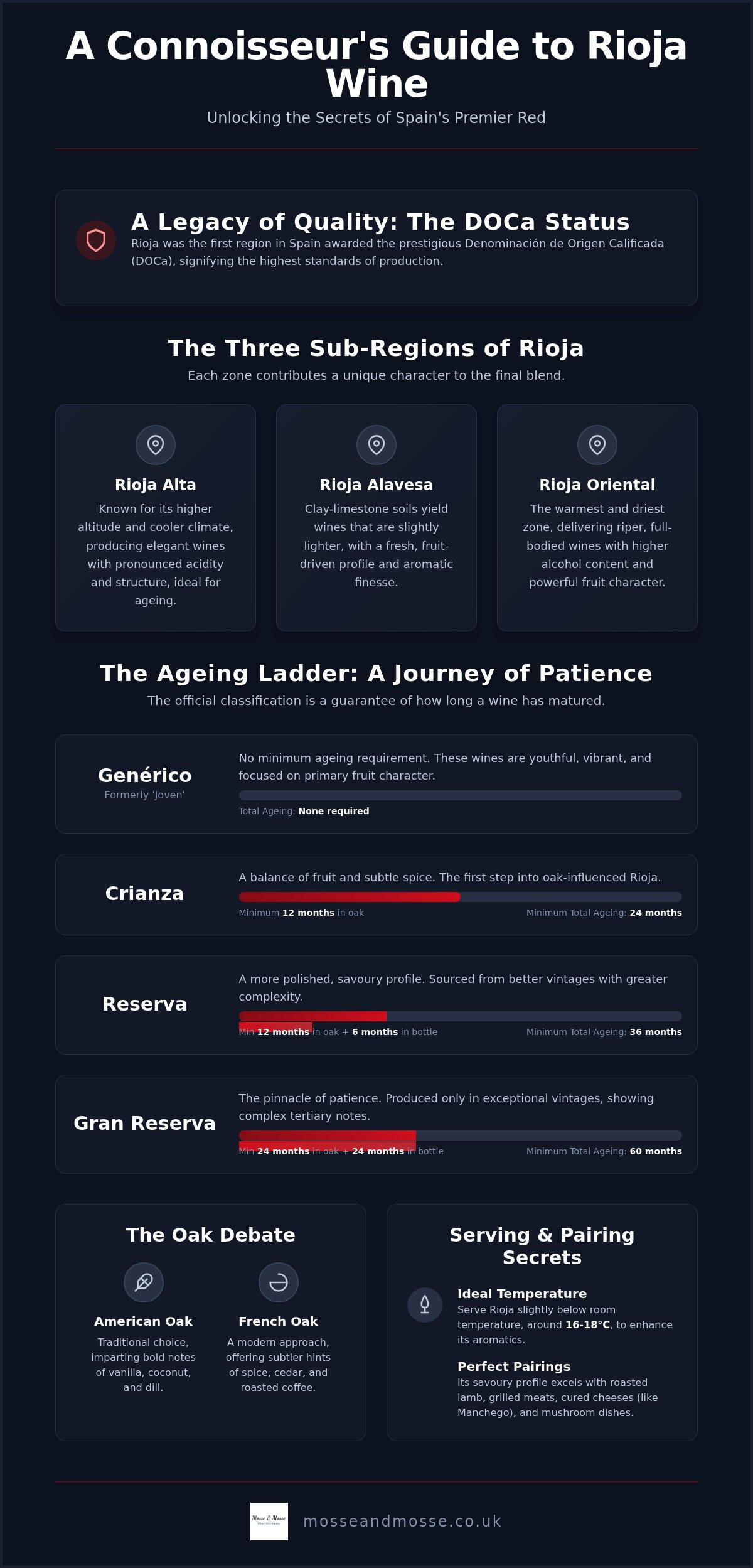
Rioja was the first region to be awarded the prestigious Denominación de Origen Calificada (DOCa) status. For you, this means every bottle meets some of the strictest production standards in the wine world. To understand the diversity within the Rioja wine region, one must look at its three distinct zones. Rioja Alta is known for its higher altitude and cooler climate, producing elegant wines with high acidity. Rioja Alavesa offers a slightly fresher, fruit-driven profile from its clay-limestone soils. Finally, Rioja Oriental is the warmest zone, delivering wines with more body and ripeness. This classification ensures that the character of the land is preserved in every glass, providing a consistent benchmark of quality across different vintages.
The British Connection: A Long-Standing Love Affair
The UK has always had a soft spot for the savoury, cedar-scented charm of a well-aged Spanish red. We often find that collectors who enjoy the structured profile of Bordeaux wine naturally gravitate towards Rioja. Both regions share a historical dedication to blending and oak maturation, yet Rioja often provides a more accessible entry point into the world of fine wine. It offers exceptional value for those looking to build a cellar without the astronomical price tags often found in other premier European regions. This blend of heritage, quality, and relative affordability is why it remains a cornerstone of our curated selections.
Decoding the Label: Sub-regions, Grapes, and the Ageing Ladder
Understanding a bottle of rioja wine often feels like learning a secret code. The label isn't just marketing; it's a legal guarantee of how long the wine has rested in the bodega's cellar. Before you look at the age, consider the origin. Rioja Alta provides the structural backbone and elegance we love, whilst Rioja Alavesa offers a lighter, more aromatic finesse. These characters are shaped by a trio of grapes: Tempranillo for longevity, Garnacha for fleshy red fruit, and the rare Graciano for its intense perfume and acidity.
Crianza vs Reserva vs Gran Reserva
The ageing ladder is what defines the style in your glass. It's a journey from youthful energy to complex maturity. Genérico wines have no minimum ageing requirements and focus on primary fruit. A Crianza must age for at least two years, with one spent in oak, offering a vibrant balance of fruit and subtle spice. Reserva wines step up to three years of ageing, including a year in oak and six months in the bottle, resulting in a more polished, savoury profile.
The Gran Reserva is the pinnacle of patience. According to the Official Rioja wine website, these reds must age for a minimum of 60 months. This includes at least 24 months in oak and 24 months in the bottle. In these bottles, you'll find tertiary notes of leather, tobacco, and dried plum. It's vital to remember that more ageing doesn't necessarily mean "better," it simply means "different." If you're struggling to decide which tier fits your dinner plans, ask us for a personal recommendation.
The Oak Debate: American vs French Barrels
The choice of wood is the winemaker's spice rack. Traditional Rioja is synonymous with American oak, which imparts those classic, indulgent notes of vanilla, coconut, and dill. It's what gives "old school" Rioja its distinctive, creamy sweetness. In contrast, many modern boutique producers are shifting towards French oak. This wood is more porous and subtle, offering notes of clove, cedar, and a firmer tannin structure. This choice defines the "soul" of a bodega. Whether you prefer the bold embrace of American oak or the spicy precision of French barrels, the wood should always complement the fruit, never mask it.
A Connoisseur’s Guide to Serving and Pairing Rioja
Serving a fine rioja wine correctly is just as important as selecting the right bottle. I often see people serving these reds at "room temperature," which in a modern centrally-heated home can be upwards of 21°C. This is a mistake. At that heat, the delicate aromatics of cedar and vanilla are smothered by the sharp sting of alcohol. Aim for a cooler 16-18°C to let the fruit truly sing. If the bottle feels warm to the touch, twenty minutes in the fridge will do wonders for its balance.
Decanting is another area where a little patience pays dividends. Whilst a youthful Crianza might only need a quick swirl in the glass, a complex Gran Reserva often requires an hour of aeration to shed its initial "dusty" character. I recommend using a glass with a large, generous bowl. This provides the surface area needed for the Tempranillo aromatics to fully express themselves before they reach your palate. These rigorous serving standards reflect the high expectations set by Rioja's Regulatory Council, ensuring you experience the wine exactly as the maker intended.
The Classic Match: Rioja and Lamb
The marriage between Rioja and lamb is legendary for a reason. The wine's natural acidity and structured tannins act like a knife, cutting through the richness of the meat's fat. If you're hosting a celebratory dinner party, serving a magnum is a surefire way to impress your guests. The slower ageing process in larger formats often results in a more integrated, silky texture that stands up beautifully to bold flavours. A mature Reserva is the quintessential partner for a traditional Sunday roast, where its savoury notes of leather and spice complement the succulent flavours of slow-roasted lamb.
Tapas and Small Plates
Rioja is incredibly versatile, especially when you move away from the heavier styles. A vibrant Crianza is the ultimate partner for a spread of tapas, standing up to the punchy flavours of garlic-heavy chorizo, salty Manchego, and briny olives. If you're dining alfresco, don't overlook a crisp Rosé Rioja. These wines offer a refreshing acidity that handles spicy or highly seasoned foods remarkably well, making them a summer favourite amongst our regular clients.
If you're planning a special menu and want to ensure your wine selection is flawless, get in touch with us for expert pairing advice.
Finding Your Perfect Bottle Amongst Our Curated Collections
At Mosse and Mosse, we don't just sell bottles; we curate experiences. Our philosophy is simple: quality and provenance must always trump mass branding. When you select a rioja wine from our cellar, you're choosing a bottle that has been hand-picked for its character and balance. We believe in building long-term relationships with our clients, providing the kind of individualised attention you simply won't find at a large retailer. Every bottle we stock is a testament to our passion for traditional European viticulture.
Why Buy From an Independent Merchant?
It's easy to fall into the "supermarket trap" of buying generic labels that prioritise volume over flavour. As an independent merchant, we bypass the dusty, over-oaked styles often found on high-street shelves. Instead, we focus on boutique producers who treat their vines with respect. Our deep knowledge of traditional European regions, including our specialism in Red Burgundy, allows us to spot the hidden gems that offer true value. Choosing one of our curated mixed cases is the best way to explore these seasonal selections, ensuring you always have the perfect bottle on hand for any dinner party.
Rioja for Celebrations and Gifts
Rioja's versatility makes it an outstanding choice for Wedding & Party Wine. Whether it's a vibrant Crianza for a relaxed reception or an elegant Reserva for a formal sit-down meal, it rarely fails to please a crowd. For those milestone celebrations, nothing quite matches the visual impact and superior ageing of a magnum. We currently hold a stock of specific magnums ready for the 2026 season, perfect for making a statement at any event. They aren't just larger bottles; they're a centrepiece for celebration.
If you're looking to impress a client or thank a colleague, our Corporate & Private Wine Gift Boxes offer a level of sophistication that mass-market hampers lack. We draw on 25 years of corporate gifting experience to create bespoke selections, often featuring a well-aged Rioja as the prestigious focal point. A well-aged Rioja remains a timeless corporate gift because it represents a commitment to quality and a respect for heritage that resonates across any industry. We take pride in helping you choose a gift that truly reflects your professional values.
Elevate Your Cellar with Authentic Rioja
Mastering the labels and tiers of rioja wine shouldn't be a guessing game. By understanding the ageing ladder from vibrant Crianzas to complex Gran Reservas, you've taken the first step toward finding a bottle that truly resonates with your palate. Whether you're planning a grand wedding celebration or looking for the perfect Sunday roast pairing, remember that serving temperature and glassware are the final keys to unlocking those legendary Spanish aromatics.
At Mosse and Mosse, we've spent over 25 years acting as independent wine specialists and passionate connoisseurs. We take pride in offering a personal service that steers you away from mass-produced brands toward hand-selected, boutique bottles. Our expertly curated cases are delivered UK-wide, ensuring that quality and provenance are never more than a few clicks away. We believe every bottle should tell a story of heritage and craft.
Ready to discover your next favourite vintage? Explore our curated selection of fine Rioja wines or get in touch for a personalised recommendation. We look forward to helping you find a bottle that brings the soul of Spain to your table.
Frequently Asked Questions
What is the best year for Rioja wine currently available?
2010 and 2019 are officially rated "Excellent" by the region's Regulatory Board and represent the gold standard for quality. If you want a bottle to enjoy now, the 2015 and 2016 vintages offer wonderful balance and maturity. For those looking to cellar a rioja wine, the 2019 Gran Reservas are exceptional choices as they reach the market. These years provided the perfect weather for Tempranillo to develop its legendary ageing potential.
Can I age Rioja wine at home, or is it ready to drink?
Most Rioja is released only when the winemaker believes it's ready to drink. This is especially true for Reservas and Gran Reservas that have already undergone years of professional ageing. However, bottles from top-tier boutique producers can certainly improve with further home cellaring. If you have a cool, dark space with a stable temperature, a high-quality Reserva can evolve beautifully for another decade. Younger Crianzas are generally intended for more immediate, fruit-forward enjoyment.
What is the difference between Rioja and Ribera del Duero?
Whilst both regions champion the Tempranillo grape, their styles are distinct. Rioja is typically more elegant and aromatic, showcasing the influence of long oak ageing with notes of vanilla and cedar. Ribera del Duero, situated at a higher altitude, produces darker, more muscular wines with intense tannins and concentrated black fruit. Rioja often utilises a blend of several grapes, whereas Ribera is typically a pure expression of Tempranillo, which is known locally as Tinto Fino.
Is white Rioja (Rioja Blanco) worth trying?
White Rioja is a hidden gem and is absolutely worth trying for any serious wine lover. Primarily made from the Viura grape, these wines range from crisp and floral to rich, barrel-aged examples with extraordinary complexity. The oak-aged versions develop fascinating notes of toasted almonds and honeyed citrus. We often include them in our curated cases because they provide a sophisticated alternative to Chardonnay, pairing perfectly with everything from grilled seafood to roasted poultry.
Why does some Rioja wine come in a gold wire mesh?
The iconic gold wire mesh, or trencilla, was originally designed as an ingenious anti-counterfeit device. In the late 19th century, prestigious bodegas used it to prevent merchants from extracting the cork and refilling the bottle with cheaper wine. If the mesh was cut, the tampering was obvious. Whilst modern bottling makes this unnecessary, many traditional producers retain the wire as a proud symbol of their heritage and the historical prestige of rioja wine.
How long does a bottle of Rioja last once opened?
A bottle of red Rioja will typically remain in good condition for three to five days if re-corked and stored in a cool spot. Older Gran Reservas are more fragile; their delicate tertiary aromatics can dissipate quickly once the bottle is opened. I recommend enjoying these mature bottles within 24 hours to experience them at their peak. For younger wines, using a vacuum stopper can help preserve the fruit character by reducing the rate of oxidation.


