
What if the most famous Sauvignon Blanc in the world doesn't actually have its name on the label? It's a common hurdle for many enthusiasts. Sancerre wine represents the pinnacle of French winemaking, yet its tradition of labelling by region rather than grape can leave even seasoned drinkers feeling a little confused. You might find yourself staring at a wine list, wondering how it truly differs from a Pouilly-Fumé or whether those rare bottles of red Sancerre are actually worth your investment.
We've spent decades sourcing bottles from independent producers, and we know that the best way to enjoy these wines is to understand the story behind the cork. This guide promises to demystify the Loire Valley's most prestigious appellation by uncovering the heritage, the unique flinty soils, and the elegant flavour profiles that make these bottles so distinctive. We'll explore the world-famous crisp whites, the sophisticated Pinot Noir reds, and the delicate rosés, ensuring you know exactly what to look for and how to pair each style with a memorable meal.
Key Takeaways
- Understand why Sancerre is defined by its unique geography and strict AOC rules, ensuring every bottle meets a high standard of quality.
- Explore the three distinct faces of sancerre wine, from the citrus-led whites to the elegant flavour profiles of Pinot Noir reds and delicate rosés.
- Discover the secret of the "Kimmeridgian" soil and how this ancient seabed creates that unmistakable gunflint smokiness.
- Master the art of pairing, including why local goat's cheese is the ultimate partner for these crisp Loire Valley classics.
- Learn how to spot independent producers that offer more character and depth than mass-market labels.
What is Sancerre Wine? Defining the Loire Valley Icon
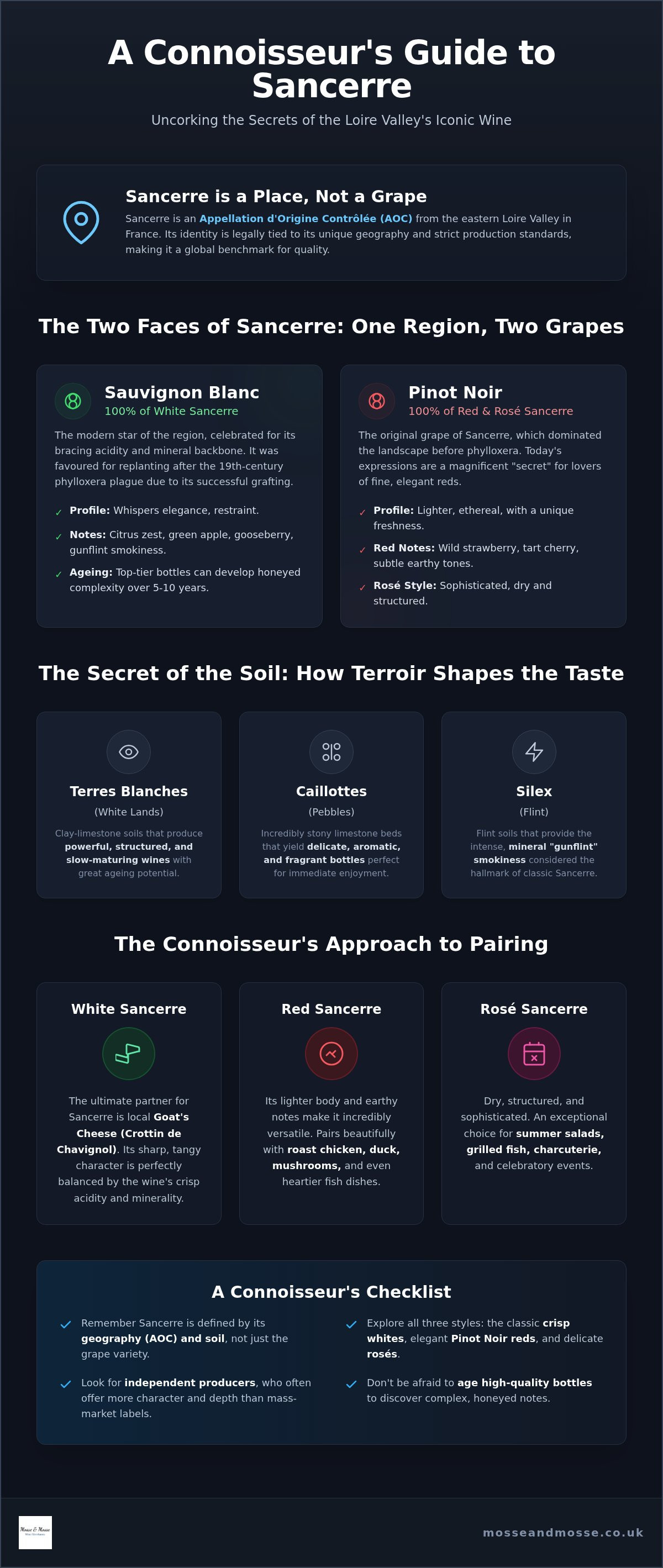
Sancerre is more than just a name on a bottle; it's a statement of origin. As an Appellation d'Origine Contrôlée (AOC) located in the eastern reaches of the Loire Valley, its identity is legally bound to its rugged geography and uncompromising production standards. Perched on the left bank of the Loire River, the vineyards overlook the historic hilltop town that gives the region its name. For many of us who cherish traditional European viticulture, Sancerre wine remains the undisputed global benchmark for vibrant, cool-climate Sauvignon Blanc and remarkably elegant Pinot Noir.
The Grapes of Sancerre: Sauvignon Blanc and Pinot Noir
When you uncork a bottle of white Sancerre, you're tasting 100% Sauvignon Blanc. These wines are celebrated for their bracing acidity and a mineral backbone that feels like liquid stone. However, the region's versatility extends beyond the white grape. Red and Rosé Sancerre are crafted exclusively from 100% Pinot Noir. These reds offer a lighter, more ethereal experience than the heavier styles found elsewhere, focusing on purity of fruit rather than power. You won't often see the grape variety on the label because French labelling traditions prioritise the "terroir" or place of origin over the specific fruit used.
A Brief History: From Red to White
It surprises many enthusiasts to learn that Sancerre was once primarily a red wine region. Before the devastating phylloxera plague swept through Europe in the late 19th century, Pinot Noir dominated the landscape. When it came time to replant, Sauvignon Blanc was favoured because it grafted more successfully onto the new American rootstocks. Whilst white sancerre wine took centre stage for decades, we've seen a thrilling resurgence of high-quality red Sancerre amongst modern collectors. These Pinot Noirs are often compared to those from the Côte d’Or, yet they possess a unique, flinty character that is entirely their own.
The Three Faces of Sancerre: White, Red, and Rosé Styles
Most enthusiasts recognise Sancerre as a singular style of crisp white wine. However, this historic region produces a trinity of expressions that each tell a different story of the Loire landscape. Whether you're pouring a flinty Sauvignon Blanc or a delicate Pinot Noir, sancerre wine is defined by its precision and purity. Understanding the nuances between these styles is the key to appreciating why this appellation remains a staple in the world's finest cellars.
White Sancerre: The Gold Standard
White Sancerre is often compared to New Zealand Sauvignon Blanc, yet the two couldn't be more different. Whilst New Zealand versions often shout with tropical passionfruit, Sancerre whispers with elegance and restraint. You'll find notes of citrus zest, green apple, and gooseberry, all underpinned by a distinct gunflint smokiness. Many of the independent producers we work with utilise extended lees ageing, which is the process of leaving the wine in contact with spent yeast cells. This technique adds a rounded, creamy mouthfeel that balances the naturally high acidity. Whilst most people drink these wines young, high-quality bottles from top-tier sites can develop beautifully over five to ten years, gaining honeyed complexity.
The secret to this variety lies in the three distinct soil types found across the region. Terres Blanches (white lands) are clay-limestone soils that produce powerful, slow-maturing wines. Caillottes are incredibly stony limestone beds that yield delicate, aromatic bottles perfect for immediate enjoyment. Finally, Silex (flint) provides the intense, mineral "spark" that many connoisseurs consider the hallmark of the region.
Red and Rosé: The Hidden Gems
Red Sancerre is a magnificent "secret" for lovers of fine Pinot Noir. These wines share much of the DNA found in the Cote de Nuits, but they offer a unique freshness and "crunchy" red fruit profile. Expect flavours of wild strawberry, tart cherry, and subtle earthy undertones. They are lighter and more ethereal than many Burgundian reds, making them incredibly versatile for food.
Similarly, Sancerre Rosé is a sophisticated, dry, and structured wine. It avoids the sugary simplicity of mass-market pinks, offering a complexity that makes it an exceptional choice for wedding and party wine where quality is paramount. If you're looking to build a curated case that showcases these hidden gems, please reach out to our team for a personal recommendation.
Terroir and Taste: The Secret of the Soil
Terroir is the invisible hand that shapes the character of sancerre wine. It's the delicate marriage of soil, climate, and topography that gives this region its soul. The continental climate, with its sharp, cold winters and sun-drenched summers, plays a vital role in preserving the grape's natural acidity. This tension between heat and cold ensures the wines remain vibrant even in riper years like the sun-soaked 2025 vintage. The specific composition of the earth beneath the vines directly dictates the aromatic intensity and textural weight of every finished bottle.
The Three Defining Soils
Much of the region sits on a geological wonder known as Kimmeridgian marl. This is the same ancient, fossil-rich seabed that underpins the greatest vineyards in Chablis and Champagne. We often find that the most complex bottles are those that respect these three distinct foundations:
- Terres Blanches: This heavy marl produces powerful, slow-maturing wines. It's also where the finest Red Sancerre often originates, as Pinot Noir finds the structure it needs in this dense, white clay.
- Caillottes: These stony limestone soils create aromatic, easy-drinking styles that are wonderfully elegant. They are the perfect introduction for those new to the region.
- Silex (Flint): This rare soil gives the wine its legendary "gunflint" mineral character and a sharp, precise finish that lingers on the palate.
Sancerre vs Pouilly-Fumé: Spotting the Difference
Whilst they share the same grape and similar soils, Sancerre and Pouilly-Fumé are distinct siblings. Sancerre occupies the hills on the left bank of the Loire, whilst Pouilly-Fumé sits directly opposite on the right. Generally, Sancerre is regarded as more vibrant and "nervy", particularly in vintages like 2024. In contrast, Pouilly-Fumé often leans towards a rounder, more overtly "smoky" profile. Both are essential additions to any serious white wine collection, offering two different perspectives on the power of flint and limestone.
If you're looking to explore the differences between these two iconic regions, ask our experts for a curated tasting selection to experience the terroir first-hand.
Serving and Pairing: The Connoisseur’s Approach
To truly honour the craftsmanship of a fine sancerre wine, one must pay attention to the details of the table. We believe that a wine's character is only fully realised when it meets its gastronomic equal. The goal is to enhance the terroir-driven nuances we explored earlier, rather than overwhelming them with heavy or clashing flavours. Proper service ensures that the flinty sparks and delicate fruit notes aren't lost before they reach your palate.
If you find yourself in the heart of the Loire, you'll inevitably be served Crottin de Chavignol. This local goat's cheese is the ultimate partner for White Sancerre. The cheese's tangy, creamy texture perfectly balances the wine's bracing acidity, whilst the mineral notes in the glass echo the limestone soils. For those exploring the reds, pairing Red Sancerre with grilled salmon or herb-crusted lamb provides a sophisticated, lighter red experience that feels fresh and elegant rather than heavy.
Food Pairing Favourites
Beyond the classic cheese match, sancerre wine is remarkably versatile at the dinner table. Its high acidity and clean finish make it a natural companion for a variety of dishes:
- Seafood: Fresh oysters, grilled sea bass, and seared scallops highlight the wine's inherent salinity and citrus zest.
- Vegetarian: Asparagus and pea risotto are wonderful choices that complement the herbal "green" notes of the Sauvignon Blanc grape.
- Poultry: A simple roast chicken with tarragon is a classic match for both White and Red Sancerre, allowing the fruit purity to shine through.
Storage and Service Tips
Temperature is perhaps the most critical factor in your service. We often see enthusiasts over-chilling their whites, which unfortunately masks those delicate mineral notes and complex aromatics. Aim for 8-10°C for whites and rosés. For Red Sancerre, a slightly cooler "cellar temperature" of 12-14°C is ideal to keep the red fruit flavours crunchy and fresh.
Glassware also plays a role in the experience. We recommend using a tapered tulip glass. This specific shape helps concentrate the Sauvignon Blanc aromatics, directing the bouquet towards the nose. If you're opening a young, high-quality bottle, don't be afraid to decant it for thirty minutes to help the wine open up. Because of its prestige and reliable quality, Sancerre remains a premier choice for corporate gifting and special celebrations where only the finest Loire Valley expressions will do.
Experience the Purest Expression of the Loire
Sancerre is a region where ancient geology and meticulous winemaking meet to create something truly extraordinary. By understanding the trio of soils that define the appellation and looking beyond the famous whites to the elegant Pinot Noir reds, you can appreciate the full breadth of this French icon. It's about more than just a grape; it's a commitment to quality that transcends simple branding.
As independent merchants with decades of experience, we're proud to be specialists in French regional classics. We've spent years building relationships with smaller, high-quality producers to ensure our collection represents the very best of sancerre wine. Whether you're seeking a flinty Sauvignon Blanc for a refined dinner or a structured rosé for a special celebration, we provide safe national UK delivery for all our expertly curated cases.
Explore our curated selection of Sancerre and Loire Valley wines today. We'd be delighted to help you find a bottle that perfectly suits your palate and brings a taste of the Loire to your table.
Frequently Asked Questions
Is Sancerre always a Sauvignon Blanc?
No, it is not always a Sauvignon Blanc. Whilst the white variety accounts for the majority of production, the Sancerre AOC also produces red and rosé wines made exclusively from 100% Pinot Noir. These styles are essential to the region's identity, providing a refreshing alternative to the heavier wines found in southern France. We find that many enthusiasts are pleasantly surprised by the elegance and fruit purity of these Pinot Noir expressions.
What is the difference between Sancerre and Pouilly-Fumé?
The primary difference lies in geography and subtle stylistic nuances. Sancerre sits on the left bank of the Loire River, whilst Pouilly-Fumé is located directly across on the right bank. Both use the Sauvignon Blanc grape, but Sancerre is typically perceived as having more vibrant acidity and a nervy edge. Pouilly-Fumé is often described as rounder with a more pronounced fumé or smoky character, largely influenced by the flint-rich soils found in its specific vineyards.
Does Sancerre wine age well in a cellar?
Most sancerre wine is designed to be enjoyed young and fresh, but premium bottles from specific vineyard sites have remarkable ageing potential. These high-quality wines can develop beautifully over five to ten years, evolving from primary citrus notes into complex layers of honey and dried fruit. Proper storage at stable temperatures is essential for this evolution, allowing the mineral texture to integrate whilst the wine gains a richer, more golden character.
Why is Sancerre wine more expensive than other Sauvignon Blancs?
Sancerre commands a higher price because of its global prestige, limited geographic boundaries, and the high cost of land. Market data from January 2026 shows that vineyard prices in the region rose by 24% to an average of €260,000 per hectare. This high entry cost, combined with strict AOC rules that limit harvest yields to maintain quality, ensures that sancerre wine remains a premium product compared to mass-produced Sauvignon Blanc from other countries.
Is Red Sancerre a heavy wine?
Red Sancerre is decidedly not a heavy wine. It is a delicate, ethereal expression of Pinot Noir that prioritises freshness and purity of fruit over power and tannin. You can expect a palate filled with crunchy red berries, wild strawberries, and a light, earthy undertone. Its elegant structure makes it a favourite for those who prefer a lighter red experience, particularly during the warmer months or when paired with more delicate poultry and fish dishes.
What food goes best with Sancerre Rosé?
Sancerre Rosé is a structured, dry wine that pairs beautifully with Mediterranean-inspired dishes. Its crisp acidity and subtle red fruit notes make it a natural match for grilled prawns, Nicoise salad, or even spicy Asian cuisine. Because it possesses more body than many Provence-style pinks, it also stands up well to charcuterie and light pasta dishes. We often recommend it as an elegant choice for wedding celebrations due to its versatility with various menu options.


