

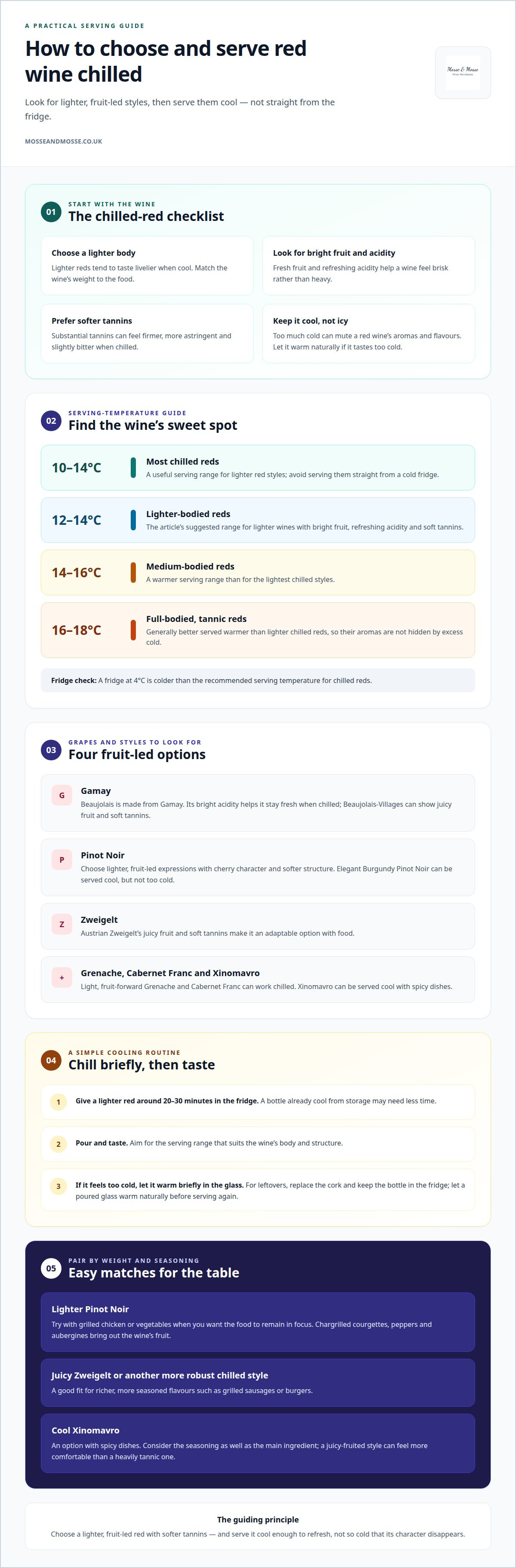
Red wine can be more refreshing with a brief spell in the fridge. The best red wine to drink chilled is usually light-bodied, fruity and low in tannin; serve most chilled reds at 10 to 14°C, rather than straight from a cold fridge.
If you’ve always thought red wine should be served warm, that instinct makes sense: too much chilling can mute its aromas and flavours. But a little coolness can bring freshness to lighter styles, making them especially enjoyable with a relaxed meal or lunch outdoors.
Here, you’ll learn why temperature changes the way red wine tastes, which grapes and styles are particularly well suited to chilling, and how to cool a bottle in the fridge. A simple serving-temperature guide will help you find the sweet spot, keeping the fruit expressive and the wine refreshing rather than cold.
Key Takeaways
- Serve most chilled reds at 10 to 14°C; too much cold can mute their aromas and flavours.
- Look for lighter-bodied wines with bright fruit, refreshing acidity and soft tannins.
- Gamay, Pinot Noir and Zweigelt are among the grape varieties that can work well lightly chilled.
- Give a lighter red wine around 20-30 minutes in the fridge, then let it warm briefly in the glass if it feels too cold.
- Try chilled reds with grilled food and chargrilled vegetables for a refreshing match.
1. Why Is Serving Temperature Important For Red Wine?
Temperature changes how red wines show their fruit, acidity, tannins and aromas. The traditional serving temperature is 18°C, but that can feel too warm in a centrally heated UK room. More structured reds are generally served around 16-19°C, while most chilled reds taste best at 10 to 14°C. The right temperature depends on the wine’s body and structure, not simply its colour.
For a practical comparison, serve medium-bodied reds at 14-16°C and full-bodied, tannic styles at 16-18°C. Pinot Noir, including elegant Burgundy styles, can be served cool at around 16°C. Lighter reds benefit from a lower temperature, with recommendations around 13°C or 14°C. In summer, a cool, refreshing red can be served between 10-16°C, depending on its weight.
Chilling works best for lighter wines with lively fruit and softer tannins. A short time in the fridge can bring a warm bottle towards serving temperature, while a bottle already cool from storage may need less time. For a light red, chill it briefly in the fridge, then taste and adjust. A fridge at 4°C is colder than the recommended serving temperature, so don’t serve the wine straight from it.
A cooler serving temperature can make red wine feel fresher, particularly with summer meals, and bring its acidity and fruit to the fore. But cold affects tannins too: these compounds, associated with grape skins and seeds, can taste more astringent and slightly bitter when the wine is chilled. Very low temperatures can mute aromas and flavours, so aim for cool, not icy.
Which red wines should not be served chilled? Young, dark-coloured reds with substantial body and tannin are generally better served closer to 16-18°C than at 10-14°C. Chilling can make their tannic structure feel firmer and hide some of their aromas. Even these fuller styles may benefit from a brief spell in the fridge on a hot day.
What is a good price range for chilled red wine in the UK? There isn’t a separate price band for chilled reds: suitability depends more on the wine’s body, acidity and tannins than its price. Choose by style, such as a lighter Gamay or Pinot Noir, rather than assuming a higher-priced bottle will taste better chilled.
Does chilling red wine change its flavour, tannins or aroma? Yes. Moderate chilling can emphasise fresh fruit, while excessive cold can mute aromas and make tannins feel more pronounced. For leftovers, replace the cork and store the bottle in the fridge. When serving it again, pour a glass and let it warm naturally if it tastes too cold. This gradual approach helps the aromas emerge without warming the whole bottle.
2. Why chill red wine?
A cooler serving temperature gives lighter red wines a brisker feel, helping their fruit and acidity complement food without overwhelming it. Try lightly chilled Pinot Noir with grilled chicken: its delicate character sits comfortably alongside savoury, charred flavours. The aim is balance, not an icy bottle.
Grilled food is a natural match. Chilled reds pair well with sausages and burgers, where juicy fruit complements smoky, savoury flavours. Try a lighter-bodied red with grilled chicken, served alongside chargrilled courgettes, peppers or aubergines. The wine’s freshness gives the vegetables a lively counterpart, while their browned edges bring out the fruit.
Match the wine’s weight to the dish. Delicate Pinot Noir suits chicken or vegetables when you want the food to remain in focus. For a burger or sausage, a more robust chilled style can stand up to richer, more seasoned flavours. Keep the wine cool enough to feel refreshing, but not so cold that its aromas disappear.
Spice calls for a thoughtful choice. Xinomavro can be served cool with spicy dishes, offering an alternative to the familiar pairing of red wine and grilled meat. Consider the seasoning as well as the main ingredient: aromatic spices and chilli can make a wine seem more forceful, so a juicy-fruited style is often a more comfortable match than a heavily tannic one.
Zweigelt offers another useful option. Its juicy fruit and soft tannins make it versatile with food, including grilled sausages or burgers. That softer structure matters: a highly tannic red can feel more astringent beside char and spice, while a fruit-led wine keeps the pairing rounded. Choose a style with enough flavour to meet the dish without letting the wine dominate.
For a simple outdoor lunch, pair lightly chilled Pinot Noir with grilled chicken and chargrilled peppers. At a summer barbecue, match sausages or burgers with juicy Zweigelt, then offer a cooler, lighter red alongside aubergine and courgette. These examples show how the dish, seasoning and wine’s body guide the choice. To talk through a bottle for your menu, discuss a wine pairing.
3. Red wine styles suited to chilling
Start with the wine’s structure rather than its colour. Lighter-bodied reds with bright fruit, refreshing acidity and soft tannins tend to taste lively when served cool. Aim for around 12-14°C, or 12-13°C for a particularly light style. These wines can feel crisp and refreshing without being treated like white wine and served straight from the fridge.
Gamay is a classic choice. Beaujolais is made from the thin-skinned Gamay grape, and its naturally bright acidity helps it stay fresh when chilled. Beaujolais-Villages is often made using carbonic maceration, in which whole grapes ferment within their cells. This approach can emphasise juicy fruit and keep tannins soft, making the style an inviting place to start.
Pinot Noir also suits gentle chilling, especially in lighter, fruit-led expressions. Look for cherry character and a softer structure rather than a highly concentrated, heavily tannic style. Simple, youthful Pinot Noir can work well for a picnic or outdoor lunch. Fine Burgundy Pinot Noir can also be served cool, though its detail is best appreciated when the wine isn’t too cold.
Other grapes offer different expressions. Austrian Zweigelt is suitable for chilling, with juicy fruit and soft tannins giving it an adaptable, approachable character. Grenache and Cabernet Franc can also make appealing chilled reds when they’re light and fruit-forward. Cabernet Franc from France’s Loire Valley can show freshness and bright fruit, though the wine’s weight and tannin vary by bottle.
For something less familiar, consider Frappato or Nerello Mascalese from Italy, alongside Mencía, Trousseau, Ploussard, Cinsault and Pinot d’Aunis. These grapes can suit cooler serving styles, but winemaking and body matter as much as variety. Choose a lighter example with lively fruit; a richer, more structured bottle may taste firm when chilled.
Use the label and the wine’s feel as a guide. A pale, fruit-led red with modest tannins is a stronger candidate than a young, dark-coloured wine with substantial body. If the bottle feels broad and grippy, serve it less cool; if it feels light, aromatic and juicy, chilling can sharpen its freshness. The best matches aren’t defined by grape names alone, but by the balance of fruit, acidity and tannin.
For a first taste, chill a Gamay or light Pinot Noir and pour a small glass. If the cherry fruit remains clear and the finish feels fresh, serve the bottle at that temperature. If the aromas seem muted or the tannins feel slightly sharper, let the wine warm in the glass before pouring more.
4. Chilling red wine in the fridge
A fridge is a simple way to bring a light red closer to serving temperature. For a room-temperature bottle, start with 25-30 minutes, then pour a small taste. The target is cool and refreshing, not fridge-cold. A Beaujolais with bright fruit and lively acidity can show its freshness well when gently chilled, while a more structured red may need less cooling.
Timing depends on the bottle’s starting temperature and style. A bottle kept in a cool place needs less time than one standing in a warm kitchen. For lighter reds, a spell of 20-30 minutes is a useful starting point; a broader window of 20 to 40 minutes may suit different bottles and starting conditions. Treat the clock as a guide, then taste.
- Place the bottle in the fridge. Set a timer for 20 minutes if it’s already cool, or 25-30 minutes for a room-temperature light red.
- Pour a small glass. Check whether the wine’s fruit, acidity and structure still feel balanced.
- Adjust before serving. If it tastes too cold, leave the glass out for a few minutes so the aromas can open.
A fridge set at 4°C is colder than the serving temperature suited to lighter reds. That’s why a short chill works better than leaving the bottle in for hours. Very low temperatures can mute aroma and flavour, making even a bright Gamay seem less expressive. If the first pour feels subdued, let it warm slightly before deciding the wine lacks character.
On a warm day, a brief spell in the fridge may also suit fuller-bodied reds. Keep it short, then taste: if the wine’s tannins feel firmer or its aromas muted, let it warm in the glass. The same approach can preserve the freshness of lighter Pinot Noir without hiding its fruit.
For a quick comparison, pour a small glass before chilling and another after 20-30 minutes. Notice whether the cooler wine feels more refreshing, and whether its fruit and acidity remain clear. That simple tasting helps you find the right timing for a favourite bottle, rather than relying on a fixed rule for every red.
If you’re choosing a red for this method, focus on lighter styles with bright fruit and softer tannins. Ask Mosse and Mosse for help choosing a red wine that suits your preferred serving style.
Mosse and Mosse: Champagne & Sparkling Wines
Mosse and Mosse offers Champagne & Sparkling Wines alongside its red wine selection, giving you another style to consider for a meal or gathering. If you enjoy the freshness of a lightly chilled red but fancy something different, explore Champagne and sparkling wines. White wine is another option when you’re planning a varied table or choosing bottles for different tastes.
For help choosing a red wine for an occasion or finding a style to suit your preferences, turn to Mosse and Mosse. This independent Suffolk wine merchant offers personalised service and a carefully selected range of red wines.
Contact Mosse and Mosse to discuss your wine choices.
Make your next bottle a personal discovery
Let your next meal guide your choice. A relaxed lunch, a garden supper or a table of varied dishes each offers a different way to explore how wine works with food. The best red wine to drink chilled is the one whose character you enjoy at a cooler serving temperature, so trust your palate and make the first pour part of the pleasure.
Mosse and Mosse offers red and white wines, Champagne and sparkling wines for different tastes and occasions. Whether you’re planning a meal or choosing wines to share, its curated selection and personal service can help you find a style to suit the occasion.
Start a conversation with Mosse and Mosse, and enjoy discovering a bottle that makes your next gathering feel special.
Frequently Asked Questions
Why chill red wine?
Chilling can make a lighter red feel livelier alongside food, particularly at an outdoor lunch or summer supper. It can also help a wine feel less heavy with grilled dishes. Try the same wine at two temperatures with a bite of food, such as grilled courgette, and notice how its fruit and acidity interact. This side-by-side tasting is an easy way to find your preference.
Which red wines work best when chilled?
Light, fruit-led reds with refreshing acidity and softer tannins are usually the most successful. Gamay, Pinot Noir and Zweigelt are useful starting points, especially when the wine feels juicy rather than dense. Simple Pinot Noir can suit a picnic, while fresh Beaujolais may work with a casual meal. The best red wine to drink chilled stays expressive as it cools.
Why Is Serving Temperature Important For Red Wine?
Serving temperature changes how clearly you perceive a wine’s aromas, fruit and structure. Too much warmth can make a red seem heavier, while excessive cold can make its aromas harder to detect. Temperature also affects the impression of tannins, which may feel more pronounced when chilled. If a glass seems closed or firm, give it time to warm naturally before deciding whether the wine suits your palate.
What red wine styles are best served chilled?
Choose lighter-bodied, fruit-forward styles rather than reds built around powerful tannins or dense structure. Beaujolais is a familiar example, and some Pinot Noir, Grenache and Cabernet Franc styles can also suit cooler serving. Look for a wine that feels bright and lively, not heavily extracted. If you’re unsure, chill a small amount first and taste it before cooling the rest of the bottle.
Which light-bodied red grape varieties taste best chilled?
Gamay and Pinot Noir are dependable varieties to explore, with Zweigelt, Frappato and Cinsault offering further options. Trousseau, Ploussard and Pinot d’Aunis can also suit cooler serving styles. Grape variety is a starting point, not a guarantee: ripeness, winemaking and body all shape the result. Choose a fruit-led expression with fresh acidity for the clearest, most refreshing impression.
What are the best UK-available red wines to drink chilled?
In the UK, look for Beaujolais or another light Gamay, a fruit-led Pinot Noir, or a softer Zweigelt. Mosse and Mosse’s listed red selection includes 2024 La Ronciere Cantoalba Pinot Noir from Chile and NV Roncier Reserve Pinot Noir, Gammay Maison Louis Tramier & Fils. These grape styles make useful candidates for gentle chilling. Taste a small glass first to find the serving temperature you enjoy.


