
Champagne isn’t automatically the best sparkling wine for celebrations. The best sparkling wine for celebrations is the one that suits the moment: choose fresh, fruit-led fizz for a relaxed toast, or explore traditional-method wines for more savoury, layered flavours. The food you’re serving and the style you enjoy matter just as much as the occasion.
Choosing a bottle can feel tricky when there are so many styles to consider. A wine that works beautifully as an aperitif may not be your first choice with a meal. Start with what you like in the glass, then consider whether you want the wine to refresh the palate, complement the food or bring extra richness to the celebration.
Here, you’ll learn how Prosecco, Cava, Crémant, English sparkling wine and Champagne differ, and how to match them with your menu and plans. From a casual afternoon gathering to a special dinner, a few simple cues can help you find a sparkling wine that feels right for the occasion.
Key Takeaways
- Choose a sparkling style by its flavour profile, from fresh, fruit-led Prosecco to richer traditional-method fizz.
- Use sweetness, acidity and texture to find a bottle that suits your palate and the mood of the celebration.
- Match sparkling wine to the food: a crisp style can complement delicate fish, while Cava works well with tapas or as an aperitif.
- Understand how traditional-method wines develop their more layered character through secondary fermentation and ageing in the bottle.
- Compare sparkling wine styles available in the UK, then narrow your choice by occasion, menu and personal taste.
1. Matching champagne styles to personal preferences
Start with the flavours you enjoy, then match the bottle to the occasion. If you prefer a crisp, lighter style, look for fresh fruit and lively acidity. For a richer, more layered glass, consider Champagne with reserve wines in its blend. The best sparkling wine for celebrations is the one that suits your palate, menu and plans.
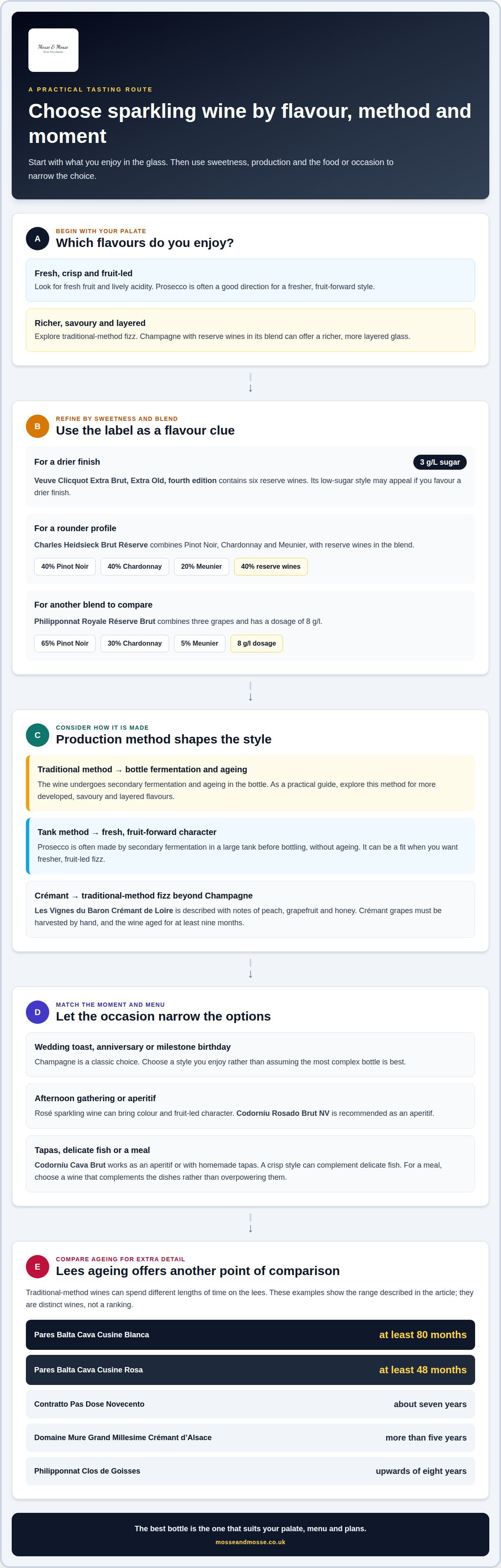
Sweetness is another useful guide. Veuve Clicquot Extra Brut, Extra Old, fourth edition, contains six reserve wines and 3 g/L of sugar. That low-sugar style may appeal if you favour a drier finish. For a rounder profile, Charles Heidsieck Brut Réserve combines 40% Pinot Noir, 40% Chardonnay and 20% Meunier, with 40% reserve wines in the blend.
For a special dinner or an important toast, consider how the blend shapes the wine’s character. Philipponnat Royale Réserve Brut brings together 65% Pinot Noir, 30% Chardonnay and 5% Meunier, with a dosage of 8 g/l. Those details offer clues about the wine, but your own preference remains the best guide. A celebratory bottle needn’t be the most complex one on the table.
For a wedding toast, anniversary or milestone birthday, Champagne is a classic choice. For an afternoon gathering, rosé sparkling wine can bring colour and fruit-led character; Codorníu Rosado Brut NV is recommended as an aperitif. If the celebration centres on a meal, choose a style that complements the dishes rather than overpowering them. Let the occasion narrow the options, then choose according to taste.
The production method also shapes the wine. With the traditional method, the wine undergoes secondary fermentation and ageing in the bottle. Prosecco is often made using the tank method, with secondary fermentation in a large tank before bottling and without ageing. As a practical guide, consider traditional-method fizz for developed, layered flavours and Prosecco for a fresher, fruit-forward style.
Crémant is another option if you enjoy traditional-method fizz and want to explore beyond Champagne. Les Vignes du Baron Crémant de Loire is described as having notes of peach, grapefruit and honey. Crémant grapes must be harvested by hand, and the wine aged for at least nine months. Compare its flavour description with Champagne you already enjoy to see how it suits your preferences.
Cava offers another style to consider alongside Champagne and Prosecco. Try Codorníu Cava Brut as an aperitif or with homemade tapas. To choose, first decide whether you prefer crisp or rounded flavours, then whether the bottle is for a toast or a meal. This makes your choice more personal than relying on the label alone.
2. Best prosecco and sparkling wines - Which?
For UK celebrations, consider Prosecco for fresh, fruit-led fizz, Cava for a versatile aperitif, or French Champagne and Crémant for traditional-method character. The right bottle depends on the occasion, food and flavours you enjoy, rather than a single universal winner.
Retail choice spans supermarkets, wine merchants and specialist sparkling wine ranges. A UK market snapshot puts Prosecco typically between £9 and £12, with a median of about £10. That estimate draws on 10 price samples from four sources, collected on 17 November 2026. Treat it as a broad market guide, not a price for every bottle.
Value depends on more than the shelf price. Crisp Prosecco might suit a relaxed welcome drink, while traditional-method Crémant or Champagne may bring more developed flavours to a special meal. Compare the wine’s style and production method with how you’ll serve it. A bottle everyone enjoys is better value than one chosen for its label alone.
The number of glasses a bottle provides depends on the size of each pour. Decide whether guests will have a single toast or continue drinking sparkling wine, then plan around the guest list and other drinks. This gives you a more useful estimate than assuming every celebration needs the same amount.
Chill sparkling wine before serving, and take care if using a freezer. After chilling, let the bottle sit for about 10 minutes before pouring. To open it safely, keep the cork pointed away from people, hold it firmly and turn the bottle slowly rather than pulling the cork sharply.
Once opened, sparkling wine is best enjoyed promptly, as its bubbles gradually fade. Seal the bottle with a sparkling-wine stopper and store it in the fridge to help preserve its fizz. How long it stays lively depends on the wine, the seal and how much remains, so avoid opening bottles long before they’re needed.
For an occasion with varied tastes, pair a fruit-led Prosecco with a richer French sparkling wine, giving guests a choice of styles. Keep the bottles chilled until serving, and open them as needed to retain their sparkle. If you’re planning a celebration and weighing up styles, talk through your sparkling wine options.
3. Traditional-method sparkling wines
Traditional-method fizz earns its classic reputation through time on the lees, where the wine develops more savoury, layered flavours. The length of ageing varies considerably, giving you a useful way to compare bottles beyond grape varieties or region. Pares Balta Cava Cusine Blanca, for example, spends at least 80 months on the lees, while its Rosa counterpart spends at least 48 months.
Ageing periods can help guide your choice. For comparison, Contratto Pas Dose Novecento spends about seven years on the lees, Domaine Mure Grand Millesime Crémant d’Alsace ages for more than five years, and Philipponnat Clos de Goisses is aged for upwards of eight years. These are distinct wines, but their maturation offers traditional-method enthusiasts a useful detail to explore.
Regional rules and cellar choices also shape sparkling wine. South African Cap Classique has a legal minimum ageing requirement of 12 months, while Crémant grapes must be harvested manually and the wine aged for at least nine months. Tank-method fizz offers a different style, generally emphasising fresh, immediate fruit rather than the developed character associated with extended lees ageing.
Choose according to the experience you want in the glass. A bottle aged for longer may offer more developed aromas and texture, making it appealing for dinner or a leisurely celebratory toast. A shorter-aged sparkling wine may feel more at home at a lively reception, with its brighter, more direct style. Ageing is a useful clue, but taste and occasion matter too.
Blind tasting offers a practical way to compare styles without labels shaping expectations. Tasters assess appearance, aroma, flavour, texture and finish, then record their impressions before seeing the bottles. In September 2026, a tasting of 10 supermarket own-label sparkling wines priced at £17 or less involved four independent wine experts. The example shows how structured tasting can compare value and style across a group.
For your own tasting, serve each wine at a similar temperature and use the same glassware. Taste the sparkling wines side by side, noting whether each feels crisp, rounded, fruity or savoury. Then revisit the labels and production details, including region and lees ageing. This helps you separate your own response to the wine from the influence of a familiar name.
Use these details to narrow your shortlist, not to declare one method universally superior. A long-aged traditional-method bottle may suit someone who enjoys complexity, while a fruit-forward tank-method wine may better match another guest’s preferences. The right choice is the one whose style fits the celebration and the people sharing it.
4. Sparkling wine with food and celebrations
Start with the food, then choose a sparkling wine that complements rather than overwhelms it. Ruggeri Argeo Prosecco Brut is recommended with delicate fish, making it a useful match for a light first course. For richer dishes, consider how acidity, texture and flavour intensity will work alongside the meal. A well-chosen pairing lets both the wine and food shine.
Think about the whole menu, not just the main course. With smoked salmon canapés, crisp sparkling wine can refresh the palate between bites. For a cheese board, consider how the wine’s fruit character will work with the cheeses’ savoury flavours. If you’re serving several courses, choose a versatile bottle that suits the spread rather than focusing on one ingredient.
For a reception, serve a fresh, approachable style as guests arrive, then bring out a more layered bottle with the meal. At a garden party, lighter canapés and floral sparkling wine can set an easy-going tone. For a formal dinner, traditional-method wine can make the toast feel more considered. Let your favourite style guide the choice; the event is a setting, not a rulebook.
Rosé sparkling wine can add colour to a birthday lunch or summer gathering, while white fizz suits a broad range of menus. Match the wine’s intensity to the dishes: delicate flavours call for a wine that won’t dominate, while strongly seasoned food can stand up to a more pronounced style. Pair subtle seafood with a lighter wine, then serve a fuller-flavoured bottle with richer dishes.
Plan the serving order as carefully as the pairings. Set out the first bottle with arrival snacks, keep food and glasses accessible, and open further bottles as the meal progresses. This keeps the fizz fresh and gives guests a natural chance to enjoy different styles. For a wedding or party, offering white sparkling wine and rosé gives guests distinct options without turning the table into a tasting flight.
Keep practical details in mind. At a seated dinner, pour a small first glass before the food arrives, then serve more alongside the courses. For a standing reception, choose a style that works with bite-sized food and is easy to enjoy between conversations. These choices make the wine part of the occasion rather than an afterthought.
For a food-led celebration, build your choice around the menu, serving order and guests’ tastes. A delicate fish course points towards a fresh, balanced pairing; a relaxed gathering may call for a fruit-forward style. Discuss sparkling wine for your celebration and find a bottle to suit the food and occasion.
Mosse and Mosse: Champagne & Sparkling Wines
Mosse and Mosse is a natural next step when you’ve settled on the style and occasion, but want help choosing a bottle. Its Champagne and sparkling wine selection gives you options to consider for a toast, a meal or a gathering with varied tastes.
Personalised service can help you choose wines to suit your preferred flavours and planned menu. If you’re also choosing wines for the table, Mosse and Mosse offers white, red and rosé wines alongside sparkling wines.
Contact Mosse and Mosse to discuss sparkling wine for your celebration.
Choose a bottle that feels like yours
Let the celebration have its own character. A relaxed lunch, a lively gathering and a carefully planned dinner each create a different mood, but your choice needn’t follow a set formula. Pick a flavour you genuinely enjoy, then make it part of the occasion: the bottle opened as guests arrive, the glass raised for a toast or the pour that accompanies a favourite moment.
That personal detail makes the best sparkling wine for celebrations more than a label or style. It reflects the people around the table and the kind of occasion you want to create. If you’re weighing up different bottles, Mosse and Mosse can help you find a direction to suit your taste and plans.
Contact Mosse and Mosse to discuss your celebration, then raise a glass to a choice that feels right for you.
Frequently Asked Questions
Best prosecco and sparkling wines - Which?
For an informal welcome, choose fresh Prosecco; for a formal toast, consider a traditional-method bottle. Soffio Prosecco Spumante DOC and Chapel Down Brut are examples from different sparkling-wine categories to explore. If food is central, let the menu guide your choice. For guests with different preferences, serving two contrasting styles offers choice without requiring a large selection.
Champagne vs Cava vs Prosecco: What’s the difference?
A key distinction is how the bubbles are produced and the style that results. Champagne and Cava are associated with traditional-method fizz, while Prosecco is commonly made using the tank method. This gives you a practical starting point: decide whether you prefer the character of bottle-aged fizz or a fresher, fruit-led style, then compare individual wines rather than relying on the category name alone.
What is a good Champagne alternative?
Crémant is a good alternative if you enjoy French sparkling wine beyond Champagne. Les Vignes du Baron Crémant de Loire is described with notes of peach, grapefruit and honey, while Crémant d’Alsace offers another regional style to explore. For a celebration, choose according to the flavours you enjoy and the food being served; the regional name can help narrow your shortlist.
How do Champagne, English sparkling wine, Prosecco and Cava compare?
Compare the four by the style you want, rather than treating them as interchangeable. Prosecco is often chosen for its fruit-forward character, while Champagne, English sparkling wine and Cava give you other regional expressions to explore. Read the tasting notes for clues about freshness, fruit and richness, then consider the occasion: a relaxed reception may call for a different profile from a dinner toast.
Which sparkling wines offer the best value in the UK?
The best value is the bottle that delivers the style you want for its role in the celebration. For a casual gathering, a well-matched Prosecco may make more sense than a complex bottle intended for a formal dinner. Compare the wine’s tasting notes, production method and format with your plans. A bottle chosen for enjoyment and food pairing can offer better value than one selected for its label alone.
What are the prices of popular celebratory sparkling wines in UK shops?
A UK market snapshot places Prosecco typically between £9 and £12, with a median of about £10. It is based on 10 price samples from four sources, collected on 17 November 2026. This is a broad market indicator, not a quote for a specific bottle or merchant. Compare the listed style and bottle format as well as the shelf price when considering alternatives.


