
The distinction between organic and biodynamic wine is about how the vineyard is farmed, not a guarantee that every bottle will taste a certain way. In the UK, “biological” is often used to mean organic, while biodynamic farming builds on organic practices and follows a broader philosophy associated with Rudolf Steiner, whose agricultural ideas began in 1924. That’s the starting point for choosing organic and biodynamic wine in the UK.
It’s understandable to look for a label as a quick guide to how a wine was made. Certification can provide useful evidence, but it doesn’t tell the whole story: choices in the vineyard and winery still matter, and biodynamic certification has its limits.
This guide explains how the terms differ, what labels can and can’t tell you, and which producer practices are worth understanding. You’ll be better equipped to choose a bottle based on farming, winemaking and style, rather than relying on a single word on the label.
Key Takeaways
- Understand how organic, biological and biodynamic describe different approaches to growing grapes and making wine.
- Learn which vineyard and cellar practices can help you look beyond the wording on a label.
- See what certification can tell you, and why it doesn’t by itself determine a wine’s quality or style.
- Explore how to choose a biodynamic bottle with its region, producer and your own taste in mind.
- Discover how Mosse and Mosse’s Champagne and sparkling wines can help when you’re choosing a bottle for a particular occasion.
What is the difference between organic, biological and biodynamic wines?
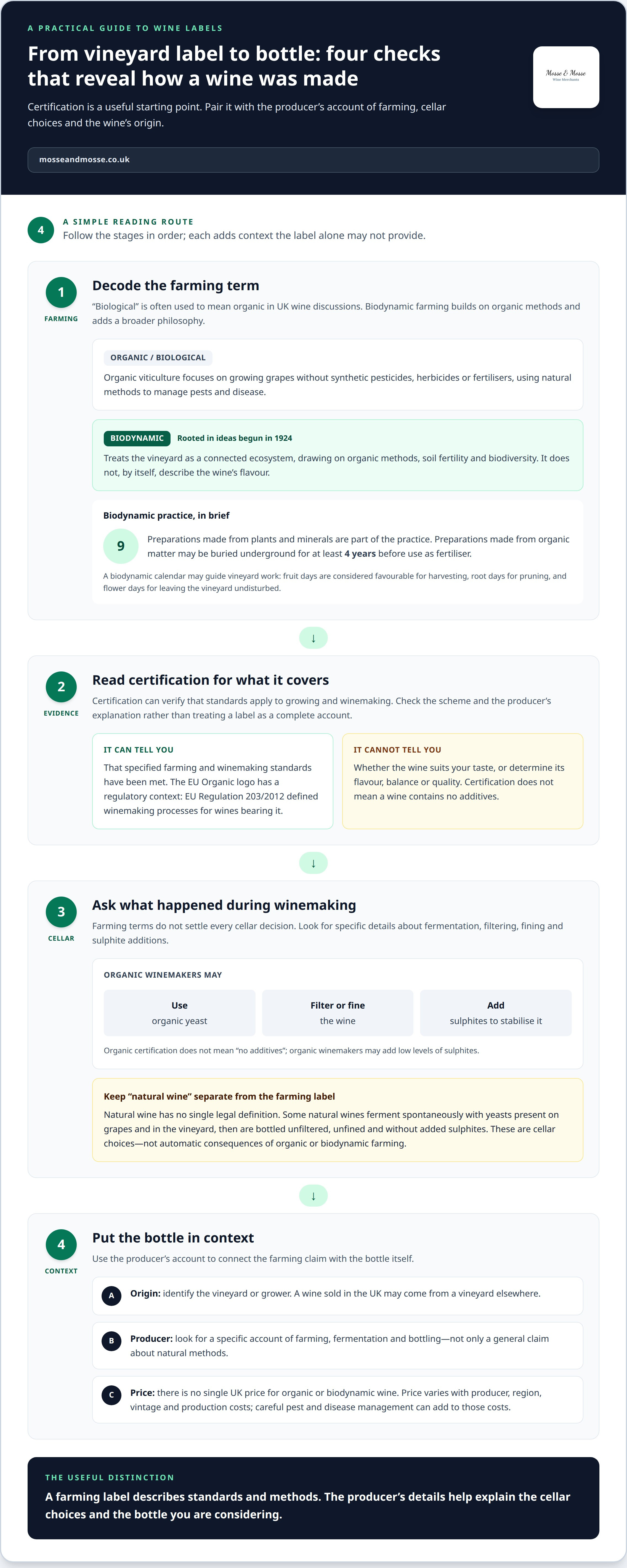
Organic and biological usually describe similar farming approaches, while biodynamic farming adds a broader philosophy and specific vineyard practices. The distinction matters because a label may describe how grapes are grown, not every decision made during winemaking.
Biodynamic farming principles and origins
Biodynamic agriculture treats a farm as a connected ecosystem, drawing on organic methods and Rudolf Steiner’s teachings. The movement began in 1924, before organic agriculture developed. For wine drinkers, this history helps explain why biodynamic wines involve more than avoiding synthetic chemicals: growers also consider soil fertility, biodiversity and the vineyard’s relationship with its surroundings.
Organic viticulture focuses on growing grapes without synthetic pesticides, herbicides or fertilisers, using natural methods to manage pests and disease. “Biological” is often used as another term for organic farming in wine discussions. Organic methods can include powdered sulphur to protect vines. In the cellar, organic winemakers may use organic yeast, filter or fine wine, and add sulphites to help stabilise it.
Biodynamic farming builds on organic agriculture but follows Rudolf Steiner’s principles and a spiritual philosophy. Growers treat the vineyard as a whole ecosystem, supporting soil life with compost and preparations made from plants, minerals and composted animal manure. Biodynamic practice also uses nine preparations made from plants and minerals. Preparations made from organic matter may be buried underground for at least 4 years before use as fertiliser.
Principles and costs of biodynamic wine
Biodynamic wine is made from grapes grown according to organic farming principles, alongside vineyard work planned around lunar and planetary cycles. This approach helps explain a producer’s farming choices, rather than signalling a particular flavour. Biodynamic doesn’t automatically mean natural wine, a term with no single legal definition that can involve different cellar choices.
A biodynamic calendar can guide tasks such as pruning, planting and harvesting. In this system, fruit days are considered favourable for harvesting grapes, root days for pruning, and flower days for leaving the vineyard undisturbed. These practices reflect biodynamics’ aim of working with natural cycles, not a description of the wine’s taste.
There is no single UK price for organic or biodynamic wine. The price varies with producer, region, vintage and production costs; careful pest and disease management can add to those costs. When comparing bottles, consider their origin and producer as well as the farming term on the label.
Choosing wine based on labels and producer practices
A label is a useful starting point, but it describes defined standards rather than every choice a grower makes. To understand a bottle, pair its certification with the producer’s account of vineyard work, fermentation and bottling.
Does organic or biodynamic wine contain fewer additives or sulphites? Organic certification covers standards for grape-growing and winemaking, but it doesn’t mean a wine contains no additives. Organic winemakers may use organic yeast, filter or fine wine, and add low levels of sulphites to stabilise it.
Natural wine is a separate term with no single legal definition. Some natural wines ferment spontaneously using yeasts present on grapes and in the vineyard, then go into the bottle unfiltered, unfined and without added sulphites. These are cellar choices, not automatic consequences of organic or biodynamic farming.
Read the label alongside the producer’s methods
Certification can verify that standards apply to growing and winemaking. Look for an organic or biodynamic label, then consider what the producer says about farming, fermentation and bottling. A general claim about natural methods may leave important details unclear; a specific account explains how grapes were grown and handled.
Biodynamic production adds its own farming principles to organic methods. Growers use preparations made from plants and minerals, and vineyard work may follow lunar and planetary cycles. Biodynamic production is used in France, Switzerland, Italy, Spain, Austria, Germany, Australia, Chile, South Africa, Canada and the United States. The producer’s explanation can connect these methods with the bottle you’re considering.
Finding UK-grown bottles
Which UK vineyards produce organic or biodynamic wine? To identify a UK-grown bottle, look for the vineyard or grower named on its label, alongside an organic or biodynamic claim. Then use the producer’s account to distinguish certified farming from individual practices. Wine sold in the UK may come from a vineyard elsewhere, so the place of sale doesn’t identify where its grapes were grown.
For a particular bottle, the most useful details are its origin, certification and the producer’s description of cellar choices. These help separate farming standards from decisions such as filtering or sulphite additions. If you’d like guidance choosing a bottle for your taste, ask Mosse and Mosse.
Limitations of certification as a quality indicator
Certification can help explain farming and winemaking standards, but it can’t tell you whether a wine suits your taste. Its value depends on what the scheme covers and which details the producer shares.
Certification rules and regulation
Organic certification checks that standards are met across grape-growing and winemaking, giving you a clearer account of production methods. The EU Organic logo has a specific regulatory context: EU Regulation 203/2012 defined winemaking processes for wines bearing it. That tells you about standards behind the label, not the wine’s flavour, balance or quality.
For biodynamic wines, distinguish legal regulation from private certification. Biodynamic wine itself isn’t subject to legal regulations, while Demeter is an international certifier for biodynamic production. A certification mark indicates that a producer follows a scheme’s standards. It doesn’t mean every biodynamic producer uses identical methods or makes wine in the same style.
These distinctions matter on UK shelves, where wines can come from different countries and certification systems. Read the named certification alongside the wine’s origin and producer information. An EU Organic logo indicates compliance with applicable EU standards; it isn’t a general UK quality grade or a promise about taste.
Certification as a quality indicator
A certificate is evidence of specified farming or production standards, not a tasting score. Biodynamic certification can tell you about practices such as preparations and attention to biodiversity, but it can’t establish whether a bottle will be aromatic, fresh or structured. Those qualities depend on choices across the vineyard, harvest and winery.
Certification also has limits in scope. A biodynamic certificate relates to the land or production covered by its scheme, rather than proving that every wine from a producer has the same status. In 2013, more than 700 vineyards worldwide were certified as biodynamic, covering more than 10,000 hectares. Those figures show certification’s reach, not the quality of each resulting wine.
Use the label as one part of your decision. Pair it with the producer’s details about vineyard work, harvest and cellar methods, then consider the wine’s region and grape variety. For example, a certified bottle may still be filtered or fined, while the producer’s explanation can clarify those choices. Organic or biodynamic status alone won’t tell you whether you’ll enjoy the style.
A tasting can reveal what certification cannot: how a wine smells and tastes in the glass. Compare its texture, acidity and finish with your preferences, while treating the label as useful context. Combining production information with personal tasting is a more reliable guide than assuming a certificate guarantees a particular kind of enjoyment.
Biodynamic wine recommendations
Alsace is a useful region to explore when choosing a biodynamic bottle. Its wines let you compare how different grape varieties and producers express a place, while the biodynamic label describes farming principles rather than a fixed flavour. Treat the region as a starting point, then choose according to style and occasion.
Start with the producer’s name and the details on the bottle. Look for a clear account of how the grapes were grown, whether the wine is certified, and what happened during winemaking. This helps distinguish a producer following Rudolf Steiner’s biodynamic principles from one using the term loosely, keeping your choice grounded in practices rather than packaging.
Next, decide what you want from the wine. A fresh, lighter style may suit an aperitif, while a fuller-bodied bottle can work better with a meal. These are style preferences, not promises of biodynamic farming. Grape variety, growing conditions and cellar decisions all shape the finished wine, so the farming label alone won’t tell you how it tastes.
Compare bottles from the same region where possible. For example, you could assess one Alsace white alongside another from the region, focusing on grape, producer and vintage rather than geography. Then note whether the producer explains soil care, preparations and chemical use. Specific detail gives a clearer picture than broad claims about balance or nature.
Where can you buy organic and biodynamic wine in the UK? Independent wine merchants and specialist retailers can help you find bottles by certification, region and style. Choose a merchant that shares useful information about the producer and winemaking, so you can consider the farming approach alongside the wine itself.
Biodynamic methods are used in countries including France, Italy, Spain, Austria and Australia. This gives you scope to explore beyond Alsace, but the principles don’t make every wine identical. A bottle from one region may taste very different from another, even when both are farmed biodynamically.
For a first choice, set aside the label briefly and think about the occasion, preferred weight and grape style. Then use certification and producer information to narrow the options. If you’d like personal guidance choosing a bottle, get help selecting a wine.
Mosse and Mosse: Champagne & Sparkling Wines
Mosse and Mosse offers Champagne and sparkling wines for celebrations, aperitifs and meals, alongside white wine for those seeking a still option. If you’re choosing by farming method, use the producer and certification details on the bottle to guide your decision; the wine’s style and occasion matter too.
For a particular meal or gathering, Mosse and Mosse can help you consider which style may suit the occasion. Explore the Champagne and sparkling wines range as one place to start.
Contact Mosse and Mosse to discuss your wine choice.
Make your next bottle a personal discovery
Let your next choice reflect both your interest in how grapes are grown and what you enjoy drinking. Organic and biodynamic wine in the UK offers a way to explore producers’ approaches, but your own preferences should guide the final decision. Notice which styles you enjoy, from bright and refreshing to deep and savoury, and use those impressions to shape what you try next.
A considered bottle can make an ordinary meal feel like an occasion, whether you’re choosing red wine, white wine, or Champagne and sparkling wine. Mosse and Mosse can help you explore wines for different tastes and moments, with a personal approach rooted in a genuine appreciation of the bottle itself.
Ready to choose something for your table or a special occasion? Talk with Mosse and Mosse and take the next step towards a bottle you’ll be pleased to share.
Frequently Asked Questions
What is the future of biodynamic wine?
The future of biodynamic wine will depend on how growers apply its principles to individual vineyards and communicate their choices. Clearer information about soil care, biodiversity and grape-growing, alongside certification, can help consumers distinguish practical farming details from broad claims. As you explore bottles, consider both the producer’s approach and the wine’s style, rather than treating biodynamic practice as a prediction of flavour.
Is natural wine organic?
Natural wine isn’t automatically organic, because the term describes winemaking choices rather than a verified farming standard. Spontaneous fermentation or bottling without filtration, for example, doesn’t establish how the grapes were grown. An organic claim relates to grape-growing and winemaking standards; natural wine has no single legal definition. To understand a bottle, distinguish vineyard practices from cellar decisions such as filtering, fining and adding sulphites.
What does biodynamic mean?
Biodynamic describes an approach to agriculture influenced by Rudolf Steiner’s teachings, in which a farm is treated as an interconnected ecosystem. In winegrowing, this outlook can shape soil care, biodiversity and the timing of vineyard work. Demeter is an international certifier for biodynamic production. The term refers to a farming philosophy and its practices, not a grape variety, region or guaranteed flavour profile.
What exactly is biodynamic viticulture?
Biodynamic viticulture applies biodynamic farming principles to grapevines and vineyard land. It concerns how growers care for soil, vines and the wider farm ecosystem, rather than how wine is blended or aged in the cellar. A producer may describe vineyard preparations and work scheduled around lunar or planetary cycles. These details explain the growing approach, while the resulting wine’s style remains a separate consideration.
What are the cultivation methods?
Cultivation methods are the practical ways growers manage vines, soil and pests through the growing season. In biodynamic vineyards, these can include compost, plant-based preparations and timing tasks with a biodynamic calendar. For example, pheromone traps can disrupt the life cycle of grape moths. Ask what the producer does in the vineyard, and distinguish those cultivation choices from winemaking decisions after harvest.
What are the principles of organic viticulture?
Organic viticulture aims to grow grapes without synthetic pesticides, herbicides or fertilisers, using natural approaches to manage pests and disease. A grower may use powdered sulphur as a non-synthetic spray, for example. These principles apply to vineyard farming, not necessarily every cellar choice. Organic winemaking can still involve yeast, filtration or sulphites, so an organic label doesn’t mean the wine is made without additions.


