

The best wine for a summer BBQ isn’t always a big, full-bodied red. Grenache or Cinsaut can suit punchy Asian-style barbecue, Pinot Noir works with chicken, pork and salmon, while Cabernet Franc pairs well with burgers and sausages. For an easy-going option in warm weather, serve dry rosé chilled.
Choosing wine for the grill can feel tricky when smoky flavours, spice and different dishes share the table. You don’t need one wine to suit everything: matching its weight and character to the food makes the choice easier. This guide covers which grapes and styles to serve, and what to consider alongside the dishes you’re cooking.
We’ll start with Grenache and Cinsaut for Asian-style barbecue, then look at Pinot Noir with chicken, pork and salmon, Cabernet Franc with burgers and sausages, and chilled rosé as a versatile summer pour. You’ll have a clear starting point for building a delicious match, whether you’re grilling one favourite or serving a mix of dishes.
Key Takeaways
- For punchy Asian-style barbecue, look for Grenache and Cinsaut blends with ripe red-fruit, floral and spice notes.
- Keep smoke light when serving Pinot Noir with chicken, and consider fruitier woods such as cherry or apple.
- Well-seasoned burgers with minimal toppings make a natural match for Cabernet Franc.
- Choose rosé by the grill’s intensity: a fuller-bodied style can stand up to stronger wood smoke.
- Match the wine to the flavours on the table, then serve it in a style you enjoy.
1. Grenache and Cinsaut with Asian-style barbecue
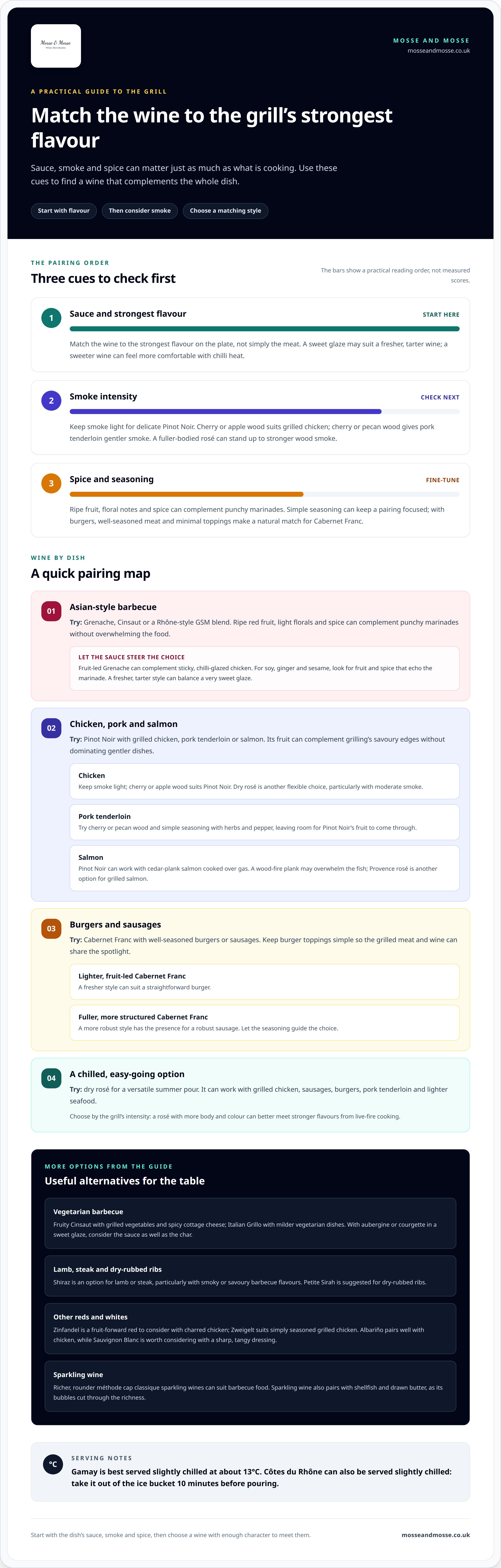
For Asian-style barbecue, try Grenache, Cinsaut or a Rhône-style GSM blend. Ripe red fruit, light florals and spice help these reds complement punchy marinades without overwhelming the food. The best pairing depends on the sauce: sweeter wines can soften spicy barbecue, while crisp, tart styles suit sweeter sauces.
Match the wine to the strongest flavour, not simply the meat. With sticky, chilli-glazed chicken, fruit-led Grenache or a Grenache-Cinsaut blend can complement the sauce’s sweetness and spice. For soy, ginger and sesame, choose a red whose fruit and spice echo the marinade. Consider the seasoning, too: a very sweet glaze calls for a fresher, tarter style.
Cinsaut also works beyond meat. Pair fruity Cinsaut with grilled vegetables and spicy cottage cheese, or choose Italian Grillo for milder vegetarian barbecue dishes. With aubergine or courgette in a sweet glaze, the sauce matters as much as the char. A crisp, tart wine can balance sweetness; with chilli heat, a sweeter wine can feel more comfortable.
Shiraz is another option for lamb or steak, particularly when the barbecue sauce has smoky or savoury flavours. For a vegetarian spread, consider how charred peppers, mushrooms or grilled vegetables affect the dish’s intensity. A wine that feels lively beside lightly seasoned vegetables may seem less expressive with a dark, sweet sauce.
Petite Sirah is one option for dry-rubbed ribs and a smoky barbecue table. Keep the pairing in context: it’s suggested for dry-rubbed ribs, not every style of Texas barbecue. When choosing wine for a summer BBQ, start with the dish’s sauce, smoke and spice, then pick a red with enough fruit to meet them.
Which red wines suit a summer barbecue, and should they be chilled? Grenache, Cinsaut blends and Shiraz are useful choices for stronger flavours; Gamay is best served slightly chilled at about 13°C. Côtes du Rhône can also be served slightly chilled by taking it out of the ice bucket 10 minutes before pouring.
When shopping, look for Grenache or Cinsaut blends, then compare the prices of the bottles available. The pairing guidance here doesn’t point to a particular UK retailer or price, so choose by grape and label price rather than assuming one supermarket offers the best value.
Richer, rounder méthode cap classique sparkling wines can suit barbecue food. Sparkling wine also pairs with shellfish and drawn butter, as its bubbles cut through the richness. To plan how much to buy, consider how long the barbecue will last, how many guests drink wine, and whether you’ll serve other drinks.
2. Pinot Noir with chicken, pork and salmon
Pinot Noir is a thoughtful choice for grilled chicken, pork tenderloin and salmon. Its fruit can complement the savoury edges of grilling without dominating gentler dishes. For chicken, keep the smoke light: cherry or apple wood suits Pinot Noir better than stronger hickory or oak, helping balance the wine’s delicate character with the food.
For pork tenderloin cooked over live fire, try cherry or pecan wood. These add gentler smoke, leaving room for Pinot Noir’s fruit to come through. Simple seasoning with herbs and pepper keeps the pairing focused. If the pork has a sweet glaze, consider how its richness changes the balance before choosing your bottle.
Salmon needs a little care. Pinot Noir can work with cedar-plank salmon cooked over gas, but a plank over a wood fire may overwhelm the fish. For grilled salmon, Provence rosé is another option, especially if you want a chilled, refreshing style alongside the fish’s richness.
Dry rosé is a flexible choice for chicken, particularly with moderate smoke from lump charcoal. A rosé with more body and colour can better meet the stronger flavours of live-fire cooking. Zinfandel is another fruit-forward red to consider with charred chicken; choose a style whose ripe fruit complements the seasoning rather than masking it.
Zweigelt offers a different red-wine option. Try it with simply seasoned grilled chicken for a fruit-led match that doesn’t compete with the dish. For a white, Albariño pairs well with chicken, and its lively character can suit herb-seasoned or lightly marinated pieces. Sauvignon Blanc is also worth considering when the chicken has a sharp, tangy dressing.
Which white wines and rosé wines pair well with barbecue food? Albariño suits chicken, while dry rosé works with grilled chicken, sausages, burgers, pork tenderloin and lighter seafood. For further ideas, explore white and sparkling wines alongside the food you’re serving.
One named example is Tacherons Pinot Noir VdF, listed at 13% alcohol. That detail can help you compare bottles, but the food match still depends on smoke, seasoning and sauce. A heavily spiced chicken dish may call for a more fruit-led style; salmon with herbs can favour a lighter touch.
For a mixed barbecue, set out Pinot Noir with pork or salmon, then offer chilled rosé for chicken and seafood. If you’re weighing up styles for the menu, talk through the wine options before settling on your selection.
3. Cabernet Franc with burgers and sausages
Cabernet Franc brings a savoury red option to burgers and sausages, particularly when the meat is well seasoned. For beef burgers cooked over lump charcoal or live fire, keep the toppings simple. A lighter hand lets the grilled meat and wine share the spotlight, rather than making the pairing compete with several strong flavours.
Cabernet Franc varies in style, so consider the bottle as well as the grape. Some examples are lighter and Loire-like; others are fuller and more structured. A fresher, fruit-led style can suit a straightforward burger, while a more structured wine has the presence for a robust sausage. Let the seasoning guide your choice.
For a cheeseburger, consider how the cheese changes the dish’s richness. A well-seasoned patty with minimal toppings is the clearest match, especially when cooked over live fire. Several sweet or sharp accompaniments can take centre stage. Keep the wine fruity, and avoid letting the toppings dictate every bite.
Sausages offer another useful match because their seasoning gives Cabernet Franc something substantial to meet. Pair it with grilled pork sausages and simple accompaniments, such as bread or a green salad. If the sausages are heavily spiced, taste a small bite before pouring. Strong seasoning can make wine seem less fruity or more austere.
The same grape also works beyond burgers and sausages. Cabernet Franc pairs well with bone-in grilled chicken and pork tenderloin, giving a barbecue menu one red that suits several dishes. For chicken, moderate smoke keeps the meat’s flavour clear. With pork tenderloin, herbs and pepper make a more restrained match than a very sweet glaze.
During cooking, pay attention to the fire and seasoning together. Lump charcoal or live fire gives beef burgers a grilled character that suits the pairing, while heavy toppings can shift the balance. Set out the wine beside the food and taste it with the finished burger. This simple step shows whether the sauce, cheese or char dominates.
Cabernet Franc is a strong choice when the menu centres on well-seasoned beef burgers or sausages, but it needn’t be the only bottle. For a mixed grill, choose it for the meatier dishes and offer a refreshing alternative for guests who prefer something lighter. Fruity rosé or chilled red can provide contrast without competing with the main pairing.
For relaxed serving, bring Cabernet Franc slightly cooler than a warm room, then pour it with the first burgers or sausages. Avoid serving it very warm beside a hot grill, where the alcohol can seem more prominent. With minimal toppings, a well-seasoned patty and a considered serving temperature, the wine’s fruit and structure can complement the meal.
4. Rosé served chilled
Chilled rosé brings freshness to a summer barbecue, especially alongside grilled chicken, sausages, burgers, pork tenderloin or lighter seafood. Its acidity can lift savoury, charred flavours, while a dry finish keeps the pairing from feeling heavy. Choose the dish first, then decide whether a lighter or fuller style suits its seasoning and smoke.
Smoke matters. A delicate rosé can work with chicken cooked over lump charcoal and moderate smoke. For food cooked over live fire with stronger wood smoke, choose a rosé with more body and colour. That extra weight helps the wine hold its own beside the grill’s bolder flavours.
Rosé is also flexible with spice rubs and sweeter barbecue sauces. Match the wine to the dominant flavour: fruit can complement a sweet glaze, while refreshing acidity helps balance richer or more savoury dishes. Italian rosé can bring a different regional character to the table, but the food’s seasoning remains the best guide.
What serving temperature and chilling time work for an outdoor summer barbecue? Serve rosé chilled, and put it in the fridge ahead of the meal. Keep it cool in an ice bucket during serving; the right time to chill it depends on the bottle’s starting temperature and how cold you want it.
To keep wine cool outdoors, place bottles in an ice bucket and keep them out of direct sun. Pour a glass when needed, then return the bottle to the bucket. This works well for rosé beside the grill, where sun and warm surroundings can quickly take away its refreshing edge.
Rosé’s fruit and acidity also make it useful when guests choose different dishes. Pour it with a spice-rubbed chicken thigh, then try it alongside a grilled sausage or burger. These contrasts help show whether the rosé’s weight suits the food, rather than relying on colour alone.
For a menu with stronger smoke, a more coloured, fuller-bodied rosé can be the better choice. With lighter seafood or simply seasoned chicken, a fresher style keeps the pairing lively. Tannin is usually less prominent in rosé than in many reds, so it can feel less weighty alongside lighter barbecue dishes.
Set out rosé alongside the food, rather than leaving every bottle beside the grill. A shaded serving spot and an ice bucket help keep each pour cool. To choose a rosé for your barbecue menu, discuss your wine selection.
Road 13 Rosé is recommended served ice cold. It is a fruity Canadian rosé with cranberry, strawberry and cherry flavours, and is medium-bodied, slightly acidic and dry-finished.
Mosse and Mosse: Champagne & Sparkling Wines
Mosse and Mosse offers Champagne and sparkling wines for a celebratory barbecue pour or a pairing with shellfish and drawn butter. The bubbles can cut through the richness, making sparkling wine a natural option alongside grilled seafood. If your menu includes several dishes, consider how the wine might complement the food rather than compete with stronger sauces or smoke.
For a broader selection, Mosse and Mosse also offers red, white and rosé wines. Build a table around your barbecue menu, from grilled meats to lighter dishes, while keeping the food and your own preferences at the centre.
Contact Mosse and Mosse to discuss a wine selection for your summer barbecue.
Plan a barbecue that feels like yours
The most useful next step is to shape your wine for a summer BBQ around the meal you plan to serve. Before choosing, jot down the main dishes, strongest seasonings and whether guests will share plates. That short menu gives you a clearer starting point than selecting a bottle by label or colour alone.
Think about the mood you want at the table, too. A relaxed gathering might call for one familiar style, while varied tastes can make a little choice welcome. Keep your own preferences in view: the best selection is one you’ll enjoy pouring and drinking, not simply a theoretically perfect match. If plans change, let the food lead.
Mosse and Mosse can help turn your menu into a considered wine selection suited to the occasion. Bring your ideas together, then choose a style that makes the meal feel personal. Plan your next barbecue selection with Mosse and Mosse, and look forward to a table made for good company.
Frequently Asked Questions
What wines pair best with popular summer BBQ foods such as burgers, sausages, and grilled vegetables?
Gamay is a versatile choice for burgers and sausages, including beef, chicken or plant-based patties. Its fruit, acidity and lower tannin work well with the savoury richness of grilled sausage. For a mixed grill, a red blend can suit different proteins without requiring a separate bottle for each dish. With vegetables, consider how their seasoning and char affect the match, then choose a wine that complements the strongest flavour.
What wine pairs best with smoky, spicy, or sweet barbecue sauces?
Let the sauce’s dominant flavour guide the pairing: a sweeter wine can soften chilli heat, while crisp, tart wine suits a sweet glaze. For smoky steak, peppery Syrah is a strong choice. Sauce intensity matters, too: a thick, dark coating can overwhelm a delicate wine, so serve extra sauce separately and taste the meat with its seasoning first. That keeps the pairing flexible as guests add sauce to their plates.
What are good affordable BBQ wines available in UK supermarkets, and how much do they cost?
Grenache or Cinsaut blends are practical choices; compare the prices of the bottles available.


