
A thoughtful wine selection for a wake or funeral starts with the expected guests and the kind of gathering you’re planning. Choose quantities to suit attendance, then select wines that fit the setting and honour the person being remembered. The aim is to make guests feel welcome without taking focus from the occasion.
It’s understandable to want every detail to feel appropriate while balancing the budget, family preferences and a meaningful tribute. This guide covers budgeting, choosing wines for a celebration of life and bringing personal connections into the selection. It also considers simple ways to remember someone over time, from choosing a favourite style or region to setting aside a bottle for an anniversary. A clear sense of the occasion and the guests makes planning more straightforward.
Key Takeaways
- Build the wine budget around expected attendance and the style of gathering, so your selection feels considered without over-ordering.
- Match the wines to the season, setting and tone of the celebration, from a crisp white to a sparkling toast.
- Make the tribute more personal by choosing a favourite wine style or a region connected to the person’s life.
- Shape the service around the ceremony and family’s needs, and consider keeping a bottle for a future remembrance.
- A thoughtful range of Champagne, sparkling, red, white or rosé wines can help give the gathering its own character.
1. Planning a budget for memorial wine with a wine merchant
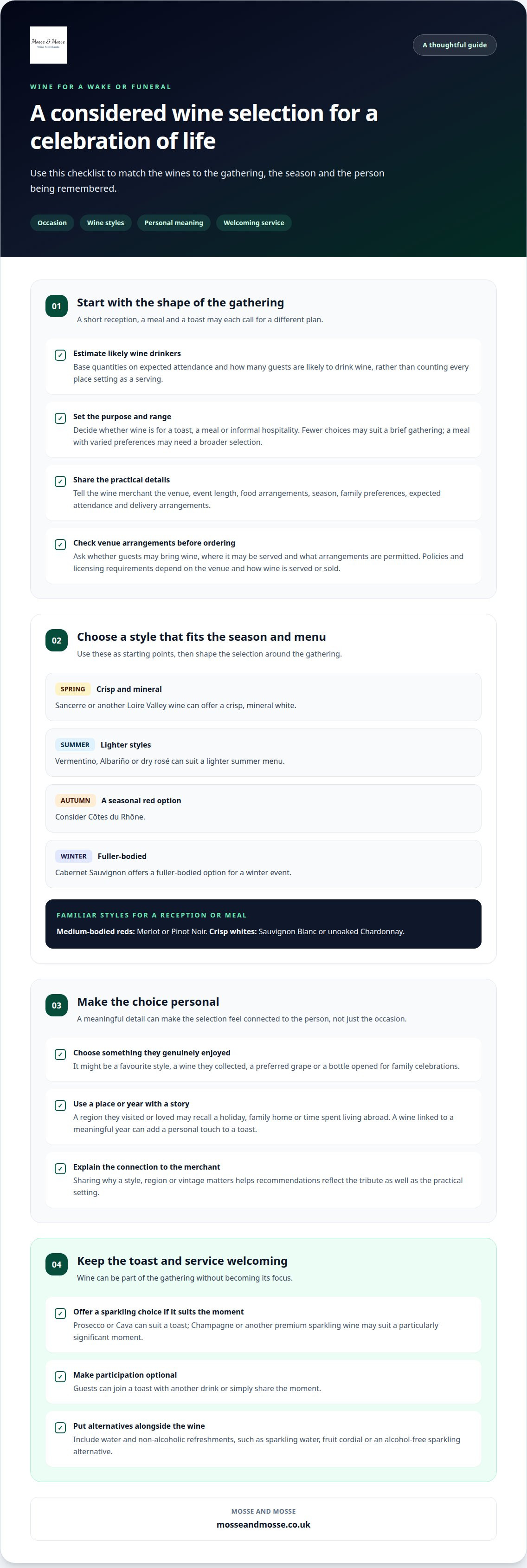
Planning a wine selection for a wake or funeral begins with the expected guests and the type of gathering. A short reception after a service calls for a different plan from a longer celebration of life. The venue, food, season and family preferences also matter. Share these details with a wine merchant when discussing suitable styles and quantities.
Set the budget by deciding what the wine is for: a toast, a meal or informal hospitality. Then estimate how many guests are likely to drink wine, rather than counting every place setting as a wine serving. Include non-alcoholic refreshments in the plan too.
For a reception, a medium-bodied red such as Merlot or Pinot Noir and a crisp white such as Sauvignon Blanc or Pinot Grigio can offer two familiar styles. For a brief gathering, fewer choices may be enough. A meal with guests who have varied preferences may call for a broader selection.
Can a UK funeral venue or crematorium allow guests to bring or serve alcohol? Policies vary, so ask the venue organiser whether guests may bring wine or whether the venue must arrange service. Confirm where wine may be served and what arrangements are permitted before ordering.
What are the UK licensing rules for serving or selling wine at a wake? Requirements depend on the venue and whether wine is sold, included in an event charge or served without charge. Ask the venue operator which permissions apply, especially before selling wine or including it in ticket costs.
To estimate quantities, a wine merchant will need the expected attendance, event length, food arrangements and whether wine is for a toast or general hospitality. Also share how many guests are likely to drink wine. This gives the merchant a practical basis for suggesting a mix without assuming everyone will drink the same amount.
Where can you find a UK wine merchant offering delivery and clear returns for a wake? Choose one that can deliver to the venue or another agreed address, and read its delivery and returns terms before ordering. Confirm who must receive the wine and how unopened bottles are handled under those terms.
Offer wine without making it the focus. Put water and other non-alcoholic refreshments alongside it, and let guests choose for themselves. A sparkling wine toast can be optional: guests may raise another drink or simply share the moment.
A thoughtful wine selection for a wake or funeral also depends on practical details. Give the merchant the date, venue access arrangements and expected guest numbers. Explain whether there will be a meal or a toast. With this brief, the merchant can help balance the selection and quantity with the delivery arrangements.
2. Choosing wines for a celebration of life with a wine merchant
A suitable wine selection for a wake or funeral reflects the gathering’s tone, food and guests. Medium-bodied reds such as Merlot or Pinot Noir can suit a reception meal, while crisp whites such as Sauvignon Blanc or unoaked Chardonnay offer a different style. The family’s preferences can help shape a balanced choice.
For a celebration of life, personal meaning can guide the selection. A wine from a region the deceased visited or loved may prompt shared memories, while a bottle linked to a meaningful year can lend a toast a personal touch. Tell the merchant why you have chosen it so recommendations reflect that connection.
The season can help narrow the choice. At a spring gathering, Sancerre or another Loire Valley wine offers a crisp, mineral white. Vermentino or Albariño can suit a lighter summer menu, as can dry rosé. For autumn, consider Côtes du Rhône; Cabernet Sauvignon offers a fuller-bodied option for a winter event.
For a toast, Prosecco or Cava offers a sparkling option. Champagne or another premium sparkling wine may suit a particularly significant moment. A toast need not be obligatory: guests can join with another drink or simply share the moment, making the gesture welcoming to people with different preferences.
There is no single best combination of red, white, rosé and sparkling wine. Pinot Noir, crisp Sauvignon Blanc and dry rosé offer variety; add sparkling wine if the family wants a toast. Tailor the wine selection for a wake or funeral to the event instead of following a fixed formula.
Wine need not be served at a wake. If the family chooses to offer it, include water and non-alcoholic drinks too. Sparkling water, fruit cordial or an alcohol-free sparkling alternative lets guests choose without drawing attention to what they are drinking.
A useful brief for a wine merchant covers the venue, food and guest preferences. A seated meal may call for red and white options, while a short reception might centre on one style. Mention the season and any meaningful region or vintage. These details help shape a selection suited to the occasion.
For a personal recommendation, talk through the wines that suit the gathering. Share the atmosphere you hope to create and the family’s preferences. A thoughtful wine selection for a wake or funeral can then reflect both the practical setting and the person being remembered.
3. Selecting wines with a personal connection to the deceased with a wine merchant
A meaningful choice often begins with a bottle the person genuinely enjoyed. It could be a favourite style, a wine they collected or one opened for family celebrations. Tell the merchant about that connection so they can suggest a suitable choice that keeps the memory at its heart.
Personal details give a selection more meaning than a label alone. Perhaps the person preferred a particular grape, chose lighter reds or saved sparkling wine for special occasions. Sharing these preferences can help the merchant recommend wines that feel familiar to close family and welcoming to other guests.
A region can carry a story too. It may recall a first holiday, a family home or years spent living abroad. The merchant can use that detail to shape a selection around the person’s life, rather than choosing bottles only for their formality or appearance.
A wine collection may offer another thoughtful starting point. If the deceased collected wine, a bottle from the collection could be served or displayed at the gathering. Explain its significance to the merchant, who can help choose other wines that complement it without competing for attention.
A story about a 1922 D’Oliveras Boal Madeira shows how a particular bottle can hold deep meaning. Its owner had saved the last few ounces, hoping his mother would reach 100; she died at 96. That connection can guide a tribute, even when the original bottle isn’t the wine served to every guest.
For a toast, choose a wine for what it means to the family. A sparkling style might recall a birthday tradition, while a favourite fortified wine could mark the familiar end to a meal. The association matters more than making the toast elaborate.
Explain the story behind the choice in a short note or spoken introduction. A family member might mention, for example, that the wine recalls Sunday lunches with the deceased. Keep the wording simple, and let guests share their own memories or listen quietly.
A wine merchant can turn personal details into a practical brief. They can consider the chosen bottle’s role, the number of styles required and whether guests will drink during a meal or join only a toast. This keeps the tribute coherent and the arrangements manageable.
A meaningful wine need not be rare or expensive. A familiar bottle enjoyed together may carry more personal weight than an impressive label with no family connection. Describe the memory, preferred taste and intended moment, then use those details to guide the choice.
4. Creating memorial wine traditions
A memorial wine tradition can be simple, personal and repeatable. A family might raise a glass at the service and repeat the gesture on each anniversary. The wine can mark a moment of remembrance without making the gathering formal. Agree in advance who will lead the toast and when.
Let the timing follow the ceremony and the family’s needs. A toast may suit the reception after the service; another family may prefer a quiet moment during a meal. Share the schedule with the wine merchant so the selection and serving arrangements fit the gathering.
A real example comes from a participant who recalled drinking 1975 Chappellet at a shiva held at his parents’ house. The memory links a specific wine and vintage with a family gathering. A tradition needn’t copy that exact choice; its value comes from the connection the family gives it.
Some families choose a bottle associated with a birthday, holiday or shared meal; others select a wine from a region linked to the deceased’s life. A short introduction can explain the connection, perhaps by recalling a favourite family celebration. Keep it direct and leave space for guests to remember in their own way.
Consider setting aside bottles for future anniversary gatherings. Ask the merchant to help choose wines intended for that later occasion, rather than assuming every bottle bought now should be stored. Keep the plan flexible: family members may prefer a familiar style, a sparkling toast or a different tribute in years to come.
A recurring ritual can include people who do not drink wine. Invite everyone to join the toast with their chosen drink or simply share the moment without a glass. This keeps the focus on remembering the person, not on how guests participate.
For a practical plan, tell the merchant about the ceremony schedule, intended toast and any anniversary tradition. Explain whether the family wants to choose the same recognisable wine each year or vary the selection while keeping a common thread. This helps connect the wines with the ritual and keeps service manageable.
Tradition doesn’t require a rare vintage or elaborate presentation. A familiar wine opened at a family gathering can carry more meaning than an unfamiliar bottle chosen for prestige. The 1975 Chappellet memory shows how a particular vintage can become part of a family story.
If you’re shaping a wine ritual around a meaningful bottle or future anniversary, discuss your memorial wine plans.
Tell the merchant how the family wants the final moment to feel. Set the serving time around the ceremony and the family’s needs, rather than following a fixed schedule. If you want to keep wine for an anniversary gathering, plan which bottles to set aside instead of assuming the current selection will suit both occasions. Agreeing these details in advance can make the ritual feel considered while leaving room for family preferences to change.
Mosse and Mosse: Champagne & Sparkling Wines
Mosse and Mosse can help shape a wine choice around your planned tribute. Champagne and sparkling wines offer an option for a remembrance toast, while white wine can provide another style for the gathering. The selection can reflect the person’s preferences, the event’s tone and the family’s wishes.
If you’re weighing a sparkling toast against a quieter choice, share the story or style you have in mind. Mosse and Mosse can guide you through suitable wines, including red wine and rosé wine, as well as Champagne and sparkling wines.
Contact Mosse and Mosse to discuss a wine selection that honours the person being remembered.
Make the tribute your own
The wine chosen for a memorial can prompt stories that might otherwise go unshared. A familiar bottle, a thoughtful toast or a note beside the glasses can help guests connect through their memories. Let the family’s intentions guide the details rather than feeling obliged to follow convention. A thoughtful wine selection for a wake or funeral should feel true to the person and comfortable for those gathered.
Mosse and Mosse offers red, white, rosé, Champagne and sparkling wines to help shape a fitting choice. Share the atmosphere you hope to create and any details that matter to the family to guide the conversation towards a meaningful selection.
Contact Mosse and Mosse to discuss the tribute you have in mind. A considered choice can help make the gathering feel personal, welcoming and distinctly connected to the person being remembered.
Frequently Asked Questions
What is the average price of wine in the UK for a funeral reception?
There is no single useful average for every UK funeral reception: the total depends on the wines chosen and the quantity needed. A modest toast and a meal with several styles require different orders. To set a workable budget, decide what the wine needs to do at the gathering, then choose bottles to suit. Keep venue charges separate from the wine budget.
How much wine should I buy per guest for a wake?
There is no fixed amount per guest. Estimate attendance, event length, food arrangements, whether wine is for a toast or general hospitality, and how many guests are likely to drink. A wine merchant can use those details to suggest quantities.


