

Is Port red wine, or a different kind of drink altogether? The phrase “red wine port” can make the distinction easy to muddle. Port often has a deep red colour and is made from red grapes, but it is fortified wine, not simply still red wine. That difference affects its sweetness, strength and place at the table. If you’re deciding whether to pour it with food, after a meal or as a gift, knowing what to look for makes the choice easier.
This guide explains how Port relates to red wine, what shapes its character and how familiar styles differ. You’ll also find practical ideas for serving it and choosing a bottle to suit the occasion and your taste.
Mosse and Mosse is an independent Suffolk wine merchant offering Port and a curated wine selection. With personalised service, choosing a bottle can start with what you enjoy and how you plan to serve it. Read on for a clear introduction to Port and useful guidance for making your choice.
Key Takeaways
- “Red wine port” usually refers to red styles of Port, but Port is fortified wine, not simply still red wine.
- How Port is made and matured influences its colour, sweetness and texture, so bottles can differ considerably.
- Choose a style by thinking about the occasion, your taste and the food you plan to serve. Pairing suggestions are useful starting points, not rules.
- Knowing the broad styles makes it easier to choose a bottle for sharing, serving after a meal or giving as a gift.
- Mosse and Mosse is an independent Suffolk wine merchant offering Port, curated wine selections and delivery across the UK mainland.
Is Port Red Wine? Understand What “Red Wine Port” Means
Port is a fortified wine, most commonly associated with red styles. In simple terms, Port is wine from Portugal’s Douro region made with the addition of grape spirit, and it comes in several styles and colours. So, “red wine port” usually means red-style Port, not a mixture of Port and ordinary still red wine.
The distinction is useful when you’re choosing what to serve. Both Port and still red wine can be made from red grapes, but fortification gives Port a different balance and often a different role at the table. Colour alone does not define the category: white and rosé styles of Port are also made. The Port wine overview provides further background on the category, its production and its varied styles.
What does “fortified wine” mean?
Fortification means adding grape spirit to wine during production. In Port-making, the spirit is added before fermentation has converted all the grape sugars into alcohol. This leaves some natural sweetness in the finished wine and gives it a higher alcohol level than ordinary still wine. The balance varies between styles and bottles, so “fortified” describes the method, not a single taste.
How does Port differ from ordinary red wine?
Still red wine is generally fermented without added spirit and is often served alongside a meal. Port is fortified, and many styles have noticeable sweetness, making them a familiar choice after dinner or with dessert. These are conventions rather than rules. Red wines vary in body and sweetness, and Port can be enjoyed in different settings.
Think of the difference in terms of production and character, not just colour. A deep red hue does not make a wine Port, just as red-style Port is not ordinary red wine with another drink mixed in. If you’ve seen “red wine port” on a menu or heard it in conversation, it most likely means red-style Port.
Once that distinction is clear, consider what you want from the bottle. Do you prefer a more fruit-led impression or a softer, more developed one? Port’s colour, sweetness and texture can vary with its style and maturation. Understanding those broad differences helps you narrow down a bottle for an after-dinner glass, a gathering or a food pairing.
How Port Gets Its Character: Fortification, Grapes and Broad Styles
Port’s character begins with grapes grown in Portugal’s Douro Valley, then develops through winemaking and maturation. The grapes are fermented before grape spirit is added. This stops fermentation while some natural grape sweetness remains, creating the balance of richness and strength associated with Port. Fortification preserves some grape sweetness and gives Port its distinctive strength and structure.
The way a wine develops after fortification influences its colour, sweetness and texture. “Red wine port” may suggest a deep colour, but the phrase alone does not tell you exactly how sweet, full or mature the wine will taste. Use the style name as a first clue, then look at the bottle’s description for more specific guidance.
What role does the Douro region play in Port?
The Douro Valley in northern Portugal is closely associated with Port production. Its name is part of the wine’s identity, linking Port to a particular region and winemaking tradition. The Instituto dos Vinhos do Douro e do Porto is the regional institute associated with Douro wines and Port. The practical point for shoppers is that Port is not a generic name for any fortified wine.
What do ruby and tawny tell a beginner?
Ruby and tawny are useful broad signposts. Ruby styles are generally associated with deeper colour and a youthful, fruit-led character. Tawny styles tend to develop a lighter colour and a more mellow character through maturation. These are general descriptions, not guarantees about every bottle. The style can help you narrow down what appeals, but the bottle’s own description is worth reading too.
If you enjoy vivid, fruit-forward flavours, ruby may be a helpful place to start. If you prefer softer, more developed flavours, consider tawny. For a more reliable choice, think about how you’ll serve the Port and check the bottle description for clues about its character. Neither style name tells the whole story.
Mosse and Mosse is an independent Suffolk wine merchant offering Port and personalised guidance. Tell the team what you enjoy and what you’re planning, or get in touch with the team for help choosing a direction.
Choosing Red Port for an Occasion: Match Style, Food and Preference
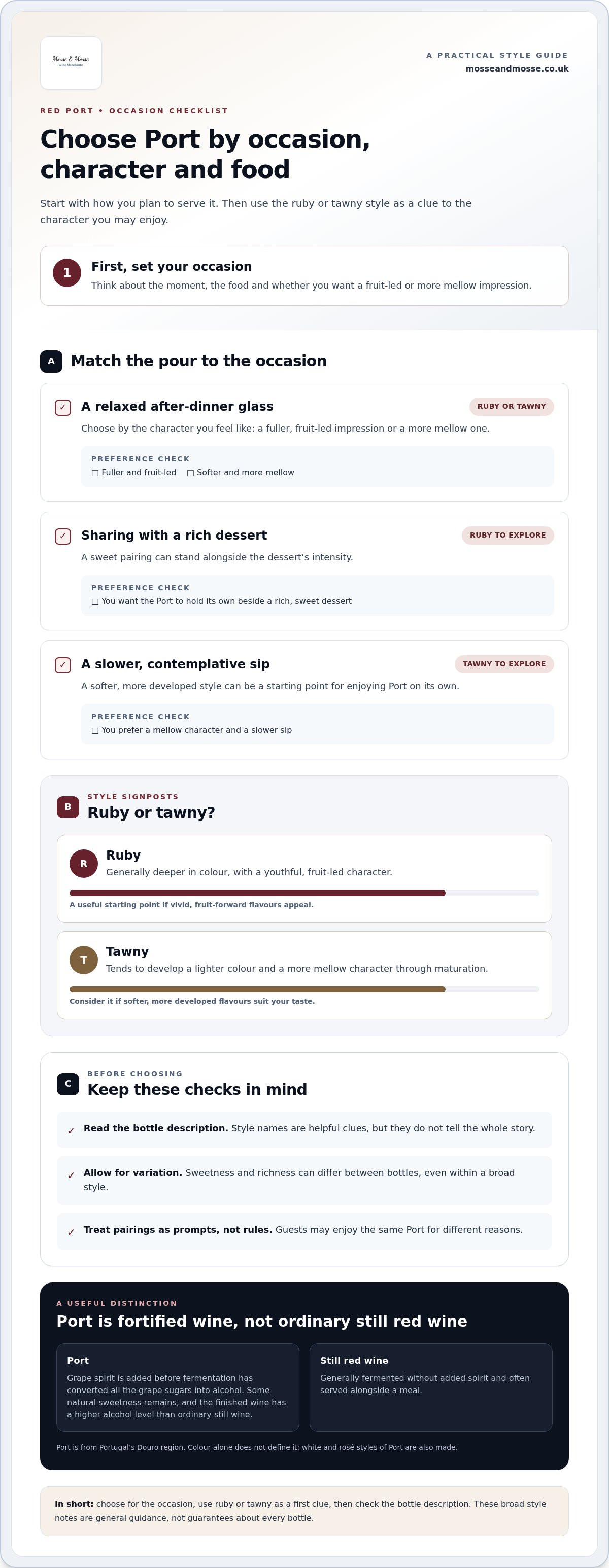
Start with the occasion, then think about sweetness and richness. Are you choosing Port for a small after-dinner pour, to serve with dessert or for guests with different tastes? Decide whether you want a more fruit-led or mellow character, and use food pairing ideas as a guide rather than a strict formula.
Which broad Port style suits different occasions?
Ruby and tawny are useful starting points, but they are not the only Port styles. This comparison can help you narrow down what to explore. If you’re choosing for a group, consider which flavours your guests are more likely to enjoy.
| Occasion | Style to explore | Consider if you prefer |
|---|---|---|
| A relaxed after-dinner glass | Ruby or tawny | A fuller, fruit-led impression, or a more mellow one |
| Sharing with a rich dessert | Ruby as a starting point | A sweet pairing that can stand alongside the dessert’s intensity |
| A slower, contemplative sip | Tawny as a starting point | A softer, more developed style to enjoy on its own |
These are prompts, not guarantees. The sweetness and richness of a particular Port can vary, and people may enjoy the same style for different reasons. For a group, think about whether guests tend to favour bold, fruit-forward flavours or something gentler and more mellow. Red-style Port is a familiar after-dinner choice, but the occasion and people drinking it matter more than the colour in the glass.
What foods can you pair with Port?
Consider the dessert’s sweetness and richness before choosing a pairing. A full-flavoured pudding may suit a Port with enough presence to hold its own, while a lighter dessert may call for a less intense match. Chocolate and fruit-based desserts are familiar options to try. There is no single correct pairing, so aim for a balance you enjoy rather than matching by colour alone.
Cheese is another option. Some people enjoy Port with a strong or salty cheese, while others prefer it with dessert or on its own. For a cheeseboard, consider the intensity of both the cheese and the Port. Choose each because you enjoy it individually, then see how the flavours work together.
Mosse and Mosse offers Port and personalised guidance for choosing a bottle to suit your occasion. Speak with Mosse and Mosse about choosing a bottle and share what you plan to serve and the flavours you enjoy.
Finding Port with Personal Guidance from a Suffolk Wine Merchant
Port covers a range of styles, so choosing a bottle can feel less straightforward than deciding between red and white wine. A wine merchant can help narrow the choice by starting with what you enjoy, the occasion and who will be sharing the bottle. You do not need specialist terminology to explain what you’re looking for.
What should you tell a wine merchant when asking for Port?
Begin with the occasion. Explain whether you’re choosing Port for a quiet after-dinner glass, a dessert or a gathering, and mention the food you plan to serve. Everyday descriptions of your preferences are useful too: do you enjoy sweeter drinks, or prefer less sweetness? Do you usually choose lighter or fuller red wines?
- Sweetness: Say whether you enjoy a sweeter finish or prefer less pronounced sweetness.
- Occasion: Explain whether you’re choosing for yourself, guests or a gift.
- Food: Mention any dessert, cheese or other dishes you expect to serve.
- Familiar wines: Describe red wines you like, including whether you favour lighter or fuller styles.
These details offer a useful starting point without requiring you to know every Port category. If “red wine port” is what you have in mind, say so and explain whether you’re hoping for something fruit-led, mellow or simply enjoyable to share. Your preferences are more helpful than trying to guess the “right” choice from a label alone.
How can Mosse and Mosse help you take the next step?
Mosse and Mosse is an independent wine merchant based in Suffolk, offering Port, a curated wine selection and personalised service. Share your tastes and plans with the team to get guidance on a suitable direction, even if you do not have a particular style or bottle in mind. Mosse and Mosse delivers to customers across the UK mainland.
Whether you’re choosing for an intimate supper, a celebration or a thoughtful gift, start with what you like and how you hope to enjoy the wine. Contact Mosse and Mosse to discuss your preferences and choose a Port for the occasion.
Make your next Port choice personal
Choosing Port gives you the chance to try something beyond your usual glass, guided by flavours you already enjoy. Instead of searching for one “right” answer, consider what would make the occasion feel special: a bottle to share after supper, a thoughtful gift or a new style to discover. Your own preferences are a practical place to start.
Mosse and Mosse is an independent Suffolk wine merchant with a curated wine selection and personalised service, and delivers across the UK mainland. If you’re weighing up which Port to choose, share what you enjoy and what you’re planning. That makes it easier to focus on a style that fits the occasion.
Discuss your Port preferences with Mosse and Mosse. Choose a red wine port you’ll be pleased to pour and enjoy.
Frequently Asked Questions
Is Port a red wine?
Port is fortified wine, and red styles are the best-known, but not every Port is red. The phrase “red wine port” usually means red-style Port rather than a blend of Port and still red wine. White and rosé styles are also made. If colour matters to your choice, look for the style on the label rather than relying on the word “Port” alone.
Can you drink Port with a meal?
Yes. Port can be enjoyed with a meal, not only after it. Try serving it alongside a course with flavours that can stand up to its richness, or with cheese towards the end of dinner. A glass with a cheeseboard, for example, offers a change from serving only red or white wine. Choose a combination that you and your guests enjoy.
How long does Port last once opened?
It depends on the style, how the bottle is stored and how much air remains inside, so there is no single reliable timeframe for every Port. Reseal the bottle promptly and keep it somewhere cool and dark; refrigeration can help preserve an opened bottle. Check the producer’s guidance on the label, and use your senses before serving. If its aroma or flavour seems dull or unpleasant, don’t pour it.
Can you use Port in cooking?
Yes, Port can add sweetness and depth to cooking. Try adding a little to a meat sauce, or simmer it with fruit for a dessert topping. Because Port can be sweet and rich, add it gradually and taste as you go, especially if the recipe already contains sugar. Choose a Port whose flavour you’d be happy to drink rather than relying on cooking to improve a bottle past its best.
Is all Port sweet?
No. Port is often associated with sweetness, but styles differ and some are made in a drier style. The word “Port” alone will not tell you exactly how sweet a particular bottle tastes. Read the label or producer’s description, especially if you’re buying for someone who prefers less-sweet wines. A wine merchant can help narrow the choice if you explain that preference.
Does Port have to come from Portugal?
Yes. Port is the name for fortified wine associated with Portugal’s Douro region; a similar wine made elsewhere is not Port in the same sense. Keep that origin in mind when reading a wine list or label, as other fortified wines may have their own names. Mosse and Mosse, based in Suffolk, delivers across the UK mainland, including Ipswich, Norwich, Bury St Edmunds, Sudbury, Stowmarket, Newmarket, Thetford, Diss, Attleborough, Southwold, Aldeburgh, Framlingham, Woodbridge, Long Stratton and Saxmundham.


